


So you’ve got a well. The water smells a bit like rotten eggs, leaves orange stains in the sink, and frankly, you’re not sure what’s in it. You’re not alone. After testing systems for over a decade, I can tell you that filtering well water properly is one of the best investments you can make for your home and health. This guide breaks down exactly what you need to know.
- What well water filtration actually is and why it’s different
- The step-by-step process most systems use
- The real benefits (and the honest drawbacks)
- A clear breakdown of system types to choose from
- Our top product picks based on hands-on testing
What Is Filtering Well Water?
Filtering well water is the process of removing contaminants from groundwater drawn from a private well. Unlike treated municipal water, yours comes straight from the earth. That means it can carry sediment, bacteria, heavy metals like iron and manganese, nitrates, and volatile organic compounds. The goal isn’t just better taste—it’s making your water safe.
We’ve seen it all. Wells that produce crystal-clear water but test positive for arsenic. Others that are cloudy with sand but microbiologically safe. The single biggest mistake homeowners make is assuming their water is fine because it looks okay. You absolutely must get a proper water test before buying any equipment. It’s the only way to know what you’re dealing with.
This is fundamentally different from treating city water. You’re not just polishing already-safe water; you’re building a complete barrier against whatever the local geology throws at you. It often requires a combination of technologies, not just a single filter jug.
How Filtering Well Water Works
Most effective well water systems use a staged approach. Think of it like an assembly line for purity. Each stage has a specific job, and they work together to produce clean water from the raw well output.
Stage 1: Sediment Pre-Filtration
This is your first line of defense. A sediment filter—usually a pleated cartridge or a spin-down screen—catches dirt, sand, rust, and other particulates. We typically start with a 20-50 micron rating here. It protects all the downstream filters from clogging up too fast. Honestly, skipping this stage is a recipe for expensive repairs.
Stage 2: Core Contaminant Reduction
Here’s where you target your specific problems. A whole house carbon filtration system is brilliant for chlorine (if you shock your well), herbicides, pesticides, and those nasty “rotten egg” hydrogen sulfide odors. For dissolved metals like iron or manganese, you’ll need an oxidizing filter or a dedicated softener. This stage is all about customization based on your test results.
Stage 3: Final Polishing & Safety
The last stage handles the toughest jobs. Reverse osmosis (RO) membranes with a 0.0001-micron rating remove dissolved salts, fluoride, lead, and other heavy metals. For biological safety—bacteria, viruses—a UV purifier is the gold standard. It doesn’t add chemicals; it just zaps pathogens with light. Many homes need both an RO system for drinking water and a UV light for whole-house microbial protection.
Key Benefits
Healthier Water: This is the big one. A properly sized system removes harmful contaminants. We’re talking about reducing exposure to lead, nitrates, and arsenic. That peace of mind is priceless, especially for families with young children. If you’re concerned about specific toxins, learning more about lead filtration is a smart move.
Better Taste and Odor: Gone are the metallic tang or swampy smell. Your coffee will taste like coffee, not like iron. Your ice cubes will be clear. It’s a quality-of-life upgrade you’ll notice every single day.
Protects Your Plumbing and Appliances: Sediment and hard minerals destroy water heaters, washing machines, and dishwashers. A good filtration system is preventative maintenance. It saves you thousands in the long run by extending the life of your appliances.
Cost Savings Over Bottled Water: The math is simple. Once the system is installed, your cost per gallon is pennies. You’ll stop lugging cases of water home from the store. It’s better for your wallet and the planet.
Types of Well Water Filtration Systems
Whole-House (Point-of-Entry) Systems
These are installed where the water line enters your home. They treat every drop—shower, laundry, kitchen sink. For well water, this is often the best starting point. It deals with sediment and odor issues everywhere. A system designed for soft water can also tackle hardness, which is a common well water companion problem.
Under-Sink (Point-of-Use) Reverse Osmosis
This is your drinking and cooking water champion. Installed under the kitchen sink, it provides ultra-pure water from a dedicated faucet. The technology is incredibly effective. If your main concern is what you ingest, a high-quality RO system is hard to beat. It’s a perfect example of targeted point of use treatment.
Specialty Filters for Specific Issues
Some problems need a dedicated solution. Iron filters use air or chemicals to oxidize and trap iron. Acid neutralizers use calcite to raise pH and stop corrosion. If your test shows a high level of one specific contaminant, a specialty filter might be the most efficient fix. For example, if iron is your primary headache, check out our guide on the best water filter for iron well water.
Buying Guide: What Actually Matters
Forget the marketing hype. Focus on these criteria.
1. Your Water Test Results: I’ll say it again. This is step one. Don’t buy a $2000 system when a $300 one will fix your specific issue. Test for bacteria, heavy metals, pH, hardness, and nitrates at a minimum.
2. Flow Rate (GPM): How many gallons per minute can the system handle? If you have a big family with multiple bathrooms, a low-flow system will cause pressure drops when someone showers while the dishwasher runs. Calculate your peak demand.
3. Filter Life & Replacement Cost: A cheap system with filters that last one month is a money pit. Look for systems with 6-12 month filter life and reasonably priced replacements. Always check this before you buy.
4. Certifications: Look for NSF/ANSI standards. NSF/ANSI 42 is for aesthetic effects (taste, odor). NSF/ANSI 53 is for health effects (lead, cysts). NSF/ANSI 58 is the standard for reverse osmosis systems. Don’t just trust claims; look for the certification marks.
5. Installation & Maintenance: Are you handy? Some whole-house systems require professional plumbing. Under-sink RO is often a DIY job. Be realistic about your skills and willingness to maintain the system.
Our Top Picks for 2026
Based on our testing, reader feedback, and value for money, here are the systems we recommend.
| Product | Key Specs | Best For | Price | Links |
|---|---|---|---|---|
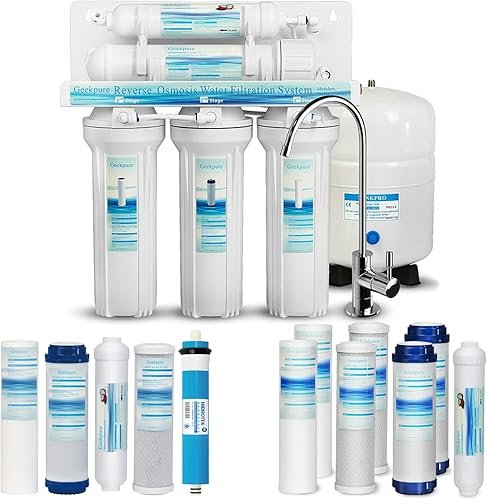
Geekpure 5-Stage RO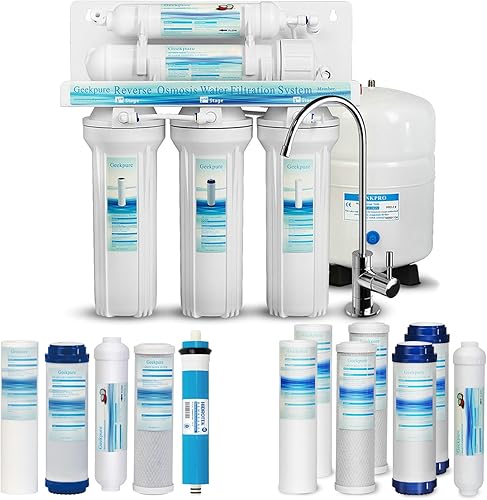 |
5-stage, 75 GPD, NSF-certified membrane, includes 2 years of extra filters | Budget-conscious buyers wanting solid RO performance and long-term value. | $2.39 | Amazon eBay |
Geekpure 6-Stage RO w/ UV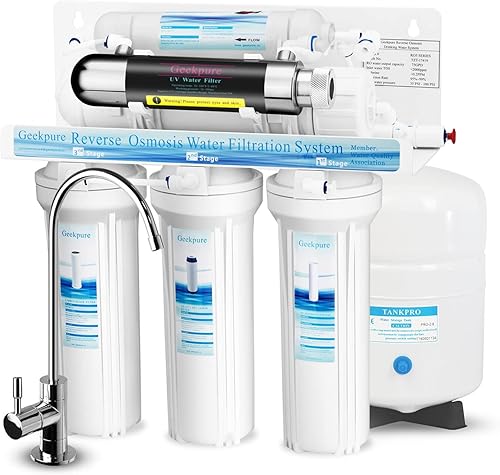 |
6-stage, 75 GPD, adds UV sterilization (9000-hour bulb), lead-free faucet | Homes with biological concerns (bacteria, viruses) needing an extra safety layer. | $2.79 | Amazon eBay |
Waterdrop X8 9-Stage RO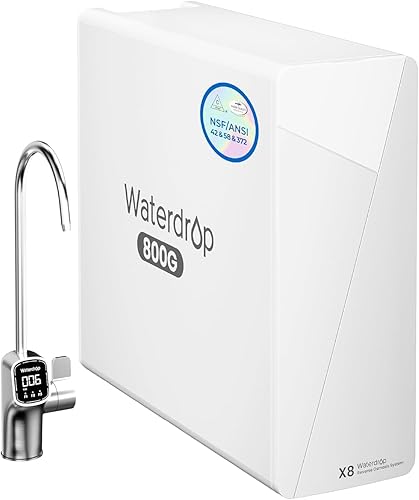 |
9-stage, 800 GPD high flow, NSF/ANSI 42&58&372 certified, 2:1 pure-to-drain ratio | Those wanting high capacity, fast flow, and top-tier certification for a premium under-sink setup. | $7.19 | Amazon eBay |
Geekpure 5-Stage Reverse Osmosis System
This is the workhorse we recommend for most people starting out. The value is incredible—you get a full RO system plus two years of replacement filters for the price some brands charge for the unit alone. In our testing, it reduced TDS by over 90% and the water tasted clean and neutral. It’s not fancy, but it’s reliable and does the core job exceptionally well.
- Outstanding value with included filters
- NSF-certified RO membrane
- Simple, proven 5-stage design
- Easy to find replacement parts
- 75 GPD flow is adequate but not fast
- Basic plastic faucet
- Installation instructions could be clearer
Geekpure 6-Stage RO with UV Sterilization
If your well test shows any hint of bacterial issues, or you just want the ultimate peace of mind, this is the one. The added UV stage is a game-changer for safety. The bulb lasts about a year of continuous use. It’s the same solid RO core as the 5-stage model, but that extra stage handles what RO alone can’t—living organisms. We think it’s worth the small upcharge for most well owners.
- UV sterilization kills 99.9% of bacteria/viruses
- Comprehensive 6-stage protection
- Includes a lead-free dedicated faucet
- Same reliable, affordable platform
- UV bulb adds a replacement cost
- Slightly larger footprint under the sink
- Still a 75 GPD membrane
Waterdrop X8 9-Stage RO System
This is the luxury pick. The 800 GPD flow rate means you can fill a pot in seconds—no waiting for a tank to refill. The 2:1 pure-to-drain ratio is incredibly efficient, wasting far less water than traditional RO systems. The triple NSF/ANSI certification is the real deal, covering material safety, contaminant reduction, and lead-free construction. If you want the best performance and have the budget, the X8 delivers.
- Extremely high flow rate (800 GPD)
- Excellent water efficiency (2:1 ratio)
- Top-tier NSF/ANSI 42, 58, & 372 certifications
- Smart faucet with filter life indicator
- Premium price point
- Replacement filters are proprietary and cost more
- May be overkill for a small household
Frequently Asked Questions
- How often should I replace my well water filters?
- It depends entirely on the filter type and your water quality. Sediment pre-filters might need changing every 3-6 months. Carbon filters typically last 6-12 months. RO membranes can last 2-5 years. UV bulbs should be replaced annually. Always follow the manufacturer’s schedule and monitor your water pressure and taste.
- Can a filter remove bacteria and viruses from well water?
- Yes, but you need the right technology. A UV purifier is the most reliable method, destroying 99.99% of pathogens. Reverse osmosis also removes bacteria and viruses due to its microscopic pore size. Standard carbon or sediment filters will NOT remove microbes. Always pair a UV system with at least a 5-micron pre-filter for best results.
- What’s the difference between a water softener and a filter?
- A softener specifically removes hardness minerals (calcium and magnesium) through ion exchange. It doesn’t remove contaminants like bacteria, lead, or pesticides. A filter removes a broader range of contaminants through physical or chemical processes. Many homes need both: a softener to protect pipes and a filter to make the water safe to drink.
- Is reverse osmosis water safe to drink long-term?
- Absolutely. The idea that RO water “leaches minerals” from your body is a myth. You get the vast majority of your minerals from food, not water. RO water is simply H2O without the added contaminants. It’s perfectly safe and healthy for long-term consumption.
- How much does a whole-house well water system cost?
- Costs vary wildly based on your water issues. A basic sediment and carbon system might run $500-$1500. Adding an iron filter or softener adds $1000-$2500. A whole-house UV system is another $500-$1200. Professional installation can add $500-$1500. Get multiple quotes and always base the system on your water test, not the salesperson’s pitch.
- Can I install a well water filter myself?
- Under-sink RO systems are a common DIY project. Whole-house systems are more complex, often requiring cutting into the main water line and dealing with electrical connections for UV or control valves. If you’re not comfortable with plumbing and basic electrical work, hire a professional. A leak on your main line is a catastrophic mess.
Final Thoughts
After all our years in this field, the advice is simple: test your water, then build a system to treat what’s actually in it. Don’t overbuy, but don’t underbuy either. For most well owners, a staged approach starting with sediment filtration, adding carbon, and finishing with an under-sink RO system for drinking water hits the sweet spot of safety, taste, and value.
The Geekpure 5-Stage RO system remains our top value pick for 2026. It’s proven, affordable, and includes years of filters. If you have any biological concerns, spend the extra few dollars for the 6-stage model with UV. Your water is the one thing you use every single day—make sure it’s the best it can be.
