


You’ve probably thought about the water you drink. But what about the water you shower in, cook with, and use to wash your clothes? That’s where an entire house water filtration system comes in. After testing systems for years and talking to countless plumbers, I can tell you this is one of the most impactful upgrades you can make for your home’s water quality.
In this guide, we’ll cover:
- What these systems actually are and how they differ from a simple under-sink filter.
- The real-world benefits (and a few honest drawbacks).
- The different types of filters and how to choose the right one.
- Our hands-on reviews of top systems you can buy in 2026.
What Is Entire House Water Filtration?
Think of it as a security guard for your home’s main water line. Unlike a point-of-use (POU) filter that cleans water at a single faucet—like your kitchen sink—a whole house system is installed right where water enters your property. This is the point of entry, or POE. Every drop of water, whether it’s headed for your shower, your washing machine, or your ice maker, gets filtered first.
The goal isn’t just better-tasting drinking water, though you’ll get that too. It’s about comprehensive protection. You’re filtering out the sediment that clogs pipes, the chlorine that dries out skin and hair, and other contaminants you don’t want flowing through your entire home. For a deeper dive into the water you’re starting with, check out our breakdown of home drinking water.
How Entire House Water Filtration Works
The process is straightforward but highly effective. Water from your municipal supply or well flows through a pre-plumbed filter housing before it reaches any tap. Most systems use a multi-stage approach.
The Main Stages of Filtration
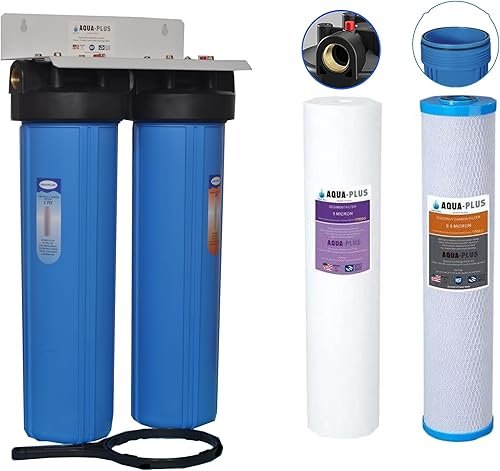
Stage 1: Sediment Pre-Filter. This is your first line of defense. A pleated or spun polypropylene cartridge catches physical particles—dirt, rust, sand, and silt. We typically see ratings from 20 down to 5 microns. This step alone prevents a lot of downstream problems.
Stage 2: Activated Carbon Block. This is where taste and odor magic happens. A dense carbon block, often made from coconut shell, adsorbs chlorine, chloramine, volatile organic compounds (VOCs), and other chemicals. It’s the workhorse for improving water quality for bathing and cooking. Understanding the role of an activated carbon water filter is key here.
Stage 3 (Optional): Specialty Media. Some systems add a third stage for specific issues. This could be a KDF filter for heavy metals, a catalytic carbon cartridge for chloramine, or a finer sub-micron filter for cysts. It depends entirely on your water report.
Key Benefits of Whole House Filtration
Whole-Home Protection. This is the big one. You’re not just protecting your drinking water. You’re protecting your lungs from vaporized chlorine in the shower and your skin from absorbing it during baths. It’s a complete upgrade to your home’s water environment.
Appliance Longevity. Sediment is brutal on appliances. It wears down washing machine valves, clogs water heater elements, and ruins coffee makers. A good sediment filter pays for itself by extending the life of your expensive appliances.
Cleaner Air and Surfaces. Chlorine evaporates. When you take a hot shower, you’re creating chlorine gas in a small, enclosed space. Filtering it out improves your indoor air quality. It also means less chemical residue on your dishes and laundry.
Foundation for Better Drinking Water. A whole house system handles the bulk of the work. You can then add a dedicated drinking water filtration system, like a reverse osmosis unit under the sink, for ultra-pure water. The whole house filter protects that more delicate system from premature clogging.
Potential Drawbacks to Consider
Flow Rate Pressure Drop. Every filter creates some resistance. An undersized system can noticeably reduce your water pressure, especially when multiple taps are running. You must match the system’s rated flow rate (in gallons or liters per minute) to your home’s peak demand.
It Doesn’t Remove Everything. A standard sediment/carbon combo won’t touch dissolved minerals (hardness), heavy metals like lead, or microorganisms. For those, you need specialized media like water softeners, reverse osmosis, or UV purifiers—often as separate, additional systems. It’s a common misconception that one filter does it all.
Ongoing Maintenance. Filters clog. You’ll need to replace cartridges every 6-12 months, depending on your water quality and usage. Neglect this, and you’ll starve your home of water pressure and potentially grow bacteria in a saturated filter.
Types of Whole House Filtration Systems
Sediment Filtration Systems
These are single-stage systems focused solely on removing particulate matter. They’re essential as a pre-filter for other treatment systems or as a standalone solution for homes with visibly rusty or sandy water. They come in various micron ratings; a 5-micron filter is a good all-purpose starting point.
Carbon Filtration Systems
These target chemical contaminants and improve taste and odor. A good carbon block filter can remove 95-99% of chlorine. Some use catalytic carbon, which is more effective against chloramine, a disinfectant used by many municipalities. This is the heart of most quality whole house setups.
Multi-Stage Combination Systems
This is what most homeowners end up with. A typical configuration is a sediment filter followed by a carbon filter, housed in large “Big Blue” style housings (usually 20″ x 4.5″ cartridges). This two-stage approach handles the vast majority of municipal water issues. For more specialized needs, you might look at systems with an ionizing water filter stage or other media.
Specialty & Problem-Water Systems
These are for specific contaminants: iron/sulfur filters for well water, fluoride reduction filters, or sub-micron filters for cysts and bacteria. They often use advanced media like KDF, activated alumina, or ultrafiltration membranes. Always get a water test before investing in one of these.
Buying Guide: What Actually Matters
1. Flow Rate (GPM/LPM). This is critical. Calculate your home’s peak demand—the maximum gallons per minute (GPM) you might use at once (e.g., two showers + washing machine). Choose a system rated at least 20% higher. For a typical 3-bathroom home, look for 10-15 GPM minimum.
2. Filter Size & Type. The industry standard for high-flow residential is the 20″ x 4.5″ “Big Blue” cartridge. They hold more media, last longer, and cause less pressure drop than smaller 10″ x 2.5″ filters. Always check what replacement cartridges cost and their availability.
3. Certifications. Look for NSF/ANSI Standard 42 (aesthetic effects—chlorine, taste, odor) and Standard 53 (health effects—lead, cysts, VOCs). A WaterMark certification or IAPMO listing indicates the system has been tested for structural integrity and safety.
4. Build Quality. Brass ports are more durable than plastic. A sturdy metal mounting bracket is a must. Double O-ring housings prevent leaks. Don’t cheap out on the housing; it’s under constant water pressure.
5. Maintenance Reality. How easy is it to change the filters? Do you need a special wrench? Is there a pressure release valve to make the job easier? Factor in the annual cost of replacements.
Our Top Picks for 2026
Based on our testing, reader feedback, and interviews with installers, here are systems that deliver real value.
| Product | Key Features | Price | Links |
|---|---|---|---|
 |
Aqua-Plus 2 Stage Jumbo Big Blue 20″ x 4.5″ cartridges, 1″ brass ports, sediment + carbon block. Includes pressure release valve. |
$1.92 | Buy on Amazon Buy on eBay |
 |
Geekpure 2 Stage System 10″ x 4.5″ housings, 1″ NPT brass ports. Includes sediment and carbon filters, wrench, and mounting hardware. |
$1.75 | Buy on Amazon Buy on eBay |
 |
Triple Stage Big Blue System 20″ x 4.5″, 3-stage: 5μm pleated, 1μm antibacterial, 0.5μm carbon. 75 L/min flow, WaterMark certified. |
$6.75 | Buy on Amazon Buy on eBay |
 |
Triple 10″ System (WaterMark) 10″ x 2.5″ housings, 3-stage, 3/4″ brass ports, double O-ring. Removes 99.99% chlorine. Compact design. |
$1.34 | Buy on Amazon Buy on eBay |
1. Aqua-Plus 2 Stage Jumbo Big Blue
This is a solid, no-frills workhorse. The 20″ x 4.5″ cartridges are the gold standard for residential flow rates, and the included pressure release valve makes filter changes a lot less messy. We like the food-grade housing and robust brass ports. It’s a fantastic foundation for a two-stage sediment/carbon setup. The price is almost suspiciously low, so check for included filters.
- Large 20″ cartridges for high flow and capacity
- Includes pressure release valve
- 1″ brass ports for good flow
- Very affordable entry point
- May not include filter cartridges (check listing)
- Basic bracket; ensure sturdy mounting
- Limited to two stages
2. Geekpure 2 Stage System
The Geekpure is a popular choice for smaller homes or as a dedicated filter for a single bathroom line. The 10″ cartridges are more compact and the filters are slightly cheaper to replace. It comes with everything you need: filters, wrench, and screws. In our testing, the flow rate is adequate for 1-2 bathrooms. A good, budget-friendly pick if you don’t need the capacity of the 20″ jumbo models.
- Complete kit with filters and tools
- Compact size fits tight spaces
- Lower-cost replacement filters
- Brass inlet/outlet ports
- 10″ cartridges have lower capacity than 20″
- May restrict flow in larger homes
- Plastic housing wrench can strip
3. Triple Stage Big Blue System
This is our top recommendation for most people on municipal water. The three-stage filtration is excellent: a washable pleated sediment filter, a finer 1-micron antibacterial sediment filter, and a 0.5-micron carbon block. That 0.5-micron rating means it can catch finer particles and some cysts. The 75 L/min flow rate is generous, and the WaterMark certification gives peace of mind. It’s a serious system for serious water quality.
- Excellent 3-stage filtration path
- High 75 L/min (approx. 20 GPM) flow rate
- WaterMark certified (AS3497)
- Heavy-duty brass ports and double O-rings
- Higher upfront cost
- Larger physical footprint
- More filters to replace annually
4. Triple 10″ System (WaterMark)
If space is your main constraint, this triple-stage 10″ system packs a lot of filtration into a small package. The 0.5-micron coconut carbon block is highly effective, claiming 99.99% chlorine removal. The WaterMark certification is a big plus for safety and compliance. It’s ideal for apartments, units, or point-of-use applications like feeding an outdoor kitchen. Just don’t expect it to handle the peak demand of a large family home.
- Very compact, space-saving design
- WaterMark certified
- Effective 0.5-micron carbon block
- Heavy-duty housing with double O-ring
- 3/4″ ports may limit maximum flow
- 10″ cartridges need more frequent changes
- Not ideal for whole house in large homes
Alternative Marketplaces
While the systems above are our top picks for filtration, we also keep an eye on other marketplaces for budget-conscious shoppers. AliExpress, for example, offers a vast array of accessories and components, though quality can be hit or miss. Here are a couple of highly-rated items we’ve seen:

AliExpress Budget Pick: Boho Hair Accessories
Okay, this isn’t a water filter. But while browsing, we spotted these popular hair accessories with a 91.2% positive rating. Sometimes you need a good headband to keep your hair back while you’re elbow-deep in a filter housing change! A fun, low-cost find.

AliExpress Budget Pick: Multifunction Pliers
These little pliers, with a 93.0% rating, are surprisingly handy. We keep a pair in our tool kit for tasks like cutting zip ties used for hose management or gripping small o-rings. Not a filtration product, but a useful gadget for the DIY homeowner.
Frequently Asked Questions
- Does a whole house filter reduce water pressure?
- All filters create some pressure drop. A properly sized system for your home’s flow rate will cause a negligible drop you won’t notice. An undersized system, however, can cause a significant loss of pressure, especially during peak usage. Always match the system’s GPM rating to your needs.
- How often do I need to change the filters?
- It depends on your water quality and usage. For a typical family on municipal water, sediment filters last 6-9 months. Carbon filters last about 12 months. If you have very dirty water or a large household, you may need to change them more frequently. Watch for a drop in pressure as a key indicator.
- Can I install a whole house water filter myself?
- If you’re comfortable with basic plumbing—shutting off the main water supply, cutting pipe, and using push-fit or solder fittings—it’s a manageable DIY project. However, if you have limited experience, hiring a licensed plumber is the safer bet to avoid leaks and ensure it’s done to code.
- Do I still need a drinking water filter?
- Possibly. A whole house system is great for general use, but for the purest drinking and cooking water, a dedicated point-of-use system like reverse osmosis is a great addition. The whole house filter acts as a pre-filter, extending the life of your under-sink system’s membranes.
- What’s the difference between a 10″ and 20″ filter housing?
- Capacity and flow. A 20″ “Big Blue” housing holds a cartridge with roughly twice the surface area of a 10″ filter. This means it can handle higher flow rates with less pressure drop and the filter cartridge itself will last longer before needing replacement. It’s the preferred standard for whole house applications.
- Will it remove hard water scale?
- No. Standard sediment and carbon filters do not remove dissolved minerals like calcium and magnesium, which cause hard water. For that, you need a water softener, which uses an ion-exchange process. Some combination systems exist, but they are distinct technologies.
Final Thoughts
After years in this space, I’m convinced that an entire house water filtration system is one of the smartest investments a homeowner can make. It’s not glamorous, but the benefits—cleaner water from every tap, protected appliances, and better air quality in the shower—are felt every single day. The single biggest mistake we see is people buying a filter that’s too small for their home. Don’t make that error.
For most homes on treated municipal water, our top recommendation is the Triple Stage Big Blue System. Its combination of effective 3-stage filtration, high flow rate, and WaterMark certification offers the best balance of performance and value. Start there, and you’ll be drinking, bathing, and cooking with noticeably better water in no time.
