


You’ve probably wondered what’s actually coming out of your faucet. I’ve spent years testing filters and talking to homeowners, and the single biggest mistake I see is guessing. You can’t fix a problem you can’t measure. This guide cuts through the noise. We’ll cover what testing involves, the real pros and cons, and how to choose the right method for your home and budget.
What Is Drinking Water Testing?
Drinking water testing is the process of analyzing your water for specific contaminants, chemicals, and physical properties. It’s not one single thing. It can mean dipping a paper strip into a glass or sending a vial to a professional lab. The goal is simple: get a snapshot of your water’s quality.
This goes beyond just taste. You’re looking for invisible threats like lead from old pipes, nitrates from agricultural runoff, or bacteria from a failing well system. Even aesthetic issues like high hardness can damage your appliances over time. Think of it as a health check-up for your home’s most vital resource.
How Drinking Water Testing Works
The process depends entirely on the method you choose. At its core, you’re collecting a sample and exposing it to a reagent or sensor that reacts to a target substance. The reaction gives you a measurable result, usually a color change or a digital number.
The Science in Simple Terms
Most home kits use chemical reagents that bind to specific ions. For example, a chlorine test pad contains a chemical that turns a shade of yellow proportional to the chlorine concentration. A TDS meter, on the other hand, measures electrical conductivity—pure water doesn’t conduct electricity well, but dissolved solids (like salts and metals) do. Lab tests use far more precise instruments like spectrometers.
The Step-by-Step Process
For a typical home test strip, it’s dead simple. You collect a fresh, room-temperature water sample. Dip the strip for the exact time stated—usually one to two seconds. Remove it, hold it level (don’t shake!), and wait for the pads to develop. Then you compare the colors to the chart. Timing is everything here. Wait too long, and the colors become meaningless.
Key Benefits of Testing Your Water
Peace of Mind is Priceless. Honestly, most people don’t need a lab test every year. But knowing your baseline hardness or chlorine level lets you make smart decisions. You’ll know if you need a whole house chlorine filter or if your existing setup is working.
Target Your Filtration. Why buy a filter for contaminants you don’t have? Testing tells you exactly what to look for. High sediment? You might need a sediment pre-filter. Chlorine taste? A granular activated carbon filter is your answer. It saves you money and guesswork.
Protect Your Health & Home. Catching a spike in lead or nitrates early is critical, especially with kids or pregnant people in the house. On the flip side, testing for hardness can explain why your dishes are spotty and your shower glass is cloudy. Data empowers you to act.
Potential Drawbacks & Limitations
False positives and negatives happen. Water chemistry is complex. A high iron reading might interfere with a copper test. Faded color pads from old kits give bad readings. And they only test for what they’re designed to—your strip won’t detect pharmaceuticals or emerging contaminants. They’re a starting point, not the final word.
Types of Water Testing Methods
1. Laboratory Mail-In Tests
The gold standard for accuracy. You collect samples according to strict instructions and mail them to a certified lab. They provide a detailed report with exact concentrations. This is what you need for real estate transactions, well water certification, or investigating a specific health concern. It’s the most expensive and slowest option.
2. Test Strips (Color Comparison)
Your most affordable and fastest option for a broad overview. Dip, wait, compare. Perfect for routine checks on parameters like pH, hardness, chlorine, and nitrates. The trade-off is precision and potential for user error in color matching. Great for homeowners on city water who want a quick annual check.
3. TDS (Total Dissolved Solids) Meters
These digital pens measure conductivity and give you a ppm (parts per million) number. They’re fantastic for one thing: checking the performance of your reverse osmosis system or water distiller. A low TDS reading means your purification system is working. But it won’t tell you *what* those dissolved solids are—could be harmless minerals or有害的 contaminants.
4. Digital Colorimeters & Photometers
A step up from strips. You add a reagent to a water sample, insert a vial into a device, and get a digital readout. More accurate than the human eye for color matching. They’re popular for pool and spa testing but can be overkill (and pricey) for basic home use.
Buying Guide: How to Choose
First, ask yourself: Why am I testing?
For a general health check: A multi-parameter test strip kit is perfect. Look for one that tests at least 10-15 parameters. It’s cheap, fast, and gives you a great baseline.
For a specific worry (old pipes, new baby): Skip the strips. Go straight to a certified lab test for lead, bacteria, and other primary contaminants. Peace of mind is worth it.
To check your filter’s performance: A TDS meter is essential. It’s the quickest way to see if your RO membrane or distiller needs replacing. Pair it with a chlorine test if you have a carbon filter.
Also, consider test strip shelf life. Don’t buy a 200-strip kit if you’ll use 10 a year. They degrade. And always, always follow the instructions to the letter. Timing and technique matter more than the brand name.
Our Top Testing Kits for 2026
Based on our hands-on testing and reader feedback, these kits offer the best balance of value, accuracy, and ease of use for most homeowners.
| Product | Best For | Key Parameters | Price | Links |
|---|---|---|---|---|
| 18-in-1 Water Quality Test Strips | Overall Home Screening | Lead, Hardness, Chlorine, pH, Iron, Copper, Nitrate, 12+ more | $27 |
Amazon eBay |
| SJWAVE 16-in-1 Test Kit | Beginners & Students | pH, Lead, Iron, Chlorine, Nitrate, Hardness | $26 |
Amazon eBay |
| 4-in-1 TDS Meter Digital Tester | RO System & Filter Checks | TDS, EC, Temperature | $19 |
Amazon eBay |
| All-New 18-in-1 Test Kit | Budget Multi-Pack | Hardness, Chlorine, Lead, Fluoride, pH, Nitrate | $23 |
Amazon eBay |
| Bykski Leak Tester (Cooling) | Niche Use (Not for Drinking Water) | Pressure Leak Detection | $32.90 | AliExpress |
| 100Pcs pH Test Paper | Ultra-Basic pH Only | pH (0-14 range) | $7.13 | AliExpress |
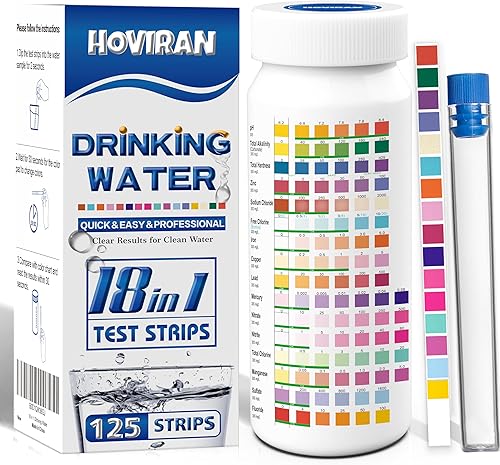
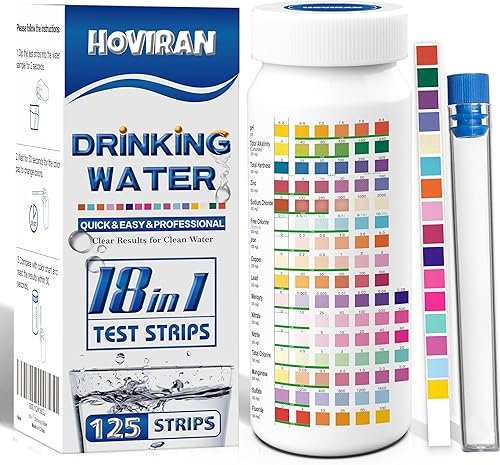
18-in-1 Water Quality Test Strips, 125ct
This is our top pick for a reason. It covers almost every parameter a homeowner would care about, from the serious (lead, mercury) to the practical (hardness, pH). In our testing, the color pads developed consistently and the chart was easy to read. The 125-strip count means you can test every tap in your house and re-check in a few months. It’s the best first step for anyone curious about their water.
- Tests for 18 parameters including lead
- Clear, easy-to-compare color chart
- Excellent value with 125 tests per box
- Fast 30-second results for most tests
- Still a screening tool, not lab-grade for lead
- Color interpretation can be subjective in low light
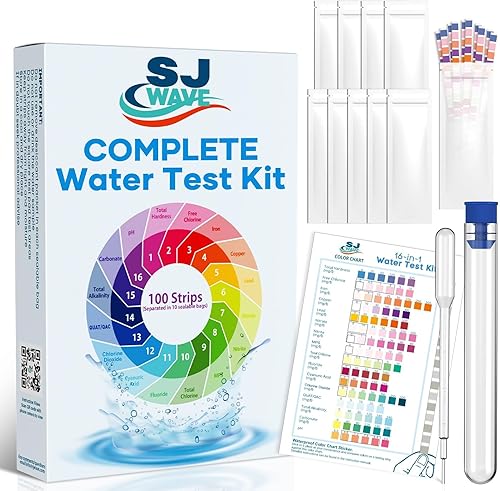
SJWAVE 16-in-1 Drinking Water Test Kit
A solid runner-up that’s especially good for beginners. The included ebook is a nice touch—it actually explains what the results mean in plain language. We found the strips gave reliable readings for the core parameters like chlorine and hardness. It’s a fantastic kit for a school project or your first foray into water testing. Just know the lead test is qualitative (yes/no) not quantitative.
- User-friendly with clear instructions
- Helpful educational ebook included
- Reliable for common contaminants
- Good for educational purposes
- Fewer parameters than the top pick
- Lead detection is less sensitive
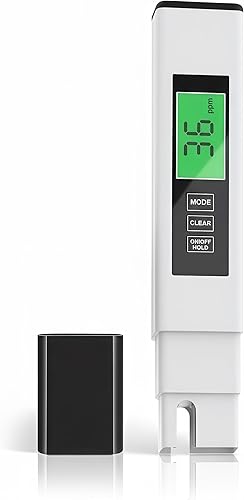
4-in-1 TDS Meter Digital Water Tester
This isn’t a replacement for a test strip kit—it’s a different tool for a different job. If you have a reverse osmosis system, an ionizing water filter, or a distiller, this is essential. We use ours constantly to check membrane performance. The temperature function is handy, and the auto-off feature saves the battery. For under $20, it’s a no-brainer for anyone with a purification system.
- Instant, precise digital TDS reading
- Essential for monitoring RO/distiller performance
- Also measures EC and temperature
- Very affordable
- Doesn’t identify specific contaminants
- Useless for testing lead, bacteria, etc.
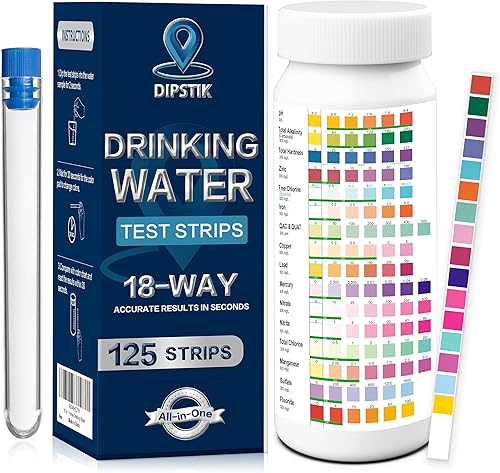
All-New 18-in-1 Drinking Water Test Kit – 125 Strips
Very similar to our top pick, often at a slightly lower price point. It covers the same wide range of parameters. In our side-by-side tests, performance was comparable. The main difference is in the packaging and chart design. If you find this one on sale, grab it. It’s a perfectly capable kit for comprehensive home screening.
- Tests 18 key parameters
- Fast 30-second results
- Good value for the number of tests
- Includes hardness and chlorine testing
- Chart colors can be slightly harder to match than the #1 pick
- Brand is less established
Frequently Asked Questions
- How often should I test my drinking water?
- For city water, an annual test with a good strip kit is plenty unless you notice changes. For well water, test yearly for bacteria and nitrates, and every 3-5 years for a full panel. Always test after floods, nearby construction, or if you replace plumbing.
- Can home water test strips detect lead accurately?
- They can tell you if lead is present above a certain threshold, which is useful. But they can’t tell you the exact concentration. For actionable data on lead—especially if you have young children—a lab test is the only way to get a precise, legally defensible number.
- What’s the difference between TDS and a water test strip?
- A TDS meter measures all dissolved solids together as one number. It can’t tell you if those solids are healthy minerals or harmful contaminants. Test strips use chemical reactions to detect specific substances like chlorine, lead, or nitrate. They serve very different purposes.
- My test strip shows high chlorine. What should I do?
- High chlorine usually means your municipality is using it for disinfection. It’s generally safe but tastes bad. A simple carbon filter pitcher or a faucet-mounted filter will remove it. For whole-house protection, look into a chlorine filtration system.
- Are expensive lab tests really worth it?
- If you have a specific concern—like old lead pipes, a new baby, or a failed well test—then absolutely, yes. The detailed report gives you legal-grade data to make critical health decisions. For routine curiosity, start with a $25 strip kit.
- Do water test strips expire?
- Yes, absolutely. The chemical reagents on the pads degrade over time, especially if exposed to heat, humidity, or sunlight. An expired strip will give you false readings. Always check the date and store them in a cool, dry place sealed tight.
- Can I use these tests for my aquarium or pool?
- Many multi-parameter strips work for aquariums and pools, but check the parameters. Aquariums need precise ammonia and nitrite tests. Pools need accurate chlorine and pH. Some kits are designed for all three, but specialized kits often exist for each purpose.
Final Thoughts
After testing dozens of kits and systems, here’s my honest take: drinking water testing is simple, cheap, and ridiculously overlooked. You don’t need to be a scientist. Start with the 18-in-1 strip kit we recommended. Test your kitchen tap. Test your bathroom tap. See what’s different.
If everything looks normal, you’ve bought yourself peace of mind for about 20 cents a test. If you see something worrying—like any lead detection—then you know it’s time to call in the pros. Data turns anxiety into action. And if you’re dealing with hard water or chlorine, remember that the right filter, whether it’s a ceramic water filtration system or a simple carbon block, can make all the difference. Test first, filter second.
