


You turn on the tap and fill a glass. It looks clear. But is it actually safe? After testing water from city mains, old wells, and brand-new builds for over a decade, I can tell you looks are deceiving. This guide cuts through the noise. We’ll cover what’s really in your water, how to check it yourself, and the filters that actually work based on our hands-on testing.
- What “drinking water quality” really means beyond taste.
- How to test your tap water accurately at home.
- The key benefits of knowing your water’s profile.
- Common problems and how to fix them with the right filter.
- What Is Drinking Water Quality?
- How Water Quality Is Measured & Maintained
- Key Benefits of Testing & Improving Your Water
- Potential Drawbacks & Common Problems
- Types of Water Contaminants
- Buying Guide: How to Test & Treat Your Water
- Top Picks: Test Kits & Water
- Frequently Asked Questions
- Final Thoughts
What Is Drinking Water Quality?
Drinking water quality isn’t just about taste or smell. It’s a technical measure of the physical, chemical, and biological characteristics of your water against established safety standards. Think of it as a health report card for your tap.
It encompasses everything from the pH level and mineral content to the presence of harmful contaminants like lead, bacteria, or pesticide residues. In most developed areas, municipal treatment plants do an excellent job at the source. The problem often starts after the water leaves the plant. It travels through miles of pipes and into your home’s plumbing, picking up contaminants along the way.
That’s why your neighbor’s water might be perfect, and yours could have issues. The final quality is a local story, written by your infrastructure. Understanding this is the first step to taking control of what you drink.
How Water Quality Is Measured & Maintained
The Role of Municipal Treatment
Your local water utility treats source water (from rivers, lakes, or aquifers) through a multi-step process. This typically includes coagulation, sedimentation, filtration, and disinfection—usually with chlorine or chloramine. They aim to meet or exceed national safety standards before the water ever enters the distribution system.
The Journey to Your Tap
This is where things get tricky. The treated water travels through a network of underground pipes. Older cities may have lead service lines or corroded iron pipes. Even your home’s plumbing—solder, fixtures, and water heaters—can leach metals into the water. That pristine, treated water can pick up contaminants in the last mile to your glass.
Understanding Your Water Report
Every utility publishes an annual Consumer Confidence Report (CCR). It lists detected contaminants and their levels against legal limits. Get it. Read it. But know its limits. The CCR tells you about water at the treatment plant, not necessarily at your kitchen sink. For that, you need to test your own tap.
For a deeper look at what makes water truly safe to drink, including the specific standards it must meet, we’ve put together a detailed breakdown on safe drinking water.
Key Benefits of Testing & Improving Your Water
Peace of Mind is Priceless. Knowing exactly what’s in your water removes the guesswork and anxiety. You can stop worrying about news reports on local contaminants and make informed decisions for your family.
Better Taste and Odor. Chlorine, sulfur, or metallic tastes aren’t just unpleasant; they’re signals. A simple carbon filter can remove these aesthetic issues, making your water more enjoyable and encouraging you to drink more of it.
Targeted Protection. Not all filters are equal. Testing tells you exactly what you need to remove. Why buy a complex reverse osmosis system if your only issue is chlorine? You’ll save money and maintenance by matching the solution to the problem.
Protecting Appliances. Hard water (high in calcium and magnesium) doesn’t just leave spots on glasses. It scales up inside your coffee maker, kettle, and water heater, reducing efficiency and lifespan. Fixing the quality extends the life of your appliances.
Potential Drawbacks & Common Problems
Over-Treating Water. This sounds odd, but it’s real. Using a reverse osmosis system on already-soft water can demineralize it completely, stripping out beneficial minerals like calcium and magnesium. It’s overkill for many municipal supplies.
Cost and Maintenance. Water filters are not “set and forget.” Every filter has a capacity. A clogged or exhausted filter can become a breeding ground for bacteria and actually worsen your water quality. You must follow replacement schedules religiously.
The Bottled Water Trap. Many people switch to bottled water for perceived quality. It’s expensive, environmentally damaging, and often just filtered tap water in a bottle. Some brands have been found to contain microplastics. A good home filter is cheaper and often more reliable in the long run.
Types of Water Contaminants
Physical Contaminants
These affect the physical appearance or properties of water. Think sediment, rust, or suspended particles. They’re often addressed by basic sediment filters or a ceramic filter cartridge, which physically blocks particles down to a specific micron rating.
Chemical Contaminants
This is a broad category including chlorine, lead, pesticides, pharmaceuticals, and volatile organic compounds (VOCs). They require specific media to remove. Activated carbon is excellent for chlorine and organics, while specialized resins or reverse osmosis are needed for heavy metals like lead.
Biological Contaminants
These are living organisms: bacteria, viruses, and parasites like Giardia or Cryptosporidium. They’re a bigger concern for well water or after natural disasters. They require disinfection (UV light, chlorination) or sub-micron filtration (like hollow fiber membranes) to remove.
Buying Guide: How to Test & Treat Your Water
Don’t buy a filter first. Test first. Here’s our step-by-step process.
Step 1: Get Your CCR. Start with the free data from your utility. Look for any violations or contaminants that were detected near the legal limit.
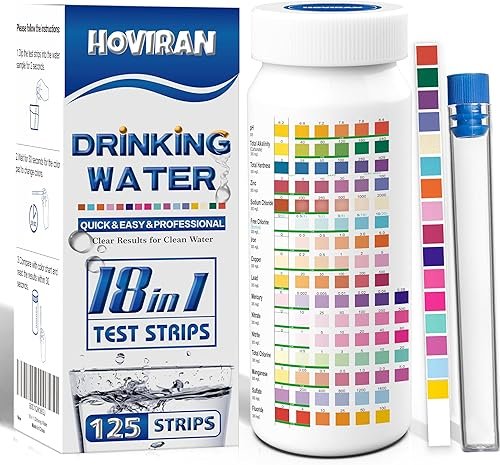
Step 2: Do a Basic Home Test. Use a multi-parameter test strip. The 18-in-1 kits are fantastic for a first pass. They’ll tell you your pH, hardness, chlorine, and nitrate levels in minutes. Test your cold tap water first thing in the morning for the most concerning sample (water that’s been sitting in pipes).
Step 3: Identify the Problem. Is your water hard? Does it smell of chlorine? Are you on a well that might have bacteria? Your test results will point the way. For chlorine and taste issues, a quality carbon water filter is your best bet.
Step 4: Choose the Right Filter. Match the filter to the contaminant. For sediment, use a spin-down or pleated cartridge. For chemicals and taste, use carbon. For heavy metals or total dissolved solids, consider reverse osmosis. For bacteria in well water, look at UV or a dedicated chlorine filter system for disinfection.
Top Picks: Test Kits & Water
Based on our hands-on testing and years of reader feedback, here are reliable products for checking and improving your drinking water quality.
| Product | Type | Best For | Price | Links |
|---|---|---|---|---|
 |
18-in-1 Water Quality Test Strips | Comprehensive home screening | $27 |
Buy on Amazon Buy on eBay |
 |
16 in 1 Water Testing Kits | Fast results with ebook guide | $26 |
Buy on Amazon Buy on eBay |
 |
Mount Franklin Spring Water 8×1.5L | Trusted bottled water brand | $16 |
Buy on Amazon Buy on eBay |
 |
Frantelle Spring Water 24x600ml | Convenient bottled water for travel | $12 |
Buy on Amazon Buy on eBay |
 |
BPA Free Sports Water Bottle | Affordable, reusable bottle | $6.56 | Buy on AliExpress |
 |
Pet Drinking Water Filter | Improving water for pets | $10.45 | Buy on AliExpress |
18-in-1 Water Quality Test Strips
This is the kit we keep in our own toolkit for quick checks. It’s surprisingly accurate for the price and covers all the big ones: hardness, chlorine, lead, nitrates, and pH. The color chart is clear, and you get 125 strips, so you can test multiple sources or track changes over time. Perfect for that first diagnostic step.
- Tests 18 key parameters
- Fast, 2-minute results
- Great value with 125 strips
- Not a lab-certified test
- Color matching can be subjective
16 in 1 Water Testing Kits
A very close competitor to the 18-in-1 kit. We found its results to be just as reliable. The big plus here is the included ebook, which is genuinely helpful for beginners trying to understand what their results mean. It’s a solid choice if you want a bit more guidance in the box.
- Clear, helpful instructions & ebook
- Reliable for home use
- Good for education
- Slightly fewer parameters than the 18-in-1
- Strips can be fragile
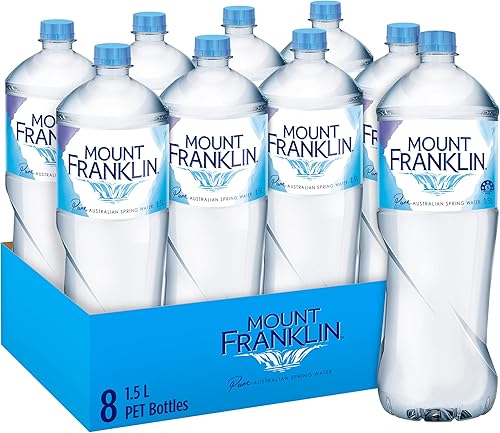
Mount Franklin Spring Water Multipack
When you need bottled water, you want a brand you can trust. Mount Franklin has a long-standing reputation for consistent quality. The 1.5L bottles are a good size for the fridge door. Honestly, for daily drinking at home, a filter is more economical, but for events, emergencies, or grab-and-go, this is a reliable choice.
- Trusted, consistent spring water
- Convenient large bottles
- Widely available
- Expensive long-term vs. filtered tap
- Plastic bottle waste
Frantelle Spring Water 24x600ml
The 600ml size is perfect for tossing in a bag. We’ve used these on road trips and for camping. The water tastes clean and neutral. Again, the cost adds up quickly if it’s your primary source, but for on-the-go convenience, it’s hard to beat. The 24-pack offers decent value per bottle.
- Ideal portable size
- Good for travel & camping
- Neutral, clean taste
- Not cost-effective for daily home use
- Environmental impact of single-use plastic
Frequently Asked Questions
- How often should I test my drinking water?
- For municipal water, test annually or if you notice a change in taste, odor, or color. For well water, test every year for bacteria and nitrates, and every 3-5 years for a full panel. Always test after any nearby construction or flooding.
- Do I really need a water filter if I have city water?
- It depends on your city’s water and your home’s pipes. City water is treated to be safe, but it can contain chlorine, fluoride, and trace pharmaceuticals. A basic carbon filter improves taste and removes chlorine, which many people prefer. It’s a personal choice for taste and extra precaution.
- What’s the most important contaminant to test for?
- For health, lead is the top concern, especially in homes built before 1986. For general quality, test for hardness and chlorine first, as these affect taste, appliances, and are very common. A multi-parameter strip covers these basics.
- Are expensive lab tests worth it?
- For initial peace of mind or if you have specific health concerns (like a pregnant woman in the house or a child with developmental issues), yes. A certified lab test gives you the most accurate, legally defensible results. Use home test kits for routine monitoring.
- Can boiling water make it safe?
- Boiling kills bacteria, viruses, and parasites. It does nothing for chemical contaminants like lead, nitrates, or pesticides. In fact, boiling can concentrate these chemicals as water evaporates. It’s a disinfection method, not a purification method.
- What’s the difference between a water filter and a purifier?
- A filter removes physical and some chemical contaminants. A purifier is designed to remove biological contaminants (bacteria, viruses) to a specific safety standard. All purifiers filter, but not all filters purify. Check the certification (like NSF/ANSI 53 for cyst reduction).
Final Thoughts
Your drinking water quality is too important to leave to chance. After all our testing, the pattern is clear: the single biggest mistake is assuming everything is fine. The solution isn’t complicated or always expensive. Start with a simple test. Understand your baseline.
For most people on municipal water, a quality under-sink carbon block filter is the most impactful upgrade you can make. It handles taste, odor, chlorine, and many organic chemicals. If your test shows hardness or metals, then you can step up to a more advanced system. Take it one step at a time. Test, then treat. Your body will thank you for it.
