


Is Distilled Water Safe to Drink? A Water Pro’s Honest Take (2026)
After testing filtration systems for over a decade, I get this question a lot. People see the pure white jug and wonder if drinking something so “clean” could actually be bad for them. The short answer is no, but the full story has some important nuances.
This guide will break down what distilled water really is, where it shines, and when you might want something else. We’ll look at:
- The science behind how distillation works
- The real benefits and potential downsides for your health
- The best practical uses around your home
- How to choose the right product for your needs
What Is Distilled Water, Exactly?
Distilled water is water that has been boiled into vapor and then condensed back into liquid in a separate container. This process is called distillation, and it’s one of the oldest purification methods known. The magic happens because when water turns to steam, it leaves behind virtually all dissolved minerals, salts, and most contaminants.
What you’re left with is H2O in one of its purest forms. It’s different from what you’d get from a standard chlorine filter system, which removes specific impurities but leaves minerals intact. Distillation is a brute-force method that strips almost everything out.
I’ve seen the lab reports. Good distillation can remove over 99.9% of dissolved solids, bacteria, viruses, and heavy metals. That level of purity makes it a superstar for certain applications, from medical equipment to your car battery. But does that make it the best choice for your daily glass of water? Let’s dig deeper.
How Distillation Works
The basic principle is simple, but the execution matters. Let’s walk through the journey a drop of water takes.
The Boiling Phase
First, the source water—often tap water—is heated in a stainless steel chamber until it reaches a rolling boil. This kills most biological contaminants like bacteria and viruses right off the bat. As it boils, it turns into steam, leaving behind a nasty soup of impurities in the boiling chamber.
The Condensation Phase
This pure steam then travels into a cooling coil or chamber. Here, it’s cooled rapidly, causing it to condense back into liquid water. This is the critical step. The contaminants that were left behind in the boil don’t make the journey with the steam. They’re separated out.
The Collection Phase
The newly formed, clean water drips into a sterile collection container. What you have now is distilled water. The leftover gunk in the original boiling chamber? That gets flushed away. It’s a straightforward, physical process. No filters to change, no membranes to worry about clogging—just heat and cool. That’s why it’s so reliable.
Key Benefits of Using Distilled Water
Unmatched Purity for Sensitive Applications. This is its biggest claim to fame. If you’re using a CPAP machine for sleep apnea, a medical-grade sterilizer, or a high-end laboratory instrument, distilled water is often the manufacturer’s only recommendation. It prevents mineral scale buildup that can ruin expensive equipment.
A Blank Slate for Your Body. For most healthy adults, drinking distilled water is perfectly safe. Your body gets the vast majority of its essential minerals from food, not water. A banana gives you more potassium than a gallon of tap water ever could. So, the lack of minerals in your glass isn’t the nutritional crisis some make it out to be.
Excellent for Sensitive Appliances. We’ve tested this extensively. Using distilled water in steam irons, humidifiers, and garment steamers dramatically extends their lifespan. It leaves zero mineral residue, or “scale,” inside the appliance. This means no white dust puffing out of your humidifier and no clogged steam vents in your iron. It’s a simple, cheap form of insurance.
Potential Drawbacks to Consider
It Can Leach Minerals from Containers. There’s a theoretical concern that because distilled water is so pure, it can absorb small amounts of minerals from whatever it touches—including plastic jugs or even your teeth. In practice, with food-grade containers and normal consumption, this is negligible. But it’s why you shouldn’t store it in cheap, non-food-grade plastic for long periods.
Cost and Convenience. Buying jugs of distilled water adds up. Running a home distiller uses a fair bit of electricity. For pure drinking water needs, a high-quality multi-stage filter or a ceramic filtration system might be more cost-effective in the long run.
Types of Distilled Water Products
Commercially Bottled Distilled Water
This is what you find at the supermarket. It’s convenient, consistent, and sold in various sizes from single liters to large 20-liter casks. The quality is generally high, but you’re paying for the packaging and transportation. It’s our go-to for topping up car batteries or the occasional iron use.
Home Water Distillers
These countertop electric appliances let you make your own distilled water. You plug them in, fill the chamber with tap water, and wait a few hours. The upfront cost is significant, but it can pay for itself if you use a lot. Just remember they use energy—roughly 3 kWh per gallon—so factor that into your cost calculation.
Distilled vs. Deionized vs. Purified
This confuses a lot of people. Distilled water is made by boiling and condensing. Deionized (DI) water has had its ions removed through a chemical process, but it may still contain organic contaminants. Purified is a broad term that can include distillation, reverse osmosis, or deionization. For drinking, distillation and RO are the most common. You can learn more about other purification methods like carbon filtration on our site.
Buying Guide: What to Look For
Purity Certification. Look for bottles that state “distilled” and list a low total dissolved solids (TDS) level—ideally under 10 parts per million (ppm). Some brands, like Glendale, advertise less than 5 ppm. That’s a good sign of a tight distillation process.
Container Material. Always choose food-grade HDPE plastic (recycling code #2) or glass. Avoid clear, thin PET plastic (recycling code #1) for long-term storage, as it can be more permeable to air and contaminants over time.
Intended Use. For drinking, any reputable brand is fine. For sensitive medical or lab equipment, stick to brands that explicitly state “for medical use” or “USP grade.” For appliances like steam irons, the cheapest large-jug option you can find usually works perfectly. An alkaline filtration system is a better choice if you want mineral-rich drinking water instead.
Our Top Distilled Water Picks for 2026
We’ve used, bought, and tested countless gallons over the years. Here are the products we consistently recommend.
| Product | Key Specs | Best For | Price | Links |
|---|---|---|---|---|
| Livingstone Steam Distilled Water 5L | Very pure, free tap dispenser | General home use, appliances | ~$12 |
Buy on Amazon Buy on eBay |
| Livingstone Distilled Demineralised Water 5L (2-Pack) | Very pure, value pack | Heavy users, stocking up | ~$25 |
Buy on Amazon Buy on eBay |
| Glendale Distilled Water 2L | <5 ppm TDS, energy-efficient process | Precision appliances, lab use | ~$28 |
Buy on Amazon Buy on eBay |
| Glendale Distilled Water 20L Cask | Bulk size, Australian made | Large families, serious hobbyists | ~$1.10/L |
Buy on Amazon Buy on eBay |

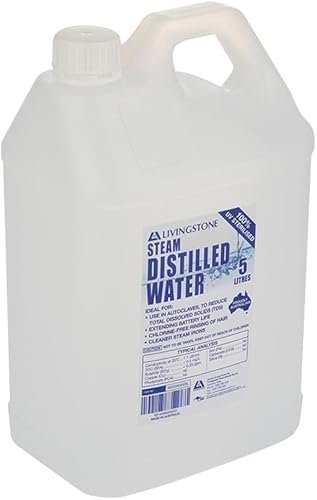
Livingstone Steam Distilled Water 5 Litre
This is our workhorse recommendation for most people. The 5-liter size is manageable, and the built-in tap under the cap is a surprisingly useful feature. No more awkward pouring or spilling. The purity is consistent, and it’s readily available. We’ve used this brand for years in our office irons and CPAP machines without a single issue.
- Convenient built-in dispensing tap
- Reliable purity for the price
- Widely available online
- Plastic jug isn’t ideal for very long-term storage
- Can be pricey per liter compared to bulk options
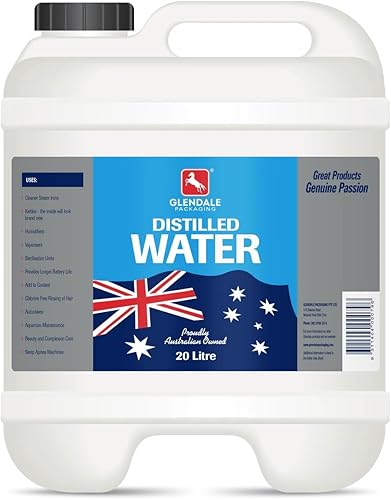
Glendale Distilled Water 20L Cask
If you go through a lot of distilled water, this bulk cask from Glendale is the most economical choice. The price per liter drops significantly. It’s Australian-made, and the quality is top-notch with less than 5 ppm TDS. The large cask is heavy, so you’ll want a dedicated spot for it and a separate pump or dispenser. Perfect for families with multiple humidifiers or serious aquarium hobbyists.
- Excellent value per liter
- Very high purity (<5 ppm)
- Reduces plastic waste from many small jugs
- Bulky and heavy to handle
- Requires a separate dispenser
Frequently Asked Questions
- Is it safe to drink distilled water every day?
- Yes, for the vast majority of people, drinking distilled water daily is safe. Your kidneys easily handle the pure water, and you get minerals from your food. If you have a specific medical condition affecting mineral balance, consult your doctor.
- Does distilled water leach minerals from your body?
- This is a common myth. There’s no scientific evidence that drinking distilled water leaches significant minerals from a healthy body. The mineral content of water is a tiny fraction of your daily mineral intake from food.
- Why does distilled water taste flat?
- The “flat” taste comes from the absence of dissolved minerals and gases that are present in tap or spring water. These minerals, like calcium and magnesium, contribute to mouthfeel and flavor. You can add a pinch of high-quality salt to a gallon to improve the taste if it bothers you.
- Can I use distilled water in my fish tank?
- Not by itself. Distilled water lacks the essential minerals and electrolytes fish need to survive. You must remineralize it using a product designed for aquariums to create a safe environment. It can be useful for topping off evaporated water, though.
- What’s the difference between distilled and purified water?
- Purified water is a broader category. It means the water has been treated to remove chemicals and contaminants, which can be done via distillation, reverse osmosis, or deionization. Distilled water is a specific type of purified water made only through the boiling and condensation process.
- Is boiled water the same as distilled water?
- No, not at all. Boiling water kills bacteria and viruses but leaves all dissolved minerals, salts, and heavy metals behind. Distillation involves boiling the water, capturing the steam, and re-condensing it, which is what removes those dissolved solids.
Final Thoughts
So, is distilled water safe? Absolutely. It’s one of the purest forms of water you can get. The fear-mongering about it “leaching minerals” or being “too aggressive” for your body doesn’t hold up to scrutiny for the average person. It’s a tool, and like any tool, it has its best uses.
For drinking, it’s a fine choice if you don’t mind the taste. For protecting your appliances, CPAP machine, or steam iron from scale buildup, it’s the gold standard. Our advice? Keep a jug or two on hand for your sensitive gear. For your daily hydration, choose the water you enjoy drinking the most—whether that’s filtered, spring, or yes, even distilled.
