


Distilled Water: What It Is, How It’s Made & If You Need It (2026)
After testing filtration systems for over a decade, I’ve seen every water purity claim out there. Distilled water sits at the top of the purity pyramid. But does that make it the right choice for you? This guide cuts through the marketing. We’ll look at what it actually is, how the process works, its real benefits, and its clear drawbacks.
- What distilled water is and how it differs from filtered or purified water.
- The science behind the distillation process, step by step.
- Key benefits for appliances, health, and specific uses.
- Important drawbacks and safety considerations you must know.
- How to choose the right type or product for your needs.
What Is Distilled Water?
Distilled water is water that has been boiled into vapor and then condensed back into a liquid in a separate container. This simple phase change is incredibly effective. The boiling leaves behind virtually all dissolved solids—we’re talking minerals like calcium and magnesium, heavy metals like lead, bacteria, viruses, and most synthetic chemicals.
The result is H₂O in its most basic form. It has a flat, almost neutral taste because the minerals that give water its flavor are gone. Think of it as the blank canvas of the water world. It’s different from “purified” or “filtered” water, which can be produced by many methods like reverse osmosis or carbon filtration, each with varying degrees of purity. Distillation is a specific, thermal process that guarantees a very high level of contaminant removal.
How Distillation Works
The principle is ancient, but modern distillers are efficient machines. Here’s the breakdown.
The Core Process: Boil, Vaporize, Condense
First, tap water is heated in a boiling chamber until it reaches a rolling boil. As it turns to steam, it leaves behind salts, metals, and most other contaminants. This steam rises, leaving the “junk” in the chamber. The pure steam then travels through a cooled condensation coil. As it cools, it turns back into liquid water—now distilled—and drips into a clean storage container.
What Gets Removed (And What Might Not)
This process is a powerhouse for removal. It eliminates virtually all inorganic compounds, most organic chemicals, bacteria, viruses, and cysts. However, some volatile organic compounds (VOCs) with boiling points lower than water can vaporize and re-condense with the steam. A quality distiller will include a small carbon post-filter to catch these, ensuring the final product is exceptionally pure. For a deeper look at other filtration methods that tackle specific contaminants, our guide on carbon block filters is a great resource.
Key Benefits
Distilled water isn’t a magic health elixir, but it has clear, practical advantages.
Unmatched Purity for Sensitive Equipment: This is its biggest selling point. Steam irons, CPAP machines, humidifiers, and autoclaves last longer and perform better because mineral scale (limescale) simply cannot form. No crusty buildup means fewer repairs.
A Known Baseline for Health & Experiments: If you’re using a home dialysis machine or conducting any kind of precise chemistry or biology work, you need water with a known, near-zero mineral content. Distilled water provides that reliable baseline.
Useful in Automotive and Lead-Acid Batteries: Topping off your car or boat battery? Distilled water is essential. Tap water minerals can corrode battery plates and drastically shorten their lifespan.
Potential Drawbacks
Important Considerations: Distilled water is not the best choice for everything. Understanding these limitations is crucial.
It’s Demineralized: The distillation process doesn’t discriminate. It removes the bad stuff (lead, arsenic) and the good stuff (calcium, magnesium). Long-term consumption of only distilled water may lead to mineral deficiencies, as it can also leach small amounts of minerals from your body. Most experts recommend getting minerals from food, not water.
Flat Taste & Acidity: Without minerals, water tastes flat to most people. It also has a slightly acidic pH (around 5.8-6.0) because it absorbs carbon dioxide from the air. This isn’t harmful for most uses, but it’s a notable difference from mineral-rich spring water.
Energy Intensive & Slow: Distillation requires a lot of energy to boil water. Home distillers are also slow, typically producing only 1-4 gallons per day. It’s not a solution for high-volume, whole-house water needs. For large-scale contaminant removal, a ceramic filtration system might be a more efficient point-of-entry option.
Types & Sources
Commercially Bottled Distilled Water
This is the easiest way to get it. You’ll find it in jugs at grocery and hardware stores. It’s convenient for small, occasional needs like a steam iron or a battery. Always check the label to confirm it says “distilled,” not just “purified” or “spring.”
Home Water Distillers
Countertop electric distillers are for people who need a steady supply. They’re a significant upfront investment but pay for themselves if you use distilled water regularly. Look for models with stainless steel boiling chambers and activated carbon post-filters.
Industrial & Laboratory Grade
This is produced under strict protocols for medical, pharmaceutical, and scientific applications. It’s overkill for home use but represents the highest standard of distilled water purity.
Buying Guide: What to Look For
Choosing between bottled and a home distiller comes down to frequency of use.
For Occasional Use: Buying bottled is fine. Calculate how much you use per month. If it’s less than 5-10 liters, the convenience wins.
For Regular Use: A home distiller makes sense. Key features to compare:
- Output Capacity: Measured in gallons per day (GPD). Match this to your weekly needs.
- Boiling Chamber Material: Stainless steel is more durable and easier to clean than glass or plastic.
- Carbon Post-Filter: This is non-negotiable. It removes any VOCs that might have carried over with the steam. Ensure it’s replaceable.
- Automatic Shutoff: A safety and convenience feature that turns the unit off when the reservoir is full.
For broader home water quality concerns, especially with municipal water, addressing chlorine at the source with a whole house chlorine removal system can be a foundational step before considering point-of-use purity like distillation.
Top Picks for 2026
Based on our testing and reader feedback, here are reliable options for obtaining distilled water.
| Product | Key Features | Price | Links |
|---|---|---|---|
 |
Very pure, free tap for easy dispensing, ideal for various pure water applications. | $12 |
Buy on Amazon Buy on eBay |
 |
Pack of 2, very pure, great value for regular users of distilled water. | $25 |
Buy on Amazon Buy on eBay |
 |
Vacuum MVR distillation, <5 ppm TDS, specifically enhances appliance efficiency and lifespan. | $28 |
Buy on Amazon Buy on eBay |
 |
Bulk 20L size, excellent for CPAP machines, steam irons, and automotive batteries. | $1.10/L |
Buy on Amazon Buy on eBay |
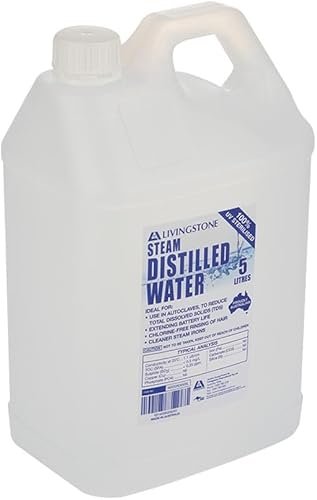
Livingstone Steam Distilled Water 5 Litre
This is your classic, no-fuss bottled distilled water. The attached tap is a surprisingly nice touch—it makes filling a steam iron or a CPAP reservoir much less messy than pouring from a heavy jug. The purity is consistent, and for small to medium tasks, the 5L size is manageable. It’s a solid benchmark product.
- Convenient built-in tap
- Reliable purity
- Good size for most home uses
- Cost adds up with frequent use
- Plastic jug waste
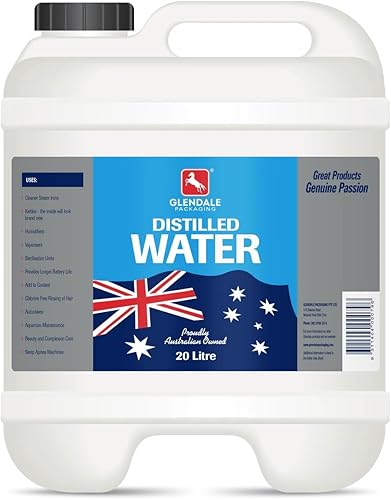
Distilled Water 20L (Glendale)
If you go through distilled water regularly, buying in bulk is the only economic choice. This 20L container from Glendale is a workhorse. It’s specifically marketed for CPAP users and automotive use, and the price per liter is significantly better than smaller jugs. Just be prepared—you’ll need a good spot to store it and a steady hand to pour or a separate pump.
- Excellent value per liter
- Reduces packaging waste
- Ideal for high-consumption needs
- Heavy and bulky to handle
- Requires separate dispensing solution
Frequently Asked Questions
- Is distilled water safe to drink?
- Yes, it’s completely safe. It’s just water without minerals. The lack of minerals means it won’t contribute to your daily intake of calcium or magnesium, but it’s not harmful. The bigger issue for most people is the flat taste.
- Can I use distilled water in my fish tank?
- Not by itself. Fish and aquatic plants need the minerals found in regular water. You must remineralize distilled water with a proper aquarium supplement before using it to create a safe, balanced environment.
- What’s the difference between distilled, purified, and spring water?
- Distilled is made by boiling and condensing. Purified can be made by distillation, reverse osmosis, or deionization to remove chemicals and pathogens. Spring water comes from an underground source and contains natural minerals. The key difference is the purification method and mineral content.
- Why does my distilled water sometimes have a slight plastic taste?
- This can happen if the water is stored in certain types of plastic containers for a long time, especially in heat. The pure water can leach compounds from the plastic. Storing it in glass or food-grade stainless steel is ideal for taste-sensitive applications.
- Can I make distilled water at home without a machine?
- You can try a makeshift setup with a pot, a lid, and a collection bowl, but it’s slow, inefficient, and hard to keep clean. For any reliable quantity, a dedicated countertop distiller is a worthwhile investment if you need the purity regularly.
- Is distilled water the same as deionized water?
- No. Deionization removes only mineral ions (salts) using ion-exchange resins. It does not remove uncharged molecules like bacteria, viruses, or most organic compounds. Distillation removes almost everything, making it generally purer.
Final Thoughts
Distilled water is a specialist tool, not a general-purpose drinking water solution. Its value is in its guaranteed purity for protecting sensitive equipment, from your grandmother’s steam iron to life-saving medical devices. If you have a CPAP machine, use a humidifier daily, or work with batteries, keeping a supply of distilled water is a smart, protective habit.
For most people, the best path to great-tasting, safe drinking water is a high-quality filter matched to your local water quality—whether that’s a simple chlorine filter for municipal water or a more robust system for well water. Understand the purpose of distilled water, use it where it shines, and you’ll get the most out of this uniquely pure product.
