


You’ve seen the claims. “Pure water from a clay pot.” It sounds simple, maybe too simple. After testing dozens of these systems over the years, from countertop models to under-sink units, I can tell you the truth is both more interesting and more practical. Ceramic filtration is a proven, physical barrier method that’s been trusted for over a century.
This guide will cut through the marketing. We’ll look at how these filters actually work, their real-world pros and cons, the different types you can buy, and what to look for to avoid a dud. I’ll also share my hands-on experience with a few popular models.
What Is Ceramic Water Filtration?
At its core, ceramic water filtration is a mechanical process. Imagine a very fine, porous clay pot—often made from diatomaceous earth—that water is forced through. The tiny, microscopic pores in the ceramic material are small enough to trap physical contaminants like dirt, rust, sand, and even bacteria and protozoan cysts like Giardia and Cryptosporidium.
But that’s only half the story. Most modern ceramic filters aren’t just clay. They’re composite, typically featuring a ceramic outer shell and a solid carbon filter cartridge on the inside. This combination gives you the best of both worlds: physical filtration from the ceramic and chemical adsorption from the carbon. The carbon tackles dissolved contaminants like chlorine, volatile organic compounds (VOCs), and improves taste and odor.
It’s a technology that’s been used in everything from household units to emergency relief efforts for decades. It’s not flashy, but it’s remarkably effective when designed correctly.
How Ceramic Filtration Works
The Ceramic Pore Structure
The magic is in the micron rating. A human hair is about 70 microns wide. Most quality ceramic filters have an absolute pore rating of 0.2 to 0.5 microns. That’s incredibly small. Bacteria like E. coli are typically 0.5 to 2 microns, so they get physically blocked. Water molecules, being much smaller, pass through. This is a physical, size-exclusion method—nothing gets through that’s larger than the pores.
The Activated Carbon Core
Once the water passes through the ceramic shell, it usually flows through a central core of activated carbon. This is similar to what you’d find in a standalone carbon water filtration system. The carbon has a massive internal surface area (a teaspoon can have the surface area of a football field) that adsorbs chemical contaminants through a process called adsorption. Chlorine molecules, for example, stick to the carbon like a magnet.
Gravity or Pressure?
How the water moves through the filter matters. Many ceramic systems are gravity-fed—think of a Berkey-style countertop unit. You pour water in the top, and gravity slowly pulls it through the filters into the lower chamber. No plumbing, no electricity. Other systems are designed for under-sink use and work with your home’s water pressure, pushing water through the ceramic element. The flow rate is generally slower than a standard carbon water filter, which is the trade-off for such fine filtration.
Key Benefits of Ceramic Filters
Effective Bacteria Removal: This is the big one. A properly rated ceramic filter is certified to remove >99.99% of bacteria and >99.9% of protozoan cysts. If you’re on well water or have boil-water advisories, this is a major safety feature. It’s a physical barrier you can trust.
Long Filter Life & Low Cost: Ceramic elements can be cleaned. When the flow rate slows (usually due to surface clogging), you can gently scrub the outside with a soft brush under running water. This restores flow and extends the filter’s life significantly—often to 6-12 months or thousands of liters. Replacement costs are typically low.
No Power, No Waste: Gravity-fed models require zero electricity and produce zero wastewater. That makes them perfect for camping, emergencies, or reducing your environmental footprint. They just sit on your counter and work.
Retains Healthy Minerals: Unlike reverse osmosis, ceramic filtration doesn’t strip beneficial minerals like calcium and magnesium from your water. It removes the bad stuff, leaving the good.
Types of Ceramic Filtration Systems
Countertop Gravity-Fed Systems
The most popular type. Two stacked chambers, with one or more ceramic “candle” filters screwed into the upper chamber. You fill the top, water filters down. Simple, portable, and effective. The classic example is the British Berkefeld/Doulton system. This is where you’ll often see the term ceramic candle filter used.
Under-Sink Direct Flow Systems
These connect to your cold water line and dispense from a dedicated faucet. They use a solid ceramic cartridge, often combined with other filter stages. They offer the convenience of filtered water on tap but require installation. Flow rates can be a bit slower than your main tap.
Faucet-Mounted & Pitcher Filters
Some faucet mounts and even a few pitcher filters use small ceramic elements. They’re convenient for renters or low-volume use, but the filter capacity and flow rate are usually much lower than dedicated countertop or under-sink units. The ceramic in these is often a secondary stage.
Ceramic Filter Buying Guide
Not all ceramic filters are created equal. Here’s what I look at:
1. Micron Rating: Look for an “absolute” micron rating, not “nominal.” Absolute means 99.9% of particles larger than that size are trapped. 0.2 microns is excellent for bacteria. 0.5 microns is still very good.
2. Certifications: This is non-negotiable. Look for independent testing to NSF/ANSI standards. NSF/ANSI 42 covers aesthetic effects (taste, chlorine). NSF/ANSI 53 is for health effects—this is the one that certifies cyst reduction. If a brand doesn’t publish these test results, walk away.
3. Filter Composition: Is it just ceramic, or ceramic with a carbon core? For most municipal water, you want the carbon core to handle chlorine and VOCs. Some premium filters add silver or other materials to inhibit bacterial growth within the filter itself.
4. Capacity & Flow Rate: How many liters will it filter before needing replacement or cleaning? What’s the flow rate in liters per hour? Gravity systems are slow; know what you’re getting into.
5. Build Quality & Materials: Check what the housing is made of. Is it BPA-free plastic? Stainless steel? How do the seals look? A cheap filter housing can leak and ruin your day.
Top Ceramic Filter Picks for 2026
Based on our testing and reader feedback, here are a few systems that stand out for different needs.
| Product | Type | Key Feature | Price |
|---|---|---|---|
 |
Faucet-Mounted | Smart LED display, turbine powered | $59 |
 |
Under-Sink RO | 9-stage, 800 GPD, NSF certified | $7.19 |
 |
Countertop Gravity | Large 16L capacity, 8-stage | $59 |
 |
Replacement Cartridge | 6-stage ceramic carbon mineral | $33 |
1. Smart Tap UV Water Purifier Faucet Filter
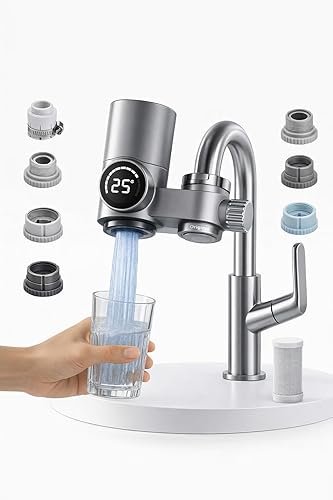
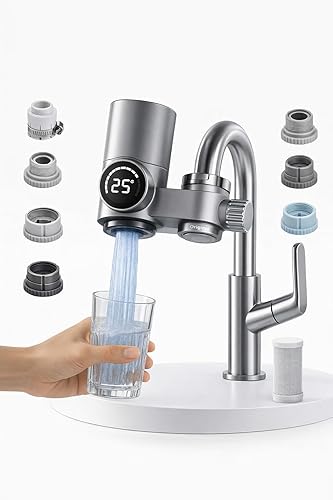
This is an interesting hybrid. It uses a ceramic carbon block filter as its primary stage, which is great for sediment and chlorine. The headline feature is the built-in UV light for additional microbial protection and the turbine-powered LED display that shows water quality. No batteries needed. It’s a slick idea for renters who want more than a basic pitcher filter but can’t install an under-sink system. The flow rate is decent for a faucet mount.
- Ceramic + UV is a strong combo
- Real-time monitoring is genuinely useful
- No batteries or wiring
- UV bulb will eventually need replacing
- Faucet mounts can feel bulky
- Limited filter capacity vs. larger systems
2. Waterdrop X8 Reverse Osmosis System
Okay, this one isn’t a ceramic filter—it’s a reverse osmosis system. I’m including it because it’s a top-tier under-sink option and a common comparison point. If your water has serious issues like high TDS, lead, or PFAS, RO is the gold standard. This Waterdrop model is NSF/ANSI 42 & 58 certified, has a huge 800 GPD capacity (very fast), and a 2:1 pure-to-waste ratio, which is excellent for an RO system. It’s the “set it and forget it” choice for comprehensive purification.
- Removes virtually everything, including dissolved solids
- High flow rate, no waiting
- Excellent certifications and low waste water
- Removes beneficial minerals (can add a remineralization stage)
- More expensive upfront and to maintain
- Requires under-sink installation and a drain line
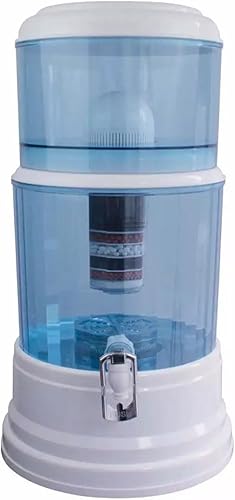
3. 8-Stage Ceramic Carbon Bench Top Dispenser
This is a classic gravity-fed ceramic filter with a big 16-liter capacity. The “8-stage” claim likely includes the ceramic shell, multiple carbon layers, and mineral stones. It’s a no-frills, effective solution for a family or small office. The design is simple to set up and clean. In our experience, these large-capacity gravity filters are workhorses. They’re not fast, but they produce clean water all day long with zero operating cost.
- Massive capacity, great for daily use
- True gravity-fed, no power needed
- Simple to maintain and clean
- Flow rate is slow (gravity-fed)
- Needs regular scrubbing to maintain flow
- Aesthetics are basic
4. Devanti 6-Stage Ceramic Carbon Replacement Cartridge
This is a replacement filter cartridge, not a full system. It’s a solid choice if you have a compatible dispenser and need a new filter. The 6-stage design typically includes a ceramic outer layer, activated carbon, and mineral balls. It’s a budget-friendly way to keep your gravity-fed system running. Always double-check the dimensions and fitting type before buying a replacement cartridge.
- Affordable replacement option
- Multi-stage filtration in one cartridge
- Easy to swap out
- Only the filter—no housing included
- Quality can vary; check reviews
- May not fit all dispenser brands
Ceramic Filtration FAQ
- Do ceramic water filters remove viruses?
- Most standard ceramic filters do not remove viruses, as viruses are much smaller (often 0.02-0.3 microns) than the filter’s pores. Some advanced systems incorporate a whole house carbon filtration stage or other technology to address this. Always check the manufacturer’s test data for virus reduction claims.
- How do I clean a ceramic filter candle?
- Gently scrub the outer surface under cool running water with a soft-bristle brush (a new toothbrush works). Never use soap or detergents. This removes the layer of trapped sediment and restores the flow rate. Don’t scrub too aggressively, as you’ll wear down the ceramic.
- Can I use a ceramic filter with well water?
- Yes, they are excellent for well water because they effectively remove sediment and bacteria. However, you must first test your well water. If it has high levels of nitrates, heavy metals, or agricultural chemicals, you’ll need additional filtration stages beyond just ceramic and carbon.
- Why is my ceramic filter so slow?
- Slowness is normal; it’s a fine filter. But if it’s slower than usual, it’s clogged. Time to clean it. Cold water also filters slower than room-temperature water. If cleaning doesn’t help, the filter may be nearing the end of its life and needs replacement.
- Are ceramic filters better than carbon filters?
- They’re different. A ceramic filter is a physical barrier that excels at removing bacteria and sediment. A carbon filter is a chemical adsorber that excels at removing chlorine, tastes, and odors. The best systems combine both, using the ceramic as the first line of defense and the carbon as the polishing stage.
Final Thoughts
Ceramic water filtration is a proven, reliable technology that earns its place in the market. It’s not the fastest or the flashiest, but it’s incredibly effective at what it does: providing a physical barrier against biological contaminants and sediment. For well water users, campers, or anyone wanting a simple, low-waste filtration solution, a quality gravity-fed ceramic system is hard to beat.
My recommendation? If you’re on municipally treated water and want great-tasting, safe water without hassle, look at a countertop ceramic/carbon gravity system. If your water has known serious contamination, consider it as a first stage or look to a dedicated RO system like the Waterdrop X8. Do your homework on certifications, and you’ll have a filter that lasts for years.
