


Let’s cut through the noise. You’ve heard carbon filters are good, but maybe you’re not sure why, or if one will actually solve your water woes. After testing dozens of systems and seeing what works (and what fails) in real homes, I’ll give you the straight facts. This guide covers what carbon filtration really is, how it works, its real-world benefits and limits, the different types you’ll encounter, and how to pick the right one for your kitchen.
What Is Carbon Water Filtration?
At its core, carbon water filtration is a purification method that uses activated carbon—typically from coconut shells, wood, or coal—to remove impurities from water. The “activated” part is key. It means the carbon has been processed to create millions of tiny pores between its atoms, massively increasing its surface area. A single gram can have the surface area of a football field.
This vast, porous surface acts like a sponge for certain contaminants. Through a process called adsorption (not absorption), impurities stick to the carbon’s surface as water passes through. It’s one of the oldest and most reliable filtration methods out there. You’ll find it in everything from simple pitcher filters to complex whole-house systems. For a deeper dive into the mechanics, our guide on carbon water filter technology is a great next read.
How Carbon Water Filtration Works
It’s not magic, but it is clever chemistry. Understanding the process helps you choose and maintain your system properly.
The Adsorption Process
Think of activated carbon like a sticky, porous magnet for certain chemicals. As water flows through the filter, organic compounds, chlorine, and other molecules are drawn to and trapped in the carbon’s vast network of pores. The water molecules themselves slip right through. The effectiveness depends on the carbon’s quality, the flow rate, and the contact time between the water and the carbon.
What It Targets (And What It Doesn’t)
Carbon excels at removing chlorine, which fixes that nasty pool-water taste and smell. It’s also very effective against many volatile organic compounds (VOCs), some pesticides, and herbicides. However, it’s a poor choice for removing dissolved inorganic contaminants like arsenic, fluoride, nitrates, or heavy metals like lead and copper. It also won’t touch bacteria, viruses, or hardness minerals. For those, you’d need a different technology or a combination system.
Key Benefits of Using a Carbon Filter
Dramatically Better Taste and Odor. This is the number one reason people buy them. By stripping out chlorine and other volatile compounds, carbon filters deliver crisp, clean-tasting water straight from the tap. No more bottled water needed.
Removes Specific Chemical Contaminants. A good carbon removal filter, especially a quality carbon block, can reduce a range of harmful chemicals like certain VOCs and disinfection byproducts (DBPs) that form when chlorine reacts with organic matter in water.
Cost-Effective and Low Maintenance. Compared to reverse osmosis or distillation, carbon filtration is cheap to buy and operate. Replacement filters are affordable, and there’s no wasted water or electricity required for most systems.
Preserves Beneficial Minerals. Unlike RO systems that strip everything out, carbon filters leave healthy minerals like calcium and magnesium in your water. If you’re interested in systems that add minerals, look into an alkaline filtration system.
Potential Drawbacks & Limitations
Doesn’t Remove Everything. As mentioned, dissolved minerals, heavy metals, fluoride, and microorganisms pass right through. If your water has lead pipes or high nitrates, a carbon filter alone is insufficient.
Can Become a Breeding Ground. A saturated or old filter can harbor bacteria. This is why changing the filter on schedule is non-negotiable. The trapped contaminants become food for microbes over time.
“Channeling” Reduces Effectiveness. In granular activated carbon (GAC) filters, water can carve paths of least resistance through the carbon bed, reducing contact time and letting contaminants slip through. A carbon block filter is denser and generally avoids this problem.
Types of Carbon Filtration Systems
Granular Activated Carbon (GAC)
Loose carbon granules in a cartridge or bed. Common in pitcher filters, fridge filters, and some countertop units. Good for taste and odor, but prone to channeling. Lower cost upfront.
Carbon Block
Finely ground carbon compressed into a solid block. This creates a denser, more effective filter with a longer contact time. It can also physically trap sediment down to its micron rating (e.g., 1 or 5 microns). Our top pick for under-sink use.
Catalytic Carbon
A specially treated carbon that’s enhanced to target chloramines (a combination of chlorine and ammonia used by many utilities) and hydrogen sulfide (rotten egg smell). It’s more expensive but necessary if your water uses chloramines.
Whole-House Systems
These are large tanks installed at your main water line, treating every tap in your home. They’re great for protecting appliances and providing clean water for showers. For more on this, see our complete guide to whole house carbon filtration.
Buying Guide: How to Choose
Forget brand hype. Focus on these four things.
1. Know Your Water. Get a copy of your local water quality report (or a home test kit). Is chlorine your main issue? Or are you worried about specific VOCs? Your filter must match your contaminants.
2. Check Certifications. Look for NSF/ANSI 42 (aesthetic) and 53 (health) certifications on the product listing. This is your best proof of performance claims.
3. Consider Micron Rating. This indicates the smallest particle size the filter can catch. A 5-micron carbon block is a good all-rounder. A 1-micron filter offers finer sediment removal but may clog faster.
4. Calculate Cost Per Gallon. Don’t just look at the upfront price. Divide the filter’s cost by its rated capacity (in gallons or liters) to see the true long-term cost. A cheap filter that needs changing every month isn’t a bargain.
Top Carbon Filter Picks for 2026
Based on our testing and reader feedback, here are solid options across different use cases.
| Product | Type | Best For | Price |
|---|---|---|---|
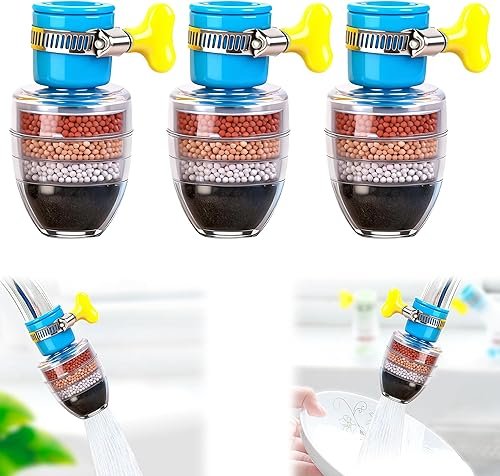
| 2025 New Magic Charcoal Water Filter | Faucet-mount (GAC + Maifan Stone) | Budget-friendly taste upgrade | ~$21 |
| Devanti 6-Stage Filter Cartridge | Replacement cartridge (Ceramic + Carbon + Mineral) | Water cooler/dispenser owners | ~$33 |
| LifeStraw Home Replacement Filters | Pitcher/dispenser (Activated Carbon + Ion Exchange) | LifeStraw pitcher owners | ~$56 |
| Waterdrop X8 RO System | Under-sink (RO + Carbon stages) | Maximum contaminant removal | ~$719 |

1. 2025 New Magic Charcoal Water Filter (Faucet Mount)
This is a super-basic, ultra-low-cost entry point. It attaches to your faucet and combines activated carbon with Maifan stone (which claims to add minerals). In our experience, it will improve the taste of heavily chlorinated water. But manage your expectations. The filtration is not certified to strict standards, and the “6-layer” claim is marketing fluff. It’s a $21 taste fix, not a health filter.
- Extremely affordable
- 360-degree rotating head
- Easy, tool-free installation
- No NSF certification listed
- Filter life is very short
- Won’t remove heavy metals or microbes

2. Devanti 6-Stage Replacement Filter Cartridge
If you own a Devanti or compatible water cooler/dispenser, this is your replacement. The “6-stage” includes a ceramic pre-filter, carbon, and mineral stones. It’s a decent all-in-one cartridge for the price. It will improve taste and reduce some sediment. Just don’t expect it to perform like a dedicated, certified under-sink system. It’s a maintenance item for a specific appliance.
- Multi-stage filtration in one cartridge
- Adds minerals back
- Direct replacement for Devanti units
- Only for specific dispenser models
- Performance claims are vague
- Limited independent testing data

3. LifeStraw Home Activated Carbon + Ion Exchange Filters
These are the official replacement filters for the LifeStraw Home pitchers and dispensers. LifeStraw is a trusted brand in water safety. The combination of activated carbon and ion exchange resin does a solid job on taste, odor, and reducing some heavy metals like lead and mercury. A reliable choice if you’re already in their ecosystem. The main drawback is the ongoing cost of proprietary filters.
- Trusted brand with good testing
- Improves taste and reduces some metals
- Easy swap for LifeStraw owners
- Proprietary—only fits LifeStraw products
- Higher long-term cost
- Pitcher filters are slower than faucet/under-sink

4. Waterdrop X8 Reverse Osmosis System (with Carbon Stages)
This is the heavyweight. It’s primarily a 9-stage reverse osmosis system, but it includes crucial carbon pre-filters and a post-carbon filter. The carbon stages remove chlorine to protect the RO membrane and polish the taste of the final water. If you want to remove virtually everything—PFAS, lead, TDS, fluoride—this is the type of system you need. The 800 GPD flow rate is excellent for a household. It’s a big investment, but it’s the real deal for comprehensive purification.
- NSF/ANSI 42, 58, & 372 certified
- High 800 GPD flow rate
- Low 2:1 drain ratio saves water
- Removes a vast range of contaminants
- High upfront cost
- Requires under-sink installation
- Removes beneficial minerals (remineralization stage optional)
Frequently Asked Questions
- How often should I replace my carbon filter?
- It depends on the filter’s capacity and your water usage. Most under-sink carbon blocks last 6-12 months or 1,000-2,000 gallons. Pitcher filters often need changing every 2 months. Always follow the manufacturer’s schedule—a saturated filter stops working and can release trapped contaminants.
- Can a carbon filter remove lead?
- Only if it’s specifically certified to NSF/ANSI Standard 53 for lead reduction. Many basic carbon filters are not. A standard GAC pitcher will not remove lead. You need a dedicated carbon block or, better yet, an RO system for reliable lead removal.
- What’s the difference between a carbon block and GAC filter?
- Granular Activated Carbon (GAC) is loose granules. Carbon Block is finely ground carbon compressed into a solid, dense block. Carbon blocks typically offer better contaminant reduction, longer contact time, and can also trap sediment. GAC is cheaper but can develop “channeling” where water bypasses the carbon.
- Do carbon filters remove PFAS (forever chemicals)?
- Some high-quality carbon block filters and, more reliably, reverse osmosis systems can reduce certain PFAS like PFOA and PFOS. Look for specific testing data or certifications for PFAS reduction. It’s a complex issue, and not all carbon filters are effective.
- Is a carbon filter enough for well water?
- It depends entirely on what’s in your well water. Carbon is great for odors (like hydrogen sulfide) and some organic chemicals. But well water often has bacteria, nitrates, heavy metals, or hardness that require different treatments like UV, RO, or water softeners. Always test your well water first.
- Why does my water taste bad after changing the carbon filter?
- A slight carbon taste or black flecks are normal for the first few gallons—just flush the system as instructed. If the bad taste persists, you may have a defective filter, incorrect installation, or a contaminant in your water that carbon doesn’t address.
Final Thoughts
Carbon water filtration is a workhorse technology. For most people on municipal water, a quality ionizing water filter or a simple carbon block under the sink is the sweet spot for improving taste and safety without breaking the bank. It’s not about buying the most expensive system; it’s about buying the right one for your water.
Our clear recommendation for most households is a certified carbon block filter for your primary drinking water tap. It offers the best balance of performance, cost, and reliability. If your water report shows more serious contaminants, step up to a combination system like an RO unit with carbon stages. Start with your water report, match the technology, and you can’t go wrong.
