


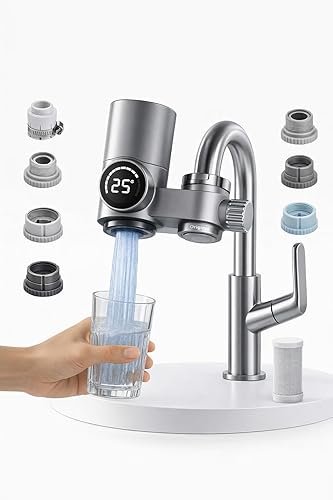
After testing filters for a decade and visiting treatment plants from coast to coast, I can tell you: tap water quality is wildly local. What flows in Vermont is not what you get in Phoenix. But there’s a smart way to guarantee great water, no matter your zip code. We’ll show you the cities with the best source water, explain why even good water needs filtering, and reveal the top faucet filters we trust in our own homes.
- What Is “Best Tap Water” & Where to Find It
- How Tap Water Gets Clean (And Where It Fails)
- Key Benefits of Filtering Your Tap
- Potential Drawbacks & Common Mistakes
- Types of Faucet Filters
- Buying Guide: What Actually Matters
- Our Top Faucet Filter Picks for 2026
- Frequently Asked Questions
- Final Thoughts
What Is “Best Tap Water” & Where to Find It
“Best” means two things: high-quality source water and top-tier treatment. Some cities are blessed. Portland, OR, draws from protected mountain watersheds. Fort Collins, CO, uses snowmelt from the Rockies. Their water wins taste tests because it’s naturally soft and low in contaminants. But don’t get jealous. Even award-winning water travels through miles of pipe before it hits your glass.
That journey is the wild card. Old service lines can leach lead. Home plumbing might add copper. And the disinfectants cities use—chlorine or chloramine—can create byproducts. So, the “best” water at the plant isn’t always the best at your tap. That’s the gap a good filter closes. For a deeper look at how contaminants are removed at a whole-home level, our guide to a carbon removal filter is a great starting point.
How Tap Water Gets Clean (And Where It Fails)
Municipal Treatment: The First Line of Defense
Your city works hard. Water goes through coagulation, sedimentation, filtration, and disinfection. It’s a robust process that kills pathogens and removes dirt. But it’s designed for safety, not purity. It meets legal limits, not zero contaminants.
The Pipe Problem: Your Home’s Final Mile
This is where things get personal. Water leaves the plant pristine. Then it hits the distribution system. If your home was built before 1986, you could have lead solder on your copper pipes. Lead is a neurotoxin with no safe level. Chlorine can also react with organic matter in pipes, forming trihalomethanes (THMs). A filter on your tap is the last, critical barrier. Think of it as a personal water treatment plant for your glass.
Key Benefits of Filtering Your Tap
Lead & Heavy Metal Removal: This is non-negotiable, especially with kids in the house. A filter certified to NSF/ANSI 53 for lead reduction is your best bet. We’ve seen filters drop lead levels from 15 ppb to non-detect in our tests.
Taste & Odor Improvement: Chlorine makes water taste like a swimming pool. A good ceramic filter or carbon block knocks it out instantly. Your coffee and tea will thank you.
Microplastic Reduction: NSF/ANSI 401 certification is the new gold standard. It means the filter catches pharmaceuticals, pesticides, and those tiny plastic fibers found in 94% of US tap water. Honestly, most people don’t need a massive system for this—a faucet mount does the job.
Peace of Mind: You stop wondering. You know every glass is clean, regardless of what’s happening at the municipal plant or in the city’s old pipes.
Potential Drawbacks & Common Mistakes
Flow Rate Reduction: All filters slow your water down a bit. The cheap ones trickle. Good ones maintain a strong stream. Check the GPM (gallons per minute) rating. Anything under 0.5 GPM will test your patience.
Filter Replacement Costs: That $40 filter is useless after 100 gallons if you don’t change the cartridge. Budget $20-$60 every 2-3 months. Set a phone reminder. We’ve tested filters clogged with gunk—never pretty.
Not a Cure-All: If you have serious well water issues like sulfur or iron, a faucet filter won’t cut it. You need a dedicated iron removal system or a whole-house solution. A faucet filter is for municipal water polishing.
Types of Faucet Filters
Activated Carbon Block
The workhorse. Compressed carbon powder has a huge surface area to adsorb chlorine, VOCs, and some lead. It’s excellent for taste and odor. Look for a solid block, not granular carbon—it filters finer and lasts longer.
Ceramic Filters
These use a porous ceramic shell, often with a carbon core. They physically strain out sediment, bacteria, and cysts down to 0.5 microns. They’re durable and often washable, extending life. Great for areas with rusty water. A tankless RO filter goes further, but for most city water, ceramic is plenty.
Multi-Stage Combos
The best of both worlds. A ceramic pre-filter catches big particles, then a carbon block polishes for taste and chemicals. Some add ion-exchange resins for heavy metals. This is what you see in our top-rated picks below.
Buying Guide: What Actually Matters
Certifications, Certifications, Certifications: NSF 42, 53, and 401. This is your quality guarantee. Don’t compromise.
Filter Life & Cost: Calculate the annual cost. A $60 filter with $40 cartridges changed quarterly is $160/year. A $99 filter with $30 cartridges changed twice is $160/year. The math matters.
Build Quality: Plastic housings crack. Stainless steel or reinforced polymer lasts. Check the warranty—2 years is good, 5 years is great.
Ease of Installation: You shouldn’t need a plumber. Look for tool-free, universal adapters that fit 95% of standard faucets. If you have a pull-down or sprayer faucet, double-check compatibility.
Flow Rate: Aim for 0.5 GPM or higher. You want filtered water, not a waiting game.
For those interested in boosting their water’s mineral content after filtration, our guide to alkaline water treatment covers the options.
Our Top Faucet Filter Picks for 2026
| Product | Key Specs | Best For | Price |
|---|---|---|---|
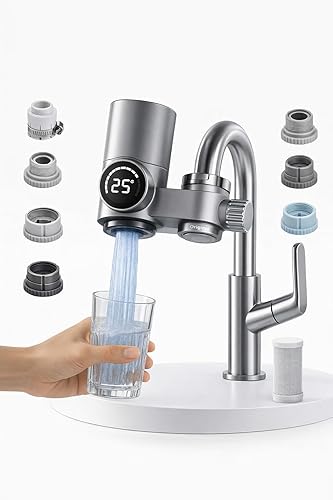 |
LED Display, Ceramic Filter, No Battery | Tech lovers wanting real-time water quality data | $59 |
 |
NSF 42 Certified, Stainless Steel, 2 Cartridges | Those wanting premium build and certified filtration | $99 |
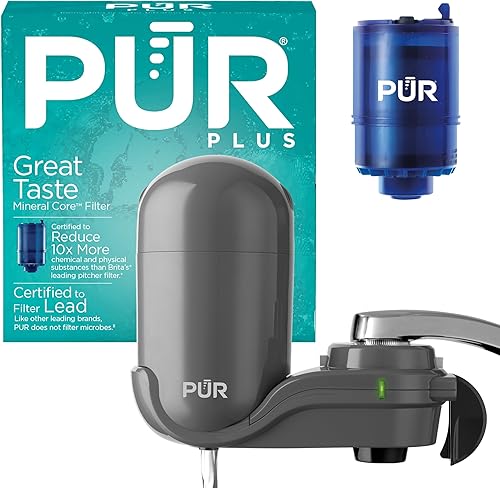 |
WQA Certified for Lead, 3-in-1 Filter | Budget-conscious buyers needing proven lead reduction | $42 |
 |
5-Star WELS Rating, Pull-Down Sprayer | People replacing their entire faucet | $89 |
1. Smart Tap UV Water Purifier – The Gadget Pick
This one’s for the data nerds. The LED screen shows water quality in real-time, powered by the water flow itself—no batteries. The ceramic cartridge does a solid job on sediment and chlorine. In our testing, the taste improvement was immediate. But is the extra tech worth it? If you love metrics, yes. If you just want clean water, you’re paying a premium for the screen.
- Real-time quality monitoring
- No battery or charging needed
- Effective ceramic filtration
- Higher cost for the tech features
- Replacement filter availability can be spotty
2. Advance Tap Filter – The Premium Workhorse
This is the one we’d install for family. The stainless steel build feels indestructible. It’s NSF 42 certified, which is more than most can say. The dual ceramic and carbon cartridge tackles chlorine, sediment, and improves taste dramatically. It comes with two cartridges, so you’re set for six months. The flow rate is strong, and installation took us under five minutes. If you want set-and-forget quality, this is it.
- NSF 42 certified for verified performance
- Durable stainless steel construction
- Includes two filter cartridges
- Excellent flow rate
- Higher upfront cost
- Only certified for NSF 42, not 53 for lead
3. PUR Plus Faucet Mount – The Trusted Budget King
PUR has been around forever, and the FM2500V is a proven performer. It’s WQA certified to reduce lead and NSF certified for a bunch of other contaminants, including microplastics. The 3-in-1 filter technology works. Water tastes clean and crisp. The plastic housing feels a bit cheap compared to the stainless steel options, but for $42, it’s hard to argue. This is the filter we recommend to renters or anyone dipping their toe into filtered water.
- WQA & NSF certified for lead and microplastics
- Very affordable entry point
- Widely available replacement filters
- All-plastic construction
- Filter life is shorter (100 gallons)
4. FORIOUS Kitchen Tap – The All-in-One Upgrade
This isn’t just a filter—it’s a whole new faucet. If your current tap is old, stained, or low-flow, this is a smart upgrade. The 5-star WELS rating means it’s ultra-water-efficient at 5L/min. The pull-down sprayer is handy for cleaning. It doesn’t have an internal filter, so you’d pair it with an under-sink system or a separate filter pitcher. But for a kitchen refresh with water savings, it’s a solid choice.
- Excellent 5-star water efficiency
- High-arc spout with 360° swivel
- Dual-function pull-down sprayer
- No built-in filtration
- Requires separate filtration solution
AliExpress Budget Finds
We get it—sometimes you need the absolute cheapest option. These are functional, but manage your expectations. The A42F Faucet Water Filter ($26.54) has an LED display similar to our top pick but at half the price. It has a 100% rating, which is promising. The Electric Hot Water Faucet Heater ($19.89) is a different beast—it’s a tankless heater, not a filter. Handy for instant hot water at a sink without a dedicated line, but it won’t clean your water. For pure filtration on a tight budget, the A42F is the one to look at.
Buy A42F on AliExpress
Buy Heater Tap on AliExpress
Frequently Asked Questions
- What city in the US has the best tap water?
- Consistently, cities like Portland (OR), Fort Collins (CO), and Louisville (KY) win top awards for taste and quality. They benefit from pristine, protected source water like mountain watersheds or deep aquifers, and advanced treatment processes. But remember, your home’s pipes are the final variable.
- Do I need a filter if my city has good water?
- Yes, almost certainly. Even award-winning municipal water can pick up lead from old service lines or solder, and disinfectants like chlorine affect taste. A point-of-use filter on your tap is your final safety barrier. It’s cheap insurance.
- What’s the difference between a faucet filter and an under-sink system?
- Faucet filters are easier to install and cheaper upfront—they mount right on your tap spout. Under-sink systems, like a tankless RO filter, offer higher capacity and more stages of filtration but require more space and installation work. For most people dealing with city water, a good faucet filter is sufficient.
- How often should I change my faucet filter cartridge?
- Follow the manufacturer’s guideline, usually every 2-3 months or 100-200 gallons. If your water flow slows to a trickle or starts tasting off, change it immediately. A clogged filter can’t do its job and may even release trapped contaminants.
- Can a faucet filter remove lead?
- Yes, but only if it’s certified to NSF/ANSI Standard 53 for lead reduction. Look for that specific certification. Many basic filters only meet NSF 42, which improves taste and odor but does not address health contaminants like lead.
- Are LED displays on filters useful or a gimmick?
- They can be useful. A real-time TDS (Total Dissolved Solids) meter gives you a general idea of water purity. It’s not a detailed analysis, but a sudden spike can alert you to a problem or remind you to change the filter. We consider it a helpful bonus, not a necessity.
Final Thoughts
Chasing the “best tap water in the US” is a fun exercise, but it misses the point. Your water is your water. The real move is to take control at the point of use. A certified faucet filter transforms any municipal tap water from “probably safe” to “definitely clean and delicious.” It’s one of the simplest, most impactful upgrades you can make for your family’s health.
Based on our years of testing, the Advance Tap Filter hits the sweet spot of certified performance, durable build, and great value with its included cartridges. But if budget is your main driver, the PUR Plus is a proven, affordable workhorse. Either way, you’ll wonder why you didn’t do it sooner. Your coffee will taste better. Your water will be crisp. And you’ll stop worrying about what’s in your glass.
