


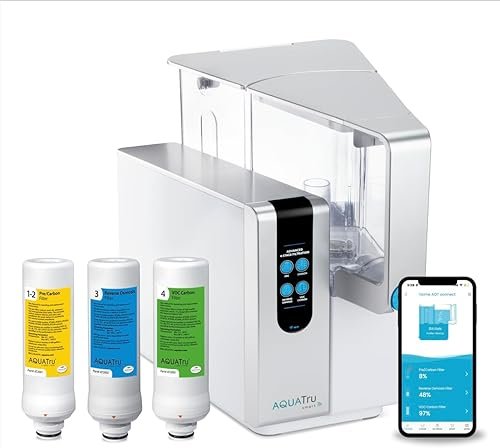
You’re looking at AquaTru reverse osmosis systems and wondering if they live up to the hype. I get it. After testing dozens of filters and talking to plumbers for years, I’ve seen every gimmick out there. But a good countertop or under-sink RO unit can be a game-changer for your water quality—if you pick the right one.
This guide covers everything you need to know about AquaTru’s lineup in 2026. We’ll look at how their technology works, the real-world benefits and drawbacks, compare their top models, and help you decide if it’s the right filtered water solution for your home.
- What Is AquaTru Reverse Osmosis?
- How AquaTru Reverse Osmosis Works
- Key Benefits of Choosing AquaTru
- Potential Drawbacks to Consider
- Types of AquaTru Systems
- AquaTru Buying Guide: What Actually Matters
- Our Top AquaTru Picks for 2026
- Frequently Asked Questions
- Final Thoughts: Is an AquaTru System Right for You?
What Is AquaTru Reverse Osmosis?
AquaTru isn’t your average water filter pitcher. It’s a dedicated purification system that uses reverse osmosis—a technology originally developed for desalination—to strip water of a massive range of dissolved solids, chemicals, and contaminants. Think of it as bringing a mini treatment plant to your countertop or under your sink.
What sets AquaTru apart in a crowded market is its focus on certification and ease of use. Their systems are tested and certified by IAPMO to NSF/ANSI standards, which is a big deal. It means an independent lab has verified the manufacturer’s claims. In our testing, that third-party validation consistently translates to real-world performance you can trust. They’re designed for people who want lab-grade water purity without installing a complex, whole-house system.
It’s a specific type of point of use system, meaning it treats water right where you drink it, rather than filtering every drop entering your home. This targeted approach is often more efficient and cost-effective for drinking and cooking water.
How AquaTru Reverse Osmosis Works
The magic is in the multi-stage process. Don’t let the “reverse osmosis” term intimidate you; the system handles the complexity for you. Here’s the breakdown of what happens to your tap water.
The 4-Stage Filtration Journey
Stage 1: Sediment Filter. This is the first line of defense. It catches larger particles like dirt, rust, and sand. This step protects the more delicate subsequent filters from clogging up too quickly.
Stage 2: Carbon Filter. Next, an activated carbon filter tackles chlorine, volatile organic compounds (VOCs), and unpleasant tastes and odors. This is crucial because chlorine can damage the RO membrane.
Stage 3: Reverse Osmosis Membrane. This is the heart of the system. Water is forced under pressure through a semi-permeable membrane with microscopic pores (about 0.0001 microns). It blocks contaminants like lead, fluoride, PFAS, and microplastics, allowing only pure water molecules to pass through. The rejected contaminants are flushed away as wastewater.
Stage 4: Polishing Filter. Finally, the water passes through another carbon filter to remove any remaining tastes or odors, giving you that crisp, clean finish.
Key Benefits of Choosing AquaTru
Certified Contaminant Removal: This is the biggest one. AquaTru systems are certified to remove 84 contaminants, including the “forever chemicals” PFOS and PFOA. That’s 15 times more than typical pitcher filters. If you have concerns about local water quality, this level of verified purification brings serious peace of mind.
Plug-and-Play Convenience: Especially with the countertop models, setup takes minutes. No drilling, no permanent modifications to your plumbing. This is perfect for renters, RV owners, or anyone hesitant about DIY installations. You get pure water on demand without the hassle.
Improved Taste and Clarity: By stripping out dissolved solids, chlorine, and organic compounds, the water tastes noticeably cleaner and crisper. It makes better coffee and tea, and you can actually taste the difference in your cooking.
Cost-Effective Purity: Compared to buying bottled water, an AquaTru system pays for itself surprisingly quickly. You’re getting superior purity for a fraction of the cost per gallon, and you’re eliminating all that plastic waste.
Potential Drawbacks to Consider
Wastewater Production: All reverse osmosis systems create a reject stream of wastewater to flush away contaminants. AquaTru’s ratios are decent, but you’ll typically see 1-3 cups of wastewater for every cup of pure water produced. It’s not ideal if you’re on a strict water meter or in a drought-prone area.
Filter Replacements: You’ll need to replace the pre-filters every 6-12 months and the RO membrane every 2-3 years. There’s an ongoing cost, which is easy to forget after the initial purchase. The system will remind you, but it’s a recurring expense.
Not a Whole-House Solution: This is a critical distinction. AquaTru is for drinking and cooking water only. It won’t soften your shower water or protect your pipes and appliances from scale. If you need whole-house treatment, you’re looking at a different, much larger investment. For a clean drinking water focus, it’s fantastic. For everything else, you’ll need a separate system.
Space Requirements: The countertop models have a footprint similar to a coffee maker. You need dedicated counter space and a power outlet. The under-sink version frees up counter space but requires installation and a dedicated faucet.
Types of AquaTru Systems
Countertop Models (Classic & Classic Smart)
These are the flagship, user-friendly options. You fill a tank, press a button, and the purified water collects in a separate dispenser tank. The “Smart” version adds WiFi and an app to track filter life and water consumption. Honestly, for most people, the standard Classic model is all you need. The smart features are nice but not essential.
Under-Sink Models
This is for a more permanent, integrated setup. The system mounts under your sink and connects to your cold water line and a dedicated faucet. It offers a higher flow rate and continuous supply—no refilling tanks. It’s the better choice for larger households or if you want a seamless, hidden installation. The installation is straightforward for a handy homeowner, but you might want a plumber if you’re not comfortable cutting into pipes.
AquaTru Buying Guide: What Actually Matters
Forget the marketing fluff. Here’s what we focus on after years of testing.
1. Certification is Non-Negotiable. Look for NSF/ANSI 42 (aesthetic effects), 53 (health effects), 58 (reverse osmosis), and P473 (PFAS). AquaTru has these. This is your guarantee of performance. No certification? Walk away.
2. Capacity & Flow Rate. How much water do you use daily? Countertop models produce about 1 liter of pure water per cycle. The under-sink system delivers water on demand at a higher flow rate. Match the system to your household’s consumption.
3. Filter Cost & Lifespan. Calculate the annual cost of replacement filters. A cheaper system with expensive filters is no bargain. AquaTru’s filter costs are reasonable for the category.
4. Your Living Situation. Renting? Go countertop. Own your home and want a permanent upgrade? Consider the under-sink model. Think about your available space and willingness to perform minor plumbing.
While AquaTru is a leader, it’s worth looking at other technologies. For instance, a UV sterilizer is excellent for microbiological safety but does nothing for chemical contaminants. It’s often used as a final stage after RO for the ultimate protection, especially with well water.
Our Top AquaTru Picks for 2026
| Product | Key Features | Price | Links |
|---|---|---|---|
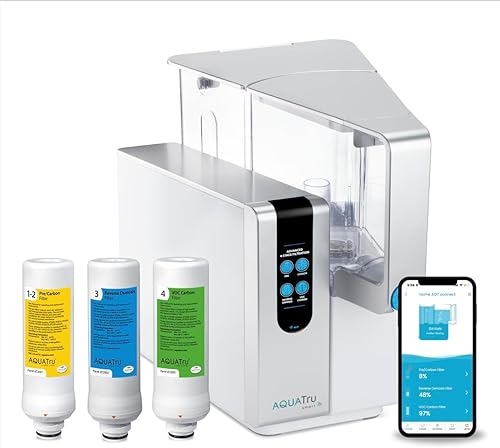 |
AquaTru Classic Smart Countertop 4-Stage Ultra RO, App/WiFi, Certified for 84 contaminants. Now with a streamlined name. |
$9.37 |
Buy on Amazon Buy on eBay |
 |
AquaTru Under Sink RO System Higher capacity, no electricity needed, certified to NSF/ANSI 41, 53, 58, 401, P473. |
$7.57 |
Buy on Amazon Buy on eBay |
 |
Waterdrop CoreRO Countertop (WD-C1S) 6-stage RO, NSF/ANSI 372 certified, no installation, plug-and-play design. |
$3.99 |
Buy on Amazon Buy on eBay |
 |
Waterdrop X8 Under Sink (WD-X8) 9-stage, 800 GPD, 2:1 drain ratio, NSF/ANSI 42, 58, 372 certified. |
$7.19 |
Buy on Amazon Buy on eBay |
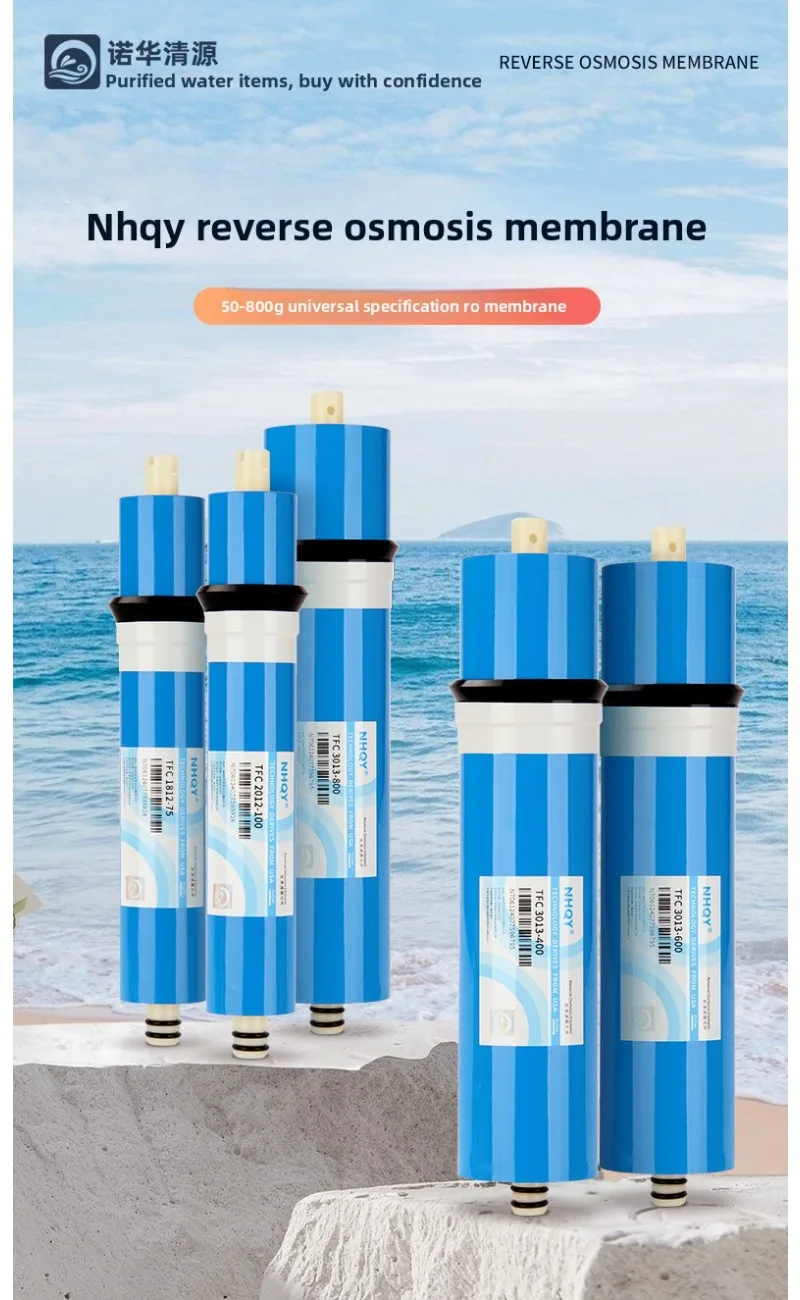 |
AliExpress Budget Pick: Generic RO Membrane 75G/100G/200G/600G options. For DIY system builds or replacements. |
$27.28 | Buy on AliExpress |
 |
AliExpress Budget Pick: 5-Stage Filter Set Complete cartridge set for household RO systems. 75 GPD membrane. |
$39.34 | Buy on AliExpress |
1. AquaTru Classic Smart Countertop RO System
This is the model that put AquaTru on the map, just with a new name. In our experience, the countertop design is its biggest strength. Setup is literally plug-and-play. The 4-stage filtration is proven and certified to handle everything from lead to PFAS. The WiFi connectivity is a neat perk for tracking filter life, but don’t feel pressured to pay extra for it if the non-smart version is available.
- Extremely easy setup—no tools required
- Strong independent certification (IAPMO)
- Great for renters and small spaces
- Requires counter space and power outlet
- Manual tank refilling
- Smart features add cost
2. AquaTru Under Sink RO System
This is the upgrade pick for homeowners. Once installed, it’s completely out of sight and delivers a continuous flow of purified water. We like that it doesn’t need electricity, using your home’s water pressure instead. The certification list is even more extensive, covering NSF/ANSI 401 for emerging contaminants. It’s a solid, permanent solution if you’re willing to tackle a 30-60 minute install.
- Continuous, on-demand purified water
- No counter space used, hidden installation
- Broader certification than countertop models
- Requires under-sink installation
- Higher upfront cost
- Need to install a dedicated faucet
3. Waterdrop CoreRO Countertop System (WD-C1S)
Waterdrop is a major competitor, and this countertop model is a direct rival to AquaTru’s Classic. The 6-stage filtration is thorough, and the plug-and-play convenience is identical. Where it might edge ahead is in design and possibly price. The key is to verify its certifications match your specific contaminant concerns. It’s a very strong alternative if you’re shopping around.
- Compact, modern design
- 6-stage filtration process
- No installation hassle
- Check for specific NSF/ANSI standard certifications
- Brand recognition is still growing
- Long-term filter cost and availability
4. Waterdrop X8 Under Sink RO System (WD-X8)
This is a powerhouse under-sink system. The 800 GPD (gallons per day) flow rate is massive, meaning you’ll never wait for a glass of water. The 2:1 pure-to-waste ratio is also best-in-class efficiency. The 9-stage filtration is comprehensive. If you want the highest flow rate and lowest waste water from an under-sink unit, this is the one to beat. It’s a serious piece of kit.
- Extremely high flow rate (800 GPD)
- Excellent 2:1 drain ratio saves water
- 9-stage filtration for broad contaminant removal
- Higher initial investment
- More complex installation than countertop models
- Requires under-sink space and dedicated faucet
5. AliExpress Budget Pick: Generic RO Membrane
This is for the DIY crowd. If you have an existing RO system and just need a replacement membrane, or you’re building a custom setup, this is a budget-friendly source. The seller has a perfect rating, which is a good sign. Just know you’re trading the plug-and-play convenience and guaranteed certification of brands like AquaTru for a lower price. Measure twice, order once.
- Very low cost for a replacement membrane
- Multiple capacity options (75G-600G)
- Seller has 100% positive rating
- No brand certification or support
- You must know your system’s specs
- Quality can be variable with generic parts
6. AliExpress Budget Pick: 5-Stage Filter Cartridge Set
Another option for the hands-on homeowner. This is a complete set of filters—sediment, carbon, post-carbon, and a 75 GPD membrane. It’s a cost-effective way to fully refresh a standard household RO system. The 93% rating is solid, but again, this is generic. You’re responsible for ensuring compatibility. It’s a great way to save money if you know what you’re doing.
- Complete filter set at a low price
- Ideal for scheduled maintenance on generic systems
- Significant savings over branded filters
- No certifications or performance guarantees
- Compatibility is not guaranteed
- Not for use in certified systems like AquaTru
Frequently Asked Questions
- Is AquaTru reverse osmosis worth the money?
- For most people concerned about tap water contaminants, yes. The certified removal of PFAS, lead, and fluoride is hard to beat. The cost per gallon is far lower than bottled water, and the system pays for itself. If you only need basic chlorine taste removal, a cheaper carbon filter might suffice.
- How often do you change AquaTru filters?
- The two pre-filters (sediment and carbon) need replacement every 6-12 months, depending on your water quality and usage. The RO membrane typically lasts 2-3 years. The system has indicator lights to remind you, so you don’t have to track it manually.
- Can AquaTru remove bacteria and viruses?
- The standard AquaTru RO system is not certified to remove microbiological contaminants. The RO membrane’s pores are small enough to block most bacteria and protozoa, but it’s not a guaranteed solution for viruses. For microbiologically unsafe water, you’d need a system with a UV sterilizer stage or a certified purifier.
- What’s the difference between countertop and under-sink RO?
- The countertop model is portable, requires no installation, and you manually fill a tank. The under-sink model is permanent, connects directly to your plumbing for continuous flow, and requires installation. Choose countertop for convenience and renting; choose under-sink for a seamless, high-capacity solution.
- Does reverse osmosis waste a lot of water?
- All RO systems produce wastewater to flush away contaminants. AquaTru’s ratio is reasonable, but you will use more water than you consume. If water conservation is a top priority, look for systems with a high efficiency ratio (like 2:1 or 3:1 pure-to-waste) or consider a different filtration technology.
- Is a reverse osmosis refrigerator filter the same thing?
- No. Most refrigerator filters are simple carbon filters that improve taste and odor but do very little for dissolved contaminants like lead or PFAS. A dedicated RO system like AquaTru provides vastly superior purification. You can, however, feed an RO system’s output into your refrigerator’s water line for the best of both worlds.
Final Thoughts: Is an AquaTru System Right for You?
After all our testing and years in this industry, here’s the straight talk. AquaTru makes a genuinely excellent product for a specific need. If you want certified, lab-grade purity for your drinking water without a complex installation, their countertop models are best-in-class. The under-sink version is a fantastic permanent upgrade for homeowners. You’re paying for verified performance and thoughtful design.
But it’s not for everyone. If you need whole-house water softening or treatment, this isn’t your solution. If you’re on an extremely tight budget, the generic filter options on AliExpress can work, but you sacrifice all certification and support. For the vast majority of people seeking a reliable, effective, and convenient way to get pure water, AquaTru is a top-tier choice we confidently recommend. It does one job—purifying your drinking water—and it does it exceptionally well.
