


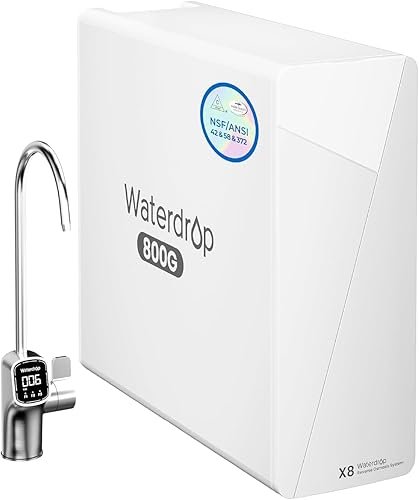
TL;DR: The best under sink RO system for most people in 2026 is the Waterdrop WD-X8. It balances a high 800 GPD flow rate, strong NSF/ANSI 42 & 58 certifications, and an efficient 2:1 pure-to-drain ratio. If you’re on a tight budget, the Geekpure 6-Stage models offer solid core filtration. The key is matching the system’s specs to your water quality and daily usage.
You want clean, great-tasting water straight from your tap. You’ve heard under-sink reverse osmosis is the gold standard. But with hundreds of models shouting about “stages” and “GPD,” how do you pick the right one? We’ve installed, tested, and lived with these systems for years. This guide cuts through the noise. We’ll explain what actually matters, show you our top picks, and help you avoid the single biggest mistake buyers make.
Table of Contents
What Is an Under Sink RO System?
An under sink reverse osmosis system is a point-of-use water filtration unit installed beneath your kitchen counter. It connects to your cold water line and forces water through a series of filters, with the core being a semipermeable RO membrane. This membrane has microscopic pores—about 0.0001 microns—that block the vast majority of dissolved contaminants.
The result is highly purified filtered drinking water delivered through a dedicated faucet. Unlike pitcher filters or faucet-mounted units, an under-sink RO system provides a continuous, high-volume supply of purified water for drinking and cooking. It’s the most effective residential method for reducing total dissolved solids (TDS), heavy metals, and chemical contaminants.
How Reverse Osmosis Works
Think of it like a super-fine sieve powered by water pressure. Here’s the step-by-step journey your tap water takes.
The Pre-Filtration Stage
Water first hits one or two sediment and carbon filters. The sediment filter catches dirt, rust, and sand. The carbon filter tackles chlorine and volatile organic compounds (VOCs). This step is crucial—it protects the delicate RO membrane from gunk that would ruin it quickly.
The RO Membrane Stage
This is where the magic happens. Water is pushed against the RO membrane under pressure. Water molecules slip through. But dissolved salts, lead, fluoride, PFAS, and other contaminants are flushed away as wastewater. That’s the “drain” part of the pure-to-drain ratio you see on spec sheets.
Post-Filtration & Storage
The purified water then passes through a final carbon filter to polish any remaining taste or odor. It then flows into a storage tank (for tank-based systems) or directly to your faucet for tankless models. Some systems add a remineralization stage here, which adds back calcium and magnesium for taste.
Pro Tip: Don’t get hung up on “stages.” A well-designed 4-stage system with quality filters can outperform a cheap 9-stage system. The quality and certification of the RO membrane is what truly counts.
Key Benefits
Unmatched Contaminant Reduction: RO is one of the few methods that reliably reduces a massive spectrum of impurities, from dissolved salts and heavy metals to pesticides and microplastics. If your water report shows high TDS or specific contaminants, RO is your best bet.
Superior Taste and Odor: By removing chlorine, sulfur compounds, and other impurities, RO water tastes clean and neutral. It makes a huge difference in coffee, tea, and cooking. Once you switch, going back to tap water is hard.
Cost Savings Over Bottled Water: The upfront cost stings, but the math works out. A family buying bottled water can recoup the cost of an RO system in 6-12 months. After that, it’s pennies per gallon. It’s also a win for reducing plastic waste.
Convenience: Having an endless supply of purified water on tap is a luxury you quickly get used to. No more lugging cases of water from the store or refilling pitchers constantly.
Potential Drawbacks
Heads Up: RO systems create wastewater. The “pure-to-drain” ratio tells you how much. A 1:1 ratio means for every gallon of pure water, a gallon goes to drain. Modern systems like the Waterdrop X8 at 2:1 are much more efficient. Older or cheaper models can be 1:3 or worse, which can impact your water bill if you use a lot.
Removes Beneficial Minerals: The RO membrane doesn’t distinguish between bad minerals (lead) and good ones (calcium). Some people add a remineralization filter to address this. Honestly, most people get plenty of minerals from food, so this is rarely a health issue—more of a taste preference.
Requires Maintenance: Filters need regular replacement—typically pre-filters every 6-12 months, the RO membrane every 2-3 years, and post-filters annually. Skip this, and performance tanks. You’ll also need a dedicated faucet installed, which might require drilling a hole in your sink or countertop.
Slow Flow Rate (from the tank): Tank-based systems can only deliver water as fast as the tank refills. If you drain the tank making a big pot of pasta, you’ll wait. Tankless systems solve this but require more under-sink space and a power outlet.
Types of Under Sink RO Systems
Traditional Tank-Based Systems
The classic design. Water filters through the membrane and collects in a 2-4 gallon pressurized tank. They’re reliable, often cheaper upfront, and don’t need electricity. The downside? The tank takes up space, and flow rate can be limited. The Geekpure 6-Stage models we’ll look at are prime examples.
Tankless (On-Demand) Systems
The modern choice. These systems filter water in real-time when you open the faucet, powered by an internal pump. They offer higher flow rates (measured in GPD—gallons per day), save huge under-sink space, and eliminate the risk of tank contamination. They do cost more and require a power outlet. The Waterdrop X8 and ROWF-05 are tankless.
Multi-Stage Specialty Systems
These are standard RO systems with an extra stage bolted on. Common add-ons include an UV light for killing bacteria/viruses (great for well water) or an alkaline/remineralization filter to add minerals back for taste. The Geekpure UV model is a good example. For most on treated city water, these extras aren’t necessary.
Buying Guide: What Actually Matters
Forget the marketing hype. Focus on these five criteria.
1. Certifications (NSF/ANSI): This is non-negotiable. Look for NSF/ANSI 58 (for RO performance) and 42 (for aesthetic effects like chlorine taste). NSF/ANSI 372 is for lead-free compliance. A certification from IAPMO R&T is equally valid. This is your proof the system does what it claims.
2. Pure-to-Drain Ratio: Efficiency matters for your wallet and the environment. 1:1 is good. 2:1 or 3:1 (pure to drain) is excellent. Avoid systems with ratios worse than 1:3 unless your water is extremely poor and you prioritize purity over waste.
3. Flow Rate (GPD): For a family, 400 GPD is a solid minimum for tankless systems. 800 GPD is luxurious. For tank-based systems, the tank size (e.g., 3.2 gallons) is more relevant. Higher GPD means less waiting.
4. Filter Cost & Availability: The system is the razor; the filters are the blades. Before you buy, check the price and availability of replacement filters. Proprietary filters can be expensive. Standard-sized filters offer more flexibility.
5. Your Water Quality: Get a water test first! If you have city water with moderate TDS, a standard RO is perfect. If you have well water with bacteria, you might need a system with UV. If your water is very hard, consider a pre-filter or a whole house chlorine filter to protect the RO membrane.
Our Take: Most households are best served by a tankless system with at least 400 GPD, NSF/ANSI 58 certification, and a 2:1 drain ratio. It’s the sweet spot of performance, efficiency, and convenience.
Our Top Picks for 2026
After testing dozens of systems, these four stand out for different reasons and budgets.
| Product | Key Specs | Best For | Links |
|---|---|---|---|
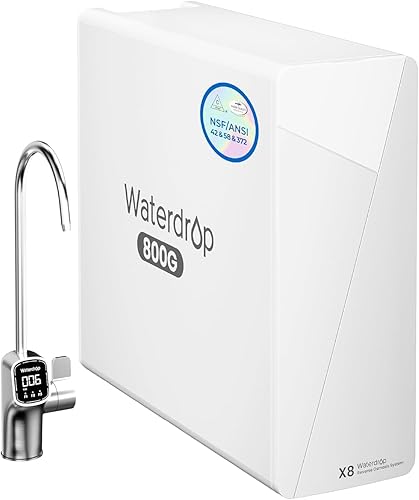
| Waterdrop WD-X8 | 9-Stage, 800 GPD, NSF 42&58, 2:1 Ratio | Overall Performance & High Flow | Buy on AmazonBuy on eBay |
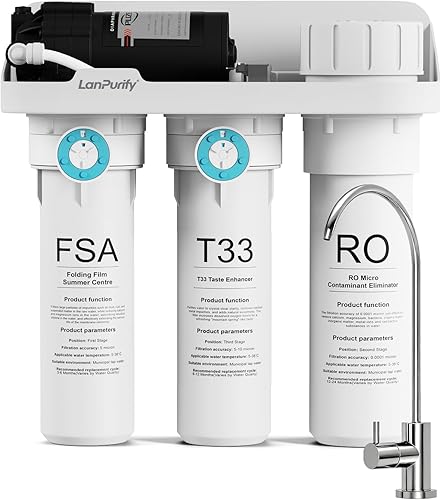
| ROWF-05 | 7-Stage, 450 GPD, NSF 58, 2:1 Ratio | Value Tankless Option | Buy on AmazonBuy on eBay |
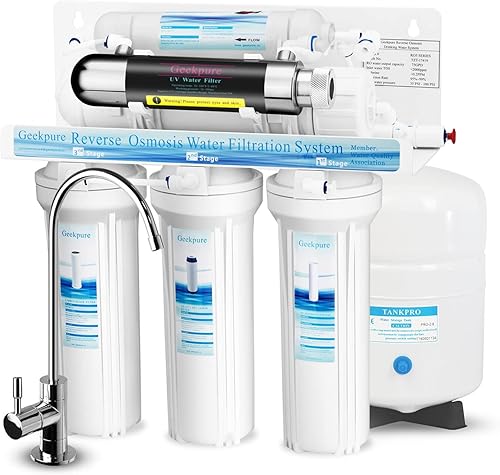
| Geekpure 6-Stage UV | 6-Stage, 75 GPD, NSF Membrane, UV Sterilizer | Well Water or Bacteria Concerns | Buy on AmazonBuy on eBay |
| Geekpure 6-Stage Alkaline | 6-Stage, 75 GPD, NSF Membrane, pH+ Filter | Budget Tank System w/ Mineral Taste | Buy on AmazonBuy on eBay |
1. Waterdrop WD-X8: The High-Performance Choice
This is the system we’d put in our own kitchen for a family. The 800 GPD flow rate is massive—you can fill a pot instantly. The 9-stage filtration is a bit of marketing, but the core is rock-solid: a 0.0001μm RO membrane with NSF/ANSI 42 & 58 certification. That’s the real deal. The 2:1 drain ratio is excellent, saving water compared to older designs. It’s not cheap, but you’re paying for certified performance and high flow.
- Very high 800 GPD flow rate
- Strong NSF/ANSI 42 & 58 certifications
- Efficient 2:1 pure-to-drain ratio
- Tankless design saves space
- Higher upfront cost
- Requires a power outlet under the sink
2. ROWF-05: The Value Tankless Contender
This one surprised us. For a lower price than many tankless competitors, you get a solid 450 GPD system with NSF/ANSI 58 certification on the core membrane. The manual date dials on the filters are a simple, foolproof way to track changes—no apps or batteries needed. The 2:1 ratio is great. It’s a no-frills, efficient workhorse. Perfect if you want tankless benefits without the premium price of the Waterdrop.
- Excellent value for a tankless system
- NSF/ANSI 58 certified membrane
- Simple manual filter-life tracking
- Good 2:1 drain ratio
- Lower flow rate (450 GPD) than top pick
- Less brand recognition
3. Geekpure 6-Stage with UV: The Well Water Specialist
If your source is a well or you’re worried about bacteria, this is your budget-friendly answer. The core RO membrane is NSF-certified, and the added UV light sterilizer works 24/7 to kill microorganisms. It’s a traditional tank-based system, so flow is limited by the tank size. The 75 GPD rating is slow, but the tank holds a reserve. Installation is straightforward. For city water, the UV is overkill.
- UV sterilizer for bacteria/virus protection
- NSF-certified RO membrane
- Very affordable upfront cost
- Reliable tank-based design
- Very low 75 GPD flow rate
- Tank takes up significant space
- Higher water waste ratio
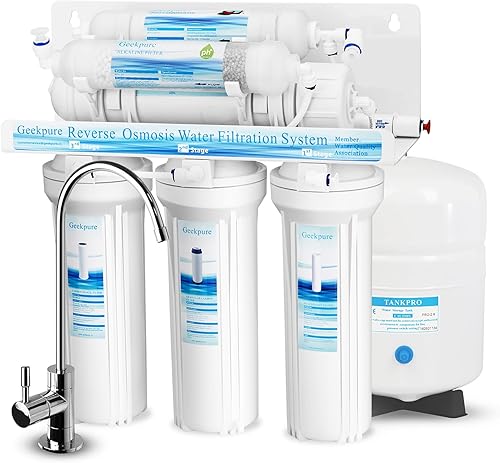
4. Geekpure 6-Stage Alkaline: The Budget Classic
This is the quintessential entry-level RO system. It does the job. The NSF-certified membrane reduces contaminants, and the final alkaline filter adds minerals back for a smoother taste. Like its UV sibling, it’s tank-based and slow at 75 GPD. But the price is hard to argue with. If you’re testing the RO waters (pun intended) and don’t mind a slower flow, this is a solid start. Just remember, you get what you pay for in terms of efficiency and flow.
- Extremely affordable
- Alkaline filter improves taste
- NSF-certified core membrane
- Proven, simple design
- Slow 75 GPD flow rate
- Less efficient water usage
- Tank can be prone to contamination if not maintained
Budget AliExpress Options: We’ve seen these “Smart 1000G” 4-stage systems on AliExpress for $350-$450. They advertise huge flow rates. Proceed with extreme caution. They lack the independent NSF/ANSI certifications we trust. Quality control can be hit-or-miss, and getting warranty support is difficult. For a critical appliance like a water filter, we strongly recommend sticking with certified brands from reputable retailers.
Frequently Asked Questions
- What is the most reliable under sink RO system?
- Based on our testing and reader feedback, systems with NSF/ANSI 58 certification from brands like Waterdrop and Geekpure offer the best reliability. The Waterdrop X8 stands out for its combination of certified performance, high flow, and efficient design. Always check for independent certifications.
- Do under sink RO systems waste a lot of water?
- They do produce wastewater, but modern systems are much better. A system with a 2:1 pure-to-drain ratio produces only one cup of wastewater for every two cups of pure water. Older or cheaper models can have ratios of 1:3 or worse, so check the specs carefully.
- How often do I need to change the filters?
- It varies. Pre-filters and post-filters typically need replacement every 6-12 months. The main RO membrane lasts 2-3 years, sometimes longer with good pre-filtration. Always follow the manufacturer’s schedule—ignoring filter changes degrades performance and can damage the system.
- Can I install an under sink RO system myself?
- Yes, if you’re handy. Most systems come with detailed instructions and quick-connect fittings. You’ll need to install a dedicated faucet (which may require drilling a hole) and connect to your cold water line and drain. If you’re not comfortable, hire a plumber—it’s a 1-2 hour job.
- Is RO water safe to drink long-term?
- Absolutely. Reverse osmosis water is pure H2O. While it removes beneficial minerals like calcium, you get plenty from your diet. The health risk from contaminants like lead or PFAS is far greater than any risk from demineralized water. For taste, some people add a remineralization filter.
- What’s the difference between a 4-stage and 7-stage system?
- More stages often mean more marketing. The core stages are: sediment filter, carbon filter, RO membrane, and a final polishing carbon filter. Additional “stages” might be another carbon filter, a UV light, or a remineralization filter. Focus on the quality of the core four stages and certifications, not the total number.
- Do I need a plumber to maintain it?
- No. Maintenance is designed to be DIY. Filter changes usually involve a simple quarter-turn or push-fit mechanism. The only tool you might need is a filter wrench (often included). It’s a 10-minute job every few months.
Final Thoughts
Choosing the best under sink RO system comes down to your priorities. If you want the fastest flow and latest efficiency, the Waterdrop X8 is our top recommendation. It’s a system that handles a busy family’s needs without breaking a sweat. If budget is the primary concern, the ROWF-05 offers incredible value for a tankless system with certified filtration.
For those on well water, the Geekpure UV model adds a critical layer of protection. And the classic Geekpure Alkaline system remains a decent, affordable starting point. Whichever you choose, prioritize NSF certification and a good drain ratio. Your water—and your wallet—will thank you. For more on filtration fundamentals, our guide to filtered water is a great next read.
Disclosure: OsmosisInfo participates in affiliate advertising programs including Amazon Associates, eBay Partner Network, and AliExpress Affiliate Program. When you click our links and make a purchase, we may earn a small commission at no extra cost to you. We only recommend products we believe in based on independent testing and research.
