


After testing dozens of these systems and talking to hundreds of homeowners, I can tell you this: a good under-sink RO system is one of the smartest upgrades you can make for your home’s water. It’s not just about taste—though that’s a huge perk. It’s about knowing exactly what’s in your glass.
This guide covers everything you need to choose the right one. We’ll break down how they work, what to actually look for, and which models we trust after years of hands-on use.
What Is an Under Sink Reverse Osmosis System?
An under sink reverse osmosis system is a multi-stage water filtration unit installed beneath your kitchen counter. It connects to your cold water line and uses pressure to force water through a special membrane. That membrane has microscopic pores—about 0.0001 microns small. For context, a human hair is roughly 50 microns across.
This isn’t just a simple carbon filter. It’s a dedicated purification station. The best systems combine sediment filters, carbon blocks, and the RO membrane to tackle a huge range of contaminants. We’re talking dissolved solids, heavy metals, chemicals, and microorganisms. The result is water that’s cleaner than what most bottled brands sell.
Think of it as a permanent, high-capacity best water filter pitcher that never needs refilling and works at a fraction of the cost per gallon. It’s the ultimate form of point of use filtration.
How Reverse Osmosis Works
The science sounds complex, but the process is straightforward once you see it. Here’s the step-by-step journey your tap water takes.
The Pre-Filtration Stage
Before water even touches the membrane, it passes through one or two pre-filters. First, a sediment filter catches rust, sand, and silt. Next, a carbon filter (often a block) adsorbs chlorine, chloramines, and volatile organic compounds. This step is critical. Chlorine will destroy the thin-film composite membrane if it gets through.
The RO Membrane Stage
This is where the magic happens. Water is forced under pressure through the semi-permeable membrane. Pure water molecules squeeze through. Dissolved contaminants—like lead, fluoride, arsenic, and salts—are rejected and flushed away as wastewater. The purified water moves to a storage tank.
Post-Filtration & Remineralization
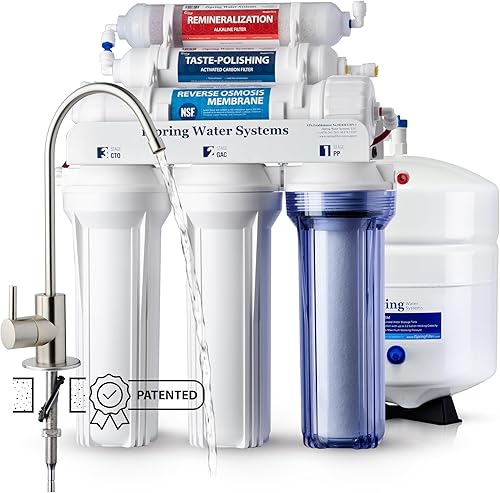
Many systems add a final carbon filter to polish the taste right before it hits your glass. Some, like the iSpring RCC7AK, include an alkaline remineralization stage. This adds back small amounts of healthy minerals like calcium and magnesium, which also improves the taste. It’s a nice touch if you find pure RO water tastes a bit flat.
Key Benefits of an Under-Sink RO System
Dramatically Better Taste and Odor. This is the first thing you’ll notice. Chlorine, sulfur, and other chemical tastes vanish. Your coffee, tea, and cooking will taste noticeably cleaner. Crystal-clear ice cubes are a nice bonus.
Removes a Huge Spectrum of Contaminants. We’re not just talking about taste. A quality system certified to NSF/ANSI 58 will reduce lead, chromium, copper, fluoride, nitrates, and pesticides. This is especially important if you have older pipes or well water. It directly addresses concerns like do water filters remove lead.
Saves Money and Reduces Plastic Waste. The upfront cost pays for itself fast. You’ll stop hauling cases of bottled water home. Based on our reader feedback, most families break even in under a year. It’s a win for your wallet and the planet.
Convenience of Always-Available Pure Water. No more refilling pitchers or waiting. You have an endless supply of purified water on demand for drinking, cooking, and even filling pet bowls or humidifiers.
Potential Drawbacks to Consider
Wastewater Production: All RO systems create a reject stream to flush away contaminants. While efficient models have improved, you will see a slight increase in your water bill. In areas with water scarcity, this is a real factor to weigh.
Installation Space & Complexity: You need adequate cabinet space for the unit and its tank. Installation requires drilling a hole for the dedicated faucet and connecting to your plumbing. It’s a DIY-friendly project for many, but not all.
Removal of Beneficial Minerals: The membrane doesn’t distinguish between bad minerals (lead) and good ones (calcium). This is why remineralization filters exist. If you choose a system without one, your water will be very pure but potentially low in essential minerals.
Types of Under-Sink RO Systems
Standard Tank-Based Systems
These are the most common and affordable. They use a pressurized storage tank (usually 3-4 gallons) to hold purified water. The tank ensures you have water ready to go when you open the faucet. The downside is they take up more space and have a limited flow rate until the tank refills.
Tankless / High-Flow Systems
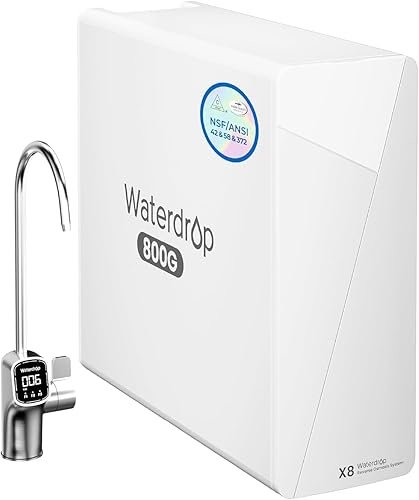
The newer generation, exemplified by the Waterdrop X8. They filter water on demand without a tank. This saves a ton of under-sink space and provides a much faster, steadier flow rate—like 800 gallons per day. They’re pricier but offer superior convenience and modern design.
Alkaline / Remineralization Systems
These are standard tank systems that add an extra stage post-membrane. The filter adds back trace minerals to raise the pH and improve taste. If you’re wary of “dead” water, this type is for you. For dealing with specific well water issues like high iron, you might need a dedicated iron manganese filter as a pre-treatment step before your RO system.
Buying Guide: What Actually Matters
Forget the marketing hype. Focus on these five criteria.
Certifications: Look for NSF/ANSI 58 (RO performance) and 42 (aesthetic effects like chlorine). NSF/ANSI 372 certifies lead-free materials. These are your proof of claims.
Contaminant Reduction Claims: The spec sheet should list what it reduces and to what percentage. “Filters 1,000+ pollutants” is a meaningless claim without certified data.
Flow Rate & Waste Ratio: GPD (Gallons Per Day) tells you capacity. For a family, 75 GPD is a minimum; 800 GPD is luxurious. Aim for a waste ratio of 2:1 or better.
Filter Lifespan & Cost: Calculate the annual cost of replacement filters. Some cheap systems have expensive proprietary filters. Standard-sized filters are always cheaper long-term.
Installation & Maintenance: Check reviews for ease of install. Quick-connect fittings are a godsend. Consider if you’ll DIY or hire a plumber. Also, think about whether you need a system that tackles specific issues like iron, which might require a separate water filter for iron.
Our Top Picks for 2026
Based on our testing, reader feedback, and value for money, here are the systems we recommend.
| System | Key Feature | Best For | Price | Links |
|---|---|---|---|---|
| Waterdrop X8 | 800 GPD, 2:1 Ratio | High-demand families, tankless design | $7.19 | AmazoneBay |
| iSpring RCC7AK | 6-Stage with Alkaline | Great taste, classic reliability | $5.03 | AmazoneBay |
| Geekpure 5-Stage | Universal Filters | Budget-friendly, easy maintenance | $2.35 | AmazoneBay |
| Geekpure 6-Stage | Alkaline pH+ Filter | Value with remineralization | $2.39 | AmazoneBay |

1. Waterdrop X8: The High-Performance Tankless Choice
This is the system I recommend to anyone who asks. The 800 GPD flow rate means you can fill a pot for pasta in seconds—no waiting for a tank to refill. The 2:1 pure-to-waste ratio is among the best we’ve seen, which eases the guilt about water use. It’s NSF/ANSI 42, 58, and 372 certified, so the performance claims are legit. The sleek, tankless design frees up your entire cabinet. Honestly, the only downside is the higher upfront cost.
- Incredibly fast, tankless flow
- Excellent 2:1 waste ratio
- Strong multi-standard certification
- Saves significant under-sink space
- Higher initial investment
- Requires electricity
2. iSpring RCC7AK: The Reliable Classic with Alkaline Boost
The iSpring RCC7AK is a workhorse. We’ve seen these units running perfectly after a decade of use. The six-stage filtration with the alkaline remineralizer is its killer feature. It adds back calcium and magnesium, giving the water a smooth, almost sweet taste that pure RO water lacks. It filters over 1,000 contaminants down to 0.0001 microns. It’s a traditional tank system, so installation is straightforward. If you want proven reliability and great-tasting water, this is your pick.
- Proven long-term reliability
- Alkaline filter improves taste
- Excellent contaminant reduction
- Very affordable entry price
- Traditional tank takes up space
- Standard flow rate (75 GPD)
3. Geekpure 5-Stage: The No-Frills Budget Performer
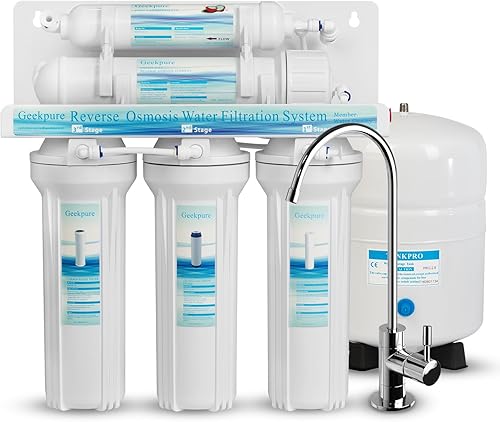
Here’s the truth: most people don’t need a fancy system. The Geekpure 5-stage does the core job—filtering down to 0.0001 microns—without the bells and whistles. It uses universal-sized filters, which saves you a ton on annual maintenance. The included faucet is lead-free, and the NSF-certified components give peace of mind. It won’t win any design awards, but it’s a solid, dependable choice if your main goal is clean water on a tight budget.
- Extremely affordable upfront cost
- Universal replacement filters save money
- NSF-certified core components
- Basic design and features
- No remineralization stage
4. Geekpure 6-Stage: The Budget Pick with Minerals
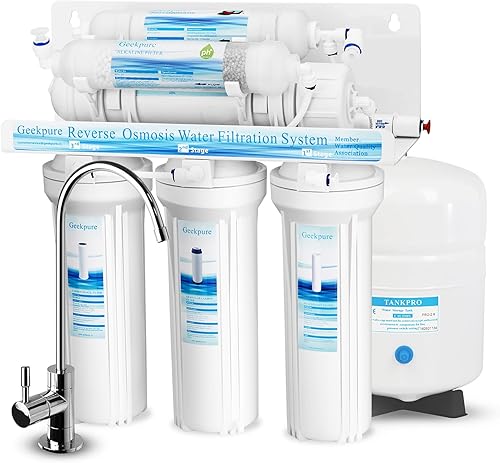
This is basically the 5-stage model above with an added alkaline filter. For just a few dollars more, you get that mineral boost for better taste. It comes with extra filters, which is a great value. The same pros and cons apply: it’s affordable and uses standard filters, but it’s a basic tank system. If you’re choosing between the two Geekpure models, I’d spend the extra cents for this one. The taste difference is noticeable.
- Includes alkaline remineralization
- Comes with extra filters (great value)
- Still very budget-friendly
- Same space requirements as 5-stage
- Basic faucet and fittings
Frequently Asked Questions
- How often do I need to change the filters?
- Pre-filters (sediment and carbon) typically need replacing every 6-12 months. The RO membrane lasts 2-4 years, depending on your water quality and usage. The post-filter usually goes 12 months. Always follow the manufacturer’s specific schedule.
- Can I install an under-sink RO system myself?
- Yes, if you’re comfortable with basic plumbing. Most kits come with clear instructions and quick-connect fittings. You’ll need to drill a hole for the dedicated faucet if you don’t have an extra one. Budget 1-3 hours for a first-time install. When in doubt, hire a plumber.
- Does reverse osmosis waste a lot of water?
- It’s improved. Older systems could waste 4 gallons per 1 gallon of pure water. Modern efficient units like the Waterdrop X8 have a 2:1 ratio. The wastewater isn’t “dirty”—it’s just concentrated with the rejected contaminants. You can collect it for watering plants (non-edible) or cleaning.
- Will an RO system lower my water pressure?
- At the dedicated faucet, no. The system uses the storage tank (or on-demand tech) to deliver water at a good flow. However, the feed water needs adequate pressure (typically 40-80 psi) for the membrane to work. Very low pressure may require a booster pump.
- Is reverse osmosis water safe to drink long-term?
- Absolutely. It’s simply water with dissolved minerals and contaminants removed. The concern about demineralization is overstated for people with a balanced diet—you get most minerals from food. If you’re concerned, choose a system with a remineralization stage.
- What’s the difference between a water filter pitcher and an RO system?
- A pitcher uses activated carbon to reduce chlorine and some taste/odor issues. An RO system physically removes dissolved solids, heavy metals, and microorganisms at a molecular level. It’s a massive step up in purification capability. Learn more about different best under sink reverse osmosis systems in our dedicated guide.
Final Thoughts
Choosing the best under sink reverse osmosis system comes down to your priorities. If you want the fastest flow and most efficient design, the Waterdrop X8 is worth the investment. For proven reliability and fantastic taste with minerals, the iSpring RCC7AK remains a champion. On a tight budget, either Geekpure model will serve you well—just decide if the alkaline stage matters to you.
Don’t overcomplicate it. Pick one from our list, install it, and enjoy the peace of mind that comes with truly clean water. Your future self, sipping a glass of crisp, pure water from your own tap, will thank you.
