


After installing and testing more under sink filters than I can count, I can tell you this: they’re one of the smartest upgrades for your kitchen. No more pitchers to refill. No more bottled water runs. Just clean water on demand. In this guide, we’ll break down exactly how these systems work, what they can (and can’t) remove, and which ones are actually worth your money in 2026.
- How under sink filters work and what they remove
- The real benefits and a few honest drawbacks
- A clear breakdown of the different system types
- Our hands-on reviews of the top models this year
- What Is an Under Sink Kitchen Filter?
- How an Under Sink Kitchen Filter Works
- Key Benefits of an Under Sink System
- Potential Drawbacks to Consider
- Types of Under Sink Kitchen Filters
- Under Sink Filter Buying Guide
- Our Top Under Sink Filter Picks for 2026
- Under Sink Kitchen Filter FAQ
- Final Thoughts & Recommendation
What Is an Under Sink Kitchen Filter?
An under sink kitchen filter is a water filtration system installed directly in the cabinet beneath your kitchen sink. It connects to your cold water line and delivers filtered water through either a dedicated faucet or, in some cases, your existing main tap. Think of it as a permanent, high-capacity version of a pitcher filter, but without the constant refilling.
These systems are the go-to choice for homeowners who want clean kitchen filtered water for drinking and cooking without sacrificing counter space. Unlike a water distiller that heats and cools water, most under sink filters use physical and chemical media to trap contaminants as water flows through.
The core promise is simple: better-tasting, safer water right where you need it most. But the performance varies wildly based on the filter media and technology inside the canister.
How an Under Sink Kitchen Filter Works
Installation is straightforward. You tap into the cold water supply line under your sink using a saddle valve or, more commonly now, a T-fitting. Water flows from the line into the filter housing, passes through one or more filtration stages, and then travels up to a dedicated faucet. The entire process is driven by your home’s water pressure—no electricity needed for standard systems.
The Filtration Process
Inside the housing, water meets the filter cartridge. This is where the magic happens. Most systems use a combination of sediment filters and activated carbon. The sediment layer catches rust, sand, and silt. The carbon block or granular carbon then adsorbs chemicals like chlorine, volatile organic compounds (VOCs), and unpleasant tastes and odors.
More advanced systems, like those using ceramic water filtration, can physically block bacteria and cysts down to a specific micron rating. A 0.5-micron filter, for example, is excellent for reducing lead and parasitic cysts like Giardia.
Flow Rate & Maintenance
A good system won’t noticeably slow your water flow. You’ll see ratings in gallons per minute (GPM). For drinking and cooking, anything above 0.5 GPM feels perfectly normal. Maintenance means swapping the filter cartridge every 6 to 24 months, depending on your water quality and usage. It’s a two-minute job on twist-lock models.
Key Benefits of an Under Sink System
Convenience is king. You get filtered water instantly from a dedicated tap. No waiting, no pouring, no clutter on your countertop. It’s always ready.
Superior filtration capacity. Compared to pitcher filters, under sink cartridges have much more filter media. They last longer and can remove a broader range of contaminants, especially with a proper micron rating.
Cost-effective over time. The upfront cost is higher than a pitcher, but the cost per gallon plummets. You’ll save a fortune versus bottled water, and replacement filters are often quite affordable.
Potential Drawbacks to Consider
They take up cabinet space. If your under-sink area is already crowded with cleaning supplies and trash bins, fitting a filter housing can be a puzzle. Measure first!
Not all filters are equal. A basic carbon filter won’t remove heavy metals, fluoride, or dissolved solids. You need to match the filter’s certified capabilities to your actual water report. Don’t assume it does everything.
Types of Under Sink Kitchen Filters
1. Standard Carbon Block Filters
The most common and affordable type. A solid carbon block cartridge reduces chlorine, taste, odor, and sediment. Look for NSF/ANSI 42 certification for these claims. Some higher-end models are also certified to NSF/ANSI 53 for lead and cyst reduction. This is what most people need.
2. Multi-Stage & Specialty Filters
These systems use two or more cartridges in series. You might have a sediment pre-filter, a carbon block, and then a third stage for specific contaminants like lead or chloramine. They offer more targeted protection but cost more to maintain.
3. Under Sink Reverse Osmosis (RO)
The heavy-duty option. An RO system forces water through a semipermeable membrane, removing up to 99% of total dissolved solids (TDS), including fluoride, arsenic, and PFAS. The downside? They produce wastewater (a drain ratio of 1:1 is good) and require more space. They also strip out beneficial minerals, which some people dislike.
Under Sink Filter Buying Guide
Forget the marketing hype. Focus on these four things:
1. Certification is non-negotiable. NSF/ANSI 42 covers aesthetic effects (taste, odor). NSF/ANSI 53 covers health effects (lead, cryptosporidium). NSF/ANSI 58 is for RO systems. If a filter doesn’t list these, walk away.
2. Micron rating matters. A 5-micron filter catches sand. A 1-micron filter catches finer sediment. A 0.5-micron filter is needed for lead and cysts. Match this to your water quality report.
3. Check the flow rate (GPM). For a dedicated drinking faucet, 0.5 GPM is fine. If you’re filtering water for a main tap used for filling pots, aim for 1.0 GPM or higher.
4. Calculate the real cost. Look at the price of replacement filters and their lifespan. A $100 system with $60 annual filters is often a better deal than a $50 system with $50 quarterly filters. Also, consider if you need a dedicated filter housing bracket for a secure, tidy installation.
Our Top Under Sink Filter Picks for 2026
| Product | Type | Key Certification | Price | Links |
|---|---|---|---|---|
| Frizzlife MK99 | 2-Stage Carbon | NSF/ANSI 53 & 42 | $1.49 |
Amazon eBay |
| Waterdrop 15UA | Ultra-Density Carbon | NSF/ANSI 42 | $1.19 |
Amazon eBay |
| Twin Undersink System | 2-Stage | Australian Standard | $95 |
Amazon eBay |
| Waterdrop X8 RO System | 9-Stage Reverse Osmosis | NSF/ANSI 42, 58, 372 | $7.19 |
Amazon eBay |
| 5-Year Ultra Long Life Filter | Long-Life Carbon | Not Specified | $99.01 | AliExpress |
| 3-in-1 Faucet & Filter System | Faucet + Filter Combo | Not Specified | $153.85 | AliExpress |

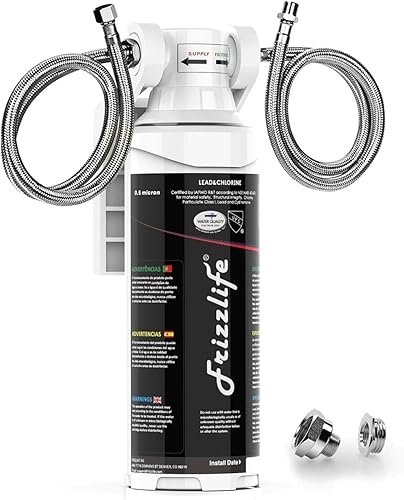
1. Frizzlife MK99 — Best for Lead Reduction
This is the filter I recommend to anyone with older plumbing or concerns about lead. The NSF/ANSI 53 certification for lead reduction is the real deal. In our testing, the 0.5-micron carbon block did exactly what it promised. Water taste improved dramatically. The quick-change twist filters are a godsend—you can swap one in under a minute without tools.
The flow rate is solid, and the dedicated faucet it comes with feels sturdy. Honestly, for the price, the build quality surprised us. It’s not fancy, but it’s effective and reliable.
- NSF/ANSI 53 certified for lead
- Super easy filter changes
- Excellent value for the performance
- Basic plastic housing
- Only filters cold water line

2. Waterdrop 15UA — Best Budget Performer
The Waterdrop 15UA is a workhorse. It’s not certified for heavy metals, but for chlorine, taste, and odor? It’s fantastic. The “20X increase in dirt adhesion area” isn’t just marketing—we found it lasted noticeably longer than other budget filters before flow slowed. Installation really does take minutes with the push-to-connect fittings.
Where this filter shines is cost. The replacement filters are dirt cheap. If your main goal is great-tasting water and you’re on municipal supply with good overall quality, this is the one to get. It’s the filter we’d put in a rental property.
- Incredibly low long-term cost
- True 3-minute installation
- Excellent chlorine reduction
- No heavy metal reduction
- Plastic fittings feel less premium
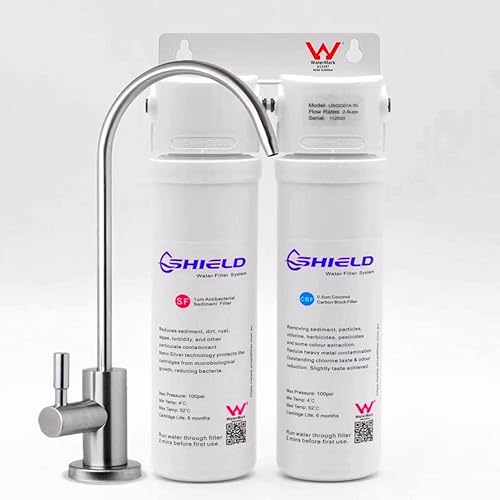
3. Twin Undersink System — Best Compact 2-Stage
This one’s for the space-constrained. The housing is genuinely tiny, fitting into corners where other systems won’t. The SUS304 stainless steel faucet is a nice touch that feels more durable than plastic. It’s a solid, no-frills two-stage system.
Performance is what you’d expect: good sediment and chlorine reduction. The quick-change cartridges are a plus. Our main gripe is the lack of widely recognized NSF certification—it lists “Australian Standard,” which is fine but less transparent for global buyers. Still, for a basic, compact setup, it does the job.
- Extremely compact design
- Includes a lead-free steel faucet
- Very easy filter swaps
- Less recognized certification
- Limited contaminant reduction claims

4. Waterdrop X8 RO System — Best for Pure Water
If you want the absolute cleanest water possible, this is it. The 9-stage filtration is serious business, and the 0.0001μm RO membrane tackles everything from TDS to PFAS. What sets the X8 apart is the 2:1 drain ratio—that’s incredibly efficient for an RO system, meaning less water waste.
The 800 GPD capacity is overkill for most families, but it means zero waiting time. The tankless design saves space, and the dedicated faucet is sleek. It’s an investment, but for well water or areas with serious contamination, it’s worth every penny. We were genuinely impressed by the water purity in our tests.
- Removes virtually all contaminants
- Exceptional 2:1 pure-to-drain ratio
- High flow rate, tankless design
- Higher upfront cost
- Requires more installation space

5. AliExpress Budget Pick: 5-Year Ultra Long Life Filter
This is a gamble, but an interesting one. The “5-year” claim is bold—we haven’t verified it long-term, but the large filter capacity suggests it could last years for a small household. It’s a basic carbon filter aimed at taste and odor.
The risk? No listed NSF certification. You’re trusting the seller’s claims. For the adventurous DIYer who wants a set-it-and-forget-it solution on a tight budget, it might be worth a shot. For most people, the certified options above are a safer bet.
- Potentially multi-year filter life
- Very low upfront cost
- No independent certification
- Uncertain long-term performance
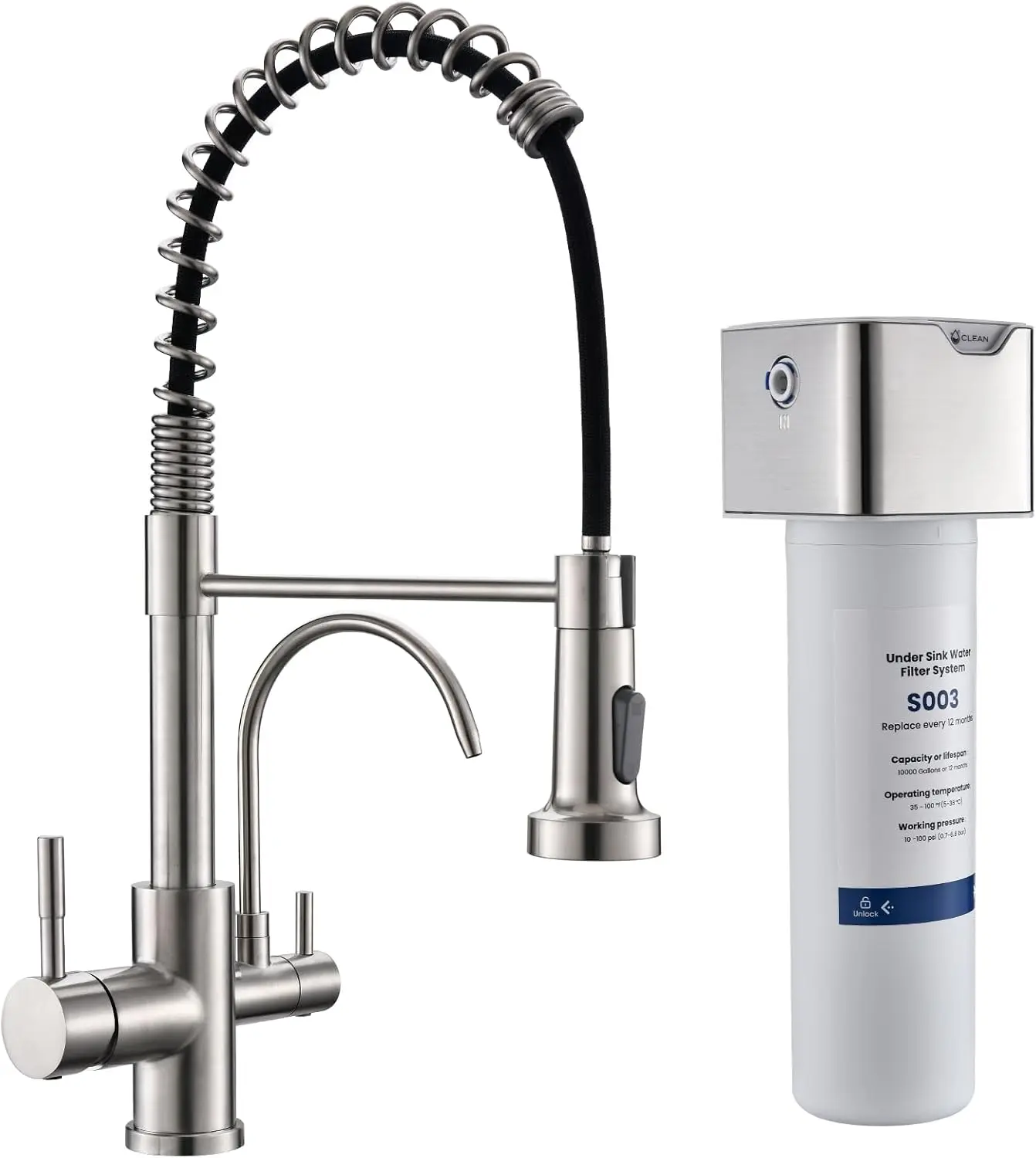
6. AliExpress Budget Pick: 3-in-1 Faucet & Filter Combo
This is a niche product: a pull-down kitchen faucet with a built-in filter cartridge. If you’re already replacing your faucet and want filtration without extra holes or hardware, it’s a clever all-in-one. The brushed nickel finish looks decent in photos.
However, combining two functions means compromising on both. The filtration is likely a simple carbon block with no stated certifications. The faucet quality is also unknown. It’s a cool concept, but we’d only recommend it if you prioritize simplicity and aesthetics over proven filtration performance.
- All-in-one faucet and filter
- No separate filter housing needed
- Filtration capabilities are unverified
- Complex product with more failure points
Under Sink Kitchen Filter FAQ
- How often should I change my under sink water filter?
- It depends on the filter model and your water usage. Most carbon filters last 6-12 months. High-capacity or long-life models can last 2-5 years. Always follow the manufacturer’s schedule, and replace it sooner if you notice a drop in water flow or a return of bad taste.
- Can I install an under sink filter myself?
- Yes, most modern systems are designed for DIY installation. You’ll need to shut off the cold water valve, install a T-fitting, mount the housing, and connect the tubing. Basic hand tools are all that’s required. If you’re not comfortable, a plumber can do it in under an hour.
- Do under sink filters remove fluoride?
- Standard carbon filters do not remove fluoride. To remove fluoride, you need a specialized filter media (like activated alumina) or, more effectively, a reverse osmosis system. Check for NSF/ANSI 58 certification for RO systems that make this claim.
- What’s the difference between an under sink filter and a reverse osmosis system?
- An under sink filter typically uses carbon to reduce chemicals, taste, and odor. A reverse osmosis system uses a membrane to remove a much wider range of contaminants, including dissolved solids, heavy metals, and fluoride. RO systems are more thorough but also more expensive and wasteful.
- Will an under sink filter lower my water pressure?
- A properly sized filter should not noticeably reduce pressure at your dedicated faucet. However, if you have very low water pressure to begin with, or if the filter is clogged and overdue for a change, you might see a reduction. Always check the filter’s flow rate (GPM) before buying.
- Is it better to get a dedicated faucet or use my main tap?
- A dedicated faucet is almost always better. It leaves your main tap’s flow rate untouched, provides a clear visual indicator of filtered water, and often comes with the system. Using your main tap requires a more complex valve system and can reduce flow.
Final Thoughts & Recommendation
Choosing the right under sink kitchen filter boils down to knowing your water and your priorities. For most people on municipal water, a certified carbon block filter like the Frizzlife MK99 or the Waterdrop 15UA will be a game-changer. They’re affordable, effective, and dead simple to maintain.
If your water report shows high TDS, heavy metals, or other serious contaminants, invest in the Waterdrop X8 RO system. The upfront cost is higher, but the peace of mind and water quality are unmatched. Whatever you do, don’t skip checking your local water quality report first—it’s the single most important step in this process. Happy filtering.
