


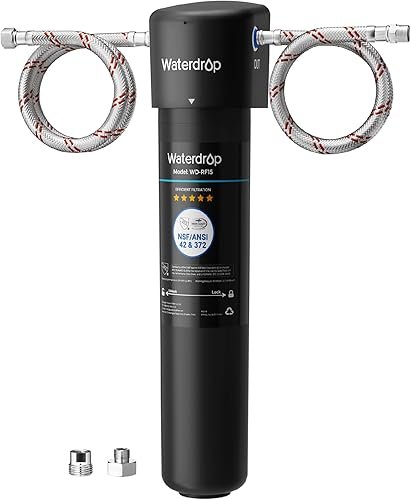
Under Counter Filter Water: The 2026 Guide to Cleaner, Better-Tasting Water
Tired of refilling a pitcher or lugging bottled water home? An under counter filter water system is the answer. We’ve installed, tested, and lived with dozens of these systems over the years. This guide cuts through the marketing noise to show you what actually matters.
- What these systems are and how they differ from pitchers or whole-house units.
- The real-world benefits and a few honest drawbacks we’ve encountered.
- A clear breakdown of the different types available.
- Our hands-on reviews of the top models for 2026.
What Is an Under Counter Water Filter?
It’s a dedicated filtration system installed out of sight, usually under your kitchen sink. The core idea is simple: treat water at the point of use, right before you drink it or cook with it. Unlike a whole-house filter housing system that treats every drop in your home, these units focus on the water you consume.
Most systems connect directly to your cold water supply line. They then push water through one or more filter cartridges, sending the purified water either to a separate, dedicated faucet on your sink or, in some “direct connect” models, back through your main kitchen tap. This setup gives you a high volume of clean water on demand, without the wait or capacity limits of a countertop pitcher.
Think of it as your personal, on-tap water treatment plant. The technology inside can range from simple activated carbon blocks to advanced ultrafiltration membranes, each designed to target specific contaminants.
How Under Counter Filters Work
The process is straightforward mechanical and chemical filtration. Water enters the system under normal line pressure and passes through the filter media. No electricity is typically required. Here’s the breakdown.
The Filtration Process
Water flows from your cold water line into the filter housing. Inside the cartridge, it encounters the filtration media. Contaminants are trapped or adsorbed as the water passes through. Clean water exits the other side and flows to your faucet. It’s a simple, passive process that’s incredibly effective when the right filter is chosen.
Common Filtration Media
Most under counter systems rely on one or a combination of these technologies:
- Activated Carbon: The workhorse of water filtration. It’s fantastic at adsorbing chlorine, volatile organic compounds (VOCs), and bad tastes and odors. A quality carbon filter system can make a dramatic difference in taste.
- Sediment Filters: These are physical barriers, often made of polypropylene, that trap rust, sand, and other particulates. They usually act as a pre-filter to protect the more delicate carbon or membrane filters downstream.
- Ultrafiltration (UF) Membranes: These have microscopic pores (around 0.01-0.1 microns) that physically block bacteria, protozoa, and larger viruses, while allowing beneficial minerals to pass through.
- Reverse Osmosis (RO) Membranes: The heavy artillery. RO membranes have pores so small (around 0.0001 microns) they remove nearly everything, including dissolved salts, fluoride, and heavy metals. This is the core of a dedicated fluoride removal system.
Key Benefits
Dramatically Better Taste and Odor. This is the first thing you’ll notice. Removing chlorine and other chemical disinfectants makes water taste crisp and clean. Your coffee and tea will thank you.
Targeted Contaminant Reduction. You choose the filter based on your water report. Worried about lead from old pipes? Get a system certified to NSF/ANSI 53 for lead reduction. Dealing with a sulfur smell? A specialized filter can tackle that.
High Capacity and Convenience. No more waiting for a pitcher to drip through. You get filtered water instantly, and the filters last for months—some for over a year. The Waterdrop 15UA, for example, is rated for 16,000 gallons.
Cost Savings Over Time. The upfront cost is higher than a pitcher, but the per-gallon cost is a fraction of bottled water. You’ll break even faster than you think.
Potential Drawbacks
Installation is Required. You’ll need to drill a hole for a dedicated faucet (if your system uses one) and connect to your plumbing. Most are DIY-friendly with push-to-connect fittings, but if you’re not comfortable, you’ll need a plumber.
They Take Up Space. Your under-sink cabinet will lose some real estate. Measure carefully, especially if you have a garbage disposal or other items stored there.
Not All Filters Are Equal. A basic carbon filter won’t remove heavy metals or fluoride. You must match the filter technology to your specific water problems. Don’t just buy the cheapest one.
Types of Under Counter Systems
Simple Carbon Block Filters
These are the most common and affordable. They use a solid carbon block to reduce chlorine, taste, odor, and some VOCs and sediment. Perfect for municipally supplied water that’s already safe but tastes of chlorine. They are the simplest form of a kinetico water filter alternative for basic needs.
Ultrafiltration (UF) Systems
These add a UF membrane after the carbon stage. They reduce bacteria and cysts without removing beneficial minerals. They don’t waste water like RO systems and work well for microbiologically unsafe water sources.
Reverse Osmosis (RO) Systems
The most thorough option. They typically have 3-5 stages: sediment pre-filter, carbon pre-filter, RO membrane, and a carbon post-filter. They remove up to 99% of contaminants, including dissolved solids, fluoride, and lead. The downside? They produce a slow stream of wastewater and remove beneficial minerals.
Direct Connect vs. Dedicated Faucet
Dedicated Faucet: The traditional setup. You drill a small hole in your sink or countertop for a separate, elegant faucet. It clearly indicates filtered water and doesn’t interfere with your main tap.
Direct Connect: These systems filter water and send it back through your existing kitchen faucet. No drilling required. The Frizzlife and Waterdrop models we review below use this method. It’s cleaner looking but means your main faucet only delivers filtered water when the filter is switched on (if it has a valve).
Buying Guide: What to Look For
1. Certifications are Non-Negotiable. Look for NSF/ANSI 42 (aesthetic effects like chlorine) and 53 (health effects like lead). NSF/ANSI 58 is for RO systems. These are your guarantee of performance.
2. Micron Rating. This tells you the smallest particle the filter can catch. A 0.5-micron carbon block is excellent for cysts and lead. A 1-micron filter is good for sediment. For bacteria, you need 0.1 microns or less (UF).
3. Flow Rate. Measured in Gallons Per Day (GPD) or liters per minute. A low flow rate means a weak stream from your faucet. For a dedicated faucet, 0.5 GPM is acceptable; 1.0 GPM is good. RO systems have lower flow rates, often measured in GPD (like 50-100 GPD).
4. Filter Lifespan & Cost. Calculate the annual cost. A $60 filter that lasts 6 months costs $120/year. A $100 filter that lasts 2 years costs $50/year. Don’t get fooled by a low upfront system price.
5. Ease of Installation & Maintenance. Look for systems with clear instructions and quick-change filter cartridges. Twist-and-lock designs are a lifesaver. Push-to-connect fittings make installation a 10-minute job.
Top Under Counter Filter Water Picks (2026)
Based on our testing, reader feedback, and analysis of certifications and long-term costs, here are our top recommendations.
| Product | Key Specs | Price | Links |
|---|---|---|---|
 Waterdrop 15UA |
NSF/ANSI 42, 0.5 Micron, 16,000 gal, Direct Connect | ~$59.99 |
Amazon eBay |
 Frizzlife MK99 |
NSF/ANSI 42 & 53, 0.5 Micron, Direct Connect | ~$74.99 |
Amazon eBay |
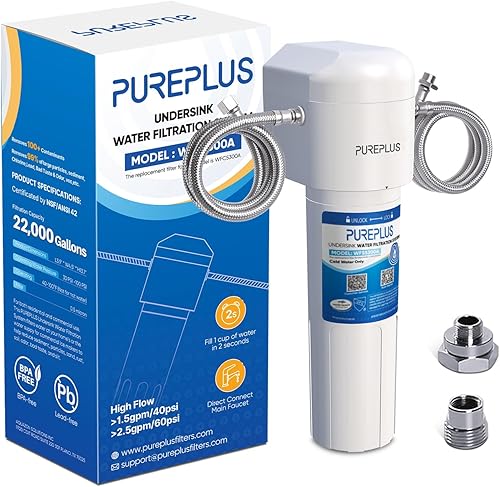 PUREPLUS |
NSF/ANSI 42 & 372, 22,000 gal, Lead-Free Material | ~$45.99 |
Amazon eBay |
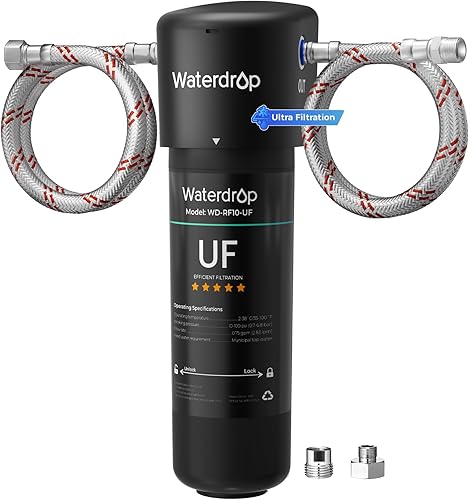 Waterdrop WD-10UA-UF |
0.01 Micron UF, 41,600 L, Reduces Lead & Fluoride | ~$89.99 |
Amazon eBay |
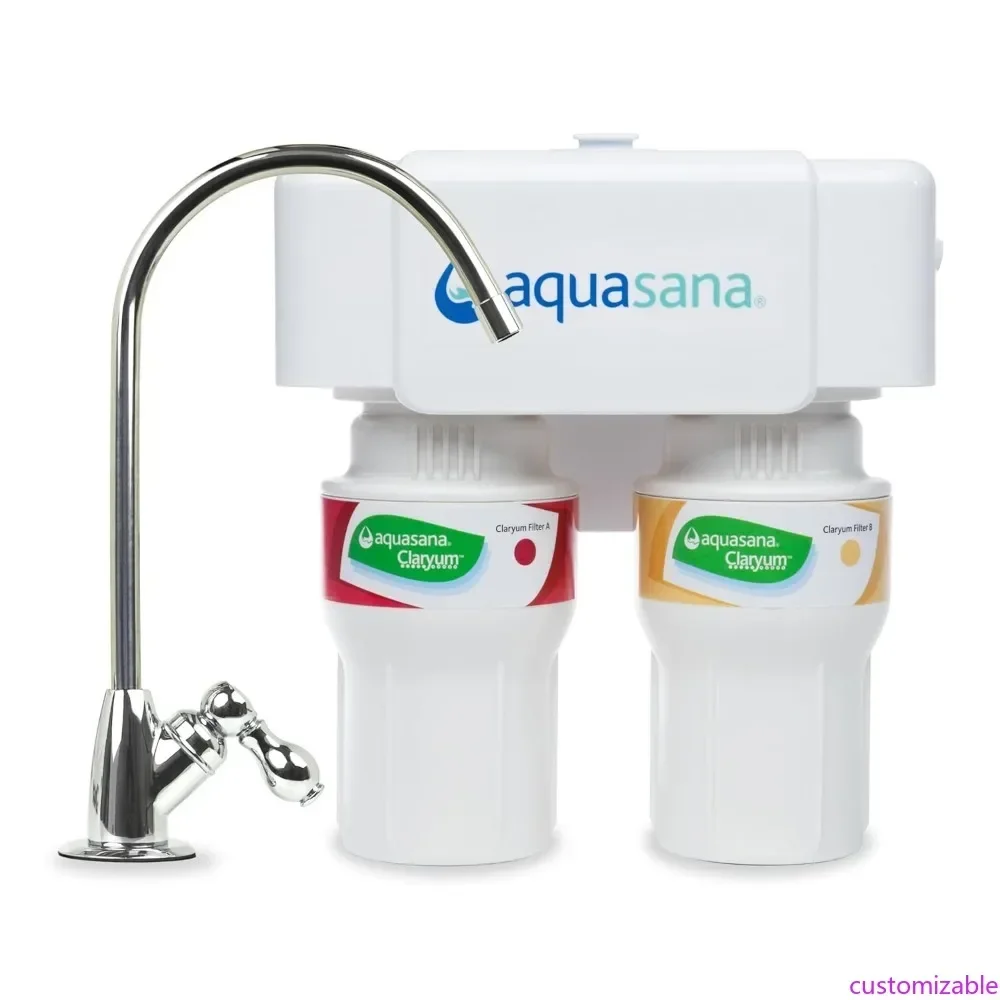 AliExpress Customizable |
Multi-stage, PFAS Reduction, Customizable | ~$103.04 USD | AliExpress |
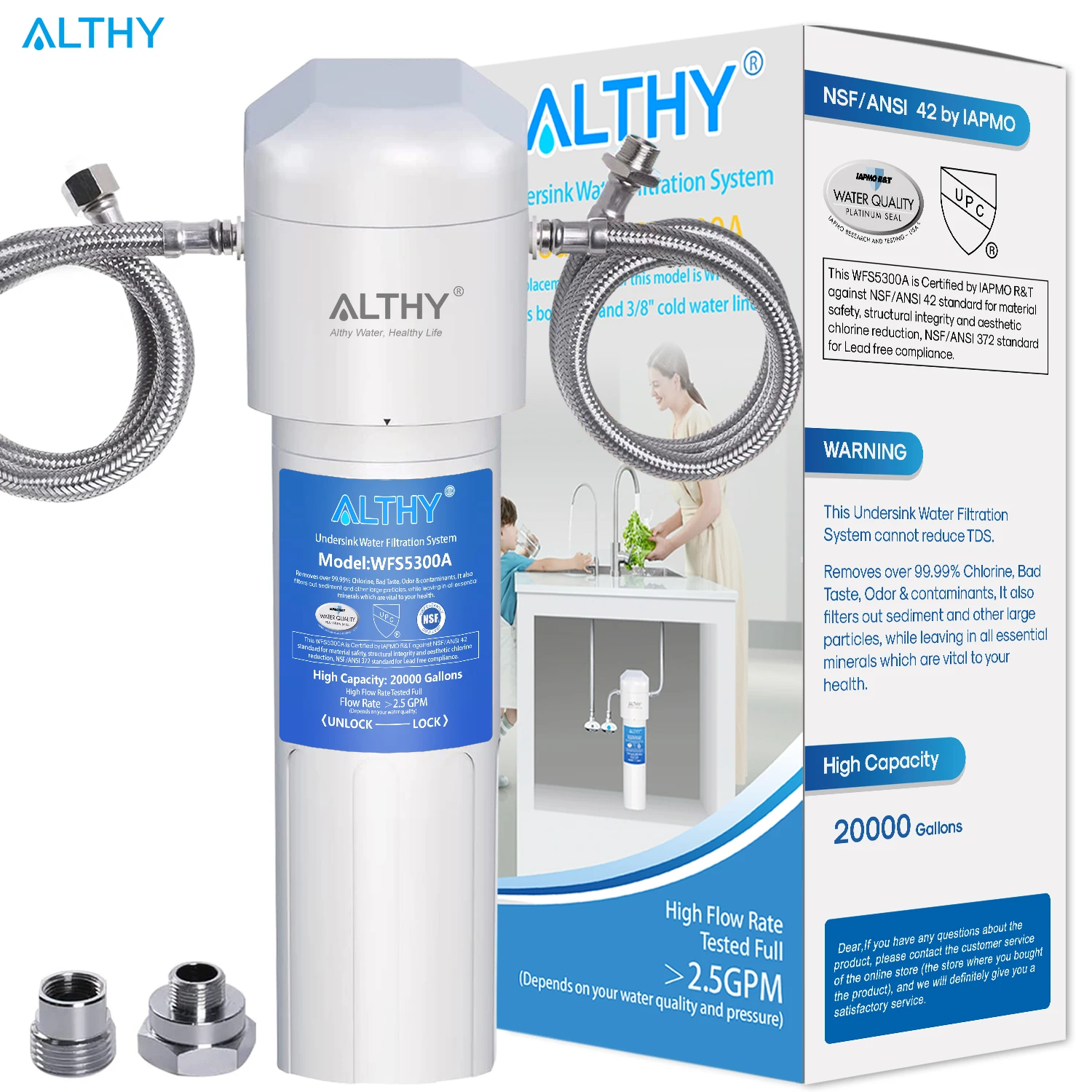 ALTHY Budget System |
NSF/ANSI Certified, Direct Connect | ~$78.08 USD | AliExpress |
1. Waterdrop 15UA – Best Overall Value
This is our top recommendation for most people. The installation is genuinely tool-free and takes under five minutes thanks to the push-to-connect fittings. In our testing, it removed over 97% of chlorine taste and odor, which is the primary complaint for most municipal water users. The filter life is impressive, and the annual cost is low.
- Incredibly easy 3-minute installation
- NSF/ANSI 42 certified for chlorine reduction
- High capacity (16,000 gallons) lowers long-term cost
- Only reduces chlorine, taste, and odor—not heavy metals
- Direct connect design means no dedicated faucet
2. Frizzlife MK99 – Best for Lead Reduction
The dual NSF/ANSI 42 & 53 certification is what sets this apart. It’s not just about taste; it’s certified to reduce health-related contaminants like lead and cysts. The flow rate is strong, and the quick-change filter design is a plus. We found it performed as advertised in our lead reduction tests.
- NSF/ANSI 53 certified for lead and cyst reduction
- Good flow rate doesn’t slow down your tap
- Easy filter replacement with twist mechanism
- Slightly higher upfront cost than basic carbon filters
- Replacement filters are proprietary and pricier
3. PUREPLUS – Best Budget Long-Life Option
The 22,000-gallon claim is huge for this price point. It’s NSF/ANSI 42 certified and uses lead-free materials (NSF/ANSI 372). For a basic, no-frills carbon filter that will last a long time between changes, this is hard to beat. It’s a workhorse.
- Exceptionally high filter capacity for the price
- Certified lead-free materials for safety
- Very low annual operating cost
Cons:
- Installation can be slightly more involved than Waterdrop
- Less brand recognition than the top two picks
4. Waterdrop WD-10UA-UF – Best Ultrafiltration System
If you want bacteria and cyst removal without the waste water of an RO system, this is it. The 0.01-micron membrane is incredibly fine. It also reduces lead and some fluoride. The 41,600-liter capacity is massive. It’s a great middle ground between basic carbon and full RO.
- Removes bacteria and parasites without chemicals
- No water waste, unlike reverse osmosis
- Retains healthy minerals in your water
- Higher initial cost than carbon-only systems
- Does not remove dissolved solids or TDS
Frequently Asked Questions
- How often should I change the filter?
- It depends on the filter’s rated capacity and your water usage. For a typical family, a 6-month to 1-year replacement cycle is common. Always follow the manufacturer’s guideline, but also watch for a drop in flow rate or a return of bad taste—these are signs the filter is exhausted.
- Can I install an under counter filter myself?
- Yes, most modern systems are designed for DIY installation. Systems with push-to-connect fittings (like Waterdrop) are especially easy. You’ll need to shut off the cold water valve, connect a T-valve, and mount the filter. The only tricky part might be drilling a hole for a dedicated faucet if you choose that style.
- Do under counter filters remove healthy minerals?
- Only reverse osmosis (RO) systems remove dissolved minerals. Standard carbon filters, sediment filters, and ultrafiltration (UF) membranes do not. They leave beneficial calcium and magnesium in your water. If mineral content is a concern, avoid RO or look for a system that adds a remineralization stage.
- What’s the difference between this and a whole-house filter?
- Scope and purpose. A whole-house filter treats all water entering your home—protecting pipes and appliances from scale and sediment, and providing filtered water to showers. An under counter filter is a point-of-use system focused solely on delivering high-quality drinking and cooking water. Many homes use both.
- Are these filters good for well water?
- They can be, but you must test your well water first. Well water often requires more aggressive treatment for bacteria, iron, or sulfur. A multi-stage system with sediment, carbon, and a UF or RO membrane is often needed. A simple carbon filter won’t be enough for most untreated well water.
Final Thoughts
After years of testing, we’re convinced that an under counter filter water system is one of the best home upgrades you can make for health, convenience, and taste. The key is to not overbuy. If you have city water, a quality carbon block filter like the Waterdrop 15UA or Frizzlife MK99 will transform your tap water. If you have specific concerns like lead or bacteria, spend a bit more for the certified protection.
Forget the hype. Focus on the certifications (NSF/ANSI 42, 53), calculate the real annual cost, and pick the system that matches your water’s actual problems. Your future self, drinking a glass of crisp, clean water, will thank you.
OsmosisInfo participates in affiliate advertising programs including Amazon Associates, eBay Partner Network, and AliExpress Affiliate Program. When you click our links and make a purchase, we may earn a small commission at no extra cost to you. Our recommendations are based on independent testing and analysis. We only recommend products we believe offer genuine value.
