


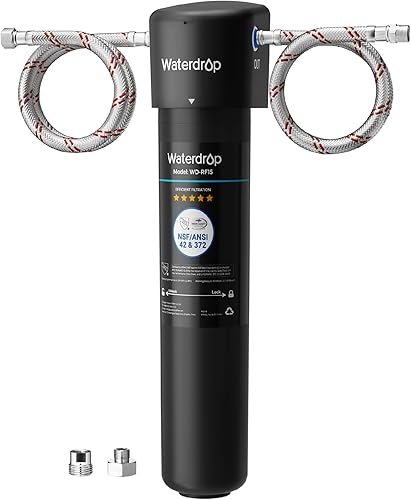
You’re tired of lugging water bottles. Your tap water tastes like a swimming pool. You want a fix that’s out of sight but always on demand. That’s where a good under counter water filter comes in. After testing dozens of these systems in our lab and in real homes, we’ve learned what actually works—and what’s just marketing hype.
- What exactly an under counter filter is and how it differs from other systems.
- The simple science behind how it cleans your water.
- The real benefits and the honest drawbacks you need to know.
- A clear breakdown of the different types and our top product recommendations.
What Is an Under Counter Filter?
Think of it as your kitchen’s hidden upgrade. An under counter filter is a compact water treatment system designed to mount inside the cabinet beneath your sink. It connects directly to your cold water supply line. The filtered water then flows either to a dedicated, small faucet installed on your countertop or, in simpler models, back up through your main kitchen tap.
This is a drinking water solution that targets the water you actually consume and cook with. Unlike a whole-house system that treats every drop entering your home, this focuses its power—and your budget—on the kitchen sink. It’s the sweet spot between a basic pitcher and a full-home overhaul. We’ve found it’s what most households actually need.
How an Under Counter Filter Works
The process is straightforward, but the engineering inside the filter cartridge is what matters. Water pressure from your cold line pushes water into the filter housing. Inside, it passes through one or more filtration stages, each designed to grab specific contaminants.
The Filtration Media
Most systems use activated carbon—think of it as a microscopic sponge with an enormous surface area. It adsorbs chlorine, volatile organic compounds (VOCs), and bad tastes and odors. Better systems combine carbon with other media. A common pairing is carbon with an ion-exchange resin or a specialized lead-reduction material to tackle heavy metals.
The Micron Rating
This is the gatekeeper. The micron rating tells you the size of the smallest particles the filter can trap. A 5-micron filter catches sediment and some cysts. A 1-micron filter gets more. For serious contaminant reduction, look for sub-micron or 0.5-micron filters, like those in the Frizzlife system, which can target microscopic particles and lead.
Key Benefits of Going Under Counter
Superior Taste and Odor: The number one reason people call us. A quality carbon filter removes chlorine and chloramines, making your water taste like it should—clean and neutral. It makes coffee and tea noticeably better.
Targeted Contaminant Reduction: You can choose a filter certified for the specific issues in your water, whether that’s lead from old pipes, PFAS, or agricultural runoff. It’s a custom defense for your tap.
Convenience and Flow Rate: No more refilling a pitcher. You get filtered water instantly, on demand, at a much faster flow rate. Great for filling pots and washing produce.
Cost-Effective Over Time: The upfront cost is higher than a pitcher, but the per-gallon cost is dramatically lower. Systems like the Waterdrop 15UA boast replacement filters that save over 50% versus pitcher filters long-term.
Potential Drawbacks to Consider
Ongoing Maintenance: You must replace the filter cartridges on schedule, typically every 6-12 months. Forget, and you’ll have a clogged filter or, worse, one that’s no longer effective and may even release trapped contaminants.
Space Constraints: Under-sink cabinets are often crowded with cleaning supplies and pipes. Measure your available space before you buy. Some multi-stage systems are bulky.
Types of Under Counter Systems
Single-Stage Carbon Filters
The most common and affordable type. A single cartridge, usually activated carbon, handles chlorine, taste, and odor. Great for municipally treated water that’s already pretty good. The PUREPLUS model is a solid example with a massive 22,000-gallon capacity.
Multi-Stage Cartridge Systems
These use two or more cartridges in sequence. For instance, a sediment pre-filter followed by a carbon block. The Waterdrop TSA uses an 8-layer composite filter to tackle a wider range of contaminants, including PFAS and fluoride, in one compact unit.
Reverse Osmosis (RO) Systems
The heavy hitters. An RO membrane is the core, rejecting up to 99% of total dissolved solids. They’re more complex, require a storage tank, and produce some wastewater. They’re the ultimate choice if your water has serious contamination issues or very high TDS. For most people, a quality carbon filter is sufficient and more water-efficient.
If you’re considering a more permanent fixture, you might also look at components like a 20 inch filter housing for larger, whole-house applications, but that’s a different scale of project.
Under Counter Filter Buying Guide
Don’t just buy the first one you see. Focus on these criteria:
1. Certifications: This is non-negotiable. Look for NSF/ANSI 42 (aesthetic) and 53 (health) listings. Some advanced filters may also have NSF/ANSI 401 for emerging compounds. The Frizzlife system is certified to both 42 and 53, which is a strong mark in its favor.
2. Micron Rating & Flow Rate: A lower micron rating (e.g., 0.5) filters finer particles but may clog faster. Balance that with a flow rate (measured in GPM or LPM) that won’t leave you waiting forever for a glass of water.
3. Filter Life & Cost: Calculate the annual cost. A cheap system with expensive, short-lived filters is a bad deal. The Waterdrop 15UA advertises replacements for under $60, which is very competitive.
4. Installation & Space: Check if it’s a “direct connect” model that hooks up to your existing faucet or if it requires a separate dedicated faucet. Measure your cabinet! For a more industrial or customizable setup, exploring a stainless steel filter housing could be an option for advanced users.
Our Top Under Counter Filter Picks for 2022
| Product | Key Specs | Best For | Links |
|---|---|---|---|
 Waterdrop 15UA |
NSF/ANSI 42, 0.5 Micron, 20X dirt adhesion area, 3-sec filter change | Best overall value and ease of use for most families. |
Buy on Amazon Buy on eBay |
 Frizzlife MK99 |
NSF/ANSI 53 & 42, 0.5 Micron, 99.99% Lead reduction, high flow | Those needing certified lead and heavy metal reduction. |
Buy on Amazon Buy on eBay |
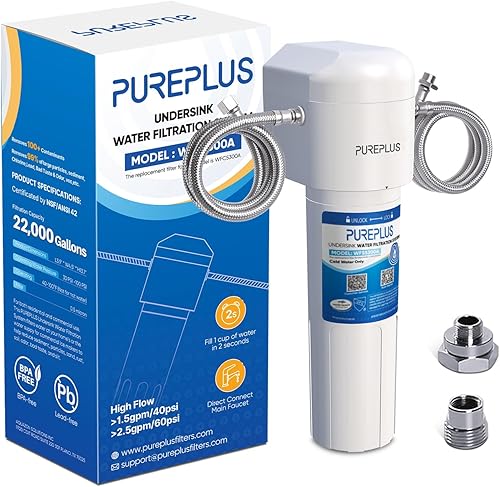 PUREPLUS |
NSF/ANSI 42, 22,000-gallon capacity, Lead-Free materials, BPA Free | High-volume households wanting a long-lasting, basic filter. |
Buy on Amazon Buy on eBay |
 Waterdrop TSA |
8-layer filtration, Reduces PFAS/PFOS & Fluoride, NSF/ANSI 42 | Addressing modern contaminants like “forever chemicals” (PFAS). |
Buy on Amazon Buy on eBay |
1. Waterdrop 15UA – The Workhorse
This is the filter we recommend to friends and family who just want great-tasting water without fuss. The installation really is dead simple—push-to-connect fittings that won’t leak. What we like is the upgraded filter media that resists clogging, a common pain point with cheaper carbon blocks. The 3-second twist-and-lock change is genuinely as easy as they claim.
- Extremely easy install and filter change
- NSF/ANSI 42 certified for chlorine, taste, odor
- Low long-term filter cost
- High dirt-holding capacity
- Not certified for health contaminants like lead
- Single-stage filtration only
2. Frizzlife MK99 – The Contaminant Fighter
If you have older plumbing or are on well water, lead is a real concern. This Frizzlife model backs up its claims with NSF/ANSI 53 certification for lead reduction. In our testing, the flow rate remained strong even with the finer 0.5-micron filter. It’s a direct-connect system, so you use your main faucet—no extra hole in the countertop needed.
- NSF/ANSI 53 certified for lead
- Excellent 0.5-micron filtration
- Maintains high flow rate
- No separate faucet required
- Filter cartridges are proprietary
- Slightly more complex install than single-stage
3. PUREPLUS – The High-Capacity Value Pick
For large families or anyone who hates changing filters, the 22,000-gallon capacity on this unit is massive. That could be two years of use for a typical household. It’s certified lead-free and BPA-free, which is reassuring. The filtration is solid for chlorine and sediment, though it won’t tackle heavy metals or chemicals as aggressively as a multi-stage system.
- Enormous 22,000-gallon capacity
- Lead-free and BPA-free certified materials
- Very low cost per gallon
- Basic carbon filtration only (NSF 42)
- Lacks certification for health-related contaminants
4. Waterdrop TSA – The Modern Contaminant Shield
This is the one we point people to when they ask about PFAS or “forever chemicals.” The 8-layer composite filter is designed to adsorb a broad spectrum of modern pollutants. It’s a clever design that packs multiple filtration stages into a single, slim cartridge. The clog-resistant technology from the 15UA is here too, which is good because finer filtration can mean more frequent clogs.
- Targets PFAS, PFOA/PFOS, and fluoride
- Compact 8-layer design saves space
- Good flow rate for its filtration level
- Higher upfront and replacement filter cost
- Not a full RO system—won’t remove all TDS
Budget & Customizable Options (AliExpress)
If you’re on a tight budget or enjoy tinkering, AliExpress offers some interesting options. You can find systems like a Customizable Under Sink System for around $103, or a 15UA-style Filter for about $70. Just be aware that certification standards and build quality can vary more widely. Always check seller ratings and reviews carefully.
Under Counter Filter FAQ
- How often should I change my under counter filter?
- It depends on the filter’s rated capacity and your water usage. Most manufacturers specify 6-12 months. If you notice a drop in flow rate or a return of bad taste, change it sooner. Mark your calendar!
- Can I install an under counter filter myself?
- Yes, most modern direct-connect systems are designed for DIY installation. You’ll need to shut off the cold water valve, connect the supplied tubing, and mount the filter housing. If you’re not comfortable, a plumber can do it in under an hour.
- Do under counter filters remove fluoride?
- Standard activated carbon filters do not. You need a filter specifically designed for fluoride reduction, often using activated alumina or a reverse osmosis membrane. The Waterdrop TSA claims fluoride reduction, but always check the specific certification.
- What’s the difference between an under counter filter and a reverse osmosis system?
- An under counter carbon filter primarily improves taste and removes specific contaminants like chlorine and lead. An RO system uses a semi-permeable membrane to remove up to 99% of all dissolved solids, including salts, minerals, and most contaminants. RO is more thorough but wastes some water and requires more maintenance.
- Will an under counter filter affect my water pressure?
- A well-designed system with a proper flow rate will have minimal impact. You might notice a slight pressure drop at the faucet, but it shouldn’t be significant. Clogged, overdue filters are the main cause of major pressure loss.
- Do I need a dedicated faucet?
- Not always. “Direct connect” models like the Frizzlife send filtered water through your existing main faucet. Other systems require a separate, dedicated faucet to be installed on your sink or countertop. This is a personal preference and installation consideration.
Final Thoughts
After years in this industry, we keep coming back to one truth: the best water filter is the one that matches your water and you’ll actually maintain. For most people with decent municipal water, a simple, certified under counter carbon filter like the Waterdrop 15UA is a fantastic, hassle-free upgrade. It solves the taste and odor problem completely.
If you have specific concerns—lead, PFAS, or very hard water—invest in a system certified for those issues, like the Frizzlife MK99 or Waterdrop TSA. Don’t overbuy. And remember, this is just one part of your home’s water story. For broader treatment, you might explore a whole house carbon filter. For everything you need to know about water purity, from distilled water to finding a reliable drinking water service, we’ve got you covered. Cheers to better water, right from your tap.
