


After testing dozens of systems and talking to countless plumbers, I can tell you that UV purification is one of the most misunderstood tools in home water treatment. People either think it’s a magic bullet or completely unnecessary. The truth, as usual, lies in the middle. This guide will break down exactly what an ultraviolet water purifier does, when you need one, and how to pick the right model for your home in 2026.
What Is an Ultraviolet Water Purifier?
An ultraviolet water purifier is a device that uses UV-C light, a specific wavelength of ultraviolet radiation, to disinfect water. It’s a physical process, not a chemical one. The light penetrates the cells of microorganisms like bacteria, viruses, and protozoa, scrambling their DNA so they can’t reproduce. You’re not killing them in the traditional sense; you’re rendering them harmless.
Think of it like a high-tech, silent security guard for your water supply. It doesn’t filter out dirt, lead, or chlorine. Its sole job is to neutralize living contaminants that can make you sick. That’s why you’ll almost always see a UV unit installed after a sediment filter and a activated carbon water filter in a proper treatment chain. The pre-filters clean up the water’s clarity so the UV light can do its job effectively.
How UV Water Purification Works
The science is straightforward, but the engineering is precise. Here’s the step-by-step.
The Core Components
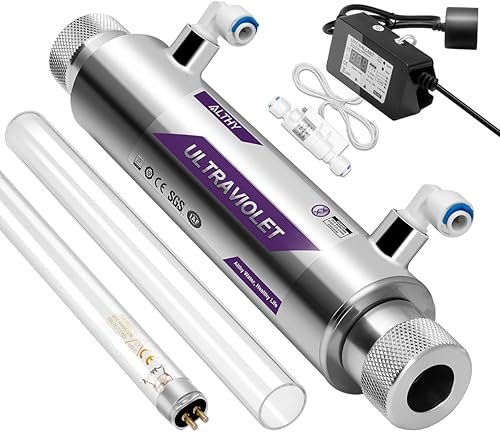
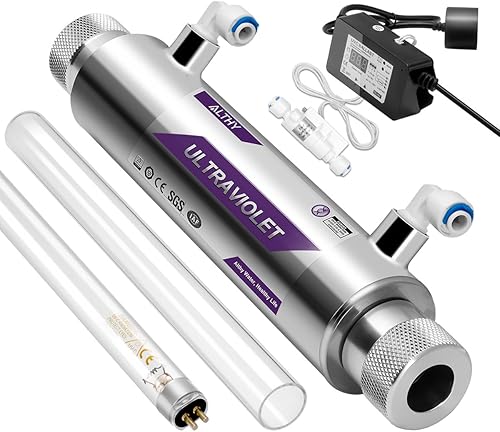
Every system has the same basic parts: a stainless steel chamber, a quartz glass sleeve, the UV-C lamp, and an electronic ballast. Water flows into the chamber and is exposed to the intense light as it passes around the quartz sleeve. The ballast powers the lamp and usually has an indicator light to tell you if it’s working.
The Disinfection Process
The magic number is 40 mJ/cm². That’s the minimum UV dose required to inactivate most common waterborne pathogens. A properly sized system will deliver at least this dose at its rated flow rate. The key factors are contact time (how long the water is exposed) and intensity (the lamp’s power). This is why flow rate is so critical—a system rated for 1 GPM will fail to protect you if you push 3 GPM through it.
Key Benefits of UV Systems
Chemical-Free Disinfection: No chlorine, no iodine, no byproducts. The water’s taste, odor, and pH remain unchanged. This is a huge deal for people on private wells or anyone trying to avoid chlorine filter system residuals.
Extremely Effective: When installed correctly, UV is 99.99% effective against a vast list of microorganisms, including nasty ones like E. coli, Giardia, and Cryptosporidium. It’s the same technology used in hospitals and bottled water plants.
Low Energy & Maintenance: A typical under-sink unit uses about the same power as a small light bulb. The main maintenance is replacing the lamp annually and wiping the quartz sleeve occasionally. It’s simple and cheap to run.
Potential Drawbacks to Consider
Doesn’t Remove Anything: Heavy metals, chemicals, salts, sediment—it passes right through. If your water has lead, you need a dedicated lead filter. If it has hydrogen sulfide (that rotten egg smell), you’ll need a separate hydrogen sulfide filter. UV is the last line of defense, not the first.
Requires Electricity: No power, no protection. If you have frequent outages, you’ll need a backup plan. It also means installation near an outlet.
Pre-Treatment is Non-Negotiable: As I mentioned, cloudy water kills its effectiveness. You must have adequate pre-filtration. Skipping this is the single biggest mistake we see homeowners make.
Types of UV Purification Systems
Point-of-Entry (POE) / Whole House
These are big boys, usually 10-40 GPM, installed where the water line enters your home. They protect every faucet, shower, and appliance. Ideal for well water with known bacterial issues. They cost more upfront but give you complete peace of mind.
Point-of-Use (POU) / Under-Sink
These smaller units (typically 0.5-1 GPM) are installed under a specific sink to treat drinking and cooking water. They’re more affordable and are a great option if your municipal water is generally safe but you want an extra layer of protection, or if only one tap needs it.
Combo Units
You’ll often find UV lamps built into reverse osmosis systems or other multi-stage filters. These can be great space-savers. The Waterdrop WD-X8 in our list below is a good example, combining RO with a final UV stage for filtered drinking water that’s microbiologically secure.
Buying Guide: What Actually Matters
Flow Rate (GPM): Match this to your need. 1 GPM is fine for a drinking faucet. For a whole house, calculate your peak demand (how many showers/appliances run at once) and size up.
Lamp Power & Quality: Look for reputable lamp brands like Philips or Lightsources. Wattage matters, but so does the design of the chamber for proper exposure. A 12W lamp in a well-designed chamber can outperform a poorly made 20W unit.
Certifications: Look for NSF/ANSI 55 Class A certification. This verifies the system delivers the required UV dose. It’s your best assurance of performance.
Smart Features: A flow sensor that only turns the lamp on when water is flowing saves energy and extends bulb life. Digital displays showing remaining lamp life are also handy. These used to be premium features but are becoming standard on better models.
Our Top UV Purifier Picks for 2026
| Product | Type | Key Specs | Best For | Price |
|---|---|---|---|---|
 |
Under-Sink / Add-on | 1 GPM, 11W, Smart Flow Sensor | Adding UV to an existing RO or filter system | $1.29 |
 |
Whole House / Point-of-Entry | 1 GPM, 12W, Stainless Steel | Budget-conscious whole-house disinfection | $1.00 |
 |
Whole House / Point-of-Entry | 12 GPM, 48W, Smart Flow Sensor | Large homes with high water demand | $3.49 |
 |
Under-Sink RO + UV Combo | 800 GPD, 9-Stage, NSF Certified | All-in-one purification for drinking water | $7.19 |
1. ALTHY UVF-FS11: Best Add-On UV Sterilizer
This is the unit I recommend to readers who already have a good sediment and carbon block filter but want to add disinfection. The smart flow sensor is a killer feature—it only powers the lamp when you’re drawing water, which can double the life of the bulb. The 1 GPM flow is perfect for a dedicated drinking water faucet. Installation is straightforward for anyone comfortable with basic plumbing.
- Excellent value for a Philips lamp unit
- Flow sensor saves energy and bulb life
- 304 stainless steel chamber feels durable
- 1 GPM is only suitable for a single faucet
- Mounting clips could be more robust
2. VEVOR 12W UV Water Purifier: Best Budget Whole House Option
Look, most people don’t need a $1,000 UV system. If you’re on a well and need basic bacterial protection for your whole house without breaking the bank, this VEVOR unit is a solid starting point. It claims a 99.99% sterilization rate and has the essential stainless steel construction. The 1 GPM flow rate, however, is a real limitation for larger households—it’s more of a “point-of-entry for a small cabin” than a true whole-house system for a family of four.
- Extremely affordable entry point
- Simple, no-frills design
- Includes installation clamps and manual
- 1 GPM flow rate is very low for whole house
- No smart features or digital display
3. ALTHY Whole House UV (12 GPM): Our Top Whole House Pick
This is the real deal for whole-house protection. A 12 GPM flow rate handles multiple showers and appliances running simultaneously. The 48W Philips lamp is powerful, and the 9,000-hour life is impressive. We like the smart flow sensor here even more than on the under-sink model—on a whole-house system, the energy and bulb savings add up quickly. It’s a significant step up in price from the VEVOR, but you’re getting a properly sized, feature-rich system.
- True 12 GPM flow for whole-house use
- High-quality 48W Philips lamp
- Flow sensor and long 9,000-hour bulb life
- Higher upfront investment
- Requires more space for installation
4. Waterdrop WD-X8: Best RO + UV Combo System
If you want the ultimate in under-sink purification and don’t want to piece together separate components, the Waterdrop X8 is a top contender. Its 9-stage filtration, including a 0.0001μm RO membrane, tackles virtually every contaminant, and the final UV stage provides that extra microbiological safety net. The 800 GPD capacity means fast flow, and the 2:1 pure-to-drain ratio is excellent for an RO system. It’s certified against NSF/ANSI 42, 53, and 372.
- All-in-one solution: sediment, carbon, RO, and UV
- High 800 GPD flow rate and low waste water
- Strong NSF/ANSI certifications
- Much higher cost than a standalone UV add-on
- More complex installation and filter changes
Frequently Asked Questions
- Does a UV purifier waste water?
- No. Unlike reverse osmosis systems that produce wastewater, a UV purifier uses all the water that flows through it. It’s a 1:1 process. The only “waste” is the small amount of electricity to power the lamp.
- How often do I need to change the UV lamp?
- Annually, or after about 9,000 hours of use. The lamp may still glow blue after this point, but its disinfecting power will have dropped below effective levels. Always follow the manufacturer’s schedule.
- Can I install a UV system myself?
- Yes, if you’re comfortable with basic plumbing and have an accessible location near an outlet. The process involves cutting into the water line, installing the unit with the provided fittings, and connecting power. When in doubt, hire a plumber.
- Will UV purify my entire house’s water?
- Only if you buy a whole-house (POE) system with a sufficient flow rate (GPM). A small under-sink unit will only treat the water at that specific faucet. Check the product’s rated flow rate against your home’s peak demand.
- Is UV better than a gravity fed water filter?
- They do different jobs. A good gravity filter with a ceramic or carbon block element can remove bacteria and chemicals. UV is faster and more reliable for disinfection but does nothing for chemicals. For well water, many people use both: a gravity filter for sediment and chemicals, and UV for guaranteed microbial safety.
Final Thoughts
An ultraviolet water purifier is a specialist tool. It’s not for everyone. If you’re on a municipal supply that’s already chlorinated, you probably don’t need one. But if you’re on a well, have a compromised immune system, or just want absolute certainty that your water is microbiologically safe, UV is one of the best investments you can make.
For most homeowners adding UV to an existing setup, the ALTHY UVF-FS11 is our top recommendation for its smart features and value. For whole-house protection, step up to the ALTHY 12 GPM model. And if you’re starting from scratch and want one system to rule them all, the Waterdrop X8 RO+UV combo is hard to beat. Just remember: pre-filtration is everything. Don’t skip it.
