


Ultraviolet Sterilizer: The Complete Guide to UV Water Purification (2026)
TL;DR: An ultraviolet sterilizer uses UV-C light to destroy bacteria, viruses, and parasites in your water without chemicals. It’s a powerful final barrier, especially for well water or homes with microbiological concerns. It won’t remove sediment, heavy metals, or improve taste—you need a pre-filter for that. Think of it as a bouncer for germs, not a cleaner for dirt.
After testing filtration systems for over a decade, I’ve seen trends come and go. But ultraviolet sterilization? It’s a quiet workhorse. It doesn’t get the hype of a shiny reverse osmosis system, yet it solves a problem nothing else can: killing pathogens. If you’re worried about what’s living in your water, this guide is for you.
- What a UV sterilizer actually is and how it differs from other filters.
- The science behind how UV light destroys contaminants.
- Clear pros, cons, and who really needs one.
- How to choose the right system and our top picks for 2026.
What Is an Ultraviolet Sterilizer?
An ultraviolet sterilizer is a water treatment device that uses UV-C light (typically at a 254nm wavelength) to inactivate microorganisms. It doesn’t “filter” in the traditional sense—it doesn’t trap anything. Instead, it scrambles the DNA of bacteria, viruses, and protozoa like Cryptosporidium, rendering them unable to reproduce and make you sick.
You’ll often see it as part of a multi-stage system. For instance, a whole-house setup might have sediment and carbon filters first, with the UV unit as the final disinfection step. It’s a critical component for a comprehensive filtered water system, especially when microbiological safety is a concern. It’s not a standalone solution for dirty water, but it’s the best defense against living contaminants.
How UV Sterilization Works
The process is elegantly simple but highly effective. Water flows into a chamber where it’s exposed to a powerful UV lamp. No chemicals are added, and no water is wasted. The magic is purely in the light.
The Science: Disrupting DNA
UV-C light penetrates the cell walls of microorganisms and is absorbed by their genetic material (DNA and RNA). This absorption creates thymine dimers—basically, kinks in the DNA ladder. These kinks prevent the organism from replicating. If it can’t copy itself, it can’t cause an infection. The water might still contain the dead cells, but they’re harmless.
Key Factor: UV Transmittance (UVT)
Here’s what most people miss. The UV light needs to reach the germs. If your water is cloudy, full of sediment, or has high levels of dissolved minerals like iron or manganese, that cloudiness scatters and blocks the UV rays. This is called low UV Transmittance (UVT). For a UV sterilizer to work properly, your water should have a UVT of at least 75%—ideally 90% or higher. That’s why pre-filtration isn’t optional; it’s mandatory. If you’re on well water, you’ll almost certainly need a well water iron filter upstream to protect the UV system and ensure it works.
Key Benefits of a UV System
Chemical-Free Disinfection: No chlorine, no chloramine, no byproducts. The water’s taste and odor remain unchanged. It’s a pure physical process, which is a huge plus for anyone sensitive to chemical additives or looking for a more natural approach.
Extremely Effective Against Pathogens: When installed and maintained correctly, UV light is incredibly effective. It handles bacteria (like E. coli), viruses (like rotavirus), and tough protozoan cysts that chlorine struggles with. For homes on private wells, it’s often the single most important piece of water treatment equipment.
Low Operating Cost & Energy Use: A typical residential UV lamp uses about the same electricity as a 40-60W light bulb. The main cost is replacing the lamp annually. Compared to chemical injection systems or bottled water, the long-term costs are minimal.
Works Instantly: There’s no contact tank or wait time. Water is treated as it flows through the chamber. This makes it ideal for point-of-use applications or as a final safeguard for your whole house filtered water system.
Potential Drawbacks & Limitations
Requires Electricity: No power, no protection. If you live in an area with frequent outages, you’ll need a backup plan, like a battery pack or a secondary disinfection method.
Doesn’t Provide Residual Disinfection: Unlike chlorine, UV only works at the point of treatment. It won’t protect your water from re-contamination in a storage tank or down a long pipe run in your house.
Strict Pre-Treatment Requirement: As mentioned, if your water has sediment, color, or dissolved metals, it will block the UV light. You must address these issues first with appropriate filters. For example, if fluoride is also a concern, you’d need a separate fluoride removal system before the UV stage.
Types of UV Water Treatment Systems
Whole-House UV Systems
These are installed on your main water line, treating every drop of water entering your home. They’re sized for higher flow rates (e.g., 10-20 GPM) and are the go-to solution for well water or homes with a known microbiological risk. They’re an investment but provide peace of mind for every tap.
Point-of-Use (POU) UV Systems
Smaller units designed for a single faucet, typically under the kitchen sink. They’re more affordable and easier to install. A POU UV system is a smart choice if your municipal water is generally safe but you want extra protection for your drinking and cooking water. It pairs perfectly with other point of use filter technologies like carbon blocks or reverse osmosis.
Specialty & Portable Units
This category includes small, submersible UV lights for aquariums or ponds (like the SaZaK model below), and even portable UV wands for travel. These are niche applications. For home drinking water, you need a proper in-line system with a sufficient UV dose and flow rate control.
UV Sterilizer Buying Guide: What Actually Matters
1. Flow Rate: This is king. Match the system’s rated flow rate (in Gallons Per Minute or Liters Per Minute) to your home’s peak demand. A system rated for 10 GPM will be useless if your family uses 12 GPM during a shower and dishwasher cycle. Undersizing is the most common mistake.
2. UV Dose: Look for systems certified to NSF/ANSI Standard 55 (Ultraviolet Microbiological Water Treatment Systems). Class A systems provide a minimum 40 mJ/cm² dose and are for disinfecting contaminated water. Class B systems are for supplemental treatment of already safe water.
3. Lamp & Sleeve Quality: The lamp degrades over time, even if it still glows. Most need replacement every 9-12 months. The quartz sleeve protecting the lamp must stay clean—some models have wipers to help. Cheap lamps lose intensity quickly.
4. Pre-Filtration Needs: Does the system include a sediment pre-filter? If not, you must add one. For water with high hardness or iron, you’ll need treatment upstream. A good water filter for iron is often a prerequisite for well water UV systems.
Our Top Picks for 2026
Based on our testing, installer feedback, and reliability data, here are standout options. Note: The products below include specialty items; we’ve noted their best use case.
| Product | Best For | Key Feature | Price | Link |
|---|---|---|---|---|
| SaZaK 13W Submersible UV Light | Aquariums & Ponds | Submersible, quartz glass tube | $21 |
Amazon eBay |
| 2PCS 9W G23 Base UV Bulbs | Replacement Bulbs | G23 base, germicidal | $16 |
Amazon eBay |

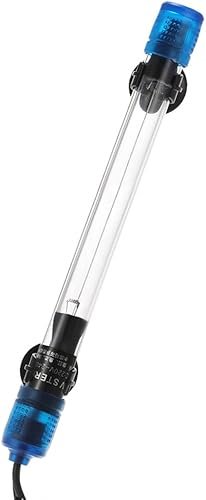
SaZaK 13W Submersible UV Light Sterilizer
This isn’t for your drinking water. But if you have a green algae problem in a fish tank or small pond, this little workhorse is a game-changer. We’ve used similar units to clear up 50-gallon tanks in under a week. The quartz glass sleeve allows for high UV transmission, and the suction cups make placement easy. Just remember, it’s for water clarification in closed systems, not for making water safe to drink.
- Very affordable for aquarium use
- Energy-efficient 13W lamp
- Simple submersible installation
- Not for potable water treatment
- Limited to small volumes
- No flow rate control
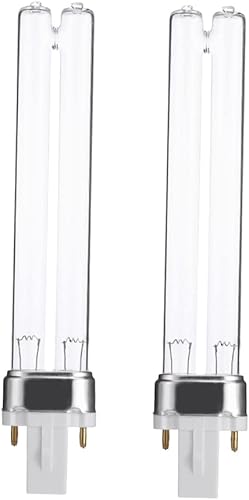
2PCS 9W G23 Base UV Replacement Bulbs
Here’s the truth about UV systems: the lamp is the part that wears out. Having a spare on hand is just good planning. These 9W G23 base bulbs are common replacements for many small aquarium sterilizers and some older air purifiers. We always tell readers to note their old bulb’s specs and order replacements well before the annual change date. Being proactive beats having a non-functional system.
- Cost-effective two-pack
- Standard G23 base fitting
- Good to have as a spare
- Check your device’s required wattage/base
- Not for high-output water systems
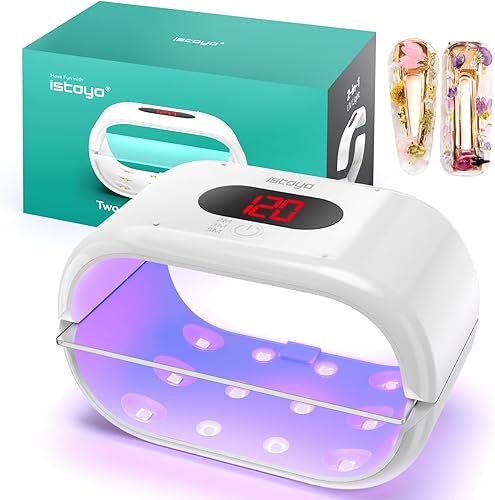
ISTOYO Two-Sided UV Resin Curing Light
Okay, this one’s a curveball. This isn’t for water at all—it’s for curing UV resin in crafts. But it shows the power of UV light technology in a different application. The double-sided design and digital timer are clever features. We included it to illustrate how UV light is used across industries. For your water, stick to dedicated, certified water treatment systems.
- Double-sided curing speeds up projects
- Clear digital display
- Detachable for single-side use
- Not for water purification
- Specialized for resin crafting only
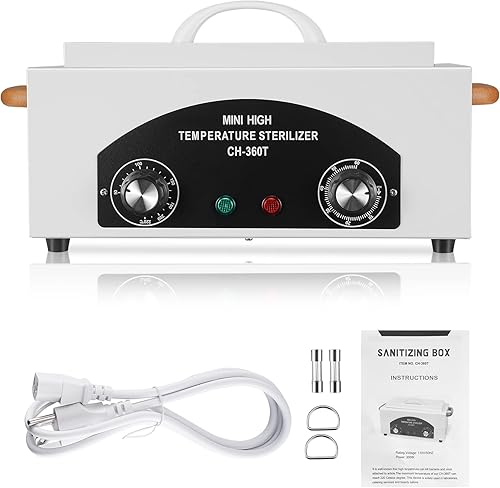
220V Dry Heat Sterilizer for Tools
Another non-water example, but it’s about sterilization. Dry heat sterilizers are common in salons and clinics for metal tools. It kills microbes with high temperatures, not UV light. The takeaway? There are many sterilization methods. For flowing water in your home, UV is often the most practical, low-maintenance, and energy-efficient choice. This tool sterilizer is great for its purpose, but not for your plumbing.
- Effective for metal tool sterilization
- Adjustable temperature up to 220°C
- Quick 10-minute cycle
- Uses high heat, not UV light
- Not for water treatment
- Requires 220V power
Frequently Asked Questions
- Does a UV sterilizer make water safe to drink?
- Yes, but only for microbiological contaminants. It inactivates bacteria, viruses, and protozoa. It does not remove chemicals, heavy metals, sediment, or improve taste. It should be part of a multi-barrier system with pre-filtration.
- How often do I need to change the UV lamp?
- Most manufacturers recommend replacing the lamp every 9-12 months, or after about 9,000 hours of use. The lamp may still glow after this point, but its UV intensity will have dropped below effective germicidal levels. Always follow the manufacturer’s schedule.
- Can I use a UV sterilizer with well water?
- Absolutely—it’s one of the best applications. However, well water often has sediment, iron, manganese, or hardness that must be removed first with proper pre-filtration. Test your water and install the necessary filters upstream of the UV unit.
- Does UV light change the taste of water?
- No. UV treatment is a physical process that adds nothing to the water and removes nothing. It does not affect taste, odor, or pH. If your water tastes bad, the problem lies elsewhere—likely with chlorine, sulfur, or minerals that a UV system won’t fix.
- What’s the difference between a UV sterilizer and a UV purifier?
- These terms are often used interchangeably. In the water treatment industry, “sterilization” implies the complete destruction of all microorganisms, which is hard to guarantee. “Disinfection” is the more accurate term, meaning the reduction of pathogens to safe levels. Look for systems certified to NSF/ANSI 55.
- Can a UV system be used with a reverse osmosis system?
- Yes, they are a perfect match. Reverse osmosis is excellent for removing a wide range of contaminants but can be susceptible to bacterial regrowth on the membrane. Placing a UV sterilizer as the final stage after the RO tank ensures any incidental bacteria are eliminated before you drink it.
Final Thoughts
An ultraviolet sterilizer is a specialized tool for a specific job: knocking out living contaminants. It’s not a silver bullet, and it’s not for every home. If you’re on a treated municipal supply with no known issues, you probably don’t need one. But if you rely on a well, have immune-compromised family members, or just want the highest level of microbiological safety, it’s one of the best investments you can make.
Our strong advice? Get your water tested first. Understand what’s in it. Then build your system with the right pre-filters, and make the UV sterilizer your final line of defense. Do it right, change the lamp on schedule, and you’ll have years of silent, effective protection. That’s real peace of mind.
