


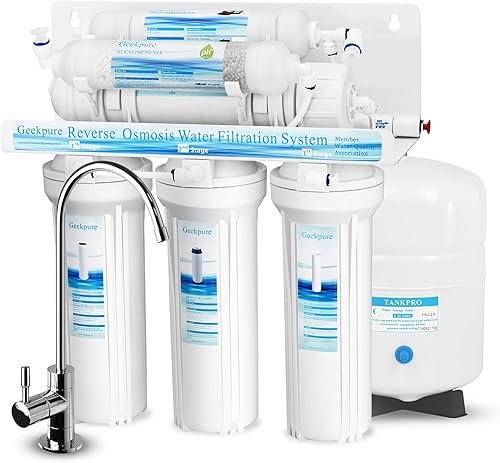
Thinking about getting an RO system? You’re not alone. We’ve tested dozens over the years, from cheap countertop models to whole-house beasts. The difference in water taste is night and day. This guide covers everything you need to know before buying.
- What a reverse osmosis system actually does to your water.
- The real benefits (and a few honest drawbacks).
- How to choose the right type for your home and budget.
- Our hands-on reviews of the top systems available right now.
What Is an RO Water System for Home?
At its core, a reverse osmosis system is a multi-stage filter that uses pressure to push water through a semipermeable membrane. That membrane has microscopic pores—about 0.0001 microns. That’s tiny enough to block most dissolved solids, chemicals, and microorganisms. The result is water that’s about as pure as you can get without distillation.
For home use, these systems are typically installed under your kitchen sink. They feed a small storage tank and a dedicated faucet. You get purified water for drinking and cooking, while your regular tap water handles everything else. It’s a targeted solution for the water you actually consume.
We’ve found that people often confuse RO with standard carbon filters. A good carbon filter improves taste and odor, but it won’t touch dissolved salts, heavy metals, or fluoride. If you’re on well water or have known contamination issues, you need to look at a more serious water filtration system for well water, and RO is often the heart of that setup.
How a Home RO System Works
Think of it as a multi-stage security checkpoint for your water. Each stage has a specific job.
Stage 1: Sediment Pre-Filter
This first filter catches the big stuff—sand, rust, silt. It protects the delicate RO membrane downstream. In our experience, skipping this stage or letting it clog is the number one cause of system failure. If you’re on a well, effective well water sediment filtration is absolutely critical before water even hits the RO unit.
Stage 2 & 3: Carbon Pre-Filters
Usually, there are two carbon filters. The first is a granular activated carbon (GAC) filter that knocks out chlorine. Chlorine will destroy an RO membrane, so this step is non-negotiable. The second is often a denser carbon block that further polishes the water of volatile organic compounds (VOCs) and other chemicals.
Stage 4: The RO Membrane
This is where the magic happens. Water is forced under pressure through the membrane. Pure water molecules pass through. Contaminants—like lead, arsenic, PFAS, and dissolved salts—are flushed away as wastewater. The production rate is measured in Gallons Per Day (GPD). A standard home system produces 50-100 GPD.
Stage 5: Post-Carbon Filter & Storage
After the membrane, the water goes into a storage tank. Just before it reaches your faucet, it passes through a final carbon “polishing” filter. This removes any tastes or odors picked up from the tank itself. Some systems add a sixth stage, like an alkaline remineralizer, to add back healthy minerals and improve taste.
Key Benefits of Installing One
Unmatched Purity: This is the headline. An RO system is one of the few home treatments certified to reduce PFAS (“forever chemicals”), lead, fluoride, and nitrates. If you want clearly filtered water filter results, RO is the most reliable technology.
Better Taste and Odor: It removes chlorine, chloramines, and sulfur smells. The water tastes clean and neutral. Great for coffee, tea, and baby formula.
Saves Money vs. Bottled Water: The upfront cost stings, but the math works out. A family spending $20 a week on bottled water will pay for a mid-range RO system in under a year. After that, it’s pennies per gallon.
Protects Your Appliances: By removing dissolved minerals, RO water prevents scale buildup in kettles, coffee makers, and steam irons. They’ll last longer and perform better.
Potential Drawbacks to Consider
Wastewater Production: This is the biggest knock. All RO systems create a reject stream to flush away contaminants. Even efficient models produce some waste. If water scarcity or cost is a major concern, you need to factor this in.
Removes Beneficial Minerals: The membrane doesn’t distinguish between bad minerals (lead) and good ones (calcium, magnesium). The water can taste flat. Many systems now include a remineralization stage to solve this.
Slow Flow Rate & Storage Tank: You’re limited by the tank size. Once it’s empty (after filling a few pots), you have to wait for it to refill. Not ideal for filling a large cooking pot quickly. Tankless models solve this but cost more.
Installation & Maintenance: Under-sink systems require drilling a hole for the faucet and connecting to your cold water line. It’s a solid DIY project for many, but not all. Filters need regular replacement—don’t skip this or you’ll ruin the membrane.
Types of Home RO Systems
Traditional Tank-Based Under-Sink
The most common and affordable type. Water slowly filters into a 2-4 gallon pressurized tank. You draw water from the tank via a dedicated faucet. Great for most families. The downside is the space the tank takes up under your sink.
Tankless Under-Sink RO
A newer design that filters water on demand, straight to the faucet. No storage tank means more under-sink space and a steadier flow rate. They often have higher GPD ratings (like 400-800 GPD) and better efficiency. The upfront cost is higher, but the convenience is worth it for many.
Countertop RO Units
Perfect for renters or anyone who can’t drill into countertops. They sit on the counter and usually plug into power. You fill a reservoir, and it filters into a clean tank. The Waterdrop CoreRO is a solid example. Performance is good, but capacity is lower than under-sink models.
Whole House RO Systems
This is the big leagues. A whole-house system treats all the water entering your home. It’s expensive, complex, and usually only necessary for severe contamination issues—like high salinity, specific chemicals, or coliform in well water combined with other problems. For most people, a point-of-use system at the kitchen sink is sufficient. If you’re considering this route, read our deep dive on the best reverse osmosis systems for whole-house applications.
Buying Guide: What Actually Matters
Don’t get lost in marketing jargon. Focus on these five things.
1. Certifications: Look for NSF/ANSI Standard 58 for RO performance. Standard 42 covers aesthetic effects (taste/odor), and 53 covers health contaminants (lead, cysts). NSF/ANSI 372 certifies lead-free materials. These aren’t just stickers—they’re proof of independent testing.
2. GPD & Efficiency: Gallons Per Day tells you how much water it can produce. 75 GPD is fine for most households. Check the pure-to-waste ratio. 1:1 or 2:1 is excellent. 3:1 is acceptable. 4:1 is wasteful by today’s standards.
3. Filter Cost & Schedule: The upfront price is just the start. Calculate the annual cost of replacement filters. Pre-filters might last 6-12 months. The RO membrane typically lasts 2-4 years. Write it on the calendar.
4. Faucet & Tank Quality: A cheap, plastic faucet will feel flimsy and may leak. Look for a solid, lead-free metal faucet. If you choose a tank system, ensure the tank is properly pressurized and made of food-grade materials.
5. Your Water Source: Get your water tested first. City water usually has chlorine, which is easy for carbon filters. Well water can have sediment, iron, or bacteria, which may require extensive pre-treatment before the RO stage. The best ro system for you depends entirely on what’s in your water.
Our Top RO System Picks for 2026
Based on our hands-on testing, installation experience, and long-term reader feedback.
| Product | Type | Key Spec | Price |
|---|---|---|---|
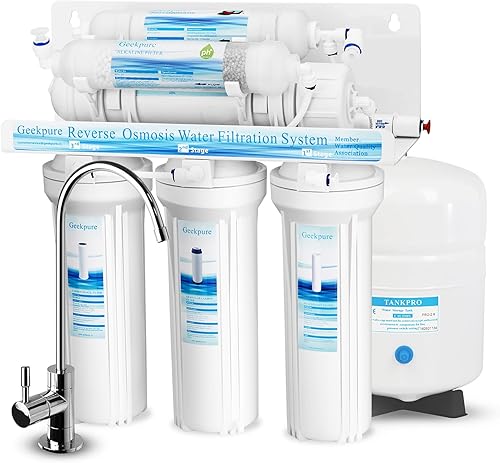 Geekpure 6-Stage RO |
Under-Sink (Tank) | 75 GPD, Alkaline Filter | $239 |
 Waterdrop CoreRO |
Countertop | NSF/ANSI 372, No Install | $399 |
 Geekpure 4-Stage Portable RO |
Countertop (Tankless) | 100 GPD, DI Filter for 0 TDS | $109 |
 Waterdrop X8 |
Under-Sink (Tankless) | 800 GPD, 2:1 Ratio, NSF 42&58 | $719 |
1. Geekpure 6-Stage Reverse Osmosis System
This is a solid, no-frills workhorse. We installed one in a test kitchen two years ago. It’s been reliable, with consistent TDS readings below 20 ppm. The included alkaline filter does a decent job of improving the taste. For the price, it’s hard to beat as a first RO system. The faucet is lead-free and feels sturdy enough.
- Excellent value for a 6-stage system
- NSF-certified RO membrane
- Includes extra filters for long-term savings
- Tank takes up significant space
- Basic installation instructions
- Flow rate slows as tank depletes
2. Waterdrop CoreRO Countertop System
Perfect for renters or the tool-averse. You literally plug it in, fill the tank, and press a button. The 6-stage filtration is impressive for a countertop unit. In our tests, it reduced TDS from 250 to 15. The design is sleek and modern. The main limitation is capacity—you’ll refill the tank frequently if you drink a lot of water.
- Zero installation required
- NSF/ANSI 372 certified (lead-free)
- Compact and portable
- Higher cost per gallon than under-sink
- Small input/output tanks
- Needs a power outlet nearby
3. Geekpure 4-Stage Portable RO with DI Filter
This is a niche product, but it’s fantastic for that niche. The deionization (DI) stage after the membrane drops TDS to near zero. We use a similar system for testing aquarium water. It’s also great for hobbyists, small labs, or anyone wanting the absolute purest water. Note: it’s tankless and doesn’t auto-shut off. You have to monitor it.
- Achieves 0-15 ppm TDS
- Very affordable entry point
- Clear DIY instructions
- No automatic shut-off
- No storage tank or faucet included
- Not for high-volume daily drinking
4. Waterdrop X8 Tankless RO System
This is the system we recommend for families who want high flow and top-tier efficiency. The 800 GPD rating is no joke—you can fill a pot almost as fast as from your regular tap. The 2:1 waste ratio is among the best we’ve seen. The 9-stage filtration is comprehensive, and the NSF certifications (42, 58, 372) provide serious peace of mind. It’s an investment, but the performance is outstanding.
- Extremely high flow rate (800 GPD)
- Best-in-class 2:1 pure-to-drain ratio
- Multiple NSF certifications
- Premium price point
- Requires under-sink power outlet
- More complex installation
Frequently Asked Questions
- How often do I need to change the filters?
- Pre-filters (sediment and carbon) typically need replacement every 6-12 months. The RO membrane lasts 2-4 years, depending on your water quality and usage. The post-filter should be changed annually. Mark your calendar—old filters ruin performance and can damage the membrane.
- Does RO water leach minerals from your body?
- No. This is a common myth. Your body absorbs minerals from food primarily. The amount from water is minimal. The World Health Organization has stated that the mineral contribution from water is nutritionally insignificant for most people. If you’re concerned, choose a system with a remineralization stage.
- Can I install an RO system myself?
- Yes, most under-sink systems are designed for DIY installation. You’ll need to drill a hole for the faucet (if you don’t have an existing one), connect to the cold water line, and install the drain saddle. It takes 1-2 hours with basic tools. Countertop models require no installation.
- What’s the difference between a 4-stage and 6-stage system?
- A 4-stage system has the basics: sediment, carbon, membrane, post-filter. A 6-stage system usually adds a second carbon filter and a final stage like an alkaline filter or UV sterilizer. More stages can mean better contaminant removal and improved taste, but the core RO performance is similar.
- Is an RO system worth it for city water?
- It depends on your city’s water quality and your concerns. City water is treated for safety but often contains chlorine, fluoride, and trace pharmaceuticals. An RO system removes these, improving taste and giving you control. If you’re happy with your tap water, you might not need one. If you buy bottled water, it’s almost always worth it.
- Do RO systems waste a lot of water?
- Older systems did. Modern, efficient models have improved dramatically. Look for a pure-to-waste ratio of 2:1 or 1:1. The Waterdrop X8, for example, produces two cups of pure water for every one cup of wastewater. The wastewater can be used for gardening or cleaning, reducing the net waste.
Final Thoughts
After years of testing and talking to homeowners, we believe a home RO system is one of the best investments you can make for your family’s health and convenience. The technology is proven, and the latest systems are more efficient and user-friendly than ever. Start by getting your water tested. Then, match a system to your specific needs, budget, and installation comfort level.
For most families, a mid-range under-sink system like the Geekpure 6-Stage offers fantastic value. If you want cutting-edge performance and have the budget, the tankless Waterdrop X8 is a standout. And if you need zero installation, the Waterdrop CoreRO is a brilliant countertop solution. Clean, great-tasting water is within reach.
