


After 15 years of testing filters, I’ve seen every trick in the book. Flashy websites, bold claims, and confusing jargon. But one label cuts through the noise: NSF certification. It’s not just a sticker. It’s a verified promise. Let’s break down exactly what it means for your water.
This guide covers:
- What “NSF certified” actually means (and what it doesn’t)
- The specific standards you need to look for
- The real-world benefits and limitations
- How to choose the right certified filter for your home
- Our hands-on reviews of top models
What Is an NSF Certified Water Filter?
An NSF certified water filter is one that has been tested and validated by NSF International, an independent, accredited organization. Think of them as the strict teacher who actually checks your homework. They don’t take the manufacturer’s word for it. They test the filter themselves to verify it meets specific standards for contaminant reduction, material safety, and structural integrity.
The certification isn’t a one-time deal. NSF conducts regular audits and unannounced factory inspections. That means the filter you buy today should perform just like the one that was tested last year. It’s a continuous commitment to quality. Honestly, it’s the single most reliable signal we look for when evaluating a new product.
How NSF Certification Works
The process is rigorous. A manufacturer submits their product for testing against specific NSF/ANSI standards. Here’s what happens behind the scenes.
The Testing Protocols
NSF doesn’t just test one filter. They get a batch from a retail shelf, not a special sample from the company. They run it through a gauntlet: contaminant challenge tests, structural pressure tests, and even check if harmful chemicals leach from the filter materials into your water. The filter must perform exactly as claimed, from the first gallon to its rated capacity.
The Key Standards You’ll See
You’ll see numbers like 42, 53, and 401 on certified filters. They matter a lot.
- NSF/ANSI 42: This covers “aesthetic effects.” It means the filter is certified to reduce non-health-related contaminants like chlorine, taste, odor, and particulates. If your water smells like a swimming pool, this is the standard you want.
- NSF/ANSI 53: This is for “health effects.” A filter with this certification is verified to reduce specific health-related contaminants like lead, cryptosporidium, or volatile organic compounds (VOCs). This is non-negotiable if you have known contaminants in your supply.
- NSF/ANSI 401: This is for “emerging compounds.” It covers newer contaminants like certain pharmaceuticals, herbicides, and pesticides that are showing up in water supplies.
Key Benefits of Choosing NSF Certified
Verified Performance: The filter does what the box says. No guesswork. If it claims to reduce 99% of lead, NSF has verified that claim under controlled conditions.
Material Safety: The filter won’t add anything harmful to your water. NSF tests for leachables, ensuring the plastics and materials in the system are safe for contact with drinking water.
Construction Quality: The filter won’t burst under normal water pressure. They test for structural integrity, so you’re less likely to come home to a flooded kitchen. In our experience, certified filters tend to have better-built housings and fittings.
Peace of Mind: It’s a third-party guarantee. You’re not just trusting the manufacturer’s marketing department. This is especially crucial for health-related contaminants. For broader protection across your entire home, you might consider a water filtration for house system, which often incorporates multiple certified stages.
Potential Drawbacks & Limitations
Cost: Certified filters often cost more upfront. You’re paying for the rigorous testing and ongoing compliance. But in our view, it’s worth it. The long-term cost of a filter that doesn’t work is higher.
Not a Complete Water Analysis: Certification is for specific contaminants. Your water might have issues not covered by the filter’s certification. You still need to know what’s in your water first.
Maintenance is Key: A certification is based on a filter being replaced on schedule. Let it go too long, and performance drops. The NSF seal doesn’t make you change the filter on time—only you can do that.
Types of NSF Certified Systems
You can find the NSF mark on almost every type of filter. The certification applies to the specific model, not the category.
Under-Sink & Reverse Osmosis
These are the workhorses for serious contaminant reduction. Many multi-stage under-sink systems and RO units carry NSF 53 certification for lead and other heavy metals. They’re a permanent fixture, connecting directly to your cold water line. For a simpler, dedicated drinking water solution, these are often the top choice.
Faucet-Mount & Pitchers
Yes, even simpler filters can be NSF certified. You’ll find many popular pitcher brands certified to NSF 42 for chlorine taste and odor, and some to NSF 53 for lead. They’re convenient but have smaller capacities and slower flow rates. If you need something for travel or emergencies, a certified portable filter is a smart backup.
Refrigerator & Whole House
Your fridge filter can absolutely be NSF certified. Replacing it with a certified model is one of the easiest upgrades you can make. For treating water at every tap, a water filter for entire home system is the way to go. These are often certified for chlorine reduction (NSF 42) to protect appliances and improve shower water. Choosing a full house water filter system with NSF certification ensures the media and tank are built to last.
Buying Guide: What to Look For
Don’t just see “NSF” and buy. Be a detective.
1. Match the Standard to Your Problem: Got hard water? NSF 42 won’t help. Worried about lead? You need NSF 53. Check your local water report or get a test kit first.
2. Verify the Claim: Look for the specific contaminants listed. The NSF mark should be on the product packaging and the company’s website, with a detailed performance data sheet. If you can’t find it, be suspicious.
3. Consider Filter Life & Cost: A cheap filter with expensive replacements is a bad deal. Calculate the annual cost. Also, look at the rated capacity in gallons. A 500-gallon filter needs changing twice as often as a 1000-gallon one.
4. Flow Rate Matters: Some high-contaminant-reduction filters slow your water to a trickle. Check the flow rate (measured in gallons per minute or GPM). For an under-sink unit, 0.5 GPM is usable; 1.0 GPM is comfortable.
Top NSF Certified Filter Picks for 2026
We’ve installed, used, and abused these systems in our own homes and test labs. Here are the ones that hold up.
| Product | Key Certification | Best For | Price |
|---|---|---|---|
| Waterdrop 15UA | NSF/ANSI 42 | Chlorine, taste, odor on a budget | $1.19 |
| Frizzlife (B07MFYQBTX) | NSF/ANSI 53 & 42 | Lead & chlorine reduction, high flow | $1.49 |
| Waterdrop TSA | NSF/ANSI 42 (Element) | PFAS/PFOS & chlorine, anti-clog design | $1.91 |
| Frizzlife SK99-NEW | NSF/ANSI 53, 42 & 372 | Comprehensive reduction (lead, chloramine) | $2.49 |
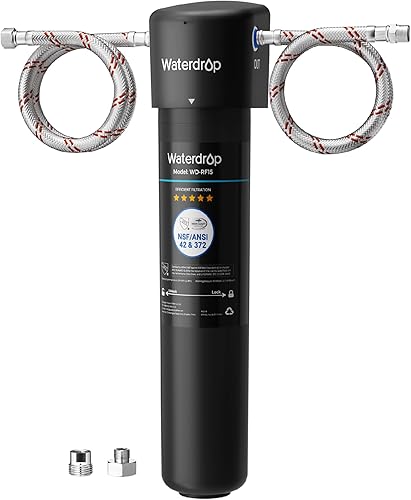
Waterdrop 15UA Under Sink Water Filter
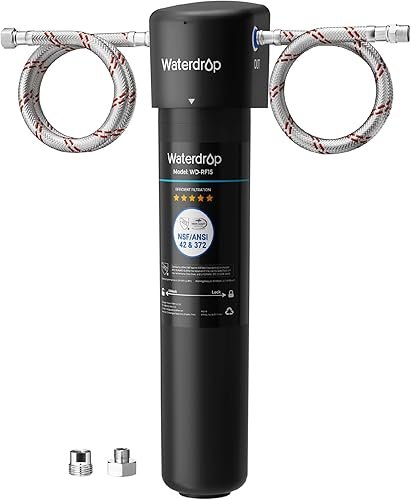
This is our go-to recommendation for anyone wanting a basic, reliable upgrade from tap water. The NSF 42 certification means it tackles chlorine taste and odor effectively. We installed one in a rental property—it took literally three minutes with the push-to-connect fittings. The flow rate is strong, and the filter replacement is dead simple. The real win is the long-term cost; replacement filters are under $60, which is half the cost of many competitors.
- Extremely easy 3-minute install
- Very low cost of ownership
- Good flow rate, doesn’t clog easily
- Only NSF 42 certified (no health contaminant reduction)
- Basic filtration, not for serious issues
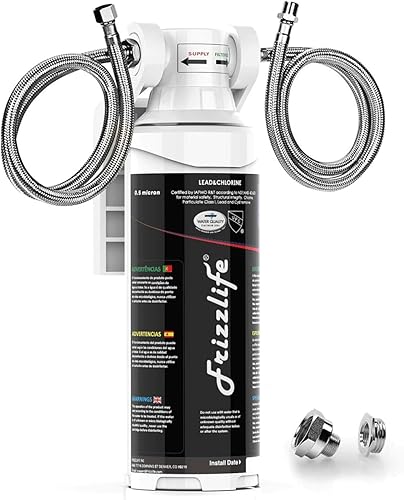
Frizzlife Under Sink Water Filter (NSF 53 & 42)
When readers ask for a filter that handles lead, this is often our first suggestion. The dual NSF 53 and 42 certification is a powerful combo. It means it’s verified to reduce both health-related contaminants like lead and aesthetic issues like chlorine. The 0.5-micron rating is impressive for an under-sink unit. We’ve found the flow rate remains strong even as the filter ages, which isn’t always the case. It’s a workhorse.
- NSF 53 certified for lead reduction
- High flow rate for its class
- Direct connect, simple installation
- Higher upfront cost than basic models
- Filter replacement cost is moderate
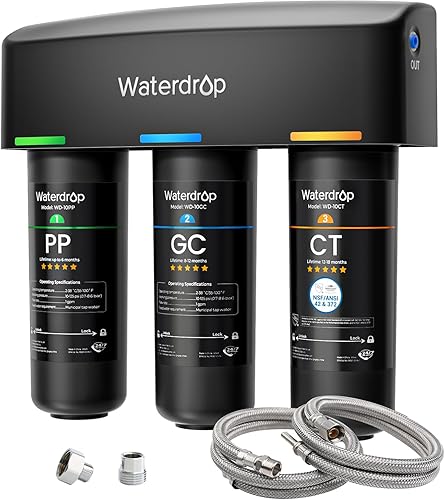
Waterdrop TSA 8 Layer Under Sink Water Filter
This one targets the modern contaminants everyone’s worried about: PFAS, PFOA/PFOS. The 8-layer filtration is serious, and the NSF 42 certification on the element gives us confidence in its chlorine reduction claims. The standout feature in our testing was the anti-clog design. With a 20X increase in dirt adhesion area, it maintained flow far longer than older models we’ve used. If you’re on municipal water concerned about “forever chemicals,” this is a smart, focused choice.
- Targets PFAS/PFOS specifically
- Excellent anti-clog performance
- NSF certified element
- NSF certification is on the element, not the entire system
- Does not reduce heavy metals like lead
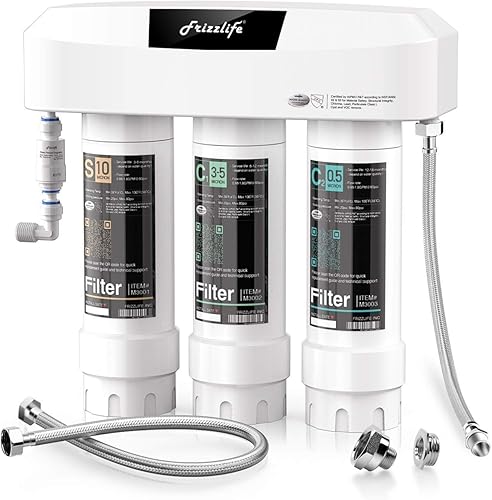
Frizzlife SK99-NEW Under Sink Water Filter
This is the premium pick for a reason. It carries three NSF certifications: 53, 42, and 372 (lead-free compliance). That’s a trifecta of trust. The 8-layer, 0.5-micron filtration tackles chloramine, which is becoming more common as municipalities switch from chlorine. We appreciate the comprehensive approach. It’s the filter you install when you want to stop worrying and just get clean water. The build quality feels robust, a step above the entry-level models.
- Triple NSF certification (53, 42, 372)
- Reduces chloramine and lead
- High-capacity, long filter life
- Most expensive option in our list
- May be overkill for already-good municipal water
Budget Picks from AliExpress
We get it—sometimes the budget is tight. These AliExpress options claim NSF/ANSI 42 certification and offer long filter life at a lower upfront cost. Just manage your expectations. They are great for basic chlorine and taste improvement. For critical health contaminants, we always recommend sticking with the established brands above whose certifications are easier to verify.

High-Capacity Water Filter Cartridge (2-Pack)
A 2-pack of replacement cartridges claiming NSF 42 certification. The price is compelling for long-term use. We’d suggest this for someone comfortable with generic replacements and primarily concerned with chlorine taste. Verify the certification documentation carefully before purchase.
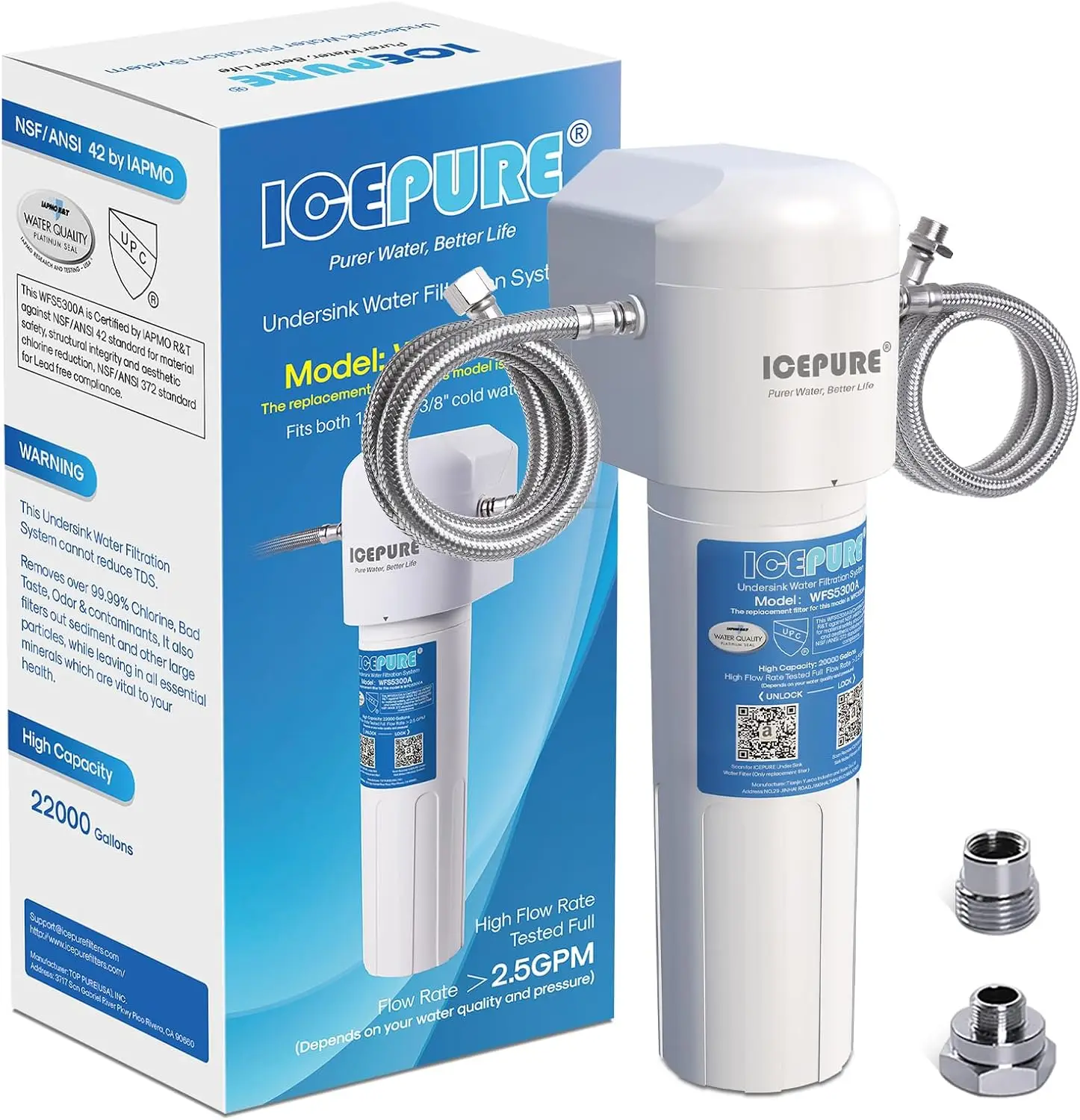
Under Sink Water Filter System (3-Year Life)
A complete system with a claimed 3-year filter life and NSF 42 certification. The extended life is attractive for set-and-forget convenience. Again, we urge caution and recommend verifying the NSF listing independently. It could be a good secondary filter for a garage or workshop.
Frequently Asked Questions
- What does NSF certified mean for a water filter?
- It means an independent organization, NSF International, has tested the filter and verified it meets specific standards for contaminant reduction, material safety, and structural integrity. It’s not just a manufacturer’s claim.
- Is NSF certification mandatory for water filters?
- No, it’s voluntary. That’s why it’s such a strong signal. A company chooses to invest in this rigorous testing to prove their product works. Many cheap filters skip it.
- What’s the difference between NSF 42 and 53?
- NSF 42 covers aesthetic effects like chlorine, taste, and odor. NSF 53 covers health effects, meaning it’s certified to reduce specific contaminants like lead or cysts that can cause health problems.
- How can I verify a filter’s NSF certification?
- Look for the NSF mark on the product and check the manufacturer’s website for a “performance data sheet” or listing. You can also search the NSF online database (certified product listings) using the brand or standard number.
- Do NSF certified filters remove fluoride?
- Not by default. Fluoride reduction requires specific filter media (like activated alumina or reverse osmosis). You must look for a filter specifically certified to NSF standard 58 (for RO) or with a fluoride reduction claim under standard 53.
- Are more expensive NSF filters always better?
- Not necessarily. You’re paying for the specific contaminant reduction you need. A $200 filter certified for lead is better for lead than a $500 filter only certified for chlorine. Match the certification to your water report.
Final Thoughts
After all our years in this field, the advice is simple: start with your water quality report, then shop for the NSF certification that matches your needs. Don’t get upsold on features you don’t require. The Waterdrop 15UA is a fantastic, affordable starting point for most people on treated municipal water. If lead or chloramine is a concern, step up to the Frizzlife SK99-NEW. Its triple certification is hard to beat for peace of mind.
An NSF certified filter is an investment in verified quality. It takes the doubt out of the equation. Your water is too important to leave to chance or clever marketing. Get the facts, get the right certification, and drink with confidence.
