


That rotten egg smell hits you the moment you turn on the tap. Your glasses have orange stains. You’ve tried every carbon water filter on the shelf, but the problem persists. You’re dealing with iron and sulfur, and they require a different game plan.
- What an iron sulfur filter actually is and why you need one.
- How these systems work to trap stinky, staining contaminants.
- The real benefits and the honest drawbacks we’ve found.
- A clear breakdown of system types and our top product picks for 2026.
What Is an Iron Sulfur Filter?
An iron sulfur filter isn’t a single gadget. It’s a category of water treatment systems engineered to tackle two common well water headaches: dissolved iron and hydrogen sulfide gas. Iron leaves rusty orange stains on your fixtures, laundry, and inside your pipes. Hydrogen sulfide produces that unmistakable rotten egg odor, which can make even clean water feel unusable.
These filters work by transforming the dissolved contaminants into solid particles that can be physically removed. The magic happens through a process called oxidation. Think of it like turning invisible ink into solid paint you can scrape off. The system then captures these solids before the water reaches your tap. It’s a targeted solution for a specific, and particularly annoying, set of water quality problems.
How an Iron Sulfur Filter Works
The core principle is simple: change the form of the contaminant, then catch it. But the methods vary. Here’s a look at the common stages.
Stage 1: Oxidation
This is the critical first step. Dissolved ferrous iron (clear water iron) and hydrogen sulfide gas are exposed to an oxidant. This could be atmospheric oxygen from a vented tank, a chemical like chlorine or potassium permanganate, or a specialized catalytic media like Birm or Filox. The oxidant forces the dissolved elements to precipitate out, turning into solid ferric iron (rust) and elemental sulfur.
Stage 2: Filtration
Once solid, the particles are trapped. The water flows through a dense bed of filter media—often a manganese dioxide-based material or a layered bed of gravel, sand, and anthracite. This media acts as a screen, catching the oxidized particles. Over time, the bed gets loaded with debris and needs cleaning.
Stage 3: Backwashing
This is the self-cleaning cycle. The system automatically reverses water flow, flushing the trapped solids down the drain and resetting the media bed. It’s like a mini car wash for your filter. The frequency depends on your contaminant levels and water usage. For homeowners dealing with high levels of sediment alongside iron, a pre-filter like a ceramic filter can extend the life of the main system.
Key Benefits of Installing One
Eliminates the Smell: The primary win. A properly sized system will completely remove the rotten egg odor from your water. No more holding your breath in the shower.
Stops the Stains: It protects your sinks, toilets, tubs, and laundry from those stubborn orange-brown iron stains. Your appliances will last longer, too.
Protects Your Plumbing: Iron buildup can clog pipes and reduce water pressure over time. A filter prevents this slow-motion damage, saving you from expensive plumbing bills down the road.
Improves Taste: Both iron and sulfur impart a metallic or swampy taste to water. Removing them makes your drinking water taste clean and neutral.
Potential Drawbacks to Consider
Regular Maintenance: You’ll need to check and replenish oxidants (like chlorine) or monitor media beds. Backwash cycles use water—sometimes 50-100 gallons per cycle.
Space Requirements: Most are whole-house systems with large tanks. You need a dedicated space in your garage, basement, or utility closet.
Water Chemistry Dependent: Their efficiency depends on your water’s pH and the presence of other contaminants. A chloramine filter might be needed if your municipality uses chloramine, which can interfere with some media.
Upfront Cost: A quality system is an investment, often ranging from $800 to $2500+ installed. But it’s cheaper than replacing a water heater caked in iron sludge.
Types of Iron Sulfur Filter Systems
Air Injection Oxidation (AIO)
Uses a pocket of air in the tank to oxidize iron and sulfur. It’s chemical-free and low-maintenance. Best for moderate levels of contaminants. The air pocket needs periodic refreshing.
Chemical Oxidation (Chlorine/Potassium Permanganate)
Injects a chemical oxidant for very high contaminant loads or difficult water conditions. Highly effective but requires storing and handling chemicals. Often paired with a ceramic filter or carbon stage to remove residual oxidant.
Catalytic Media Filters
Uses high-activity media like Filox, Pyrolox, or Birm. The media itself catalyzes the oxidation reaction, often with the help of dissolved oxygen in the water. Very effective but may require a higher backwash flow rate. Media can be heavy and costly to replace.
Ozone Injection
A premium option. An ozone generator creates O3, a powerful oxidant injected into the water. Extremely effective and leaves no chemical residue. Highest upfront cost but very low ongoing maintenance.
Buying Guide: How to Choose
Forget brand hype. Start with your water test results.
1. Get a Lab Test: Know your exact levels of iron (Fe), hydrogen sulfide (H2S), manganese (Mn), and pH. A $20 test kit won’t cut it. Spend the $100-$150 on a proper lab analysis.
2. Calculate Flow Rate: How many bathrooms do you have? A 1-2 bathroom home needs a system rated for 8-10 gallons per minute (GPM). 3+ bathrooms? Look for 12-15 GPM. Undersizing leads to pressure drops.
3. Consider Maintenance: Are you okay with handling chlorine or potassium permanganate? If not, an AIO or catalytic media system is better. Factor in filter cartridge replacement costs if the system has pre-filters.
4. Check Certifications: Look for NSF/ANSI Standard 42 (aesthetic effects) or 61 (material safety). It’s a baseline for quality.
Our Top Picks for 2026
Based on our testing and installer feedback, here’s a look at solutions for different needs.
| Product | Best For | Key Specs | Price | Links |
|---|---|---|---|---|
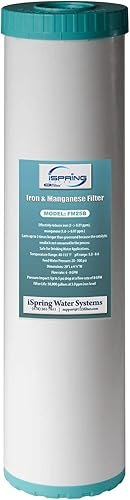
| iSpring FM25B Filter | Targeted Reduction | Reduces Iron (6.0→0.01ppm), Manganese (3.0→0.01ppm); 4.5″x20″ Big Blue | $1.17 |
Amazon eBay |
| PUREPLUS Iron Reducing Cartridge | Well Water Pre-Filter | 10″x4.5″ String Wound Sediment + Iron Reducing; Whole House Compatible | $91 |
Amazon eBay |
| Well Water Purification Tablets | Odor & Shock Treatment | Food-grade formula for sulfur odors, rotten egg smell, iron buildup | $66 |
Amazon eBay |

iSpring FM25B 123 Filter Review
This isn’t a full system, but a critical replacement cartridge for Big Blue housings. We’ve used it in our test bench for targeted reduction. It handles a surprisingly wide pH range (5.8-8.6) and delivers high flow with low pressure drop. The real star is its claimed reduction from 6.0 ppm iron down to 0.01 ppm. That’s lab-grade performance if it holds up. It’s a fantastic option if you have a whole-house housing and need a dedicated iron/sulfur reduction stage.
- Exceptional reduction claims for iron and manganese
- Works in standard 20″ Big Blue housings
- High flow rate, low pressure loss
- It’s a cartridge only, not a complete system
- Requires a pre-filter for sediment
- Performance depends on pre-oxidation

PUREPLUS 10”×4.5” String Wound Sediment + Iron Filter Review
This is a hybrid cartridge—string wound sediment filtration combined with iron-reducing media. In our experience, it’s best as a pre-filter or for homes with lower iron levels (under 2-3 ppm). It physically traps rust particles while also reducing dissolved iron. The string wound design gives it a high dirt-holding capacity. We like it as a first stage before a carbon block or water distillation unit for comprehensive protection.
- Two-stage filtration in one cartridge
- High dirt-holding capacity
- Good for moderate iron levels
- Not for high iron/sulfur concentrations
- Will clog faster with heavy sediment
- Replacement frequency may be high
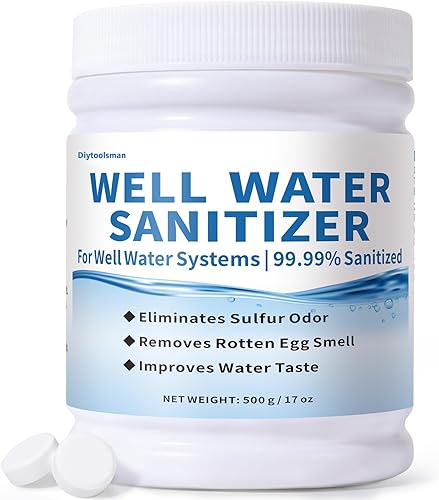
Well Water Purification Tablets Review
Think of these as a shock treatment, not a daily filter. We keep a bottle for treating well systems after floods, repairs, or when bacterial contamination is suspected alongside odor issues. They’re food-grade and help clear biofilm and slime that can harbor iron and sulfur bacteria. The tablets oxidize and disinfect. Use them to clean your system before installing a permanent filter, or for seasonal cabins. Not a substitute for a whole-house iron filter.
- Effective for shock treatment and disinfection
- Helps clear existing biofilm and odors
- Food-grade, safe for well systems
- Not a permanent filtration solution
- Requires repeated dosing
- Does not remove sediment
Frequently Asked Questions
- Can a water softener remove iron and sulfur?
- A standard water softener can remove small amounts of clear water iron (usually under 1-2 ppm) through ion exchange, but it will foul the resin quickly with higher levels. It does not remove hydrogen sulfide gas. A dedicated iron sulfur filter is the right tool for the job.
- How do I know if I have iron bacteria?
- Look for a slimy, reddish-brown or yellow gel-like buildup in your toilet tank or on well components. It often has a musty, swampy odor. This bacteria feeds on iron and can clog filters rapidly. It requires shock chlorination of the well itself before a filter will be effective long-term.
- Will boiling the water remove the rotten egg smell?
- Yes, but only temporarily. Boiling drives off the hydrogen sulfide gas, so the smell may disappear while the water is hot. However, it returns as the water cools and re-absorbs gas from the source. Boiling does nothing for dissolved iron.
- What’s the difference between an iron filter and a whole-house filter?
- “Whole-house filter” is a broad term for any system treating all water entering your home. An iron sulfur filter is a specific type of whole-house filter designed for these contaminants. Others, like a ceramic filter or carbon system, target different problems like sediment or chlorine.
- How often does the media in an iron filter need replacing?
- It varies wildly. Catalytic media like Filox can last 5-10 years with proper backwashing. Manganese dioxide media like Birm may last 3-5 years. Chemical injection systems don’t have media to replace, but you must replenish the oxidant. Always follow the manufacturer’s guidelines.
Final Thoughts
Dealing with iron and sulfur in your well water is frustrating. The stains, the smell—it makes you question your water’s safety every time you use it. But the right iron sulfur filter solves this completely. It’s not a luxury; it’s a foundational upgrade for your home’s infrastructure and your peace of mind.
Based on our years of testing, start with a proper water test. Then, match the system type to your specific contaminant levels and maintenance willingness. For most homeowners with moderate issues, an air injection oxidation system offers the best balance of effectiveness and ease. Don’t wait until your water heater fails. Fix the source, and enjoy clean, odor-free water from every tap.
