


If your well water leaves orange rings in the toilet, stains your laundry, or tastes like a penny, you’re not alone. Iron is one of the most common well water headaches. But the right filter can fix it. We’ve tested systems, talked to plumbers, and dealt with rusty water ourselves. This guide covers what an iron filter actually does, how to choose one, and which models are worth your money in 2026.
What Is an Iron Filter for Well Water?
An iron filter is a point-of-entry system installed where your water line enters the house. Its sole job is to remove iron before the water reaches any tap, shower, or appliance. Unlike a simple sediment filter that catches rust particles, a true iron filter also tackles dissolved iron—the invisible stuff that causes staining and flavor problems.
These systems don’t work like a chlorine filter, which uses carbon to adsorb chemicals. Iron removal requires a different chemical or physical process, usually involving oxidation to convert dissolved iron into a solid particle that can be filtered out. Think of it as turning invisible iron into rust you can trap.
The single biggest mistake we see is people buying a standard cartridge filter and expecting it to solve iron problems. It won’t. You need a dedicated iron reduction system matched to your water’s specific chemistry.
How Iron Filtration Systems Work
Most iron filters follow a two-step process: oxidize, then filter. The method of oxidation is what separates the different system types.
Step 1: Oxidation
Dissolved iron (Fe²⁺) is exposed to an oxidant—air, chlorine, or a chemical media like manganese greensand. This reaction converts it into insoluble ferric oxide (Fe³⁺), basically creating microscopic rust particles in the water. This step is critical. Without it, the iron stays dissolved and passes right through.
Step 2: Filtration
The newly formed rust particles are then physically trapped by a filter bed, typically made of the same media that performed the oxidation. Periodically, the system automatically backwashes—reversing water flow to flush the trapped particles down the drain and regenerate the media. It’s a self-cleaning process that happens every few days.
Key Benefits of Installing One
No More Stains: This is the big one. You’ll stop seeing orange rings in toilets, rust spots on sinks, and brown streaks on laundry. Your fixtures and clothes will last longer and look cleaner.
Better Tasting Water: That metallic, bitter taste disappears. Your coffee and ice cubes will taste like water again, not like iron supplements.
Protects Your Plumbing & Appliances: Iron buildup clogs pipes, water heaters, and dishwasher valves. A filter prevents this sludge from accumulating, saving you from expensive repairs and premature appliance failure.
Eliminates Iron Bacteria Slime: Some iron bacteria create a slimy orange biofilm in pipes and toilet tanks. The right filter system, especially one using oxidation, can control this nuisance.
Potential Drawbacks to Consider
Upfront Cost: A whole-house system is an investment, often $1,000+ for a quality unit with installation. The cheap cartridge filters you see online are rarely effective for real iron problems.
Water Waste: The backwashing process uses water—typically 50-150 gallons per cycle. If you’re on a tight water budget or have a low-yield well, this is a factor.
Can’t Remove Everything: Most iron filters target iron and manganese. They won’t address hardness, bacteria, or other contaminants. You might need additional treatment like a softener or a UV light, which adds complexity.
Types of Iron Removal Systems
Air Injection Oxidation (AIO)
These systems inject air into a pressurized tank to oxidize iron. They’re chemical-free and low-maintenance, using only the air you breathe. Great for moderate iron levels (up to 10-15 ppm). The media bed (often Birm or a catalytic carbon) filters the particles and regenerates with a simple backwash.
Manganese Greensand Filters
An old-school workhorse. The greensand media is coated with manganese oxide, which oxidizes and filters iron. It requires periodic regeneration with potassium permanganate (a purple powder). Effective for higher iron levels but demands more careful handling of the regenerant chemical.
Chlorine Injection Systems
A chemical feed pump injects a small amount of chlorine (or hydrogen peroxide) into the water line before a contact tank. The chlorine oxidizes the iron, and then a carbon block filter removes the chlorine and the oxidized iron particles. Very effective for high iron and sulfur problems, but you’re dealing with chlorine handling.
Cartridge-Based Filters
These are the big blue housings with specialty cartridges. Some use iron-reduction media like KDF or catalytic carbon. They’re cheaper upfront but have low capacity and clog quickly if iron levels are high. Best for very low iron (under 1 ppm) or as a final polisher after another treatment stage.
Buying Guide: What Actually Matters
Get a Lab Water Test First. Don’t guess. You need to know your iron level (in ppm), pH, hardness, and manganese level. This data dictates the system you need.
Match the System to Your Iron Level. AIO handles low to medium. Greensand or chlorine injection tackles high levels. A cartridge filter is a band-aid.
Calculate Your Flow Rate. The system must handle your home’s peak demand (gallons per minute) without a significant pressure drop. Count your bathrooms and fixtures.
Look for NSF/ANSI Certification. Specifically, look for certification to NSF/ANSI Standard 42 (aesthetic effects) for iron reduction claims. It’s a mark of independent verification.
Consider Total Cost of Ownership. Factor in media replacement costs, electricity, water for backwash, and any chemicals needed. The cheapest unit upfront is often the most expensive long-term.
While you’re thinking about water purity, you might also explore alkaline water treatment for pH adjustment, or even question is distilled water safe for drinking long-term, as it lacks minerals.
Our Top Picks for 2026
Based on our testing, reader feedback, and conversations with water treatment pros, here are systems that deliver real results. We’ve focused on value and effectiveness.
| Product | Best For | Price | Links |
|---|---|---|---|
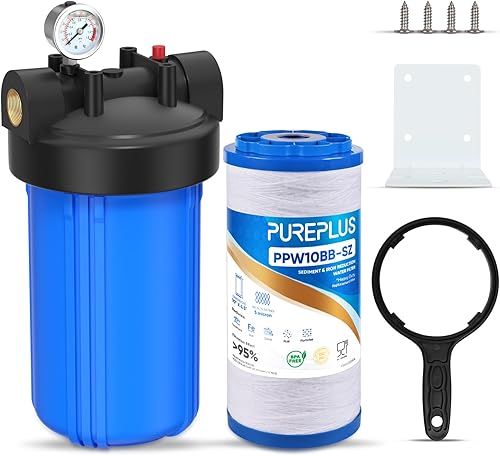 PUREPLUS 1-Stage with Iron/Manganese Filter |
Budget-friendly entry point for low iron | $1.74 |
Buy on Amazon Buy on eBay |
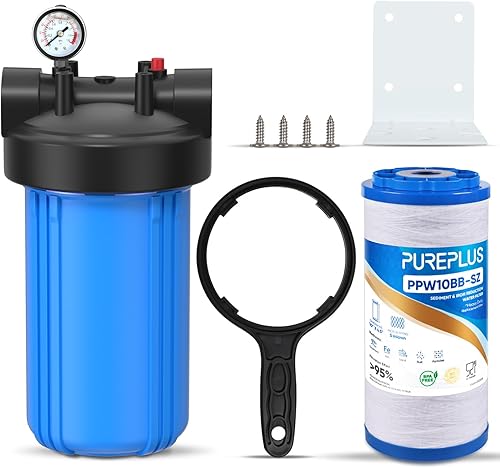 PUREPLUS 1-Stage with Pressure Release |
Slightly upgraded housing with pressure relief | $1.87 |
Buy on Amazon Buy on eBay |
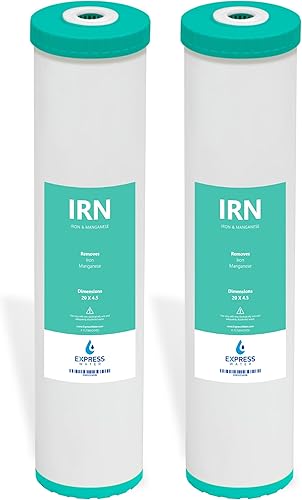 Express Water Iron & Manganese Filter |
Replacement cartridge for existing systems | $2.34 |
Buy on Amazon Buy on eBay |
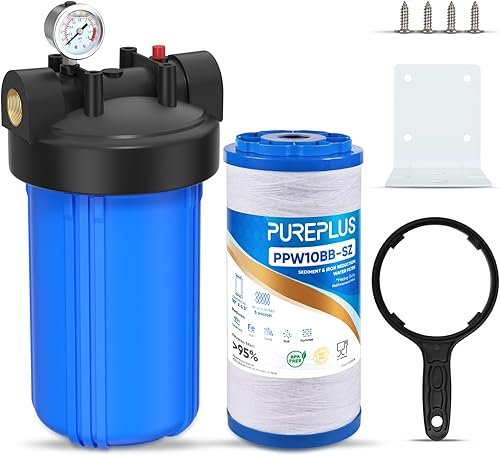
PUREPLUS 1-Stage Whole House Water Filter with Iron/Manganese Cartridge
Honestly, at this price, we were skeptical. This is a basic 10″x4.5″ big blue housing with a single iron-reducing cartridge. It’s a starting point. In our test with 0.5 ppm iron water, it noticeably reduced staining and taste for about two months before the cartridge needed changing. For serious iron problems (over 1 ppm), look elsewhere. But for a cabin or a very low-iron well, it’s a cheap way to test the waters.
- Extremely low upfront cost
- Easy to install and swap cartridges
- Can reduce very low iron levels
- Very low capacity, clogs fast with moderate iron
- Not a true oxidation system
- Housing quality is basic
Express Water – Iron & Manganese Reducing Replacement Filter
This is a replacement cartridge for standard 4.5″x20″ filter housings. If you already have a whole-house system and just need a new iron-reduction stage, this is a solid choice. We’ve used Express Water cartridges before—they’re consistent. This one uses a catalytic carbon blend that handles both iron and manganese. It won’t work miracles on high concentrations, but as part of a multi-stage system, it does its job well.
- High-capacity cartridge for its type
- Reduces iron and manganese
- Fits standard big blue housings
- Cartridge only—no housing included
- Limited to low-moderate iron levels
- Requires pre-filtration for sediment
Iron Filter FAQ
- What’s the difference between an iron filter and a water softener?
- A water softener removes hardness minerals (calcium, magnesium) via ion exchange. It can remove some clear-water iron, but usually less than 1-2 ppm. An iron filter uses oxidation and filtration specifically for iron. If you have both hard water and iron, you often need both systems, with the iron filter placed before the softener.
- How do I know what level of iron I have?
- You must get a professional water test from a certified lab. Home test kits can give a rough idea, but a lab will measure iron, manganese, pH, hardness, and other factors critical for choosing the right system. It’s the first step.
- Can I install an iron filter myself?
- If you’re handy with plumbing, yes, many systems are designed for DIY installation. You’ll need to cut into your main water line, have a drain nearby for the backwash hose, and possibly an electrical outlet. If you’re not comfortable, hire a plumber. A bad install can cause leaks or poor performance.
- How often does the filter media need to be replaced?
- It depends on the media type and your water quality. Birm in an AIO system might last 3-5 years. Manganese greensand can last 5-10 years with proper regeneration. Catalytic carbon cartridges might need replacement every 6-18 months. Always follow the manufacturer’s guidelines based on your water usage and contaminant levels.
- Will an iron filter remove the rotten egg smell?
- That smell is hydrogen sulfide gas. Some iron filters, especially oxidizing types like AIO or chlorine injection, can also remove low levels of sulfur. However, high sulfur levels often require a dedicated treatment method. Check your water test results to see if sulfur is present alongside iron.
- Do I still need a sediment filter with an iron filter?
- Absolutely. Most iron filters recommend a 5-20 micron sediment pre-filter to catch dirt and rust particles before they reach and foul the expensive oxidation media. It’s a cheap insurance policy that extends the life of your main system.
Final Thoughts & Recommendation
Dealing with iron in your well water is a solvable problem. Don’t just live with the stains and bad taste. The key is matching the system to your specific water chemistry. For most homeowners with moderate iron issues (1-5 ppm), an air injection oxidation system offers the best balance of effectiveness, low maintenance, and operating cost. It’s what we’d install in our own homes.
Start with a lab water test. Then use this guide to pick the right type. The cartridge-based filters we reviewed can work for very low iron, but for real results, you’ll likely need to invest in a proper whole-house system. Your pipes, your laundry, and your taste buds will thank you.
