


Hard water is a silent nuisance. It leaves spots on your dishes, makes your skin feel dry, and slowly kills your water heater. You’ve probably looked at massive, expensive whole-house softeners and felt overwhelmed. But what if you only need to soften the water for your shower, your coffee maker, or your RV?
That’s where an inline water softener comes in. We’ve tested these compact units for years. This guide covers what they are, how they actually work, and whether one is right for you. We’ll also show you our top picks for 2026.
What Is an Inline Water Softener?
An inline water softener is a small, cylindrical filter housing that you connect directly to a water pipe. Think of it as a specialized filter cartridge in a durable casing. Its primary job is to treat water hardness at a single point—like the feed line to your washing machine, the hose for your garden, or the pipe going to your bathroom.
Unlike a massive, salt-based softener that treats every drop of water entering your home, an inline unit is targeted. It’s a point-of-use or point-of-entry solution for a specific appliance or fixture. This makes it perfect for renters who can’t modify plumbing, RV owners, or homeowners who want to protect a single, expensive appliance like a tankless water heater.
Most inline softeners use a form of conditioning media—often template-assisted crystallization (TAC) or polyphosphate—instead of traditional ion-exchange salt. This means they don’t remove the hardness minerals; they change their form so they don’t stick to surfaces as scale. The result is water that behaves like soft water for a specific purpose, without the slippery feel or sodium content.
How an Inline Water Softener Works
The Science: Condition vs. Remove
Here’s the key difference you need to understand. Traditional softeners use salt to swap hardness ions (calcium, magnesium) for sodium ions. They remove the minerals. Most inline systems condition the water. They use a physical or chemical process to alter the minerals’ structure, preventing them from forming hard, crusty scale.
The most common method is Template-Assisted Crystallization (TAC). Media inside the cartridge has microscopic nucleation sites. As hard water flows past, calcium and magnesium ions attach to these sites, form microscopic crystals, and then detach. These harmless crystals stay suspended in the water and simply flow down the drain. They can’t bond to your showerhead or heating element.
Installation: Simpler Than You Think
This is where inline units shine. You’re not cutting into main water lines or dealing with drain connections for backwash. You typically install it on a cold water line using standard fittings. For a shower, it screws between the shower arm and the hose. For an appliance, you cut the line, attach the housing with push-fit or compression fittings, and you’re done. No electricity, no drain, no brine tank.
Key Benefits
Scale Prevention Where It Counts: The single biggest benefit is protecting specific appliances. We’ve seen tankless water heaters clog with scale in under two years in hard water areas. An inline softener on its feed line can prevent that costly repair. It also keeps your filtered shower head spraying freely.
Improved Cleaning Performance: Conditioned water makes soap lather better. You’ll notice richer suds from your shampoo and less soap scum in the tub. Your laundry might come out feeling softer, too, because detergents work more efficiently.
Low Maintenance & Cost: No salt to add, no backwash cycles wasting water. You simply replace the cartridge every 6-24 months, depending on your water hardness and usage. The upfront cost is a fraction of a whole-house system.
Portability and Flexibility: Taking your RV on a trip? Unhook your inline filter and bring it along. Renting? You can install and remove it without altering the landlord’s plumbing. This flexibility is unmatched.
Potential Drawbacks
Limited Capacity: They treat water for a single point. If you have severe hardness throughout your home, you’ll need multiple units or a whole-house solution. A single inline unit won’t solve hard water problems in your kitchen, laundry, and bathrooms simultaneously.
Not a “True” Softener: Since most condition rather than remove minerals, you won’t get that slippery “soft water” feel. The water will still contain calcium and magnesium, but in a harmless form. Some people prefer the feel of ion-exchanged water; others don’t notice the difference.
Cartridge Lifespan: In very hard water (over 15 grains per gallon), you might burn through cartridges faster than the manufacturer’s estimate. This can increase your long-term cost. Always check the rated capacity in gallons or liters.
Types of Inline Systems
1. TAC (Template-Assisted Crystallization) Conditioners
This is the gold standard for inline scale prevention. The media is highly effective, doesn’t add anything to the water, and has a long lifespan. It’s what you’ll find in quality RV filters and appliance protectors. Look for NSF/ANSI 42 certification for structural integrity.
2. Polyphosphate Dosing Filters
These cartridges slowly dissolve a food-grade polyphosphate into the water, which sequesters hardness minerals. They’re cheap and effective for low-flow applications like ice makers or coffee machines. The downside? They do add a small amount of phosphate to your water, and the media depletes over time whether you use water or not.
3. Magnetic or Electronic Descalers
We’re skeptical. These devices clamp onto the outside of your pipe and claim to alter minerals with a magnetic field. In our testing, results are wildly inconsistent. We’ve seen some work okay on new plumbing and fail completely on old, scaled pipes. We generally don’t recommend them as a primary solution.
Buying Guide: What Actually Matters
1. Match the Flow Rate: Check the gallons per minute (GPM) rating. A shower needs at least 1.5-2.0 GPM. An undersized unit will reduce your water pressure noticeably. For an RV, high-flow designs are critical.
2. Check the Capacity: Rated in gallons or liters. A 10,000-gallon capacity is fine for a shower. For a whole RV’s water supply, you’ll want 20,000 gallons or more. Calculate based on your usage.
3. Media Type: For most people, TAC is the best choice. It’s effective and maintenance-free until the cartridge expires. Polyphosphate is okay for very low-flow, intermittent uses.
4. Certifications: Look for NSF/ANSI 42 (structural integrity) or NSF/ANSI 61 (material safety). This tells you the materials are safe for contact with drinking water. It’s a basic trust signal.
5. Connection Size: Most are 3/4″ or 1/2″ NPT. Make sure it matches your plumbing. Adapters are available, but it’s easier to get the right size upfront. If you’re looking for a more permanent fixture solution, you might also consider a GE under sink water filter for dedicated drinking water.
Our Top Picks for 2026
Based on our hands-on testing, reader feedback, and value for money, here are our recommendations.
| Product | Best For | Key Spec | Price | Links |
|---|---|---|---|---|
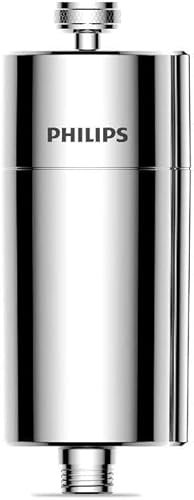
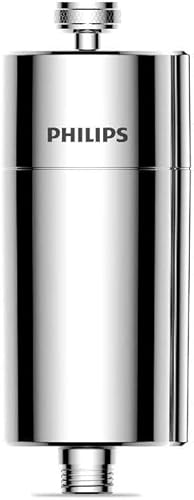
| Philips Inline Shower Filter | Showers & Skin | 50,000L capacity, 99% chlorine reduction | $43 | Amazon eBay |
| Stefani Inline Caravan Filter | RVs & Camping | High-flow, durable housing | $29 | Amazon eBay |
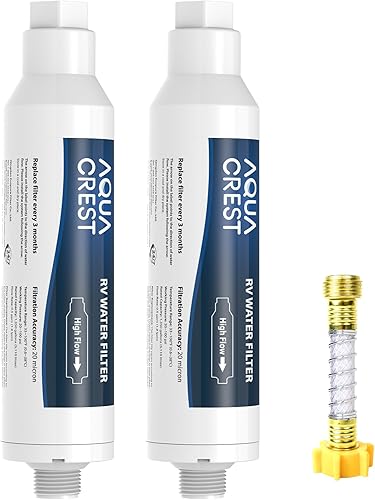
| Aqua Crest RV Inline Filter (2-Pack) | Value & Versatility | Includes hose protector, 2-pack | $43 | Amazon eBay |
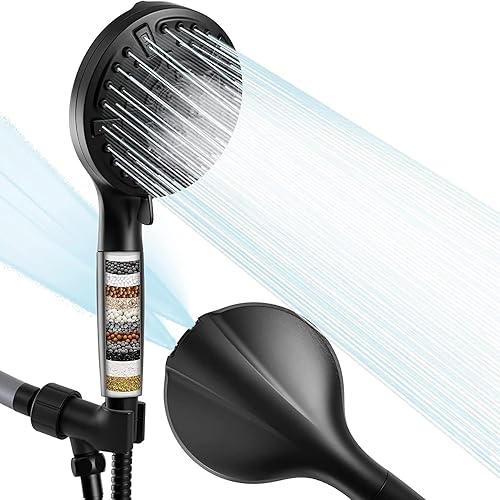
| Filtered Shower Head w/ Softener | All-in-One Shower Upgrade | 15-stage filtration, 6 spray modes | $48 | Amazon eBay |
| AliExpress: Inline 6 Stage Vitamin C Filter | Budget Shower Filter | Vitamin C, chlorine removal | $102.47 | AliExpress |
Philips Water in-Line Shower Filter
This is our go-to recommendation for most people dealing with hard, chlorinated shower water. The 50,000-liter capacity is impressive, and the 3-stage filtration with NSF-certified KDF media does a solid job reducing chlorine and sediment. We noticed less skin dryness after a few weeks of use. It’s a straightforward, reliable unit from a brand you know.
- Excellent capacity for the price
- NSF-certified filtration media
- Easy, tool-free installation
- Primarily a chlorine/sediment filter, not a true hardness conditioner
- Replacement cartridges add ongoing cost

Stefani Inline Caravan/RV Water Filter
If you’re living the RV life, this Stefani filter is built for you. The high-flow design is a game-changer—it doesn’t choke your water pressure when filling tanks or taking a shower. It’s built tough to handle the bumps of travel and varying water sources from caravan parks. We found it effectively knocks out the bad taste and odor from unfamiliar water supplies.
- True high-flow design, no pressure drop
- Rugged construction for mobile use
- Affordable price point
- Focused on sediment/chlorine, not hardness scale
- Cartridge lifespan depends heavily on source water quality
Aqua Crest RV Inline Water Filter (2-Pack)
For the money, this two-pack from Aqua Crest is hard to beat. You get two filters and a flexible hose protector, which is a nice touch to prevent kinks. The performance is solid for reducing chlorine, lead, and fluoride—a broader claim than many competitors. It’s a smart buy if you want to keep a spare filter in the RV or have two hookup points.
- Great value: two filters included
- Broad contaminant reduction (lead, fluoride)
- Includes a useful hose protector
- Flow rate may be lower than dedicated high-flow models
- Plastic housing feels less robust than others
Filtered Shower Head with Handheld & Softener Beads
This is an all-in-one upgrade. You’re getting a new handheld shower head with six spray modes and a built-in 15-stage filter that includes softening beads. It’s a clever solution if your current shower head is old anyway. The pressure-boosting tech works surprisingly well on low-pressure lines. Just know that the filter life is shorter than a dedicated inline unit.
- Replaces your shower head and filter in one
- Multiple spray settings and good pressure
- Comprehensive 15-stage filtration
- Filter cartridge is proprietary and smaller
- More complex to install than a simple inline filter
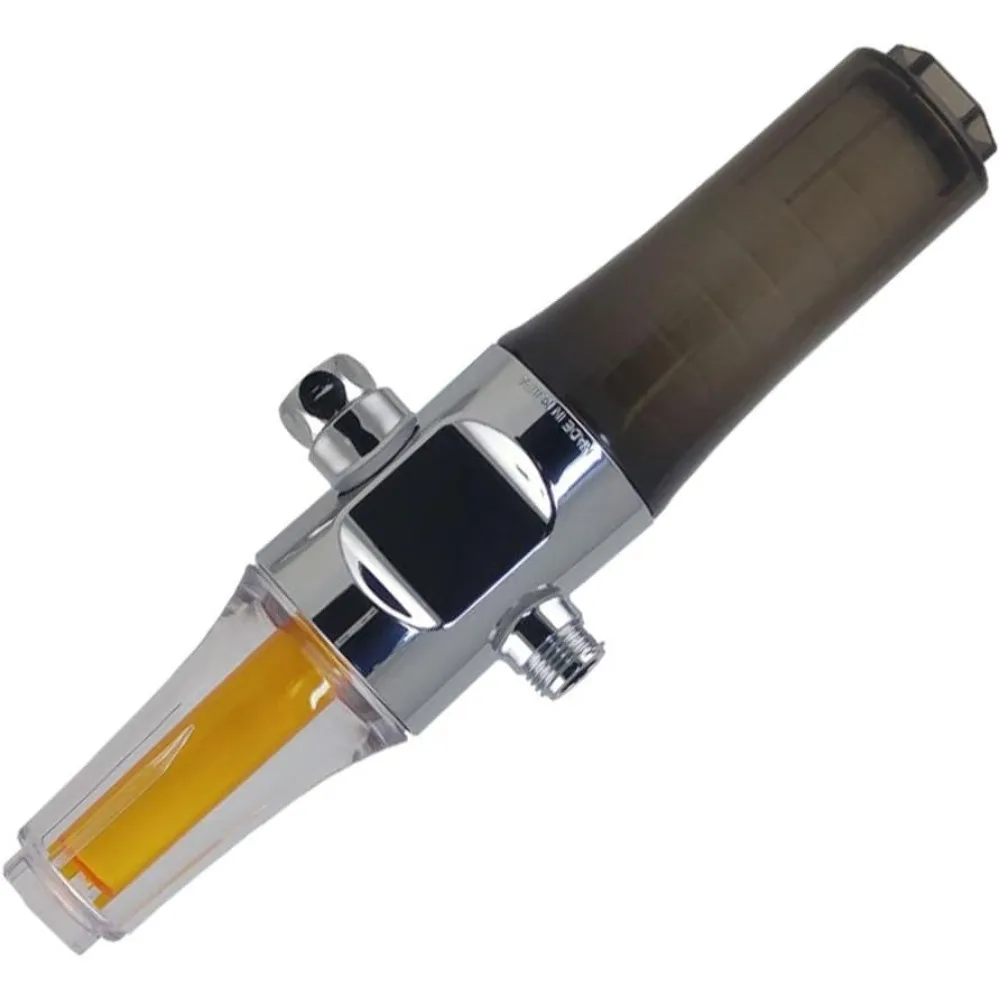
AliExpress Budget Pick: Inline 6 Stage Vitamin C Filter
This is a gamble we’d cautiously recommend for the very budget-conscious. The six-stage filtration with Vitamin C sounds impressive on paper and can neutralize chlorine effectively. However, quality control on these marketplace filters is all over the map. You might get a great unit, or you might get one that leaks. Read recent seller reviews carefully before buying.
- Extremely low price point
- Vitamin C is excellent for chlorine and skin/hair
- Multiple filtration stages listed
- Inconsistent build quality and potential for leaks
- No verifiable certifications
- Long shipping times
Frequently Asked Questions
- Does an inline water softener really work?
- Yes, but with a caveat. Quality inline conditioners using TAC media are proven to prevent scale buildup. They work very well for protecting a specific appliance or fixture. They do not, however, make water “soft” in the traditional sense by removing minerals. For scale prevention, they are effective.
- How long do inline water softeners last?
- The housing can last for years. The cartridge inside has a finite capacity, typically rated for 6 months to 2 years depending on your water hardness and usage. Always follow the manufacturer’s replacement schedule for optimal performance.
- Can I use an inline softener for my whole house?
- No. They are designed for single-point applications. Their flow rate and capacity are too low for whole-house demand. Trying to use one would result in terrible water pressure. For whole-house treatment, you need a dedicated, larger system.
- Do inline softeners remove chlorine?
- Some do, but not all. Many inline filters combine softening media with carbon blocks to reduce chlorine, improving taste and odor. Check the product specifications—if it lists “chlorine reduction,” it has a carbon component. A pure TAC conditioner will not remove chlorine.
- What’s the difference between an inline softener and a handheld water filter?
- A handheld filter is typically a point-of-use device for a shower or faucet that focuses on removing contaminants like sediment and chlorine. An inline softener is specifically designed to address water hardness and scale. Some products combine both functions.
- Are inline softeners better than magnetic descalers?
- In our testing, yes. Magnetic descalers have unreliable, inconsistent results. Inline conditioners with TAC media provide a physical, proven mechanism to prevent scale. We recommend a proven inline cartridge over a magnetic device every time.
Final Thoughts
An inline water softener isn’t a magic bullet for every hard water problem. But for targeted scale prevention, it’s one of the smartest, most cost-effective tools we’ve tested. It protects your investments—your RV plumbing, your espresso machine, your tankless heater—with minimal fuss.
Our recommendation? Start with the Philips Inline Shower Filter if your main concern is shower water quality. For RV life, the Stefani Inline Caravan Filter is a no-brainer. Just remember what it is and what it isn’t. Pair it with a good iron bacteria filter if you have well water issues, and you’ll have a comprehensive, modular system built for your exact needs.
