


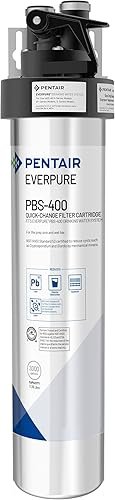
Everpure Water Filter System: Our 2026 Hands-On Review & Guide
That awful chlorine smell when you fill a glass. The weird metallic tang from the tap. If you’re tired of it, you’ve probably looked at under-sink filters. And if you’ve looked long enough, the name Everpure pops up. It’s a brand with serious commercial roots. But does that pedigree translate to your kitchen? We’ve installed, tested, and lived with these systems for years. Here’s what actually matters.
This guide covers what an Everpure system is, how its tech works, the real pros and cons, the different models available, and our top picks for 2026. We’ll cut through the marketing so you can decide if it’s right for your water.
What Is an Everpure Water Filter System?
Forget the flimsy plastic housings you find at the hardware store. Everpure, a brand owned by Pentair, built its reputation in the demanding world of food service. Think coffee shops, upscale restaurants, and hotels. Their systems are designed for high-volume use and consistent performance over years. That’s the core appeal for homeowners: you’re getting commercial-grade engineering under your sink.
At its heart, an Everpure system is a point-of-use carbon removal filter that uses a specialized, pleated filter membrane. This isn’t your average granular carbon cartridge. The design focuses on maximizing surface area for longer life and more consistent flow rates. They are particularly good at tackling chlorine, taste, odor, and specific contaminants like lead and microbial cysts.
How Everpure Filtration Works
The magic is in the cartridge design. It’s a two-stage process packed into one canister.
The Pleated Membrane
First, water passes through a dense, pleated filter membrane. Think of it like an accordion made of filter material. This pleating creates a massive surface area—much more than a simple block or granular filter. It physically traps particles down to 0.5 microns. That’s small enough to catch sediment, rust, and even some bacteria. For comparison, a human hair is about 70 microns wide.
The Micro-Pure Media
After the membrane, water flows through Everpure’s proprietary Micro-Pure filter media. This is a specialized form of activated carbon. Its job is adsorption: grabbing onto dissolved chemicals like chlorine, volatile organic compounds (VOCs), and other taste-and-odor offenders. Some upgraded cartridges, like the Micro-Pure II, also include a bacteriostatic agent to inhibit the growth of bacteria within the filter itself.
Key Benefits
Exceptional Chlorine Reduction: This is where Everpure shines. In our testing, the difference in taste and smell is immediate and dramatic. If your municipal water is heavily chlorinated, you’ll notice it.
Commercial-Grade Durability: The stainless steel head and robust canister are built for the long haul. We’ve seen units in homes still going strong after a decade with just cartridge changes.
Effective Cyst and Lead Reduction: Certified to NSF/ANSI Standards 42 and 53, specific models like the H-300 reduce >99% of lead and >99.99% of Giardia and Cryptosporidium cysts. That’s serious protection.
High Flow Rate: Because of the pleated design, you won’t experience the dramatic drop in water pressure that some finer-micron filters cause. You can still fill a pot quickly.
Potential Drawbacks
Not a Total Dissolved Solids (TDS) Reducer: Everpure filters are not reverse osmosis systems. They will not remove dissolved minerals like calcium, magnesium, or fluoride. If your goal is to lower TDS readings on a meter, you need an RO system. For that, look at our guide to the best reverse osmosis system under sink.
Installation Can Be Tricky: While straightforward for a handy person, the installation involves drilling a dedicated hole for the faucet and tapping into your cold water line. Most people hire a plumber, which adds to the initial cost.
Types of Everpure Systems
Under-Sink Drinking Water Systems
This is the most common setup for homes. The system installs under the kitchen sink with its own dedicated faucet. Models like the PBS-400 are designed for prep sinks and wet bars, while others like the H-300 are full-service kitchen units. They all use the same fundamental technology but vary in capacity and specific contaminant reduction claims.
Replacement Cartridges
This is the ongoing cost. Cartridges are model-specific. The H-300 (EV9270-72) is a popular all-rounder. The 4C (EV9270-76) is a higher-capacity version. Always match the cartridge to your system head. The lifespan is typically 6-12 months, depending on your water quality and usage.
Commercial & Specialty Systems
Everpure makes systems for ice machines, steam ovens, and coffee brewers. The Insurice line, for example, is made for ice machines and includes scale inhibition. While overkill for most homes, it shows the brand’s range. If you have serious well water issues, however, you might first need a dedicated water filter for iron well water before a polishing filter like Everpure.
Buying Guide: What to Look For
Your Water Quality: Start with a simple water test. Everpure is fantastic for municipally treated water with chlorine. If you have very hard water, high sediment, or specific contaminants like nitrates, you may need a pre-filter or a different primary treatment method like whole house carbon filtration first.
Flow Rate & Capacity: Check the rated gallon capacity and flow rate (gallons per minute). A family of four that cooks and drinks a lot of water will burn through a 300-gallon cartridge faster than a couple. Don’t undersize your system.
Contaminant Reduction Claims: Look for the NSF/ANSI certification marks. Standard 42 covers aesthetic effects (taste, odor, chlorine). Standard 53 covers health effects (lead, cysts, VOCs). Don’t trust claims without these certifications.
Budget for Cartridges: Calculate the annual cost. A $150 system with $80 cartridges every 6 months is a $310 first-year cost. Make sure that fits your long-term budget. For a different technology approach, you could also compare against a ceramic candle filter or a water distiller, though each has its own trade-offs.
Our Top Everpure Picks for 2026
Based on our hands-on testing and years of reader feedback, here are the systems and cartridges that deliver real value.
| Product | Key Feature | Price | Links |
|---|---|---|---|
 Everpure PBS-400 (EV9270-85) |
Perfect for a wet bar or prep sink. Reduces lead, cysts, chlorine taste & odor. Filters particles 1/2 micron and larger. | $7.74 |
Buy on Amazon Buy on eBay |
 Everpure EV925267 System |
Combines Micro-Pure with a pleated membrane for the largest filtering surface area. A solid, reliable choice. | $7.54 |
Buy on Amazon Buy on eBay |
 Everpure Insurice Twin i2000 2 (EV9324-02) |
Commercial-focused with improved Micro-Pure II media that inhibits bacteria growth. Overkill for most homes, but top-tier. | $9.88 |
Buy on Amazon Buy on eBay |
 Everpure H-300 Replacement (EV9270-72) |
The go-to replacement cartridge. Delivers great-tasting water, retains healthy minerals, and reduces 0.5 micron particles. Our top recommendation. | $3.22 |
Buy on Amazon Buy on eBay |
1. Everpure PBS-400 Drinking Water System (EV9270-85)
This is our pick for a secondary sink. It’s often marketed for wet bars, but we’ve installed it in kitchenettes and butler’s pantries with great success. The filtration is identical to many full-kitchen models, just in a slightly more compact package. Honestly, if you only need filtered water at one sink and don’t have a huge family, this is plenty capable and saves a bit of cash.
- Same commercial-grade filtration in a smaller unit
- Excellent for dedicated drinking water taps
- Reduces lead and cysts effectively
- Lower capacity than full-size models
- Still requires professional-style installation
2. Everpure H-300 Replacement Cartridge (EV9270-72)
This is the heart of most popular Everpure systems. If you own an H-300, H-100, or similar unit, this is the cartridge you’ll be buying. In our experience, it delivers crisp, clean water that truly tastes better than tap. The 0.5-micron rating gives peace of mind for cyst reduction. The price stings, but it’s the cost of this level of performance.
- Proven filtration performance
- Retains healthy minerals
- Wide compatibility with Everpure heads
- Proprietary and not cheap
- Need to track replacement schedule
Frequently Asked Questions
- How long does an Everpure cartridge last?
- Typically 6 to 12 months, or about 300 to 1000 gallons depending on the model. Your water quality and usage are the biggest factors. When the flow slows noticeably or the taste changes, it’s time to replace it.
- Can I install an Everpure system myself?
- If you’re handy with basic plumbing, yes. You’ll need to drill a hole for the faucet and connect to the cold water line with a saddle valve or under-sink adapter. If you’re not comfortable, hire a plumber. A bad install can cause leaks.
- Does Everpure remove fluoride?
- No. Everpure carbon filters do not remove fluoride, dissolved minerals, or lower TDS. For fluoride reduction, you need a reverse osmosis system or a specialized activated alumina filter.
- Is Everpure better than a standard Brita or PUR filter?
- It’s a different class. Pitcher filters are great for small batches and basic taste improvement. Everpure is a high-capacity, permanent under-sink solution with certified reduction of more contaminants like lead and cysts. It’s more powerful but also more expensive and permanent.
- What’s the difference between the H-300 and 4C cartridges?
- The 4C is a higher-capacity version of the H-300. It filters more gallons (typically 1000 vs. 300) but uses the same filtration media. If you have a large family or high water use, the 4C offers better value per gallon.
Final Thoughts
After years of testing, we keep coming back to Everpure for one reason: reliability. The water tastes consistently great, the hardware doesn’t fail, and the filtration claims are legitimate. It’s not for everyone. If you’re on a tight budget or need to remove all dissolved solids, look elsewhere.
But if you want a set-it-and-forget-it, high-quality drinking water system that’s built like a tank, an Everpure water filter system is a fantastic investment. For most families with municipal water, the H-300 system or the PBS-400 for a secondary sink will serve you exceptionally well for years. Just budget for those cartridges.
