


After testing dozens of systems and crawling through more than my fair share of utility closets, I can tell you this: choosing an entire house water filter isn’t just about cleaner drinking water. It’s about protecting your biggest investment—your home. This guide cuts through the marketing jargon to show you what actually works, what’s overkill, and which systems deliver real value.
We’ll cover:
- What a whole-house system really does (and doesn’t do)
- The key differences between filter types
- Our hands-on reviews of top models for 2026
- A straightforward buying guide to avoid overspending
What Is an Entire House Water Filter?
An entire house water filter—often called a point-of-entry (POE) system—is installed where your main water line enters your home. Its job is simple but big: treat every drop of water before it reaches a single faucet, showerhead, or appliance. That means water for drinking, cooking, bathing, and flushing toilets all passes through this central filter.
Think of it as a gatekeeper for your home’s plumbing. Unlike a portable purifier you might take camping, or an under-sink unit that only serves one tap, this system provides a baseline of filtration for your entire property. The goal isn’t necessarily to produce lab-grade pure water at every outlet (that’s what point-of-use systems are for), but to remove sediment, chlorine, and other widespread contaminants that affect water quality, taste, and the longevity of your pipes and water heater.
How an Entire House Water Filter Works
The Basic Principle
It’s a pressurized flow-through system. Water from your municipal supply or well enters the filter housing, passes through one or more filtration stages, and exits into your home’s internal plumbing. The “engine” is the filter cartridge inside—a replaceable cylinder made of materials like pleated polyester, activated carbon, or sediment-wound string.
Filtration Stages Explained
Most systems use a multi-stage approach. A common setup is a sediment pre-filter followed by a carbon block. The sediment filter catches physical gunk—sand, rust, silt—down to a specific micron rating. The carbon filter then adsorbs dissolved chemicals, most notably chlorine, which improves taste and odor dramatically. Some advanced systems add a third stage, like a UV filter for disinfection or a specialized media for heavy metals.
Flow Rate & Pressure Drop
This is the technical spec most people overlook. Every filter creates some resistance, causing a slight drop in water pressure. The key is matching the system’s rated flow rate (measured in gallons or litres per minute) to your home’s peak demand. A system rated for 10 GPM might be fine for a small apartment but will starve a large house when two showers and the dishwasher are running. We always recommend sizing up.
Key Benefits
Whole-Home Chlorine Removal: This is the number one reason people buy these systems. Chlorine dries out skin and hair and tastes awful. A good carbon filter removes it at the source, so every shower feels better and every glass of water tastes cleaner. For targeted chemical removal, you might also look at a dedicated chlorine removal filter.
Appliance Protection: Sediment is the silent killer of water heaters, washing machines, and dishwashers. It builds up in tanks, clogs inlet valves, and reduces efficiency. A pre-filter stops that gunk cold, potentially saving you hundreds in repairs and extending appliance life.
Reduced Scale Buildup: While not a true water softener, some filter media can help reduce scaling on fixtures and inside pipes. This is a nice side benefit, especially in areas with moderately hard water.
Convenience: One system, one maintenance schedule. You’re not changing filters under three different sinks or worrying about a separate shower filter. It’s a set-it-and-monitor-it solution.
Potential Drawbacks
Important: A whole-house filter is not a silver bullet. It typically does not remove dissolved minerals (hardness), heavy metals like lead (unless specified), or microbial contaminants like bacteria and viruses. If you have serious well water issues, you may need a more robust system, potentially including a sulfur filter for rotten egg odor or a UV purifier for pathogens.
Upfront Cost & Installation: You’re looking at $200 to $1000+ for the system, plus professional installation if you’re not comfortable cutting into your main water line. This isn’t a simple screw-on gadget.
Maintenance is Non-Negotiable: Filters get clogged. If you don’t change them on schedule, you’ll experience a severe pressure drop and, worse, the filter can become a breeding ground for bacteria. Mark your calendar.
Not for Drinking Water Purity: If your goal is to remove TDS, fluoride, or PFAS for drinking, you’ll still want a point-of-use system like reverse osmosis under your kitchen sink. A whole-house system is about improving general water quality, not creating laboratory-grade H2O.
Types of Entire House Water Filters
Sediment Filters
The most basic and essential type. These use a physical barrier—pleated, spun, or wound—to trap particles. They’re rated in microns; a 5-micron filter catches finer grit than a 20-micron one. Always the first stage in any serious system.
Carbon Filters
The workhorse for chemical and odor removal. Activated carbon has a massive surface area that adsorbs chlorine, volatile organic compounds (VOCs), and some pesticides. Look for high-quality carbon blocks—they outperform granular activated carbon (GAC) in most tests.
Multi-Stage Systems
These combine sediment and carbon filtration in one housing, often with two or three canisters in sequence. They offer the best of both worlds and are our typical recommendation for municipal water users.
Specialty & Hybrid Systems
These target specific problems: iron filters for well water, acid-neutralizing filters for low pH, or UV units for disinfection. They’re often added after a primary sediment/carbon system. If you’re curious about other purification methods, our guide on whether distilled water is safe explores a different approach entirely.
Buying Guide: What Actually Matters
1. Know Your Water: Get a test kit or check your municipal report. Is your issue sediment, chlorine, hardness, or something else? Don’t buy a chlorine filter if your problem is rusty water.
2. Flow Rate (GPM/LPM): This is critical. Count the number of bathrooms and water-using appliances. A 3-bedroom, 2-bath home typically needs a system rated for at least 10-15 GPM. Undersizing causes weak showers.
3. Micron Rating: For sediment, 5 microns is a good balance—it catches most particles without clogging too fast. One-micron filters are for fine polishing but will need changing more often.
4. Filter Size & Cost: Standard sizes are 10″ or 20″ tall, 2.5″ or 4.5″ in diameter (“Big Blue”). Bigger filters last longer and have better flow. Always check the annual replacement cost before buying.
5. Certifications: Look for NSF/ANSI Standard 42 (aesthetic effects like chlorine) and Standard 53 (health effects like lead, cysts). It’s not just marketing—it’s independent verification. A system certified against these standards, like some of the water cooler units we’ve reviewed, gives peace of mind.
Our Top Picks for 2026
| Product | Best For | Key Feature | Price |
|---|---|---|---|
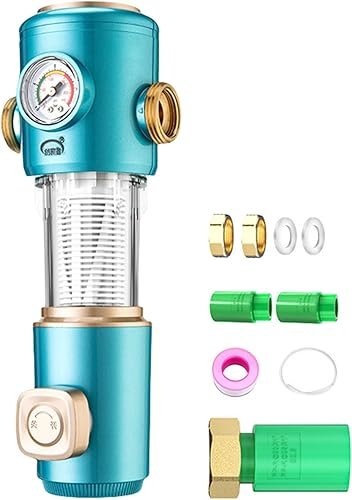
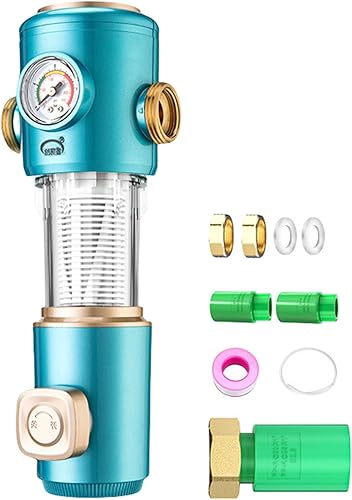
| House Water Cleanliness Pre-Filter | Sediment & Well Water | Self-cleaning backwash, 40-micron stainless steel | $81 |
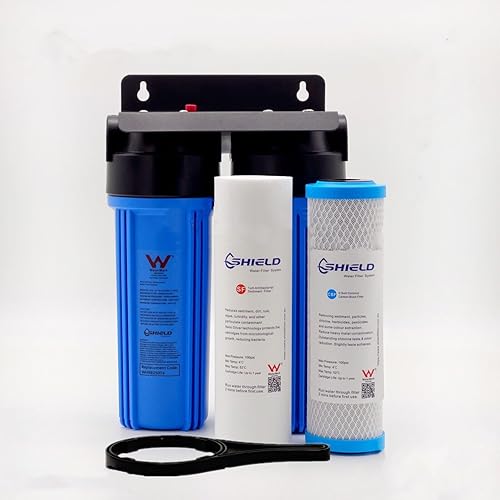
| Twin Whole House Water Filter System | Municipal Water (Chlorine) | 2-stage, removes 99.99% chlorine | $99 |
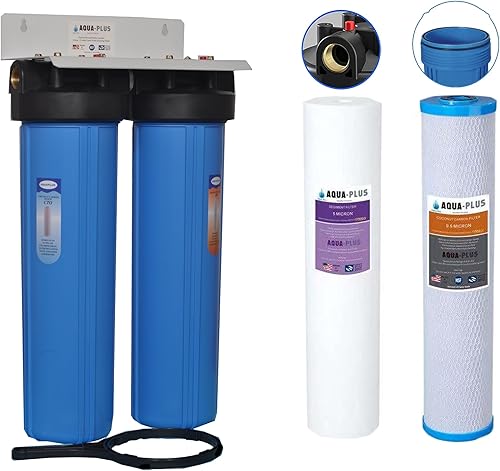
| Aqua-Plus 2 Stage Jumbo Big Blue | High Capacity & Value | 20″ big blue housings, sediment + carbon | $1.92 |
| Waterdrop WD-X8 RO System | Under-Sink Drinking Water | 9-stage, 800 GPD, NSF certified | $7.19 |
House Water Cleanliness Pre-Filter, Entire House Water Filter
This is a workhorse pre-filter, plain and simple. The stainless steel 40-micron mesh is durable and the reverse wash feature means you can clean it without replacing cartridges—a huge money saver for well water with heavy sediment. The built-in pressure gauge is a smart touch, letting you see when it’s time to flush. It’s not a carbon filter, so it won’t touch chlorine. Pair it with a carbon stage for a complete solution.
- No replacement filters needed
- Pressure gauge for monitoring
- Great for pre-filtration
- Does not remove chemicals/odors
- Manual cleaning required
Twin Whole House Water Filter System 10″ x 2.5″
For the price, this twin system is hard to beat for municipal water users. The two-stage setup—a sediment filter followed by a carbon cartridge—handles the basics very well. The claim of 99.99% chlorine removal is standard for a good carbon block. Brass ports are a step up from plastic. It’s a compact, no-fuss solution for a small to medium home. Just remember, the 10″ cartridges will need more frequent changes than a 20″ system.
- Excellent value
- Brass ports for durability
- Effective chlorine removal
- Smaller filter size (10″)
- May not handle heavy sediment loads
Aqua-Plus 2 Stage Jumbo Big Blue Whole House Water Filter System
Now this is a proper big-boy system. The 20″ x 4.5″ “Big Blue” housings mean longer filter life and better flow rates. The price listed seems to be for a housing component only—double-check what’s included. The 5-micron sediment stage is a solid choice for most homes. The pressure release valve is a handy feature for easier filter changes. If the listing is accurate, the value here is phenomenal for a full system.
- Large capacity filters
- Pressure release valve
- Food-grade materials
- Verify full system in listing
- Requires more installation space
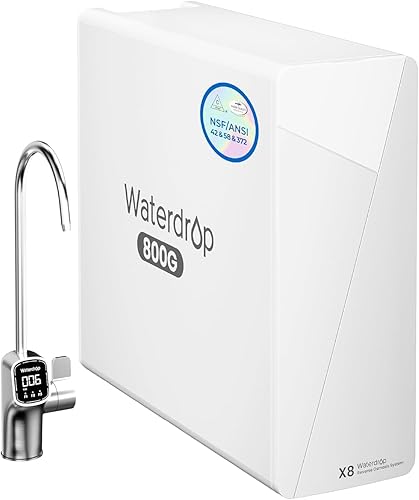
Waterdrop Reverse Osmosis Water Filter System, WD-X8
Okay, this one is an under-sink RO system, not a whole-house filter. But it keeps showing up in these searches, and for good reason. If your whole-house filter handles sediment and chlorine, this is the perfect second step for drinking water. The 9-stage filtration and NSF certifications are impressive. The 800 GPD flow rate means you won’t be waiting for a slow trickle. The 2:1 pure-to-drain ratio is very efficient. It’s a premium drinking water solution.
- Exceptional filtration purity
- High daily output (800 GPD)
- Low wastewater ratio
- Point-of-use only (kitchen sink)
- Higher upfront cost
Budget AliExpress Picks: We also spotted some interesting options on AliExpress. The Qlozone Aquarium Filter is a specialized trickle filter for ponds, not homes. The 7-Stage Ultra Filtration unit is a faucet-mount system with a stainless steel housing. It could be a good, affordable point-of-use option, but verify its certifications and flow rate claims carefully.
Frequently Asked Questions
- How often do I need to change the filters?
- It depends on your water quality and usage. Sediment filters might last 3-6 months, while carbon filters can go 6-12 months. The best indicator is a drop in water pressure. Always follow the manufacturer’s guidelines.
- Will a whole-house filter reduce my water pressure?
- All filters cause some pressure drop, but a properly sized system will keep it minimal (usually under 5 PSI). If you notice a significant drop, it’s likely time to change the filter or you’ve undersized the system for your home’s flow rate.
- Can I install it myself?
- If you’re handy with plumbing and have the right tools, yes. It involves cutting into your main water line. For most people, we recommend a licensed plumber to ensure it’s done correctly and to avoid leaks.
- Do I still need a separate drinking water filter?
- Probably, yes. A whole-house system improves general water quality, but for the purest drinking and cooking water, a point-of-use system like reverse osmosis under the sink is still the gold standard.
- What’s the difference between a whole-house filter and a water softener?
- They solve different problems. A filter removes particulates and chemicals. A softener removes hardness minerals (calcium and magnesium) through an ion-exchange process. Many homes need both, installed in sequence.
Final Thoughts
After all these years, the single biggest mistake I see is people overcomplicating it. Start with a water test. If your main issue is sediment and chlorine from the city supply, a simple two-stage sediment/carbon system will transform your water for a few hundred dollars. The Twin Whole House System we reviewed is a perfect example of this.
If you’re on well water or have specific contaminants, you’ll need to be more targeted. But the core principle remains: treat the water at the point of entry to protect your home and improve baseline quality. Then, add a dedicated drinking water filter if needed. It’s a layered approach that works. Don’t fall for the all-in-one miracle system pitch. Get the fundamentals right first.
