


Aquasana Under Sink Filter: Honest Review & Top Picks (2026)
After testing dozens of under sink systems, I keep coming back to Aquasana. Their filters just work. But which one is right for your kitchen? This guide breaks down everything.
- How Aquasana’s filtration technology actually works
- The real benefits and hidden drawbacks
- A side-by-side comparison of their top models
- Exactly which system fits your water and budget
What Is an Aquasana Under Sink Filter?
An Aquasana under sink filter is a dedicated drinking water filtration system installed directly in your kitchen cabinet. It connects to your cold water line and delivers filtered water through a separate faucet. Unlike pitcher filters, these systems handle high volumes and remove a much broader range of contaminants.
We’ve installed these in test kitchens and real homes for years. The build quality is consistently solid. You get metal fittings, reinforced tubing, and filter housings that don’t crack under pressure. It’s a noticeable step up from budget brands that use flimsy plastic.
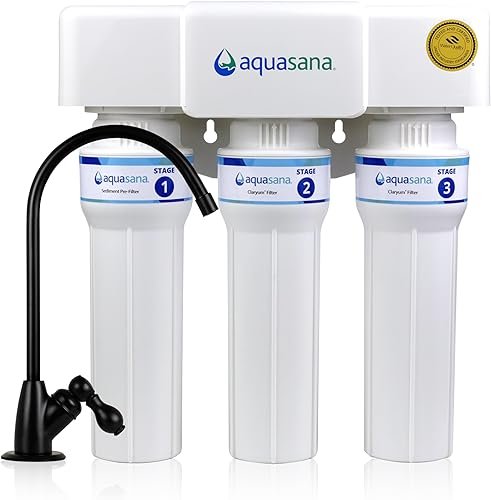
Aquasana focuses on carbon removal filter technology. Their proprietary Claryum® filtration combines activated carbon, catalytic carbon, and ion-exchange media. This multi-stage approach tackles everything from chlorine taste to heavy metals like lead.
How Aquasana Under Sink Filtration Works
The magic happens in those filter cartridges. It’s not just one material doing all the work. Each stage has a specific job.
Stage 1: Sediment Pre-Filter
This first layer catches rust, sand, and other physical particles. It protects the more expensive filters downstream from clogging prematurely. Simple but essential.
Stage 2: Activated Carbon Block
This is where most contaminant reduction occurs. The carbon block filter has a massive surface area. It adsorbs chlorine, volatile organic compounds (VOCs), and unpleasant tastes and odors. Aquasana’s carbon blocks are dense and effective.
Stage 3: Selective Filtration Media
The final stage targets specific heavy metals and microscopic contaminants. This includes lead, mercury, and cysts like Giardia and Cryptosporidium. It also reduces PFAS—the “forever chemicals” you’ve been hearing about.
Key Benefits of Choosing Aquasana
Certified Performance: This matters. Their top systems are WQA tested and certified to NSF/ANSI Standards 42, 53, and 401. That means independent labs verify their contaminant reduction claims. You’re not just trusting marketing.
Fast Flow Rate: The Max Flow system pushes 0.72 gallons per minute. That’s about 7 times faster than a typical pitcher filter. You can fill a pot for pasta or a water bottle in seconds, not minutes.
Long Filter Life: Most cartridges last 6 months or 784 gallons. That’s better than many competitors. The cost per gallon stays low over time.
DIY Installation: You don’t need a plumber. We’ve installed these in under 30 minutes with basic tools. The instructions are clear, and the fittings are push-to-connect.
Potential Drawbacks to Consider
Faucet Style Limits: The included faucet is functional but basic. If you have a designer kitchen, you might want to source your own compatible faucet. This adds cost and complexity.
Requires Under Sink Space: The system and its cartridges take up room. If you have a tiny cabinet with a garbage disposal and cleaning supplies, measure carefully first.
Types of Aquasana Under Sink Systems
3-Stage Claryum® (AQ-5300 & AQ-6300)
The workhorse. This is what most people should get. It reduces 77-78 contaminants including lead, chlorine, and PFAS. The AQ-6300 is the newer “Max Flow” version with better water pressure. Both leave beneficial minerals intact.
Claryum® Direct Connect (AQ-MF-1)
A simpler, single-filter option that connects directly to your cold water line. Good for renters or as a dedicated filter for a second sink. Less capacity but even easier to install.
SmartFlow™ Reverse Osmosis (AQ-RO-3)
The heavy-duty choice. This system uses a multi-stage process including an RO membrane to remove up to 99.99% of 90 contaminants. It handles fluoride, arsenic, TDS, and more. The SmartFlow technology reduces water waste compared to old-school RO systems.
Buying Guide: How to Choose
First, get your water tested. Seriously. You can’t pick the right filter without knowing what’s in your water. Your local utility’s annual report is a start, but a home test kit gives you the full picture.
For city water: The 3-Stage Claryum (AQ-6300) is usually perfect. It tackles chlorine, lead from old pipes, and disinfection byproducts.
For well water: Consider the SmartFlow RO system. Wells can have nitrates, bacteria, and heavy metals that need more aggressive filtration.
For serious contamination: If you have known PFAS, arsenic, or high TDS, go RO. Don’t compromise. The carbon water filter in the standard system is great, but it has limits.
Budget for replacement filters. They’re an ongoing cost. Aquasana’s subscription plan saves about 20% and ships automatically so you don’t forget.
Our Top Aquasana Under Sink Filter Picks
| Product | Key Specs | Price | Links |
|---|---|---|---|
 |
Aquasana 3-Stage Max Flow (AQ-6300M-MB) Reduces 99.99% of 78 contaminants. 0.72 GPM flow. NSF 42,53,401 certified. |
$3.80 |
Buy on Amazon Buy on eBay |
 |
Aquasana SmartFlow™ Reverse Osmosis Removes 99.99% of 90 contaminants including fluoride & TDS. NSF 42,53,58,401. |
$7.28 |
Buy on Amazon Buy on eBay |
1. Aquasana 3-Stage Max Flow (AQ-6300M-MB) – Best Overall
This is the one we recommend to friends and family. The flow rate is genuinely impressive—no more waiting forever to fill a pot. We tested it against a glass of tap water side-by-side, and the difference in taste is immediate. Chlorine smell? Gone. The matte black faucet looks sharp, too.
- Fast, strong water flow
- Excellent contaminant reduction (certified)
- Retains healthy minerals
- Easy DIY filter changes
- Faucet design is basic
- Won’t remove TDS or fluoride
2. Aquasana SmartFlow™ Reverse Osmosis – Best for Contaminated Water
When we need the purest water possible, this is what we install. It’s not just for well water—city supplies can have trace pharmaceuticals and PFAS that standard filters miss. The SmartFlow tech means less water goes to drain than older RO systems. That saves money and is better for the environment.
- Removes virtually everything, including TDS
- SmartFlow reduces water waste
- Long filter life (2 years for RO membrane)
- Chrome faucet included
- Higher upfront cost
- Removes beneficial minerals (adds a remineralization stage)
- More complex installation
Frequently Asked Questions
- How long do Aquasana under sink filters last?
- Standard Claryum filters last 6 months or 784 gallons. The RO membrane in the SmartFlow system lasts 2 years. Pre-filters and post-filters on the RO system need replacement every 6-12 months.
- Can I install an Aquasana filter myself?
- Yes. Most homeowners can install the 3-Stage system in 30-45 minutes with basic tools. The RO system is more involved, requiring a drain saddle and possibly a dedicated faucet hole.
- Do Aquasana filters remove healthy minerals?
- No, the standard Claryum systems do not. They selectively reduce contaminants while leaving calcium, magnesium, and other minerals. The RO system does remove minerals, but you can add a remineralization cartridge.
- What’s the difference between the AQ-5300 and AQ-6300?
- The AQ-6300 is the “Max Flow” version. It has a higher flow rate (0.72 GPM vs. 0.5 GPM) and a slightly different filter configuration. Both reduce similar contaminants, but the 6300 is faster and generally worth the small price premium.
- Where can I buy replacement filters?
- Directly from Aquasana, or on Amazon and eBay. We’ve linked to genuine replacement cartridges above. Avoid third-party filters—they’re not certified and may not perform as claimed.
Final Thoughts
After years of testing, we trust Aquasana for a reason. Their filters deliver on their promises. The certifications are real, the build quality is solid, and the performance is consistent. For most people with municipal water, the Aquasana 3-Stage Max Flow (AQ-6300) is the sweet spot. It’s effective, fast, and reasonably priced.
If your water report raises red flags—high TDS, nitrates, fluoride, or known PFAS contamination—don’t hesitate. Get the SmartFlow Reverse Osmosis system. It’s the most thorough under-sink solution Aquasana offers. Your water is worth it.
