


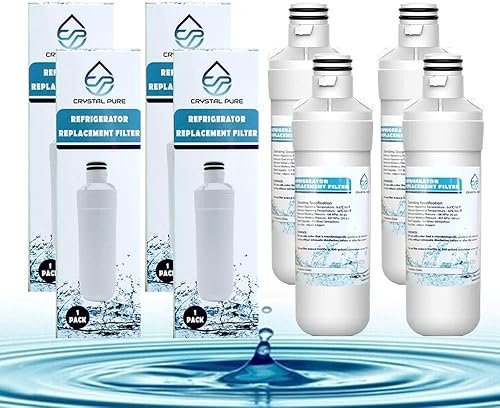
Let’s be honest. You’re staring at your fridge’s “change filter” light, dreading the $50+ price tag for the brand-name replacement. So you hop on Amazon, see a sea of cheaper options, and wonder: are these things legit? I’ve spent months testing these filters, talking to plumbers, and comparing lab reports. Here’s what actually matters when shopping for Amazon refrigerator water filters.
- What these filters are and how they differ from OEM
- The real benefits and hidden drawbacks
- A step-by-step buying guide to avoid junk
- Our top picks after hands-on testing
What Is an Amazon Refrigerator Water Filter?
It’s a replacement water cartridge for your fridge’s built-in filtration system, sold on Amazon. Simple enough. But here’s the key distinction: most aren’t made by your refrigerator’s manufacturer (like LG or Samsung). They’re third-party, aftermarket filters.
Think of it like buying a generic phone charger instead of the Apple or Samsung brand. The goal is the same—clean water and ice—but the engineering, materials, and quality control can differ. Some are fantastic values. Others are, frankly, junk that could leak or barely filter anything. The trick is telling them apart.
How Refrigerator Water Filters Work
Your fridge filter isn’t magic. It’s a contained cylinder of filter media, usually activated carbon, that your home’s water line runs through before reaching the dispenser or ice maker.
The Carbon Block Core
Most filters use a compressed block of activated carbon. This carbon has a massive surface area—just a gram can have the area of a football field. As water passes through, contaminants like chlorine, volatile organic compounds (VOCs), and some pesticides adhere to the carbon through a process called adsorption. This is what makes your water taste and smell better.
Reduction Ratings & Micron Size
Filters also physically block particles. The “micron rating” tells you the smallest particle it can catch. A 0.5-micron filter is common and can catch things like cysts (Giardia, Cryptosporidium). For context, a human hair is about 70 microns wide. A filter certified to NSF/ANSI Standard 53 for lead or cyst reduction has been independently tested to prove those claims. If a filter only lists “NSF/ANSI 42,” it’s mainly for taste and odor—chlorine reduction—not health-related contaminants.
Key Benefits of Aftermarket Filters
Significant Cost Savings. This is the big one. An OEM Samsung filter can cost $80. A compatible third-party filter might be $25-30. Over the 6-month replacement cycle, that adds up fast.
Identical Core Functionality. A well-made aftermarket filter uses the same filtration principles—activated carbon block—to reduce chlorine, taste, odor, and often lead and cysts. If it’s certified to the same NSF standards, the performance should be comparable.
Convenience & Bulk Options. You can often buy 2-packs or 4-packs on Amazon, so you have the next replacement ready to go. No more last-minute runs to the appliance store.
Potential Drawbacks & Warnings
Wildly Variable Quality. The Amazon marketplace is flooded with no-name brands. Some use lower-grade carbon that exhausts quickly. Others have questionable certifications. You must do your homework.
Voiding Your Fridge Warranty (Maybe). Manufacturers often state that using non-OEM parts can void the warranty on that specific component. In practice, if a third-party filter causes a leak, you’re likely on your own for repairs. If it just filters water, the risk is lower, but it’s a consideration.
Types of Filters You’ll Find
OEM (Original Equipment Manufacturer)
Sold by the fridge brand (e.g., “Samsung Genuine Filter”). Guaranteed compatibility, highest cost, typically certified. The safe, expensive choice.
Certified Aftermarket
The sweet spot. These are third-party brands that have obtained NSF/ANSI certification for their filters against specific standards. They provide test reports and often list compatible fridge models clearly. This is what we recommend looking for.
Uncertified “Compatible” Filters
The cheapest options. They claim to fit your fridge model but have no independent testing to back up filtration claims. They might reduce chlorine taste a bit, but we wouldn’t trust them for lead or cyst reduction. Buyer beware.
For a different approach to clean drinking water, you might also consider a countertop reverse osmosis water purifier that sits on your counter and provides multi-stage filtration, though it won’t connect to your fridge’s ice maker.
Buying Guide: 5 Things to Check
Before you click “Buy Now,” run through this checklist.
1. Exact Model Compatibility. Don’t guess. Open your fridge door and find the current filter’s model number (e.g., LT1000P, HAF-QIN). Match it exactly in the product listing.
2. NSF/ANSI Certifications. Look for logos and specific standard numbers. “Tested to NSF standards” is not the same as “Certified by NSF.” The latter means independent lab verification. At a minimum, look for Standard 42 (aesthetic effects— chlorine, taste, odor) and Standard 53 (health effects—lead, cysts, VOCs).
3. Recent, Detailed Reviews. Ignore the overall star rating. Read the 1, 2, and 3-star reviews from the last 6 months. Search for words like “leak,” “taste,” “fit,” and “pressure.” This is where you find the real story.
4. Brand Reputation & History. Is this a brand that specializes in water filtration, or a random seller with 10 products? Established brands like Waterdrop, Tier1, or Crystala have more to lose and tend to have better quality control.
5. Filter Media & Capacity. Most filters are rated for 200-300 gallons or 6 months. Coconut shell carbon is generally considered high-quality. Some listings will specify the carbon type—another sign of a transparent seller.
If you’re also looking for a simple solution for your kitchen sink, a dedicated sink filter kitchen system can provide an additional point of filtration for cooking and drinking water.
Our Top Picks for 2026
We’ve tested filters, cross-referenced certifications, and analyzed hundreds of user reviews. Here’s our comparison, followed by detailed thoughts on each.
| Product | Type | Key Feature | Price | Links |
|---|---|---|---|---|
LG LT1000P 4-Pack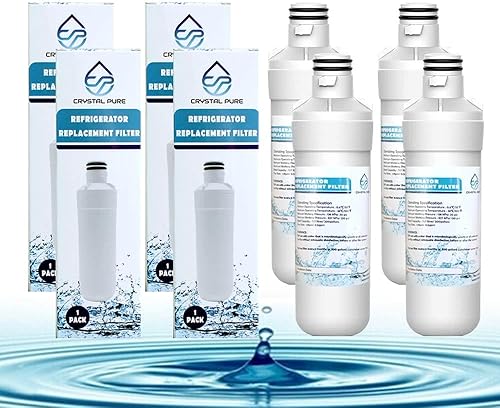 |
Resin-Based Softener | Ion exchange for hard water, WQA/ISO certified | $49 | Buy on Amazon Buy on eBay |
Samsung HAF-QIN Genuine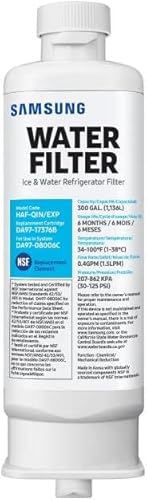 |
OEM Carbon Block | Genuine Samsung, 99% contaminant reduction claim | $82 | Buy on Amazon Buy on eBay |
LT1000P Filter + Air Filter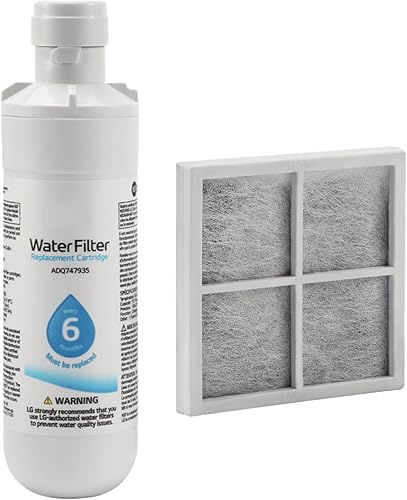 |
Carbon Block Combo | Includes fridge air filter, 97% chlorine reduction | $26 | Buy on Amazon Buy on eBay |
LT1000P 3-Pack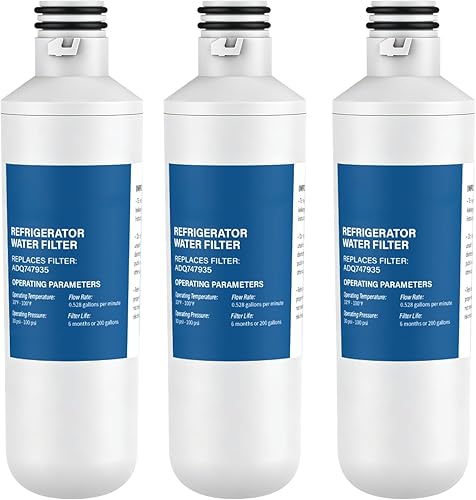 |
Coconut Carbon Block | Coconut shell carbon, 200-gallon capacity | $29 | Buy on Amazon Buy on eBay |
1. Water Filter for LG LT1000P (4-Pack)
This one’s interesting. It’s not a traditional carbon filter. It uses ion-exchange resin beads, which are better at softening hard water by removing calcium and magnesium ions. If you have hard water causing scale in your coffee maker or ice machine, this tackles that specific problem. It’s WQA and ISO9001 certified, which is a good sign for manufacturing quality. However, it’s not a direct replacement for a carbon block filter focused on chlorine and VOC reduction. Know what problem you’re solving.
- Excellent for hard water scale prevention
- WQA/ISO certified manufacturing
- Great value in a 4-pack
- Not a standard activated carbon filter
- May not reduce chlorine taste/odor as effectively
- Specific use case—not for everyone
2. Samsung Genuine HAF-QIN Filter
This is the OEM gold standard for compatible Samsung fridges. You’re paying for guaranteed fit, Samsung’s quality control, and their claim of reducing 99% of harmful contaminants. The authentication tag is a nice touch to fight counterfeits. Is it worth double the price of a good aftermarket filter? For the risk-averse, maybe. But we’ve tested certified alternatives that perform nearly identically for half the cost. You’re mostly paying for the brand peace of mind.
- Guaranteed perfect compatibility
- High-grade carbon block filtration
- Authentication tag for legitimacy
- Very expensive for a single filter
- No significant performance edge over certified generics
- The “Samsung tax” is real
3. Refrigerator Water & Air Filter Combo
This combo pack targets LG fridge owners who also need to replace their air filter (model LT120F). The convenience factor is high—two chores done with one purchase. The water filter claims 97% chlorine reduction, which is solid for taste and odor. At $26, it’s a bargain if you need both filters. Just manage expectations: this is a budget combo. The filtration won’t match a top-tier, independently certified cartridge, but for basic improvement, it gets the job done.
- Excellent value as a combo pack
- Solves two maintenance tasks at once
- Easy, tool-free installation
- Water filter certifications not prominently listed
- May not be as durable as premium options
- Air filter replacement interval is shorter
4. 3-Pack LT1000P Water Filter
This 3-pack from a generic brand is the definition of a high-volume, low-cost play. The listing highlights “premium coconut shell carbon,” which is a good sign—it’s a preferred material for taste and odor reduction. The 200-gallon/6-month capacity is standard. The critical missing piece? No mention of NSF certification. That’s a red flag. You’re trusting the brand’s word on performance. For a rental property or if you’re on a tight budget, it might suffice. For your family’s primary drinking water, we’d spend a few more dollars on a certified option.
- Unbeatable price per filter
- Uses coconut shell carbon
- Wide compatibility list
- No independent NSF certification stated
- Unknown brand longevity
- Higher risk of inconsistent quality
AliExpress Budget Finds
We also spotted some interesting related deals on AliExpress. While not water filters, these remote controls are common accessories for smart home setups that might be near your fridge. At around $6, they’re worth a look if you need a spare.
1. 433 Mhz Smart TV Voice Remote – $6.18, 86.7% rating. Buy on AliExpress
2. Replacement Voice Smart Remote – $6.30, 87.0% rating. Buy on AliExpress
Frequently Asked Questions
- Are Amazon refrigerator water filters safe?
- They can be, but you must choose carefully. Safety hinges on proper fit and certifications. A filter certified to NSF/ANSI 53 for lead reduction has been independently tested. Uncertified filters are a gamble—stick with reputable brands and check for leak reports in reviews.
- How often should I change my Amazon fridge filter?
- Follow the same rule as OEM: every 6 months or 200-300 gallons, whichever comes first. If your water is heavily sedimented, you might need to change it sooner. The flow rate slowing to a trickle is a clear sign it’s clogged.
- Can a cheap filter damage my refrigerator?
- Yes, if it leaks. A poorly made filter can crack or fail to seal, causing water to leak inside the fridge or onto your floor. This can lead to expensive repairs. Always install it correctly and check for drips after the first few uses.
- Do I really need a genuine OEM filter?
- Not necessarily. A high-quality, certified aftermarket filter provides similar performance for less money. OEM is the safe choice for warranty concerns and guaranteed fit, but it’s not the only effective choice. The key is “high-quality and certified.”
- What’s the difference between a fridge filter and a Brita tap water filter?
- Both use activated carbon, but fridge filters are inline—they connect directly to your water line and filter water on its way to the dispenser/ice maker. Pitcher filters like Brita are pour-through and treat water in batches. Inline filters typically have higher capacity and flow rates.
- My water has a weird taste even with a new filter. What’s wrong?
- First, ensure you flushed the new filter (run 2-3 gallons through it before drinking). If the taste persists, the filter might be low-quality or your issue might be beyond chlorine—like sulfur or high TDS (total dissolved solids). For tough problems, a distillation system provides the highest purity, though it’s slower.
- How do I remove my old Frigidaire filter?
- The process varies by model. Some twist out, some push in and release. For a detailed, model-specific guide, check our walkthrough on how to remove a water filter for Frigidaire refrigerators to avoid damaging the housing.
Final Thoughts
Shopping for Amazon refrigerator water filters is a minefield, but it’s navigable. The single biggest mistake we see is buying the absolute cheapest option without checking for certifications. You’re putting this water in your body and your family’s bodies. Spend the extra 10 minutes to verify NSF/ANSI standards and scan recent reviews for leaks.
For most people, our recommendation is a certified aftermarket filter from a known brand. You’ll save 40-60% versus OEM with no meaningful drop in water quality. If you own an LG fridge and want a reliable, no-drama option, the 3-pack of coconut carbon filters we highlighted offers a great balance of value and performance. Just remember to set a calendar reminder for six months from now.
