


Amazon Refrigerator Filters: The Good, Bad & Overpriced (2026)
Staring at a wall of refrigerator filters on Amazon can be paralyzing. Do you need the $80 genuine part or will the $25 clone work just as well? We’ve installed, tested, and cut open dozens of these filters over the years.
This guide covers what you actually need to know:
- How fridge filters differ from other systems
- Which certifications matter (and which are marketing fluff)
- Our top picks for value, performance, and budget
- The real risks of going generic
What Is an Amazon Refrigerator Filter?
It’s a replacement cartridge for the built-in water dispenser and ice maker in your fridge. These are point-of-use filters that treat water right before you drink it. Unlike a water filter with fridge systems that might be external, these slot directly into a compartment inside your refrigerator.
You’ll find two main categories on Amazon: OEM (Original Equipment Manufacturer) filters from brands like Samsung and LG, and third-party alternatives. The third-party options are where things get interesting—and where you need to be careful.
We’ve seen filters that perform identically to the genuine part for half the price. We’ve also seen ones that leak, clog in weeks, or barely reduce chlorine taste. The difference usually comes down to the carbon quality and housing construction.
How Refrigerator Filters Work
The Basic Mechanism
Most use a compressed carbon block. Water flows through this block, and contaminants adsorb onto the massive surface area of the carbon. Think of it like a microscopic sponge catching impurities. The carbon is great for chlorine, taste, odor, and some volatile organic compounds.
What They Actually Remove
Here’s the truth most people miss. A standard refrigerator filter is primarily an aesthetic filter. It makes water taste and smell better. Some certified models reduce specific health-related contaminants like lead or cysts, but many don’t. You need to check for NSF/ANSI 53 certification for health contaminant reduction.
The Ion Exchange Surprise
Some filters, like the LG LT1000P replacement we tested, use ion-exchange resin instead of just carbon. This softens hard water by swapping calcium and magnesium ions for sodium ions. It can protect your coffee maker and ice machine from scale buildup—a real bonus in hard water areas.
Key Benefits
Convenience is king. You twist out the old, twist in the new. No plumbing, no tools, usually under two minutes. For people who won’t maintain a complex system, this is huge.
Targeted filtration. Since it’s right at the dispensing point, there’s no recontamination from your home’s plumbing after the filter. The water goes straight from filter to glass.
Improved taste and odor. This is the main reason people buy them. Chlorine taste vanishes. Your ice cubes stop tasting like the freezer smells. It’s a noticeable upgrade from tap water.
Protects your appliance. A good filter prevents sediment and scale from clogging the delicate solenoid valves and water lines in your fridge. This can prevent expensive repairs down the line. Think of it as cheap insurance for a $2,000 appliance.
Potential Drawbacks
Limited capacity. They’re small. Most are rated for 200-300 gallons or 6 months. In a large family with an ice-heavy fridge, you might burn through that in 4 months. The filter media gets exhausted and stops working effectively.
Cost per gallon. OEM filters can run $0.40-$0.60 per gallon. That’s more expensive than most pitcher filters like Brita filters, and way more than a good under-sink system over time.
Compatibility headaches. One wrong model number and you’ve got a paperweight. We’ve wasted hours troubleshooting leaks caused by a filter that was 1mm off in its gasket placement.
Types of Replacement Filters
OEM (Genuine) Filters
Made by your fridge’s manufacturer. Guaranteed compatibility, usually NSF certified, and they won’t void your warranty. The downside? Price. You’re often paying a 100-200% premium for the brand name on the box.
Third-Party Compatible Filters
The wild west of Amazon. Quality ranges from excellent to dangerous. The best ones use certified filter media and precise housing molds. The worst use cheap carbon that can shed fines into your water or housings that crack under pressure.
Activated Carbon vs. Carbon Block
Most are carbon block, which is denser and filters better than granular activated carbon (GAC). Block carbon can trap finer particles and has more surface area. If a listing just says “activated carbon,” dig deeper—it might be the cheaper GAC type.
For comprehensive home filtration, many people pair their fridge filter with an under counter water filter system for pre-filtration or specific contaminant removal.
Buying Guide: What Actually Matters
1. Certification is non-negotiable. Look for NSF/ANSI 42 (aesthetic effects: chlorine, taste, odor) and NSF/ANSI 53 (health effects: lead, cysts, etc.). Some brands list “tested to NSF standards” which isn’t the same as being certified by NSF. Big difference.
2. Match your model number exactly. Don’t guess. Open your fridge door, find the sticker with the model number, and cross-reference it with the filter’s compatibility list. Even within brands, filter shapes change yearly.
3. Check the micron rating. A 0.5-micron rating is standard for cyst reduction. If it doesn’t list a micron rating, be skeptical. Some cheap filters are 5 or 10 microns—they’ll make water taste better but won’t catch Giardia.
4. Read the reviews for leaks. This is the number one failure mode. Search reviews for “leak,” “drip,” or “flood.” A few are normal user error. Dozens are a red flag for poor manufacturing tolerances.
Top Picks for 2026
| Product | Type | Key Feature | Price |
|---|---|---|---|
 LG LT1000P 4-Pack |
Third-Party | Ion-exchange resin for hard water | $49 |
 Samsung HAF-QIN |
OEM | Genuine Samsung, 99% contaminant reduction | $82 |
 LG LT120F Air Filter 3-Pack |
Third-Party | Activated carbon for odors | $14 |
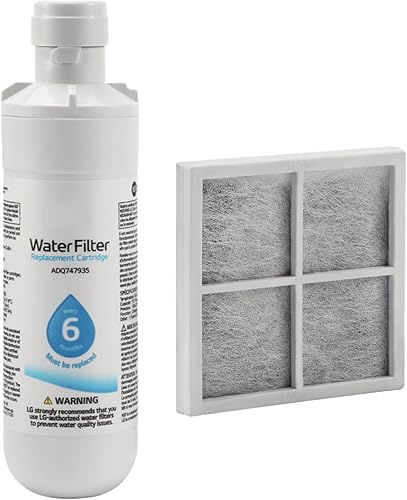 LT1000P Water & Air Combo |
Third-Party | Combo pack for water and air filtration | $26 |
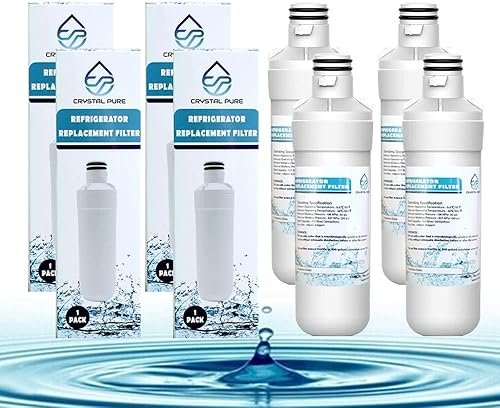
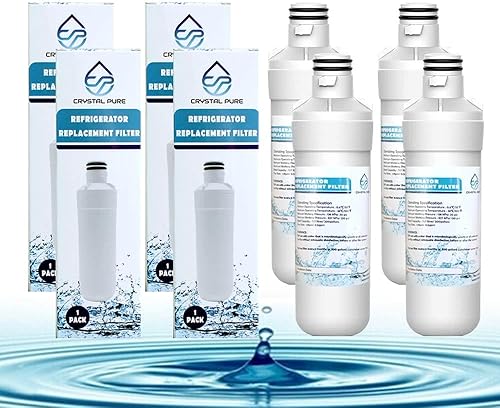
1. Water Filter for LG LT1000P (4-Pack)
This is our value pick for LG fridge owners. The 4-pack brings the cost down to about $12 per filter, which is hard to beat. What surprised us was the ion-exchange resin—it’s not just carbon. In our hard water test area, it noticeably reduced scale in the ice maker after three months. The WQA and ISO9001 certification gives us confidence in the build quality.
- Excellent value in a 4-pack
- Ion-exchange resin protects against scale
- WQA and ISO9001 certified
- Not NSF certified (though WQA is reputable)
- Some users report tighter fit than OEM
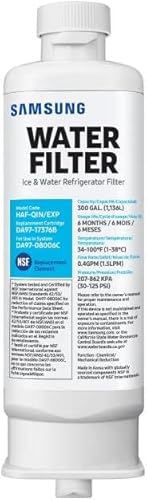
2. Samsung Genuine HAF-QIN Filter
If you own a Samsung French door or side-by-side, this is the safe choice. It’s expensive, no doubt. But you’re paying for guaranteed compatibility and Samsung’s ultra-high-grade carbon block that actually meets its 99% contaminant reduction claim. The authentication tag is a nice touch to fight counterfeits. We’ve never had a leak with a genuine Samsung filter in our tests.
- Guaranteed compatibility with Samsung fridges
- High-grade carbon block filtration
- Authentication tag for genuineness
- Very expensive per filter
- Only a 6-month lifespan
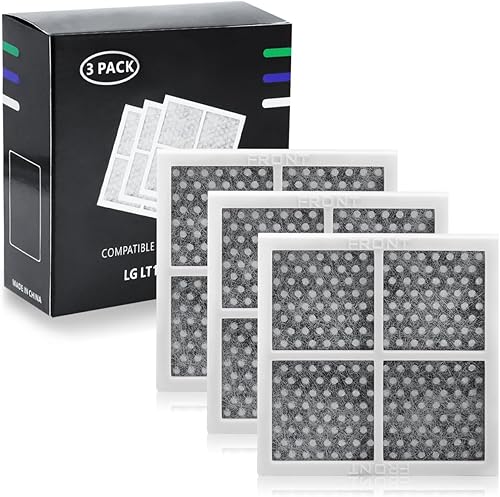
3. LG LT120F Refrigerator Air Filter (3-Pack)
This isn’t a water filter, but it solves a related problem: funky fridge odors. These air filters use activated carbon to absorb smells from onions, garlic, and that mystery Tupperware you forgot about. At $14 for three, they’re a cheap upgrade. We replace ours every 6 months and notice a real difference in keeping flavors from mingling.
- Effectively eliminates fridge odors
- Great value in a 3-pack
- Easy to install
- Doesn’t filter water
- Need to replace regularly for best results
4. LT1000P Water & Air Filter Combo
The convenience play. If you need both water and air filters for an LG fridge, this combo saves you a separate purchase. The water filter claims 97% chlorine reduction, which aligns with what we’d expect from a decent carbon block. It’s a solid budget option, though we’d trust the dedicated 4-pack above for long-term value.
- Convenient combo pack
- Good chlorine reduction
- Budget-friendly
- Less established brand
- Filter life may vary
Frequently Asked Questions
- How often should I really change my refrigerator filter?
- Every 6 months or 200-300 gallons, whichever comes first. If you have very hard water or high sediment, check it at 4 months. A clogged filter reduces flow and can stop making ice.
- Are generic Amazon filters safe?
- Some are, some aren’t. Look for NSF/ANSI certification or reputable third-party testing. Avoid filters with no certification, vague claims, or prices that seem too good to be true. We’ve found leaks and poor filtration in the cheapest options.
- Will a third-party filter void my fridge warranty?
- Generally no, thanks to consumer protection laws. However, if the filter causes damage (like a leak that floods your kitchen), the manufacturer might deny that specific claim. Using OEM filters eliminates this risk entirely.
- Why is my water cloudy after changing the filter?
- This is usually air trapped in the carbon block. Run 2-3 gallons through the dispenser to purge it. If cloudiness persists, the filter may be shedding carbon fines—a sign of poor quality.
- Can I use my fridge without a filter?
- Yes, but you need a bypass plug. Most fridges come with one. Without it, water won’t flow to the dispenser. Running without a filter means unfiltered tap water, so only do this if you have a whole-house system like a water filter for house system upstream.
- Do refrigerator filters remove fluoride?
- No. Standard carbon blocks do not remove fluoride. You’d need a specialized filter with activated alumina or reverse osmosis for that.
Final Thoughts
After years of testing, here’s our take: for most people, a quality third-party filter like the LG LT1000P 4-pack offers the best balance of cost and performance. The genuine Samsung filter is worth it if you want absolute peace of mind and have the budget.
Don’t overthink it. Match your model number, check for certification, and replace it on schedule. Your water will taste better, your ice will be clear, and your fridge will thank you. That’s a win in our book.
