


Alkaline Water Purifier Guide: Hype vs. Health in 2026
You’ve seen the ads. You’ve heard the claims. Alkaline water is everywhere, promising everything from better hydration to disease prevention. But does your tap water really need a pH makeover? After testing dozens of these systems, I’ll cut through the marketing fog. This guide covers what these filters actually do, their real benefits and drawbacks, and which models are worth your money.
What Is an Alkaline Water Purifier?
An alkaline water purifier is a two-stage device. First, it filters out contaminants—things like chlorine, sediment, and heavy metals. Second, it treats the water to increase its pH level, making it less acidic. This “alkalizing” step usually involves passing the water over mineral stones or a cartridge that adds trace amounts of calcium, magnesium, and potassium.
The goal is to produce water with a pH typically between 8 and 9.5. It’s different from a standard filter, which only removes impurities without changing the water’s chemistry. Think of it as a filter with a bonus feature. But that bonus comes with questions. Is the added mineral content meaningful? Is a higher pH actually better for you? Let’s look at the mechanics.
How Alkaline Water Purifiers Work
The process is straightforward, but the details matter. Most systems combine a primary filtration stage with an alkalizing post-filter.
The Filtration Stage
This is the core of any water treatment. Without good filtration, you’re just raising the pH of dirty water. Most quality alkaline systems start with a granular activated carbon filter or a carbon block. This tackles chlorine, volatile organic compounds (VOCs), and bad tastes. Some advanced systems, like reverse osmosis (RO) models, use a membrane to remove up to 99% of dissolved solids, including fluoride and lead.
The Alkalizing Stage
After filtration, water flows through the alkaline cartridge. This contains mineral balls or a blend of calcite and other media. As water passes, it dissolves small amounts of these minerals, which naturally raises the pH. Some systems use electrolysis (like ionizing water filters) to separate acidic and alkaline streams, but pitcher and under-sink models almost always use the mineral infusion method.
Key Benefits
Improved Taste and Odor. This is the most consistent benefit we’ve found. The filtration stage removes chlorine and other chemicals that make tap water taste flat or metallic. The added minerals can give water a smoother, slightly sweeter profile. Most people notice this immediately.
Mineral Supplementation. Alkaline filters add small amounts of calcium and magnesium—essential minerals many diets lack. While the quantities aren’t huge, every bit helps, especially if your source water is very soft. It’s a step up from distilled water vs purified water, which strips everything out.
Potential Acid Reflux Relief. Some small studies suggest alkaline water with a pH of 8.8 can denature pepsin, an enzyme involved in acid reflux. If you suffer from occasional heartburn, this might offer some relief. It’s not a cure, but it’s a low-risk thing to try.
Potential Drawbacks
Cost vs. Benefit. You’re paying a premium for the alkaline feature. A basic but excellent chlorine filtration system might cost half the price. Ask yourself if the mineral addition is worth the extra $50-$150.
Maintenance Complexity. You now have two filters to replace: the primary filter and the alkaline cartridge. Forgetting to change the alkaline cartridge can lead to bacterial growth or reduced mineral output. It’s more to keep track of.
Not a Substitute for Serious Contamination. If you have well water with high iron, bacteria, or nitrates, an alkaline pitcher won’t cut it. You need a dedicated system first. Check out our guide to water filter systems for wells before considering alkalizing.
Types of Alkaline Systems
Pitchers and Jugs
The most affordable entry point. You fill the top reservoir, water passes through a filter/alkaline cartridge, and collects in the bottom. Capacity is limited (1-3.5 liters), and filter life is short (1-2 months). Great for testing the waters, so to speak.
Undersink Systems
These are installed under your kitchen sink and connect to a dedicated faucet. They offer higher capacity, better filtration (often multi-stage including carbon blocks), and more consistent alkaline output. Installation is more involved, but it’s a set-and-forget solution.
Reverse Osmosis with Alkaline Remineralization
The gold standard for purification. The RO membrane strips out nearly everything, including beneficial minerals. A post-filter adds minerals back in, raising the pH. This gives you the purest water with controlled mineral content. It’s the best of both worlds if you start with poor-quality tap water.
Buying Guide: What Actually Matters
Start with Filtration Quality. Don’t get seduced by pH numbers alone. First, look for NSF/ANSI 42 certification (aesthetic effects like chlorine) and NSF/ANSI 53 (health effects like lead). A 0.5-micron carbon water filter is a good baseline for city water.
Check the Alkaline Media. What minerals does it add? Calcium and magnesium are good. Avoid systems that don’t disclose their media. Look for long-life cartridges (6+ months) to reduce hassle and cost.
Consider Your Water Source. For treated city water, a simple pitcher or undersink carbon+alkaline system may suffice. For well water or areas with hard water, you’ll need a more robust pre-filter or an RO system first.
Budget for Replacement Filters. This is where companies make their money. Calculate the annual cost of replacement filters before you buy. A cheap unit with expensive filters is no bargain.
Top Picks for 2026
| Product | Type | Key Feature | Price | Links |
|---|---|---|---|---|
 |
Undersink RO | 75 GPD, NSF membrane, remineralization filter | $239 | Buy on AmazonBuy on eBay |
 |
Glass Pitcher | Borosilicate glass, pH 8.0-8.5, toxin-free | $109 | Buy on AmazonBuy on eBay |
 |
Pitcher | 3.5L capacity, up to pH 9.5, activated carbon | $85 | Buy on AmazonBuy on eBay |
 |
Undersink | WaterMark certified, SUS304 tap, 0.5um carbon block | $117 | Buy on AmazonBuy on eBay |
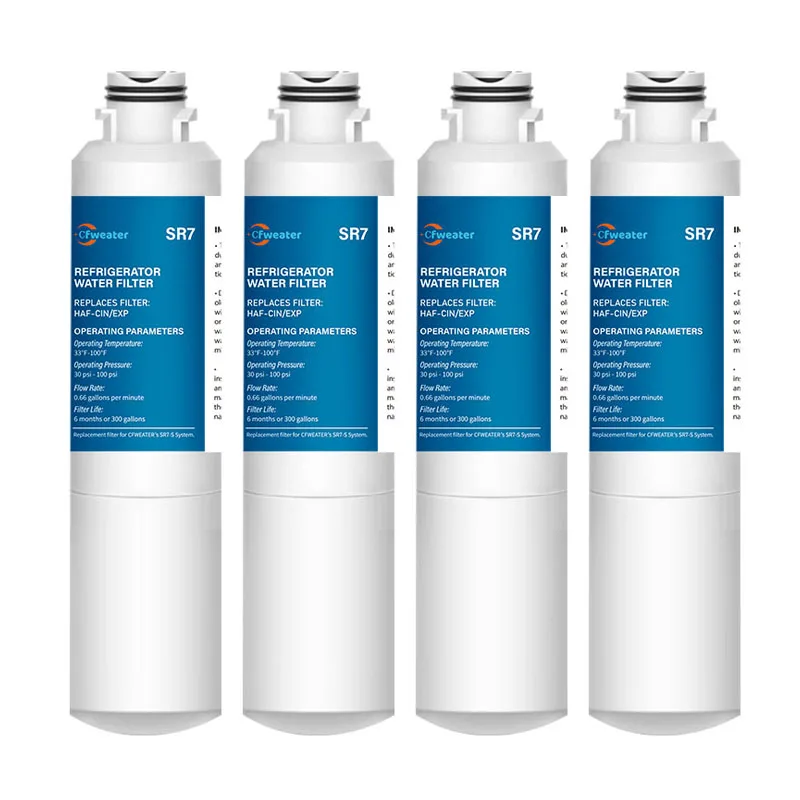 |
Fridge Filter | Replacement for Samsung, 92.3% rating | $44.35 | Buy on AliExpress |
 |
Fridge Filter | For LG, 94.6% rating, multi-pack available | $10.77 | Buy on AliExpress |
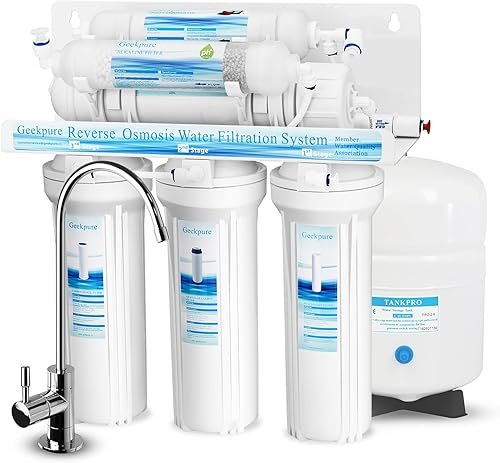
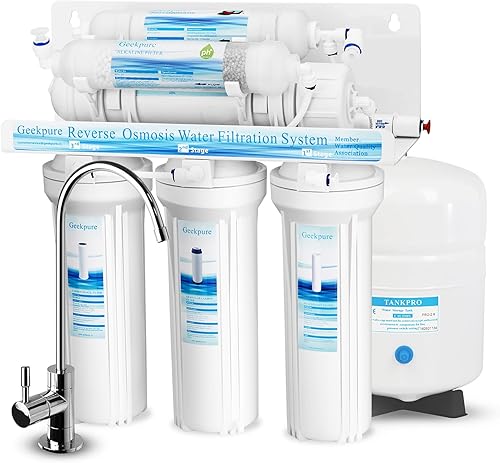
Geekpure 6-Stage RO with Alkaline Filter
This is the system I recommend for anyone serious about both purity and mineral content. The reverse osmosis membrane does the heavy lifting, removing contaminants you can’t even see. Then the final alkaline cartridge adds back calcium and magnesium. Installation is a weekend project, but the dedicated faucet delivers consistently clean, good-tasting water. The 75 GPD flow rate is adequate for most families.
- Exceptional purification via RO membrane
- NSF-certified components
- Includes lead-free faucet
- 7 extra filters included
- Requires under-sink installation
- Wastes some water (typical for RO)
- Higher upfront cost
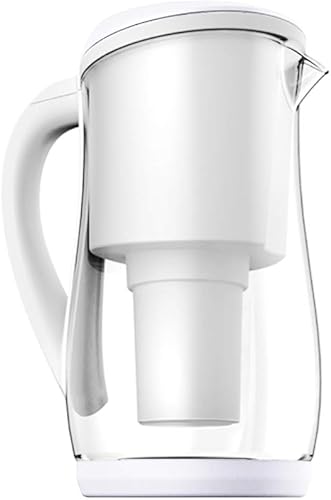
Gentoo Glass Alkaline Water Filter Jug
Honestly, most people don’t need more than this. The Gentoo Glass is beautifully made from borosilicate glass—no plastic leaching concerns. It raises pH to a sensible 8.0-8.5 range and does a decent job reducing chlorine. The 1.5L capacity is small, so you’ll be refilling it often. But for a single person or couple wanting better-tasting mineral water without installation fuss, it’s a solid, non-toxic choice.
- Glass construction is toxin-free
- Effective chlorine reduction
- Simple to use and refill
- Small 1.5L capacity
- Filter life is short (approx. 2 months)
- Glass requires careful handling
Ehm Ultra Premium Alkaline Water Pitcher
This pitcher aims high—literally, with a pH up to 9.5. The 3.5L capacity is more practical than the Gentoo for families. It uses an activated carbon filter for basic purification. In our testing, the high pH was achievable, but the filter clogged faster than advertised with moderately hard water. It’s a good value if you want high alkalinity and decent capacity, but manage your expectations on filter longevity.
- Large 3.5L capacity
- Can achieve very high pH (9.5)
- Activated carbon improves taste
- Filter may clog quickly with hard water
- Plastic construction
- Manufacturer warranty unclear
3-Stage Undersink Alkaline Water Filter System
A compelling mid-range option. The three stages—sediment, carbon block, and silver alkaline—work well for city water. The 0.5-micron carbon block is particularly effective for chlorine and taste. The “silver alkaline” technology claims antibacterial properties, which is a nice bonus. The stainless steel tap feels premium. It’s a straightforward, certified system that delivers on its core promises without the complexity or waste of RO.
- WaterMark certified for safety
- High-quality 0.5um coconut carbon block
- Includes durable SUS304 stainless steel tap
- Not for heavily contaminated sources
- Requires under-sink installation
- Silver technology claims are hard to verify
Frequently Asked Questions
- Is alkaline water safe to drink every day?
- For most people, yes. It’s essentially mineral water with a higher pH. However, if you have kidney disease or are on medications that affect mineral balance, consult your doctor first. The mineral content is low, but it’s worth checking.
- Can an alkaline filter remove fluoride?
- Most standard alkaline pitchers and carbon-based undersink filters do not remove fluoride. You need a reverse osmosis system or a specific activated alumina filter for effective fluoride reduction. The alkaline stage itself does not target fluoride.
- Do alkaline water purifiers waste water?
- Only if they use reverse osmosis. RO systems produce a stream of wastewater (brine) that flushes contaminants away. Pitchers and non-RO undersink filters do not waste water. Check the specs if this is a concern.
- How often should I replace the alkaline filter cartridge?
- It varies by model and your water usage. Typically, every 6 to 12 months for undersink systems, and every 1 to 2 months for pitchers. Ignoring replacement can lead to bacterial growth and reduced mineral output. Set a calendar reminder.
- Will alkaline water help with hydration?
- Some small studies suggest it may hydrate slightly better due to mineral content, but the difference is likely minimal. The best way to stay hydrated is to drink enough water, regardless of its pH. Don’t overpay for marginal gains.
- What’s the difference between an alkaline filter and a water ionizer?
- An alkaline filter adds minerals to raise pH. A water ionizer uses electrolysis to separate water into alkaline and acidic streams. Ionizers are more expensive and complex. For most homes, a mineral-based alkaline filter is simpler and sufficient.
Final Thoughts
After all the testing and talking to homeowners, my take is this: an alkaline water purifier is a nice upgrade, not a health necessity. The real value is in the improved taste and the addition of beneficial minerals. Start with a solid filtration foundation—whether that’s a good carbon block or an RO system—and then decide if alkalizing is worth the extra step and cost.
If you’re going to do it, invest in a quality system like the Geekpure RO or the 3-Stage Undersink model. Avoid the ultra-cheap pitchers with dubious mineral claims. Your water will taste better, and you’ll get some extra calcium and magnesium. Just don’t expect it to be a miracle cure. Drink it because you enjoy it, not because of overblown health promises.
