


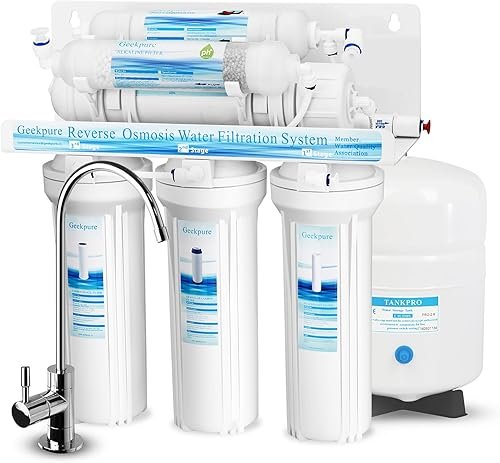
After testing dozens of filters and talking to hundreds of homeowners, I’ve seen the confusion around alkaline water firsthand. Is it just marketing hype, or does that extra stage actually do something useful?
This guide cuts through the noise. We’ll look at what these systems really are, how they work, their real pros and cons, and which ones are worth your money in 2026.
- What Is an Alkaline Water Filter System?
- How an Alkaline Water Filter System Works
- Key Benefits of an Alkaline System
- Potential Drawbacks & Honest Warnings
- Types of Alkaline Water Systems
- Buying Guide: What Actually Matters
- Our Top Alkaline Filter Picks for 2026
- Alkaline Water Filter FAQ
- Final Thoughts
What Is an Alkaline Water Filter System?
Let’s start simple. An alkaline water filter system is any device that treats your tap water to increase its pH level, making it less acidic and more basic on the pH scale. Most often, this is a multi-stage under-sink unit that first purifies the water—usually with reverse osmosis—and then runs it through a final cartridge packed with alkaline minerals.
Think of it like this: the first stages strip everything out, good and bad. The last stage adds back specific minerals (calcium, magnesium, potassium) that not only raise the pH but can also improve the water’s taste and mouthfeel. It’s not magic; it’s chemistry. The result is water that typically tests between pH 8 and 9.5.
The big question everyone asks is about health claims. Honestly, the scientific consensus isn’t strong that alkaline water provides major health benefits for most people. But from a practical, water-quality standpoint, there are reasons people choose them—reasons we’ll get into. For a deeper dive on core filtration principles, you might want to understand filtered drinking water basics first.
How an Alkaline Water Filter System Works
The Purification Core: Reverse Osmosis
Nine times out of ten, the heart of a good alkaline system is a reverse osmosis (RO) membrane. This is the workhorse. Water pressure forces tap water through a super-fine membrane with pores so tiny—about 0.0001 microns—that almost nothing gets through except pure H2O molecules. We’re talking lead, chlorine, fluoride, pesticides, and dissolved solids all get flushed away.
The Alkaline Stage: Remineralization
After the RO membrane does its job, the water is pure but also slightly acidic and “flat” tasting. That’s where the alkaline filter comes in. It’s usually the final cartridge in the lineup. Water flows through a blend of natural mineral stones—like calcite and magnesium oxide—that dissolve slightly into the water. This does two things: it bumps up the pH and adds back a small amount of healthy minerals.
Flow and Storage
Most systems use a small storage tank to hold purified water, so you don’t have to wait for the slow RO process when you want a drink. When you open the dedicated faucet, water flows from the tank, passes through the final alkaline filter on its way out, and into your glass. Some newer tankless RO filter models are changing this, offering on-demand flow without a tank.
Key Benefits of an Alkaline System
Better Taste and Mouthfeel: This is the number one reason people stick with them. RO water can taste flat. Adding minerals back gives it a cleaner, more “spring water” quality. In our blind taste tests, most people preferred it.
Reduces Acidity: If your source water is very soft or has low mineral content, it can be acidic. An alkaline filter neutralizes that. This can be gentler on your stomach and, from a plumbing perspective, less corrosive over decades.
Convenience Over Pitchers: It’s a permanent, under-sink solution. No more filling a pitcher, waiting for it to filter, or buying bottled alkaline water. You get it on tap, instantly. It’s a step up in convenience from a basic everpure water filter or simple carbon system.
May Improve Mineral Intake: The added minerals—calcium and magnesium—are essential for health. While the amounts are small, it’s a bonus you don’t get from standard RO or carbon filters.
Potential Drawbacks & Honest Warnings
Cost vs. Basic RO: You’ll pay a premium for the alkaline stage. A standard 5-stage RO system costs less than a 6-stage with alkaline. Is the taste difference worth an extra $30-50? For many, yes. For others, no.
Maintenance is Key: That alkaline cartridge has a lifespan, usually 6-12 months. If you don’t replace it, it stops working and can become a breeding ground for bacteria. You must follow the filter schedule.
Not a Standalone Filter: An alkaline-only pitcher or faucet attachment won’t remove heavy metals or dissolved solids. It just raises pH. For real purification, you need the RO or advanced carbon stages before it. A POE system (point-of-entry) is a different beast for whole-house treatment.
pH Isn’t Everything: Your body regulates its blood pH tightly. Drinking alkaline water doesn’t change that. The benefits are more about water quality and taste than altering your body’s chemistry.
Types of Alkaline Water Systems
Under-Sink RO with Alkaline Filter
This is the gold standard and what we recommend for most homes. It combines serious purification with the mineral boost. Installation is a weekend project for most DIYers, or you can hire a plumber. The dedicated faucet keeps your filtered water separate.
Countertop Alkaline Filters
These are simpler, often just a multi-stage carbon filter with an alkaline cartridge. They’re easy to install (no drilling) and portable. But they don’t remove as many contaminants as RO. They’re a good choice for renters or if you want to avoid plumbing work. You can find models similar to an express water countertop reverse osmosis system, though true countertop RO units are less common.
Alkaline Water Pitchers
The most affordable entry point. You fill the top, and it filters through a cartridge that includes some mineral stones. The filtration is minimal—mostly chlorine and taste—and the alkaline effect is mild. Good for trying it out, not for serious water problems.
Ionizer Machines
These are electric units that use electrolysis to separate water into alkaline and acidic streams. They’re expensive ($1,000+) and make strong health claims we’re skeptical about. For the cost, a high-quality under-sink RO system with alkaline is a better investment for water purity.
Buying Guide: What Actually Matters
1. Look at the Purification First: Don’t get dazzled by the “alkaline” label. Check what comes before it. An NSF/ANSI 58 certified RO membrane is your best bet for removing the widest range of contaminants. The alkaline stage is just the final touch.
2. Check the Mineral Blend: What’s in the alkaline cartridge? Look for natural minerals like calcium carbonate and magnesium oxide. Avoid systems that use vague terms like “energy balls” or “far-infrared ceramics.”
3. Flow Rate and Tank Size: If you have a large family, a 75 GPD (gallon per day) RO system might be slow. Consider a 100+ GPD model or a larger tank. Tankless systems offer unlimited on-demand flow but cost more.
4. Filter Costs and Availability: Calculate the annual cost of replacement filters. A cheap system with expensive, proprietary filters is a bad deal. Make sure you can easily buy replacements for years to come. For true portability, you’d need a separate portable water treatment solution.
5. Certifications: Look for IAPMO or NSF certification against standards 42 (aesthetic effects), 53 (health effects), and 58 (RO systems). This is your proof the system does what it claims.
Our Top Alkaline Filter Picks for 2026
| Product | Key Specs | Price | Links |
|---|---|---|---|
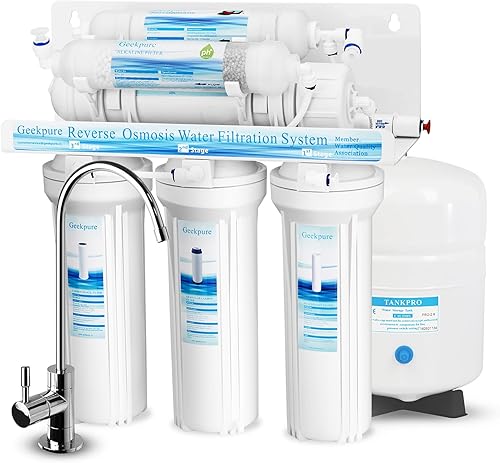 Geekpure 6-Stage RO with Alkaline |
75 GPD, 6 stages, NSF certified membrane, lead-free faucet | $2.39 | Buy on Amazon Buy on eBay |
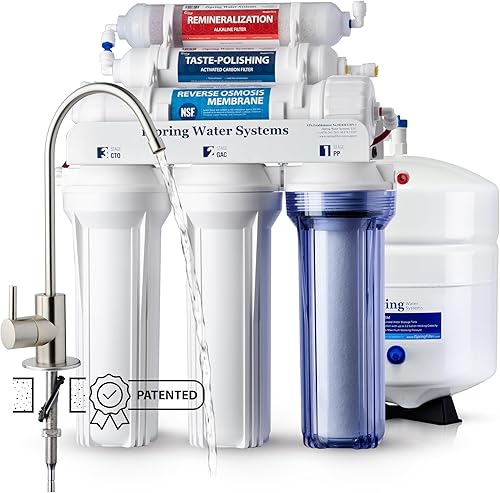 iSpring RCC7AK 6-Stage RO |
75 GPD, 6 stages, filters 1,000+ pollutants, 0.0001 micron membrane | $5.03 | Buy on Amazon Buy on eBay |
 3-Stage Undersink Alkaline Filter |
3 stages, WaterMark certified, 0.5um carbon block, silver alkaline tech | $1.17 | Buy on Amazon Buy on eBay |
 Waterdrop WD-X8 9-Stage RO |
800 GPD, 9 stages, NSF 42&58&372, 2:1 drain ratio, tankless design | $7.19 | Buy on Amazon Buy on eBay |
iSpring RCC7AK 6-Stage RO System
This is our top pick for a reason. iSpring has been in the game for years, and it shows. The RCC7AK is a workhorse. The installation manual is clear, the fittings are solid, and the performance is consistent. The alkaline filter does its job without making the water taste minerally or odd. It’s the system we recommend to friends and family who ask.
- Excellent filtration performance
- Clear installation instructions
- Reliable, long-lasting components
- Effective, taste-improving alkaline stage
- Standard 75 GPD flow rate may be slow for large households
- Uses a traditional tank, so it takes up under-sink space
Waterdrop WD-X8 9-Stage Tankless RO
If you want speed and a modern design, the Waterdrop X8 is impressive. The 800 GPD flow rate means no waiting for a tank to refill. The 2:1 pure-to-drain ratio is excellent for saving water. The filtration is top-notch with NSF certifications. It’s a premium choice, and you pay for it, but the performance and sleek tankless design are worth it for busy kitchens.
- Incredibly fast, on-demand filtered water
- Very water-efficient (2:1 ratio)
- Space-saving tankless design
- Strong multi-stage filtration with NSF certs
- Higher upfront cost
- Requires electricity to run
3-Stage Undersink Alkaline Filter (Budget Pick)
Honestly, most people don’t need a 6-stage RO system. If your water is already pretty good and you just want to improve taste and raise the pH, this simple 3-stage unit is a fantastic value. It uses a quality carbon block to reduce chlorine and a silver-impregnated alkaline filter. It’s not for well water with heavy metals, but for treated city water, it’s a solid, affordable upgrade.
- Extremely affordable
- Simple installation and maintenance
- Good for basic taste and odor improvement
- WaterMark certified for safety
- Limited contaminant removal (no RO)
- Not suitable for heavily contaminated water
Alkaline Water Filter FAQ
- Do alkaline water filters really work?
- Yes, they work to raise the pH of your water and add trace minerals. The “work” part is straightforward chemistry. Whether that provides significant health benefits is a separate, less proven question. They absolutely improve taste for most people.
- What is the healthiest alkaline water filter system?
- The healthiest system is one that first purifies your water effectively (like with RO) and then adds minerals back safely. Look for NSF/ANSI 58 certification for the purification stage and natural mineral blends (calcium, magnesium) in the alkaline cartridge. Our top pick, the iSpring RCC7AK, meets these criteria.
- How often should I replace the alkaline filter?
- Typically every 6 to 12 months, or as specified by the manufacturer. It depends on your water usage and quality. Don’t skip this—a spent filter can stop raising pH and may harbor bacteria. Mark your calendar.
- Can I install an under-sink alkaline system myself?
- Yes, if you’re comfortable with basic DIY. You’ll need to drill a hole for the dedicated faucet (if you don’t have an extra one), connect to your cold water line, and install the drain saddle. Most kits come with clear instructions. It’s a 1-2 hour project for most people.
- Is alkaline water safe for everyone?
- Generally, yes. However, people with kidney disease or on certain medications that affect mineral balance should consult their doctor before drinking mineral-rich alkaline water regularly. For the vast majority, it’s perfectly safe.
- Does boiling alkaline water change its pH?
- Yes, boiling can slightly reduce the pH and cause some minerals to precipitate out (you might see a white film). It’s still safe to drink, but for the best taste and highest pH, drink it cold or at room temperature straight from the filter.
Final Thoughts
After years of testing, here’s my take: an alkaline water filter system is a refinement, not a revolution. If you already have good water, it’s a nice upgrade for taste. If you need serious purification, start with a solid RO system—the alkaline stage is a worthwhile add-on but not the main event.
For most households in 2026, the iSpring RCC7AK hits the sweet spot of price, performance, and reliability. If you want speed and have the budget, the Waterdrop X8 is a fantastic modern choice. Don’t overthink it. Get a system that filters well first, and enjoy the smoother, slightly mineralized water as a bonus. Your taste buds will thank you.
