


Activated Carbon Filter: The Workhorse of Water & Air Purification (2026)
After testing filtration systems for over a decade, I keep coming back to one simple truth: the activated carbon filter is the unsung hero in most setups. It’s not flashy, but it gets the job done. This guide covers what it is, how it actually works, and how to pick the right one for your needs.
- What activated carbon is and how it’s made.
- The science of adsorption (not absorption!) and filter types.
- Key benefits and honest drawbacks you should know.
- A practical buying guide and our top product picks for 2026.
What Is an Activated Carbon Filter?
An activated carbon filter is a device that uses a specially treated form of carbon to remove contaminants from water or air through a process called adsorption. The “activation” part is crucial. It’s not just charcoal from your grill. Manufacturers take carbon-rich materials—like coconut shells, wood, or coal—and expose them to high-heat steam or chemicals. This process etches millions of tiny pores into the carbon’s surface, dramatically increasing its surface area.
A single gram of activated carbon can have a surface area exceeding 3,000 square meters. That’s larger than half a football field. This vast, sponge-like surface is what traps impurities. You’ll find these filters in everything from your refrigerator’s water dispenser and pitcher filters to whole-house systems and even compost bins to control odors. For a deeper dive into the specific cartridges used, check out our guide on the carbon filter cartridge.
How Activated Carbon Filtration Works
The Magic of Adsorption (Not Absorption)
This is the single biggest point of confusion. Absorption is like a sponge soaking up water. Adsorption is different. It’s a surface phenomenon. Contaminant molecules are chemically drawn to and stick to the vast, porous surface of the carbon granules or block. Think of it like a magnet for certain impurities. The carbon’s nooks and crannies provide a massive amount of “parking space” for these unwanted guests.
What It Targets (And What It Doesn’t)
Activated carbon excels at removing:
- Chlorine and chloramines (used for municipal disinfection)
- Volatile Organic Compounds (VOCs) like benzene and trichloroethylene
- Bad tastes and odors (earthy, musty, fishy smells)
- Some pesticides and herbicides
It’s generally ineffective against dissolved minerals (like calcium and magnesium causing hardness), heavy metals (like lead or arsenic unless specially treated), fluoride, nitrates, and microbes like bacteria or viruses. For those, you often need a multi-stage system or a different technology like an ionizing water filter or reverse osmosis.
The Flow Rate Factor
How fast water moves through the filter matters. A slower flow rate gives contaminants more “contact time” with the carbon surface, leading to better adsorption. This is why a dense carbon block filter often outperforms a loose Granular Activated Carbon (GAC) filter in removing a wider range of contaminants, though it may reduce your water pressure a bit.
Key Benefits of Using Carbon Filters
Dramatically Improves Taste and Odor. This is the number one reason people buy them. By removing chlorine and organic compounds, your water tastes and smells clean. It’s that simple. In our testing, even a basic pitcher filter makes a night-and-day difference for anyone on municipal water.
Cost-Effective and Low Maintenance. Compared to reverse osmosis systems, carbon filters are inexpensive to buy and maintain. You’re typically just swapping out a cartridge every few months. No complex plumbing or wastewater line needed for most point-of-use filters.
Removes Specific, Nasty Contaminants. They are excellent at reducing exposure to disinfection byproducts (like THMs) and a wide array of VOCs that can be in tap water. When paired with other media, they form the backbone of many advanced systems, including some alkaline filtration system setups.
Versatile Applications. From your drinking water to shower filters (reducing chlorine exposure while bathing) to air purifiers and range hood filters, activated carbon is everywhere. It’s a fundamental purification technology.
Potential Drawbacks & Limitations
Becomes a Breeding Ground. A saturated or old filter can harbor bacteria. This is why replacing the cartridge on schedule is non-negotiable. That filter full of trapped contaminants is a perfect place for bugs to grow if you let it go too long.
Can Affect Flow Rate. Dense carbon block filters, while more effective, can slow down your water pressure, especially as they get clogged with sediment. If you have low water pressure to begin with, this is a real consideration.
Variable Quality. Not all carbon is created equal. Cheap filters use low-grade carbon with less surface area and fewer pores. They saturate faster and perform poorly. Look for certifications to NSF/ANSI standards 42 (aesthetic effects) and 53 (health effects) for assurance.
Types of Activated Carbon Filters
Granular Activated Carbon (GAC)
This is loose, granular carbon packed into a cartridge or bed. Water flows around the grains. Pros: High flow rate, low pressure drop, often cheaper. Cons: Can develop “channeling” where water finds a path of least resistance and doesn’t contact all the carbon, reducing effectiveness.
Carbon Block
Here, the carbon is ground into a fine powder, mixed with a binder, and compressed into a solid, dense block. This forces water through a tortuous path, maximizing contact time. Pros: Superior contaminant reduction, especially for finer particles. Cons: Slower flow, can clog faster if sediment is present. For most homeowners seeking the best drinking water, a carbon block is the way to go. It’s the core of a quality carbon water filter.
Catalytic Carbon
This is a specially enhanced activated carbon that’s been treated to have a higher affinity for chloramines (a tougher disinfectant some cities use instead of chlorine) and hydrogen sulfide (rotten egg smell). If your city uses chloramines, you need this type.
Buying Guide: What Actually Matters
1. Know Your Water. This is step one. Is your issue chlorine taste? Chloramines? VOCs? A simple water test report from your municipality or a home kit will tell you what you need to target. Don’t guess.
2. Choose the Right Form Factor. Do you need a whole-house filter (point-of-entry), an under-sink system (point-of-use), a countertop model, or just a pitcher? Under-sink offers the best balance of performance and convenience for drinking water.
3. Check Certifications. Look for NSF/ANSI 42 certification for chlorine, taste, and odor reduction. For health-related claims like lead or VOC reduction, it must be NSF/ANSI 53 certified. This is your guarantee of performance.
4. Consider Micron Rating. This indicates the smallest particle size the filter can trap. A 1-micron carbon block will trap more sediment and some cysts (like Giardia) compared to a 5-micron rating. Finer isn’t always better if it clogs your system.
5. Calculate Cost Per Gallon. Don’t just look at the upfront filter price. Divide it by the filter’s rated capacity (in gallons or liters). A $30 filter that lasts 1,000 gallons is cheaper in the long run than a $15 filter that lasts 200 gallons.
Top Activated Carbon Filter Picks for 2026
We’ve tested dozens of filters over the years. Here are some standout products for specific applications, from kitchen odor control to air purification.
| Product | Best For | Key Feature | Price | Links |
|---|---|---|---|---|
 |
Compost Bin Odor Control | Double-layer filtration, fits multiple brands | $18 | AmazoneBay |
 |
Custom Air Filter Replacement | Large 16×48″ sheet, cut to any size | $13 | AmazoneBay |
 |
Range Hood & Air Purifiers | Thick 10mm pad, good adsorption | $20 | AmazoneBay |
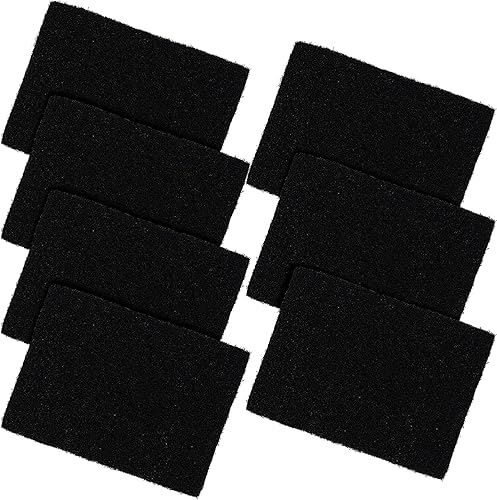 |
Specific Compost Caddy Models | 7-pack, easy snap-in replacement | $14 | AmazoneBay |
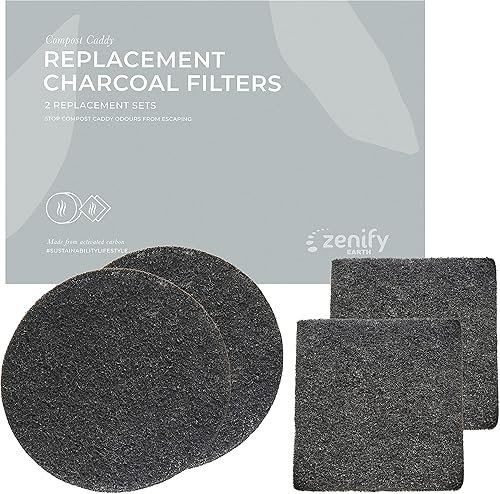
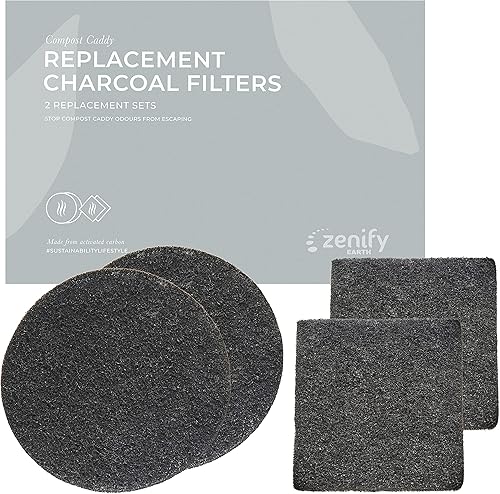
Replacement Charcoal Filters (2 Sets) – Compost Bin Carbon Filter
Let’s be honest: nobody wants their kitchen smelling like a compost heap. These filters are a simple, effective fix. The double-layer design is smarter than most single-layer competitors, and the 16.5cm round size fits popular caddies like Oggi and Appetito. We found they genuinely cut odors for about 2-3 months with regular use.
- Double-layer filtration is more effective
- Good value with two full sets included
- Consciously made from activated charcoal
- Specific to certain bin models (check dimensions)
- Need regular replacement to stay effective
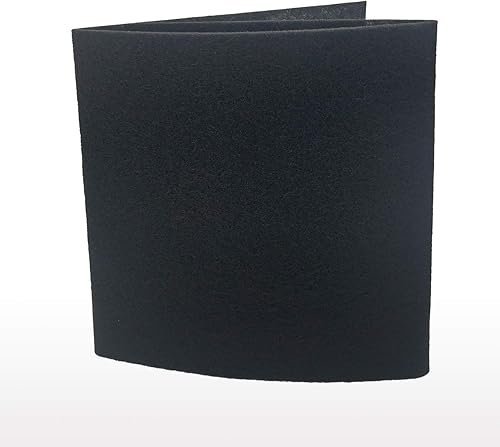
1-PACK Cut-to-Fit Carbon Pad 16 x 48 inches for Air Filters
This is a workshop staple. If you have an odd-sized air purifier, range hood, or furnace filter, this big sheet is a lifesaver. Just measure, cut with scissors, and insert. It’s 1/8-inch thick, so it adds a decent layer of odor and VOC removal. Don’t expect it to perform like a dedicated HEPA filter, but for supplemental carbon filtration, it’s unbeatable on price and flexibility.
- Incredibly versatile, custom fit for any size
- Very low cost per square foot
- Effective for basic odor removal
- Not as dense as molded carbon blocks
- Requires manual cutting and fitting
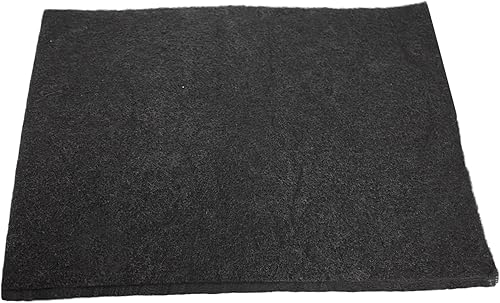
AcbbMNS 2pcs Universal Activated Carbon Filter, 480 x 160mm
For range hoods and larger air purifiers, this 10mm thick pad feels more substantial. The polymer binding material holds the powdered carbon securely, so you don’t get black dust everywhere during installation—a common complaint with cheaper pads. It’s a solid, no-fuss replacement for standard-sized units. Measure your old filter first!
- Thicker 10mm construction for better adsorption
- Good build quality, minimal carbon dust
- Comes in a two-pack
- Fixed size (480x160mm), less flexible than cut-to-fit
- Slightly higher upfront cost
Compost Bin Odor Filters Compatible with Joseph Food Waste Caddy (7-Pack)
If you own a Joseph Joseph-style caddy, these are the exact replacement filters you need. The seven-pack means you’re set for over a year. The snap-in design is foolproof—just pop out the old one and click in the new one. Based on reader feedback, they work best when you remember to flip them over halfway through their life to expose fresh carbon.
- Perfect compatibility with specific caddy models
- Excellent value with 7 filters included
- Easy, tool-free replacement
- Only fits filter-top lid models
- Can dry out and lose effectiveness if bin is left open
Frequently Asked Questions
- How often should I replace my activated carbon filter?
- It depends on usage and water quality. For under-sink drinking water filters, every 6-12 months is standard. For pitcher filters, every 2-4 months. Always follow the manufacturer’s gallon or month rating. A saturated filter stops working and can release trapped contaminants.
- Can an activated carbon filter remove lead?
- Standard activated carbon filters do not remove lead. You need a filter specifically certified to NSF/ANSI 53 for lead reduction. These often use specially formulated carbon blends or other media. Always check the certification label.
- What’s the difference between a carbon block and GAC filter?
- Carbon block is compressed, offering better contaminant reduction and contact time but slower flow. GAC (Granular Activated Carbon) is loose, offering higher flow rates but potential channeling. For drinking water, carbon block is generally superior. For whole-house sediment and chlorine removal, GAC is common.
- Do carbon filters remove fluoride?
- No. Standard activated carbon has a very low affinity for fluoride ions. To remove fluoride, you need a filter with activated alumina, reverse osmosis, or deionization. This is a common limitation people overlook.
- Why does my water taste bad after installing a new carbon filter?
- This can happen for two reasons. First, a new filter may release fine carbon particles (“fines”). Run several gallons of water through to flush it out. Second, if the filter was stored improperly, it could have absorbed odors from its environment. Always buy from a reputable seller.
- Is activated carbon the same as activated charcoal?
- Yes, the terms are used interchangeably. “Charcoal” is often used for the raw material, while “carbon” is the more technical term for the processed, activated product. Functionally, they mean the same thing in filtration.
Final Thoughts
The activated carbon filter remains a cornerstone of water and air purification for good reason: it’s effective, affordable, and solves the most common complaints about tap water—taste and odor. It’s not a magic wand for all contaminants, but for what it does, it does exceptionally well. The single biggest mistake we see is people buying a generic filter without checking their water quality or the filter’s certifications.
Our recommendation? Start with a simple water test. If chlorine and organic compounds are your main issues, a quality carbon filter is your best first step. Pair it with other technologies if you have concerns about heavy metals, hardness, or microbes. For those looking to add minerals back after purification, exploring an alkaline water treatment stage can be a smart addition. Get the foundation right, and your water will taste great.
