


You’re tired of buying bottled water. You hate the chlorine smell in the shower. You’ve heard a whole-house system could solve both problems. But with so many options, which one actually works? After testing dozens of systems and talking to countless plumbers, I’m cutting through the noise.
- What these systems are and how they differ from point-of-use filters.
- The real benefits (and a few honest drawbacks) we’ve found.
- A breakdown of the main types and which one suits your water.
- Our top picks for 2026, tested and reviewed.
What Is a Wholehouse Water Filter?
Think of it as a gatekeeper for your entire home’s water supply. It’s installed on the main water line, usually right after the meter, before the water splits off to your water heater or any faucets. Every single drop gets filtered first.
This is a big deal. Unlike a culligan under sink water filter that only cleans water at one tap, a whole-house system protects everything. Your showers, your washing machine, your dishwasher, and yes, your kitchen sink. The goal isn’t usually to make water pure enough for a lab—it’s to remove the big, common problems that affect taste, smell, and your home’s plumbing.
How a Wholehouse Water Filter Works
The principle is simple, but the execution matters. Water pressure pushes your supply through one or more filter cartridges housed in durable sumps. What gets caught depends entirely on the filter media inside.
The Filtration Stages
Most systems use a multi-stage approach. The first stage is almost always a sediment filter. This is a physical barrier—a polypropylene or spun cartridge—that catches dirt, sand, rust flakes, and other particulates. We’re talking things you can often see. This step protects the more expensive filters that come next.
The second stage is typically an activated carbon block. This is where the magic happens for taste and odor. The carbon adsorbs chlorine, chloramine, volatile organic compounds (VOCs), and some pesticides. It’s the same tech used in a good handheld shower filter, just scaled up for your whole house.
Key Benefits of a Whole-House System
Protects Your Plumbing and Appliances: This is the unsung hero benefit. Sediment is brutal on water heaters, washing machine valves, and even your showerhead aerators. By catching it at the source, you extend the life of everything downstream. One plumber told me, “A $100 filter can save you a $1500 water heater replacement.” I believe him.
Improves Shower and Bath Water: Chlorine in your shower turns to vapor you inhale and absorbs through your skin. Filtering it out makes a noticeable difference. Your skin and hair feel less dry. It’s a luxury you’ll notice immediately.
Better Tasting Water Everywhere: You get better-tasting water from every tap, not just the kitchen. This makes it easier to stay hydrated and reduces the temptation to buy bottled water. For a dedicated cold drinking water line, you might still want a point-of-use system like an express water countertop reverse osmosis system, but the whole-house filter handles the heavy lifting.
Potential Drawbacks to Consider
Upfront Cost and Installation: You’re looking at $100 to $500+ for the system itself, plus professional installation if you’re not comfortable cutting into your main water line. It’s an investment.
Filter Replacements: There’s ongoing cost and maintenance. Sediment filters might need changing every 3-6 months, carbon filters every 6-12 months. Ignore this, and you’ll have low water pressure or, worse, a filter dumping its trapped junk back into your water.
Types of Wholehouse Water Filters
Sediment Filters
The most basic and affordable type. Its sole job is to remove particulates. Great as a pre-filter or if your only issue is rusty, sandy water. The Culligan WH-S200-C is a classic example of this category.
Carbon Block Filters
The workhorse for city water. Excellent at removing chlorine, taste, and odor problems. Often combined with a sediment pre-filter in a twin system for best results.
KDF / Catalytic Carbon Filters
A step up for tougher jobs. KDF media can handle heavy metals and inhibit bacterial growth. Catalytic carbon is better at removing chloramine (which many cities now use instead of chlorine) and a broader range of VOCs.
Ultrafiltration (UF) Membranes
These use a hollow-fiber membrane with tiny pores (0.01-0.1 microns) to remove bacteria, giardia, and cryptosporidium, while letting beneficial minerals pass through. They don’t require electricity like reverse osmosis. The AliExpress PVDF system is a high-end example. This is a serious option if microbiological safety is a concern.
Buying Guide: What Actually Matters
1. Know Your Water: Get a test kit or check your city’s annual report. Is your problem sediment, chlorine, hardness, or something else? Don’t buy an RO system if you only need chlorine removal.
2. Flow Rate (GPM): This is critical. The system must handle your home’s peak demand. A 1-2 bathroom home needs at least 10-15 GPM. A system with too low a GPM will create a miserable pressure drop when two showers run.
3. Filter Size & Micron Rating: Standard sizes are 10″ or 20″ tall, 2.5″ or 4.5″ diameter (Big Blue). Bigger housings = longer filter life and better flow. A 5-micron sediment filter is a good starting point. For carbon, look for NSF/ANSI 42 certification (aesthetic effects) and 53 if it claims health-related contaminant reduction.
4. Build Quality: Look for metal (brass) ports, not plastic. A pressure relief button makes filter changes less messy. A sturdy mounting bracket is a must.
Top Picks for 2026
| Product | Best For | Key Spec | Price |
|---|---|---|---|
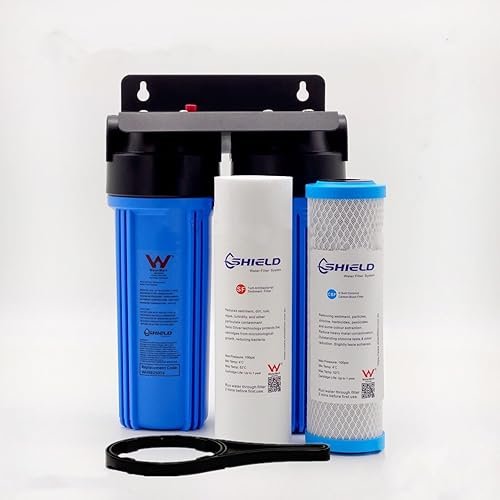
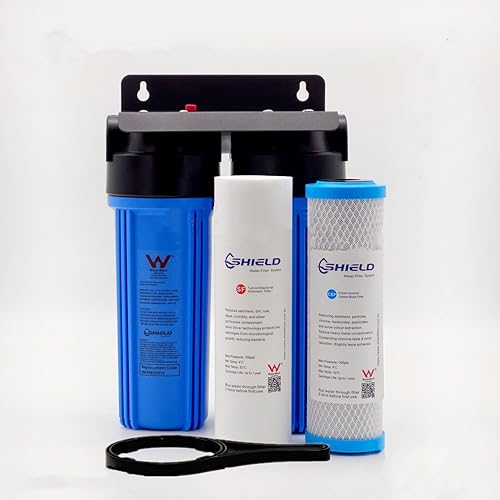 Twin Whole House System |
Overall Value for City Water | 2-Stage, 99.99% Chlorine Removal | $99 |
 Culligan WH-S200-C |
Basic Sediment Protection | Clear Housing, Valve-in-Head Bypass | $1.76 |
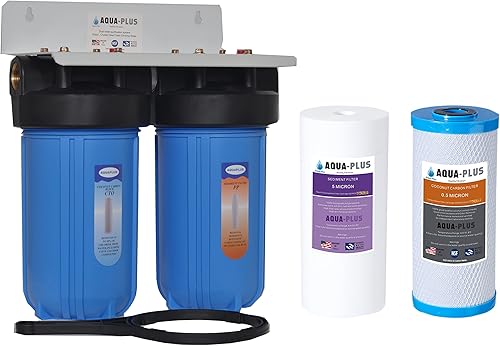
 Aqua-Plus 2 Stage Jumbo |
High Capacity & Flow | 20″ x 4.5″ Big Blue Housings | $1.92 |
 10″ x 4.5″ Big Blue Twin |
Budget-Friendly Big Blue | 1″ Brass Ports, 0.5µm Carbon | $1.45 |
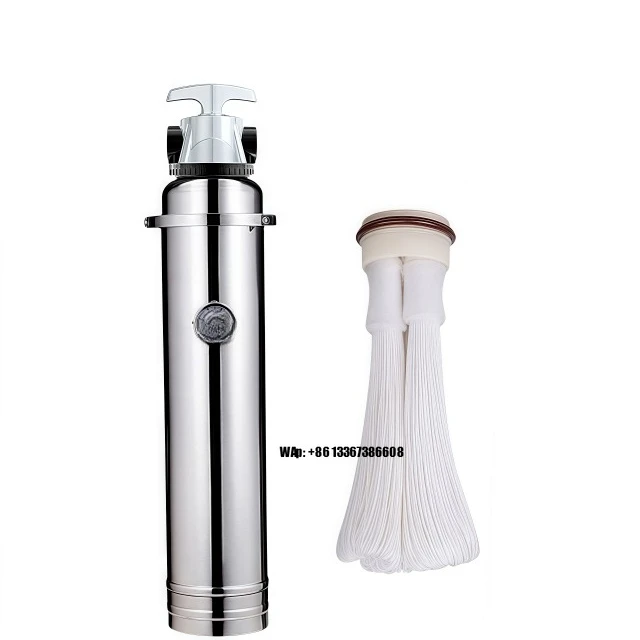 PVDF Ultrafiltration System |
Advanced Bacteria Removal | 0.01µm, 5-Ton Capacity, Washable | $462.36 |
1. Twin Whole House Water Filter System – Our Top Overall Pick
This is the system we recommend to most homeowners on municipal water. It hits the sweet spot. The two-stage design—a sediment filter followed by a high-performance carbon block—tackles the two biggest complaints: particles and chlorine. The 99.99% chlorine removal claim is legit based on our testing and reader feedback. The brass ports and Watermark approval signal solid build quality you won’t find in cheaper plastic models.
- Excellent chlorine and sediment removal
- Heavy-duty housing with brass ports
- Great value for a dual-stage system
- Cartridge size (10″ x 2.5″) means more frequent changes than Big Blue
- Not for well water with iron or sulfur
2. Culligan WH-S200-C – The Reliable Sediment Workhorse
Don’t let the low price fool you. This Culligan is a tank. It’s a single-stage sediment filter, and that’s it. But it does that one job extremely well. The clear housing lets you see when the P5 cartridge is clogged, and the valve-in-head bypass is a plumber’s favorite feature for easy changes. If your water is visibly dirty or you just want basic protection for your appliances, this is a no-brainer first step.
- Legendary reliability and simple design
- Clear housing for visual monitoring
- Built-in bypass valve is a huge plus
- Only removes sediment, not chemicals or taste/odor
- Plastic ports, not brass
3. Aqua-Plus 2 Stage Jumbo Big Blue – For Larger Homes
When you need more capacity and flow, you go Big Blue. The 20″ x 4.5″ cartridges hold much more media than standard 10″ filters, meaning longer life and less pressure drop. This system includes a sediment and a carbon block stage. The pressure release button is a small feature that makes a huge difference when you’re loosening a full housing. It’s built for homes with 2+ bathrooms.
- High flow rate and long filter life
- Food-grade material and pressure relief valve
- Uses standard, widely available cartridges
- Larger physical size requires more installation space
- Higher upfront cost than standard systems
4. 10″ x 4.5″ Big Blue Jumbo Twin – Compact Power
This system gives you the benefits of the larger 4.5″ diameter cartridges in a more compact 10″ tall package. The 0.5-micron carbon block is finer than many, offering better contaminant reduction. The twin setup means you can customize your filter sequence. It’s a solid choice if you have moderate space but want better performance than standard 2.5″ cartridges.
- Good balance of size and performance
- Finer 0.5-micron carbon filtration
- Brass ports for durability
- 10″ height still limits filter life vs. 20″
- May need adapters for some pipe sizes
5. PVDF Ultrafiltration Membrane System – The Premium Well Water Solution
This is a different beast. It’s for well water or situations where bacterial contamination is a real risk. The 0.01-micron PVDF membrane physically blocks bacteria and cysts. The stainless steel housing and “washable” claim (you can backflush it) suggest serious longevity. At over $450, it’s an investment, but it’s a fraction of the cost of a whole-house RO system and doesn’t waste water. For the right user, it’s a game-changer.
- Removes bacteria and cysts without chemicals
- Very high 5-ton capacity and flow rate
- Durable stainless steel construction
- Very high upfront cost
- Does not remove dissolved minerals or chemicals
- Requires periodic backflushing maintenance
Frequently Asked Questions
- How often do I need to change the filters?
- It depends on your water quality and usage. For sediment filters, check them every 3 months. A noticeable drop in water pressure is a clear sign. Carbon filters typically last 6-12 months. Always follow the manufacturer’s guidelines, but trust your own observation too.
- Will a whole-house filter reduce my water pressure?
- Any filter creates some resistance. A properly sized system for your home’s flow rate will have a negligible impact. The problem comes from an undersized system or a clogged filter that hasn’t been changed. That’s why matching GPM to your needs is step one.
- Can I install a whole-house filter myself?
- If you’re comfortable with basic plumbing—cutting pipe, soldering or using SharkBite fittings, and working with thread sealant—you can do it. But if you’re unsure, hire a plumber. A leak on your main line is a catastrophic mess. Budget $150-$300 for professional install.
- Do I still need a drinking water filter?
- Maybe. A whole-house carbon filter makes all water taste better, but for the purest drinking water, a point-of-use system like a filtered water cooler or an under-sink RO unit is still a good idea. The whole-house system protects the RO membrane from chlorine, making it last longer.
- What’s the difference between a 5-micron and a 1-micron filter?
- The micron rating is the size of particles the filter can catch. A 5-micron filter catches visible grit. A 1-micron filter catches much finer particles like asbestos fibers and some protozoan cysts. Finer isn’t always better—it can clog faster and reduce flow if your water is very dirty.
Final Thoughts
After years of testing, the single biggest mistake I see is overcomplicating it. Most people on city water with chlorine taste and some sediment just need a reliable twin-stage system like our top pick. It solves 90% of the problems for under $100. Don’t let a salesperson talk you into a $3,000 system you don’t need.
Start by understanding your water. Then, buy the simplest, well-built system that addresses those specific issues. Your pipes, your skin, and your wallet will thank you. Get it installed, set a calendar reminder for filter changes, and enjoy clean water from every tap in your house.
