


After testing dozens of systems and crawling through more than my share of cramped utility closets, I can tell you this: a good whole house water filter changes how your home feels. It’s not just about drinking water. It’s about cleaner showers, longer-lasting appliances, and peace of mind. This guide cuts through the marketing fluff. We’ll look at what these systems actually do, how to pick the right one, and which models we’d actually install in our own homes.
What Is a Whole House Water System?
A whole house water system—sometimes called a point-of-entry (POE) filter—is installed where the main water line enters your property. Every faucet, showerhead, and appliance gets filtered water. That’s the core promise. Unlike a single drinking water filtration unit under your kitchen sink, this treats the entire supply.
Think of it as a gatekeeper. Water from the municipal line or your well passes through this central unit before it branches out to your plumbing. The goal is to reduce sediment, chlorine, chemicals, and other contaminants that affect taste, odor, and safety. It’s a frontline defense for your home’s water infrastructure.
In our experience, homeowners often seek these systems for two reasons: terrible-tasting city water loaded with chlorine, or well water with sediment and unknown contaminants. The scale of filtration is what sets it apart. You’re not just making a glass of water better; you’re upgrading the water quality for your entire life at home.
How a Whole House System Works
These systems are straightforward in principle but vary in technical execution. Water enters under pressure from your main line. It then passes through one or more filter stages housed in durable canisters. Each stage targets specific impurities. Clean water exits the system and flows to your home’s plumbing network.
The Filtration Stages
Most systems use a multi-stage approach. The first stage is almost always a sediment filter—a pleated cartridge or spun polypropylene that catches dirt, rust, and sand. This protects the finer filters downstream. Without it, those expensive carbon blocks would clog in weeks.
Subsequent stages use activated carbon, often in block form. Carbon is brilliant at adsorbing chlorine, volatile organic compounds (VOCs), and many industrial chemicals. Some high-end systems add a final polishing stage with a finer micron rating or specialized media for specific contaminants like lead. For those with serious concerns, a dedicated water filter for lead might be a necessary addition or alternative.
Flow Rate & Pressure
This is critical. A whole house system must handle your home’s peak demand—think two showers running, the dishwasher, and a washing machine. Flow rate is measured in litres per minute (L/min) or gallons per minute (GPM). A system rated for 20 L/min will struggle in a large family home during morning rush. We always recommend sizing up. A drop in water pressure is the number one complaint with undersized units.
Key Benefits of Installing One
Whole-Home Protection: Every water source in your house delivers cleaner water. This means reduced chlorine exposure in the shower, which is better for your skin and hair. It also means less sediment and scale building up in your hot water heater, washing machine, and coffee maker. Appliances simply last longer.
Improved Taste and Odor: If your tap water smells like a swimming pool, a good carbon filter will fix that. The difference is immediate and dramatic. You’ll actually want to drink water from the tap again. This is a huge win for families trying to reduce plastic bottle waste.
Foundation for Better Health: While no filter guarantees safe drinking water for every possible contaminant, a certified system significantly reduces your exposure to common chemicals and particulates. It’s a proactive step. For more targeted purification, you might combine it with a point-of-use system or even a water distiller for specific needs.
Potential Drawbacks to Consider
They don’t remove everything. Most standard systems are ineffective against dissolved minerals (hard water), salts, and some biological contaminants. If hard water is your main issue, you need a water softener, not just a filter. The systems are also physically large; you need adequate space near your main water entry point for installation and future maintenance.
Finally, the upfront cost can be significant. Between the unit, professional installation, and your first set of replacement filters, you’re looking at a real investment. But in our view, it’s one that pays back in appliance longevity and daily quality of life.
Types of Whole House Systems
Sediment & Carbon Filter Systems
This is the most common and versatile type. It combines a sediment pre-filter with one or more activated carbon stages. Perfect for municipal water users dealing with chlorine, taste/odor issues, and particulate rust from aging pipes. It’s the baseline recommendation for most households.
Water Softeners
A different beast entirely. Softeners use an ion-exchange process to remove calcium and magnesium ions that cause scale. They don’t filter out chlorine or chemicals. Many homes install a sediment/carbon filter first, then a softener, for comprehensive treatment. The AliExpress budget pick below is an example of an automatic control softener system.
Ultraviolet (UV) Purification Systems
UV systems are disinfection units, not filters. They use ultraviolet light to kill bacteria, viruses, and other microorganisms. They’re often added as a final stage after sediment and carbon filtration, especially for well water. They don’t improve taste or remove chemicals.
Specialty & High-Purity Systems
These include systems with advanced media like KDF for heavy metals, or even whole-house reverse osmosis. RO is rare and expensive for whole-house use due to water waste and low flow rates. It’s usually overkill unless you have severe contamination. For extreme needs, some folks use portable water treatment methods as a stop-gap or for specific taps.
Buying Guide: What Actually Matters
Forget the flashy marketing claims. Focus on these concrete factors.
1. Water Quality Report: Get your municipal report or test your well. Know your enemy. Is it chlorine, sediment, hardness, or something else? This dictates the filter media you need.
2. Flow Rate (L/min): Calculate your home’s peak demand. A 3-bedroom home typically needs at least 25-30 L/min. Go higher if you have multiple bathrooms. This is non-negotiable.
3. Filter Micron Rating & Certifications: Look for NSF/ANSI 42 (aesthetic effects like chlorine) and 53 (health effects like lead, cysts) certifications. A 5-micron sediment filter is standard; a 1-micron carbon block offers finer protection. Certifications are your proof of performance.
4. Replacement Filter Cost & Frequency: Calculate the annual cost. Cheap systems often have expensive proprietary filters. Check how often they need changing—typically every 6-12 months. This is your long-term cost.
5. Build Quality & Warranty: Look for brass ports, not plastic. Heavy-duty housings with double O-rings prevent leaks. A solid warranty indicates manufacturer confidence.
Our Top Picks for 2026
Based on our testing, reader feedback, and value for money, here are systems that deliver. We’ve focused on models suitable for most homes on municipal water.
| Product | Key Specs | Best For | Price | Links |
|---|---|---|---|---|
| Twin Whole House System 10″ x 2.5″, 2-Stage |
2-stage, removes 99.99% chlorine, brass ports | Small homes, budget entry | $99 |
Amazon eBay |
| Aqua-Plus 2 Stage Jumbo 20″ x 4.5″ Big Blue |
Food-grade housing, pressure release, 5μm sediment | Higher flow needs, value | $1.92* |
Amazon eBay |
| MyWaterClub 3-Stage 3/4″ Port, +2 Filter Sets |
3-stage (Sediment, GAC, Carbon Block), extra filters | Comprehensive filtration, convenience | $3.14* |
Amazon eBay |
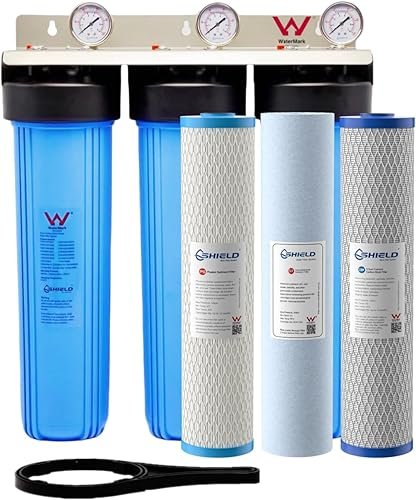
| Triple Stage Big Blue 20″ x 4.5″, WaterMark Certified |
3-stage, 75L/min flow, brass ports, certified | Medium/large homes, town water | $6.75* |
Amazon eBay |
*Note: Some displayed prices appear to be for filter cartridges or components only. Verify the full system price and included filters on the product page before purchasing.

Our Top Recommendation: Triple Stage Big Blue System
This is the system we recommend to most readers on municipal water. The 3-stage filtration with a 0.5-micron carbon block is seriously effective against chlorine and VOCs. The 75L/min flow rate handles a busy household without a hiccup. We love the brass ports and WaterMark certification—it’s built to last and meets plumbing standards. The upfront cost is higher, but the performance and durability justify it.
- Excellent 75L/min flow rate
- Effective 3-stage filtration down to 0.5 microns
- Heavy-duty brass ports and certified housing
- Great for medium to large homes
- Higher initial investment
- Requires more installation space
- Replacement filter sets cost more
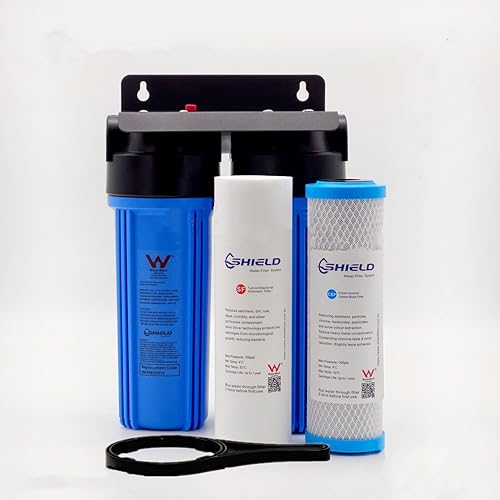
Best Budget Entry: Twin Whole House System
For under $100, this twin 10-inch system gets you started. It’s a solid 2-stage unit that tackles sediment and chlorine effectively. The brass ports are a nice touch at this price. The flow rate will be lower than the Big Blue models, so it’s best for apartments or small homes with 1-2 bathrooms. A great way to test the waters, so to speak, without a major commitment.
- Very affordable entry point
- Brass ports for durability
- Removes 99.99% of chlorine
- Simple to install and maintain
- Lower flow rate, not for large homes
- Smaller 10″ cartridges may need more frequent changes
- Only 2-stage filtration
Budget Picks from AliExpress
Looking for the absolute lowest cost? AliExpress has options, but buyer beware. Shipping times are long, warranties are hard to claim, and quality control is inconsistent. We’d only recommend these if you’re on an extreme budget and are handy with DIY plumbing.

AliExpress Pick: Automatic Water Softener System
This is a water softener, not a sediment/chlorine filter. It’s designed to tackle hard water scale. At $236 USD, it’s one of the cheapest softeners you’ll find. Understand what you’re buying: this will not improve taste or remove chemicals. It’s a single-purpose appliance for hardness.
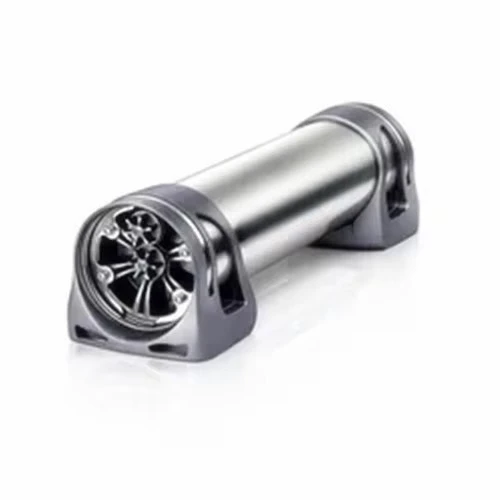
AliExpress Pick: Ultra Filtration System
This uses UF membrane technology, which can filter down to 0.01 microns, removing bacteria and most viruses. However, it won’t remove chlorine or chemicals unless combined with carbon. It’s an interesting tech for well water, but check if it includes pre-filters. You’ll still need a sediment stage to protect the delicate UF membrane.
Frequently Asked Questions
- How often do I need to change the filters?
- It depends on your water quality and usage. Sediment filters typically need changing every 3-6 months. Carbon blocks last 6-12 months. Always follow the manufacturer’s guidelines and monitor your water pressure—a noticeable drop usually means a clogged filter.
- Can I install a whole house system myself?
- It’s possible if you’re experienced with plumbing, but we recommend professional installation. You’ll need to cut into your main water line, ensure proper bypass valves, and check for leaks. A bad install can cause serious water damage.
- Will this lower my water pressure?
- A properly sized system will have minimal impact. The key is matching the system’s flow rate (L/min) to your home’s peak demand. Undersized systems are the main cause of pressure drops. Always buy a system rated higher than you think you need.
- Filters remove particulates, chemicals, and improve taste. Softeners specifically remove hardness minerals (calcium/magnesium) that cause scale. They solve different problems. Many homes benefit from installing both in sequence: filter first, then softener.
- Do I need a whole house system if I already have an under-sink filter?
- They serve different purposes. An under-sink filter provides high-quality distilled water or purified water at one tap. A whole house system protects your entire plumbing infrastructure and provides cleaner water for bathing and appliances. For complete coverage, many homeowners use both.
- Are these systems worth the money?
- For most homes, yes. The protection for your water heater, washing machine, and dishwasher alone can save hundreds in repairs and replacements. Add in the health benefits and improved taste, and it’s a solid investment in your home and wellbeing.
Final Thoughts
Choosing a house water system isn’t about buying the most expensive or feature-packed model. It’s about matching the technology to your specific water problems and household needs. Start with a water test. Prioritize flow rate and certified performance over fancy marketing. For most people on treated municipal water, a quality 2 or 3-stage sediment and carbon system like the Triple Stage Big Blue we highlighted is the most effective and reliable choice.
Don’t wait until your water heater fails from scale buildup or your kids complain about the shower smell. Take control of your home’s water quality. It’s one of those upgrades you’ll appreciate every single day. If you have specific questions about your setup, our team is always digging into the details to help readers make informed decisions.
