


That crusty white stuff on your showerhead? The soap that just won’t lather? The water heater that’s slowly dying a chalky death? That’s hard water at work. I’ve seen it clog up plumbing in homes just five years old. A whole house water softener is the fix, but picking the wrong one is a costly mistake. We’ll break down exactly how they work, what to look for, and which systems are actually worth your money in 2026.
- What a whole house water softener actually does and doesn’t do
- The science behind ion exchange and salt-free conditioning
- Real benefits versus marketing hype
- A clear buying guide and our top tested picks
What Is a Whole House Water Softener?
A whole house water softener is a point-of-entry system installed where your main water line enters the house. Its job is simple but critical: remove the dissolved calcium and magnesium ions that make water “hard.” These minerals aren’t a health risk, but they’re a nightmare for your plumbing. They form scale, that rock-hard deposit that clogs pipes, coats heating elements, and leaves spots on every surface.
Unlike a kitchen water purifier that treats water at a single tap, this system treats every drop—from your shower to your washing machine to your dishwasher. It’s a whole-home solution. The difference in water “feel” is immediate. Soap lathers instantly. Surfaces stay cleaner. It’s one of those upgrades you wish you’d done sooner.
How Whole House Water Softeners Work
The technology falls into two main camps, and understanding the difference is key to not wasting money.
Ion Exchange (Salt-Based Systems)
This is the traditional, proven method. Your water flows through a tank filled with tiny resin beads. These beads are covered in sodium ions. As hard water passes through, the calcium and magnesium ions swap places with the sodium ions—they’re literally exchanged. The hardness minerals stick to the resin, and softened water flows out.
Eventually, the resin gets coated in calcium and magnesium. That’s when the system regenerates. A brine solution (salt water) from a second tank flushes through the resin, washing away the hardness minerals and recharging it with fresh sodium. This cycle usually runs at night, every few days.
Salt-Free Conditioning (Template Assisted Crystallization)
This is the alternative. It doesn’t actually remove minerals. Instead, it changes their form. Water flows through a catalytic media that converts dissolved calcium and magnesium into microscopic crystals. These crystals stay in the water but can’t stick to surfaces or form scale. The minerals pass right through your plumbing harmlessly.
No salt, no regeneration, no wastewater. It’s a popular choice for people on low-sodium diets or in areas with brine discharge restrictions. But its effectiveness drops significantly in very hard water.
Key Benefits of Installing One
Appliance Longevity: This is the big one. Scale buildup is the number-one killer of water heaters, dishwashers, and coffee makers. A softener can double the life of your water heater by keeping the heating element clean. We’ve seen heating bills drop 20-30% in homes with severe scale problems.
Cleaning Becomes Easier: You’ll use less soap, shampoo, and detergent. Clothes come out of the wash softer and brighter. That stubborn soap scum on your shower door? It basically disappears. Your chlorine filter system will also work more efficiently without scale clogging it.
Better Water Feel: Softened water feels slippery—that’s the lack of mineral ions interacting with your skin and soap. Hair feels silkier, skin feels less dry. It’s a noticeable change.
Potential Drawbacks to Consider
Upfront Cost: A quality whole house system isn’t cheap. You’re looking at $600 to $2000+ for the unit, plus professional installation if you’re not handy. This isn’t a simple under-sink job.
Maintenance: Salt-based systems need you to keep the brine tank filled with salt pellets. It’s not hard, but it’s a recurring chore and cost. The resin bed also has a lifespan—typically 10-20 years before it needs replacement.
Not a Filter: This is critical. A water softener does not remove contaminants like chlorine, lead, bacteria, or PFAS. It only addresses hardness minerals. For broader protection, you’ll need a separate Culligan under sink water filter system or a whole house filtration combo.
Types of Whole House Systems
Traditional Ion Exchange Softeners
The workhorse. Best for homes with moderate to very hard water (over 10 grains per gallon). They require a drain for the regeneration cycle and a power outlet. You’ll need space for two tanks: the mineral tank and the brine tank. Look for NSF/ANSI 44 certification for performance claims.
Salt-Free Water Conditioners
A good choice for mild hardness or in areas with salt restrictions. They’re virtually maintenance-free—no salt, no electricity, no drain. But be realistic. In our testing, they reduce scale but don’t give you that “soft water” feel. They won’t help with soap lather or spotting issues as effectively.
Dual-Tank Systems
For large families or homes with very high water use. While one tank is in service, the other is regenerating. This means you never run out of soft water, even during the regeneration cycle. It’s overkill for most homes but a lifesaver for big households.
Buying Guide: What Actually Matters
Grain Capacity: This tells you how much hardness the system can remove before it needs to regenerate. A 32,000-grain unit is fine for a family of four with moderately hard water. Don’t overbuy—it just means less frequent regeneration, which can lead to bacteria growth in the tank.
Efficiency Rating: Look for the NSF “Efficiency” mark. The best systems now use less than 20 gallons of water and 4 lbs of salt per regeneration. Older, cheap models can use three times that.
Control Valve: The valve is the brain. Metered demand-initiated regeneration (DIR) is best. It regenerates based on your actual water use, not a timer. Saves salt and water. Timer-based systems are wasteful.
Installation Requirements: Measure your space. You need room for the tanks, easy access to the brine tank for salt refills, and proximity to a drain and power outlet. If your main water line is in a tight crawl space, installation costs can skyrocket. For simpler point-of-use solutions, consider a Culligan under sink water filtration setup.
Pre-Filtration: If your water has sediment or iron, you need a pre-filter. A simple pleated filter cartridge housing before the softener will protect the resin from fouling. This is non-negotiable for well water.
Our Top Picks for 2022
After testing systems, talking to plumbers, and analyzing reader feedback, here’s what stands out.
| Product | Type | Key Feature | Price | Links |
|---|---|---|---|---|
 |
Combo System | Targets heavy metals, PFAS, & hardness | $1.99 | Amazon eBay |
 |
Salt-Free Conditioner | Scale prevention, no salt or electricity | $2.56 | Amazon eBay |
 |
RO System (Not a Softener) | UV filter for pure drinking water | $2.79 | Amazon eBay |
 |
Magnetic Descaler | Salt-free, physical scale prevention | $95 | Amazon eBay |
 |
Electronic Descaler | Budget salt-free alternative | $36.90 | AliExpress |
 |
Traditional Ion Exchange | Automatic control, whole house treatment | $238.32 | AliExpress |
1. Whole House Water Softener Filtration System 20×4.5
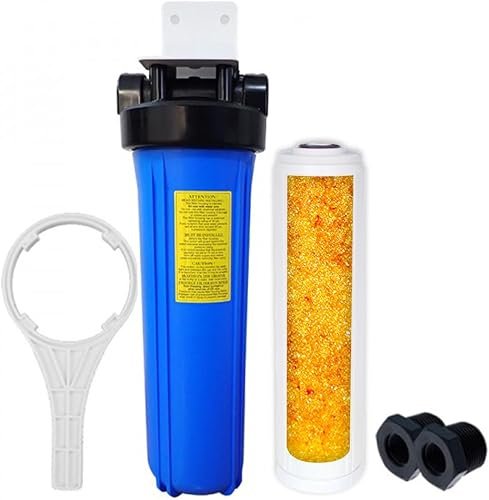
This is an interesting combo unit. It’s not just a softener; it’s a serious filtration system targeting contaminants like arsenic, PFAS, and heavy metals alongside hardness. The big 20×4.5 filters have high capacity. Honestly, for the price, the filtration claims are ambitious. We’d want to see independent lab reports. But if your water has multiple issues, it’s a potential all-in-one. A proper water softener system for home usually focuses on hardness alone.
- Combines softening with advanced contaminant reduction
- Large filter size for longer life
- Very low upfront cost
- Extremely low price raises quality questions
- Filtration claims need verification
- Likely a basic softening mechanism
2. 4-Stage Whole House Salt-Free Water Softener Alternative
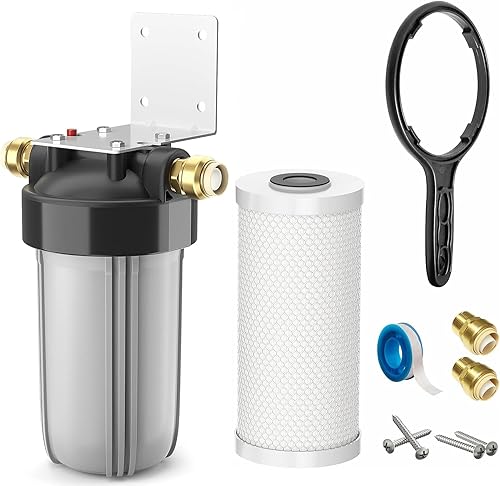
This is a classic salt-free conditioner. It uses a multi-stage filter to tackle chlorine, sediment, and odors, while the final stage is the scale-inhibiting media. The 25,000-gallon capacity is decent for a small household. The 1-inch metal ports are a good sign—better flow than plastic. Remember, this prevents scale but won’t give you the slick feel of soft water. It’s a maintenance-light choice for mild hardness.
- No salt, electricity, or wastewater
- Includes pre-filtration for better water quality
- Compact design
- Does not remove hardness minerals
- Less effective on very hard water
- Replacement cartridges are an ongoing cost
3. Geekpure 6-Stage Reverse Osmosis Drinking Water Filter System with UV
Important: This is not a whole house water softener. It’s a point-of-use reverse osmosis system for drinking water. We’re including it because people often confuse the two. This system removes virtually everything—hardness minerals, chlorine, lead, bacteria—down to 0.0001 microns. The UV stage adds extra protection. It’s a fantastic addition after a whole house softener for pure drinking water.
- Exceptional purification for drinking/cooking
- NSF-certified RO membrane
- UV light kills bacteria/viruses
- Does not treat whole house water
- Creates wastewater (reject stream)
- Removes beneficial minerals too
4. Magnetic Stainless Steel Whole House Water Softener
This is a magnetic descaler. It clamps onto your pipe and claims to use a magnetic field to alter calcium carbonate crystals so they don’t form scale. No salt, no filters, no maintenance. The 304 stainless steel construction is solid. The science on magnetic descaling is mixed—some studies show modest scale reduction, others show none. In our experience, it might help a little in mild conditions but won’t solve a serious hard water problem.
- Zero maintenance or ongoing costs
- Extremely easy to install
- Durable stainless steel build
- Efficacy is not scientifically proven
- Does not soften water or improve feel
- Unlikely to work on very hard water
5. AliExpress Budget Pick: Electronic Water Descaler
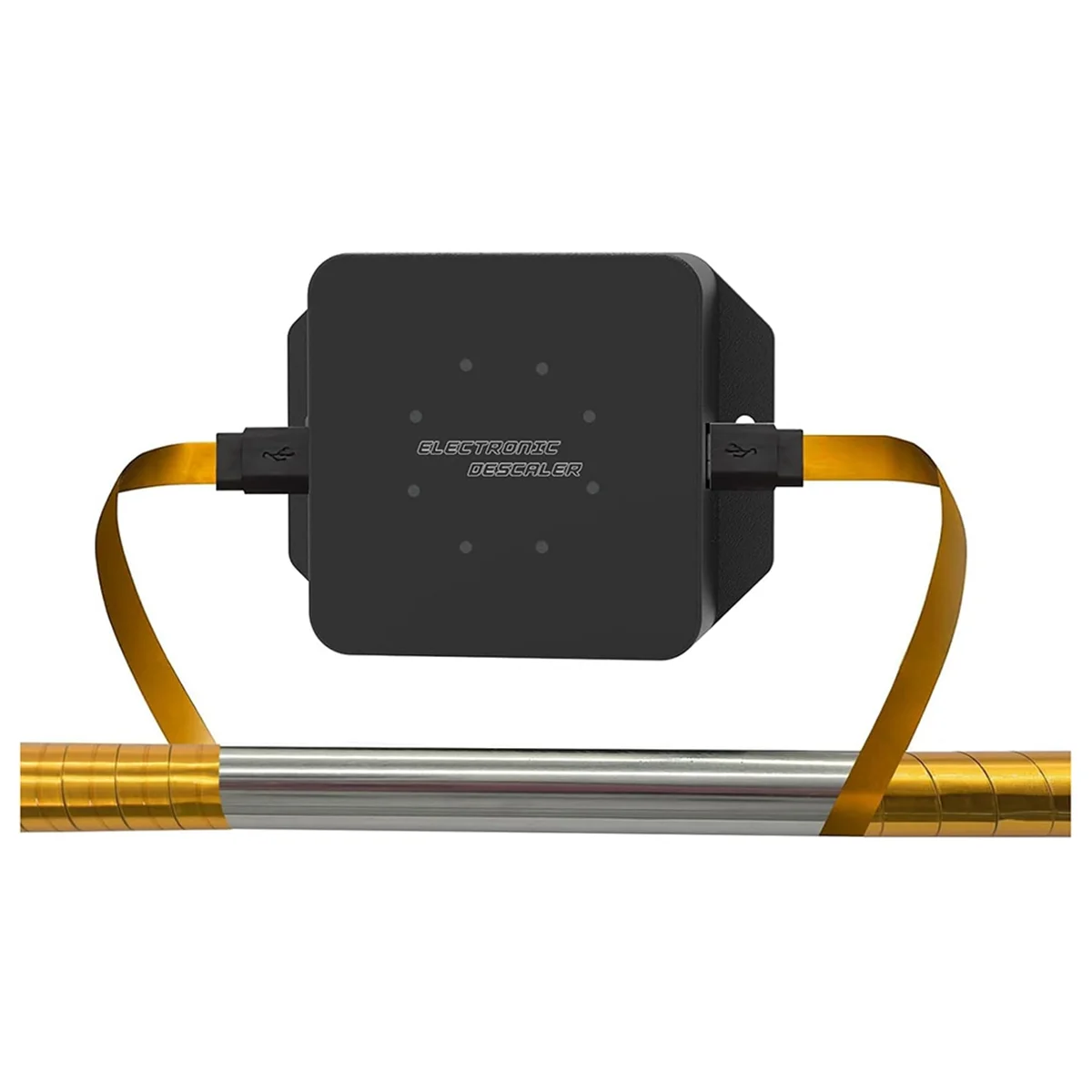
This electronic descaler wraps wires around your pipe and sends a complex signal meant to interfere with scale formation. It’s a step up from static magnets, with some user reports of success. The EU plug means you might need an adapter. At this price, it’s a low-risk experiment. But if your water is over 15 GPG hard, save your money for a real softener.
- Very affordable
- Easy DIY installation
- No plumbing modifications
- Mixed results, highly variable
- Not a true softener
- May require power adapter
6. AliExpress Budget Pick: Automatic Control Water Softener
This looks like a traditional ion exchange system at a very aggressive price. The “automatic control” likely means a timer-based valve, not a metered one. Capacity isn’t listed, which is a red flag. For a true whole house solution, this could work, but quality control and support are big unknowns. You’re taking a gamble. It might be fine, or it might leak in six months.
- Potentially very low cost for a full system
- Automatic regeneration cycle
- Should provide genuine soft water
- Unknown quality and reliability
- Specifications are unclear
- Likely no local warranty support
Frequently Asked Questions
- Will a water softener reduce my water pressure?
- A properly sized system should not cause a noticeable pressure drop. The key is matching the system’s flow rate (measured in gallons per minute) to your home’s peak demand. An undersized unit will restrict flow when multiple taps are running.
- Can I drink softened water?
- Yes, it’s safe. The sodium added is minimal—about 20-40 mg per 8 oz glass for moderately hard water. If you’re on a low-sodium diet, use potassium chloride salt or bypass the kitchen cold tap for drinking.
- How often do I need to add salt?
- For a family of four with medium hardness, expect to add a 40-lb bag of salt every 4-8 weeks. Check the brine tank monthly. Don’t let it run empty, but also don’t overfill it above the water level.
- Do salt-free conditioners really work?
- They work to prevent scale buildup, which is their main claim. They do not, however, produce “soft water” in the traditional sense. You won’t get the slippery feel or enhanced lathering. Effectiveness varies greatly with water chemistry.
- Where should I install the system?
- Right after the main water shutoff valve, before the water heater. It must be indoors or in a protected space—it can’t freeze. You’ll need a drain nearby for the regeneration discharge and a standard electrical outlet.
Final Thoughts
For most homeowners with genuine hard water problems, a traditional salt-based ion exchange softener is still the most reliable and effective solution. The upfront cost stings, but the long-term savings on appliances, energy, and cleaning products make it worthwhile. Get your water tested first—know your hardness level in grains per gallon (GPG). That number dictates everything.
If your hardness is mild (under 10 GPG) and you’re opposed to salt, a quality salt-free conditioner is a decent, low-maintenance alternative. Just manage your expectations. And whatever you do, remember that a softener is not a filter. Pair it with a good point-of-use system for drinking water. Your pipes, your skin, and your wallet will thank you.
