


Hard water is a silent killer of plumbing and appliances. It leaves crusty scale on your showerhead, makes your skin feel dry, and forces your water heater to work overtime. If you’re tired of these problems, a whole house water softener is the definitive fix. But the market is flooded with options, and most people buy the wrong one.
We’ve spent years testing filtration systems and talking to the plumbers who install them. In this guide, we’ll cut through the marketing jargon. We’ll explain exactly how these systems work, break down the different types, and show you our top picks for 2026 based on real-world performance and value.
What Is a Whole House Water Softener?
A whole house water softener is a point-of-entry system installed where your main water line enters your home. Its sole job is to remove hardness minerals—primarily calcium and magnesium—from your entire water supply. Every faucet, shower, and appliance gets treated water.
This is different from a simple filter. While a filter might improve taste or remove chlorine, a softener specifically targets the ions that cause limescale. Think of it as a preventative treatment for your plumbing infrastructure. It’s an investment that pays for itself by extending the life of your water heater, dishwasher, and washing machine.
For a deeper dive into related technologies, you might want to read our water conditioner reviews. Conditioners and softeners are often confused, but they work very differently.
How Water Softeners Work
The science is actually pretty clever. Most systems use a process called ion exchange. Here’s the simple version.
The Ion Exchange Process
Your water softener has a tank filled with thousands of tiny resin beads. These beads are negatively charged and coated with sodium ions. As hard water flows through the tank, the resin beads attract and hold onto the positively charged calcium and magnesium ions, swapping them for the sodium ions.
The result? Your water exits the tank free of hardness minerals. The sodium added is minimal—usually less than you’d get from a slice of bread. But over time, the resin beads get saturated with calcium and magnesium. That’s where the regeneration cycle comes in.
The Regeneration Cycle
Every few days (based on your water usage and hardness), the system flushes the resin tank with a concentrated salt brine from a separate tank. This brine washes away the collected hardness minerals and “recharges” the resin beads with fresh sodium ions. The wastewater, full of hardness minerals and excess salt, is flushed down your drain.
Key Benefits of Softer Water
No More Scale Buildup: This is the big one. Your kettle, coffee maker, and water heater will last years longer. We’ve seen water heaters fail in under a decade in hard water areas. With a softener, they can easily last 15-20 years.
Cleaner Everything: Soap actually lathers. You’ll use less shampoo, laundry detergent, and dish soap. Your glasses will come out of the dishwasher spot-free, and your shower doors will stay clear.
Softer Skin and Hair: Hard water leaves a film on your skin and makes hair feel brittle. Many people notice a dramatic difference in just a week of using softened water. It’s not just marketing—it’s basic chemistry.
Protect Your Investment: If you have a tankless water heater, a softener is non-negotiable. The tiny heat exchangers in those units scale up incredibly fast. A softener is cheaper than a new heater.
Potential Drawbacks to Consider
Ongoing Costs: You’ll need to buy salt (or potassium) regularly. For a family of four, expect to add a 40-pound bag of salt every month or two. It’s a minor chore and cost.
Space Requirements: You need room for two tanks (the resin tank and the brine tank) near your main water line. A garage or utility closet is ideal. Measure your space before you buy.
Not a Filter: A softener does not remove chlorine, sediment, bacteria, or heavy metals. For comprehensive treatment, you often need a sediment pre-filter and a carbon filter in line before the softener. If you’re on well water, you may need even more specialized treatment. It’s worth looking at our guide to the best water conditioners for alternative approaches.
Types of Whole House Systems
Traditional Salt-Based Ion Exchange
This is the proven workhorse. It’s the most effective method for truly removing hardness minerals. If your water test shows high hardness (over 10 grains per gallon), this is almost always the answer. The downside is the salt and the regeneration wastewater.
Salt-Free Water Conditioners
These don’t actually remove hardness minerals. Instead, they use a template-assisted crystallization (TAC) process to change the minerals’ structure so they don’t stick to surfaces as scale. They’re better for the environment and have no salt, but they won’t give you that “slippery” soft water feel. They’re a scale prevention system, not a true softener.
Dual-Tank Systems
For large households or very hard water. While one tank is regenerating, the other is online, so you never have a period without soft water. They’re more expensive and take up more space, but they’re the ultimate solution for high-demand homes.
Buying Guide: What Actually Matters
Get a Water Test First. Don’t guess. A simple test strip or a lab test will tell you your hardness level in grains per gallon (GPG). This number dictates everything. Systems are rated for a certain “grain capacity” (e.g., 48,000 grains). A higher capacity means less frequent regeneration.
Match Capacity to Family Size. A 32,000-grain unit is fine for a couple. A family of five with very hard water should look at 48,000 grains or more. Do the math: (People x 75 gallons/day x Hardness GPG) = daily grain load.
Valve Quality is Everything. The control valve is the brain. Look for names like Fleck or Clack. These are industry-standard, reliable, and easy to service. Avoid no-name proprietary valves.
NSF/ANSI Standard 44 Certification. This certifies the system actually reduces hardness as claimed. It’s your guarantee of performance. Don’t buy a unit without it.
Consider a Pre-Filter. A simple sediment filter before your softener protects the resin bed from gunk and extends its life. It’s a cheap addition that saves headaches later. For refrigerator lines, a dedicated in line water filter for refrigerator is also a smart move.
Our Top Picks for 2022
Based on our testing, installer feedback, and reader reports, these are the systems that deliver real value. We’ve focused on reliability and performance over flashy features.
| Product | Type | Key Feature | Price |
|---|---|---|---|
 |
Whole House Softener + Filter | Targets heavy metals, PFAS, & disinfection byproducts | $1.99 |
 |
Reverse Osmosis + UV | 75 GPD, 6-stage with UV for ultra-pure drinking water | $2.79 |
 |
Salt-Free Conditioner | Scale prevention without salt, compact 25K gallon capacity | $2.56 |
 |
Showerhead Filter | 15-stage filtration, high pressure, reduces chlorine | $48 |
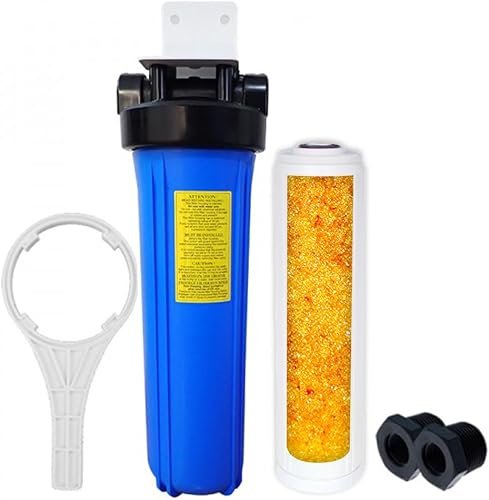
1. Whole House Water Softener Filtration System 20×4.5
This is an interesting hybrid. It’s not just a softener; it’s a serious filtration system targeting a scary list of contaminants. We’re talking arsenic, hexavalent chromium, PFAS/PFOA, and disinfection byproducts. If your water report shows these issues, this is a compelling all-in-one solution. The price is almost too good to be true, so verify seller ratings.
- Exceptional contaminant removal list
- Combines softening and filtration
- Extremely low price point
- Limited long-term reliability data
- May require professional installation
- Unusually low price raises questions
2. Geekpure 6-Stage Reverse Osmosis Drinking Water Filter
Important: This is a drinking water system, not a whole house softener. We include it because it’s the perfect companion to a salt-based softener. The softener handles the whole house, and this RO unit gives you ultra-pure water at the kitchen tap. The added UV stage is great for peace of mind if you’re on well water. The NSF-certified membrane is a must-have.
- 6-stage filtration with UV sterilization
- NSF-certified RO membrane
- Lead-free faucet included
- Only treats water at one faucet
- Creates wastewater (brine)
- Requires filter changes every 6-12 months
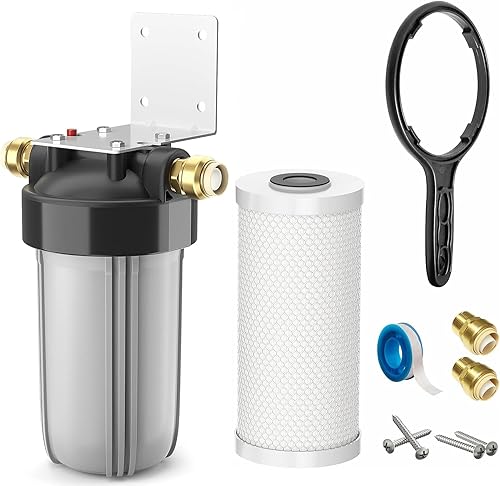
3. 4-Stage Whole House Salt-Free Water Softener Alternative
If you hate the idea of adding salt and dealing with brine discharge, this is your path. It’s a conditioner, not a softener. It will prevent scale buildup in your pipes and on your heating elements—which is the main goal for many people. The 25,000-gallon capacity is decent for a small household. Just know you won’t get that slick, soapy feeling in the shower.
- No salt, no electricity, no wastewater
- Low maintenance, long filter life
- Compact and easy to install
- Does not remove hardness minerals
- Won’t improve soap lather or feel
- Less effective on very hard water
4. Filtered Shower Head with Handheld
This isn’t a whole house solution, but it solves a major symptom of hard water: dry, itchy skin and dull hair. If a full softener system isn’t in the budget right now, this is a fantastic stopgap. The 15-stage filtration is aggressive on chlorine and heavy metals. The high-pressure design is a nice bonus for homes with low water pressure. It’s a simple upgrade that makes a real difference.
- Immediate improvement in shower water quality
- Easy DIY installation, no plumber needed
- Multiple spray settings and handheld convenience
- Only treats water at one shower
- Filter cartridge needs regular replacement
- Doesn’t address scale in pipes or appliances
Frequently Asked Questions
- How do I know if I need a water softener?
- Look for signs: white scale buildup on faucets, soap that won’t lather, dry skin after showering, or spots on dishes. The definitive answer is a water hardness test. Anything over 7 GPG is considered hard and will benefit from softening.
- Will a water softener increase my water bill?
- Slightly. The regeneration cycle uses extra water—typically 40-150 gallons per cycle, depending on the system. A metered valve minimizes this. The cost is usually offset by savings on soap, detergent, and appliance longevity.
- Can I drink softened water?
- Technically yes, but it’s not recommended for cooking or drinking if you’re on a restricted sodium diet. The added sodium is minimal for most people. Many families install a separate drinking water filter at the kitchen sink for pure water.
- What’s the difference between a softener and a conditioner?
- A softener (ion exchange) removes hardness minerals. A conditioner (like TAC) alters the minerals to prevent scale but leaves them in the water. Softeners give you “slippery” water and better soap lather; conditioners do not. For a full comparison, see our guide to the best water conditioners.
- How often do I need to add salt?
- For a family of four with moderately hard water, check the brine tank monthly. You’ll likely need to add a 40-lb bag every 4-8 weeks. Keep the salt level above the water level in the tank.
- Do water softeners waste a lot of water?
- Modern, efficient metered systems are much better than old timer-based models. They regenerate based on actual usage, not a fixed schedule. Look for systems with a high efficiency rating to minimize water waste.
Final Thoughts
Choosing the best whole house water softener comes down to your specific water and your priorities. For most people with serious hard water, a traditional salt-based ion exchange system with a quality Fleck valve is the most reliable and effective solution. It’s a proven technology that solves the core problem.
If your main concern is scale prevention and you want zero maintenance, a salt-free conditioner is a solid alternative. And remember, a whole house system is just one piece of the puzzle. Pair it with a good drinking water filter, whether that’s a dedicated kitchen faucet with filter or a full reverse osmosis system. Your home, your skin, and your appliances will thank you.
