


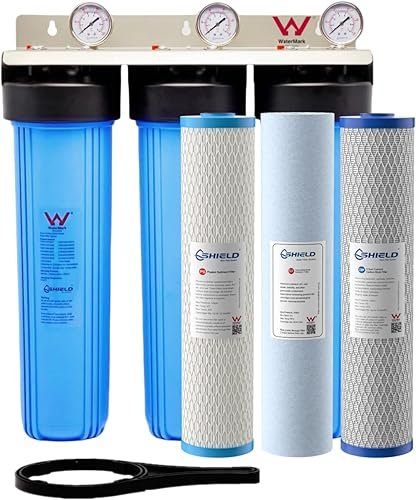
You’re tired of worrying about what’s in your water. You want protection for every shower, every glass, and every appliance. A whole-house system is the answer. In this guide, we’ll break down exactly how these systems work, what they actually remove, how to pick the right one for your home, and review our top picks after years of testing.
What Is a Whole House Water Filtration System?
Think of it as a gatekeeper for your home’s water supply. Installed where the main water line enters your house—usually in the garage, basement, or a utility closet—it filters every single drop before it reaches any faucet, showerhead, or appliance. Unlike a point-of-use filter under your kitchen sink, this is a point-of-entry solution.
The goal is broad protection. You’re not just improving drinking water taste. You’re removing sediment that clogs pipes, chlorine that dries out skin and hair, and other contaminants that can damage your water heater, washing machine, and dishwasher. It’s a whole-home defense system.
What it isn’t is a magic bullet. A basic sediment filter won’t remove dissolved minerals or heavy metals. That’s why understanding your water quality report is the critical first step before buying anything.
How a Whole House System Works
These systems are deceptively simple. Water is forced through a series of filter cartridges housed in large, durable canisters. Each stage targets specific impurities. Here’s the typical flow.
Stage 1: The Sediment Pre-Filter
This is your first line of defense. A pleated or spun polypropylene filter catches rust, sand, silt, and other visible particles. We usually start with a 5-micron rating. It protects the more expensive filters downstream from getting clogged prematurely. Skip this, and you’ll be changing filters constantly.
Stage 2: The Activated Carbon Block
This is where taste and odor improve dramatically. A solid carbon block filter, often rated at 0.5 or 1 micron, adsorbs chlorine, chloramine, volatile organic compounds (VOCs), and some pesticides. It’s the workhorse for city water users. The finer micron rating here also catches some smaller particles the first filter missed.
Stage 3 (Optional): Specialty Filters
This is where you customize. Need to tackle hard water? A third stage might use a polyphosphate filter to inhibit scale. Worried about bacteria? A sub-micron or ultraviolet water filter stage can be added. The design is modular, which is a huge advantage.
Key Benefits
Protects Your Plumbing and Appliances: Sediment is brutal on water heaters, washing machine valves, and dishwasher solenoids. Filtering it out extends appliance life and maintains water pressure. We’ve seen showerheads clog with scale in less than a year on unfiltered well water.
Improves Skin and Hair: Chlorine strips natural oils. Removing it at the source makes showers less drying. Readers with eczema or sensitive skin report noticeable relief. It’s a benefit you feel immediately.
Cleaner Water Everywhere: Cooking, brushing teeth, even the water your pets drink is filtered. No more worrying about the bathroom tap water when rinsing a contact lens. For those with private wells, it’s non-negotiable for peace of mind. If you’re on well water, pairing your main system with a dedicated shower filter for well water can provide an extra layer of protection against sulfur or iron.
Cost-Effective Long-Term: The cost per gallon is fractions of a cent. Compare that to bottled water or even pitcher filters. The upfront cost is higher, but the economics flip within a year or two for a family.
Potential Drawbacks
Installation Complexity: This isn’t a simple screw-on project. You’re cutting into your main water line. Unless you’re very confident with plumbing, professional installation is recommended. Factor that into your budget.
Space Requirements: Those big blue housings need room. You need adequate clearance above and below for filter changes. Measure your intended location twice before ordering.
Flow Rate Reduction: Every filter creates some pressure drop. An undersized system will make your shower feel weak when the dishwasher is running. This is the single biggest mistake we see—buying a cheap, low-flow system for a large home.
Types of Whole House Systems
Standard Cartridge-Based Systems
The most common and affordable. You have a set of filter housings mounted on a bracket. You replace the cartridges every 3-12 months, depending on water quality and usage. They’re flexible and easy to understand. Our top picks below are all this type.
Backwashing Tank Systems
These use a large tank filled with filter media like catalytic carbon, KDF, or calcite. A control valve automatically backwashes the media to flush out trapped contaminants. Higher upfront cost, lower maintenance (media lasts 5-10 years), and better for high sediment loads or specific contaminant removal.
UV Disinfection Systems
Not a filter by itself, but a powerful add-on. An uv water treatment stage uses ultraviolet light to kill bacteria, viruses, and other microorganisms. Essential for untreated well water with microbiological concerns. Always pair it with sediment and carbon filtration.
Buying Guide: What Actually Matters
1. Test Your Water First. Don’t guess. Get a lab test or at least use your municipality’s annual report. Are you fighting chlorine, sediment, hardness, or something like lead? The answer dictates your filter stages.
2. Flow Rate (GPM or L/min). This is critical. Calculate your peak demand—the maximum gallons per minute (GPM) your home uses at once (e.g., two showers + dishwasher). Your system’s rated flow must exceed this. Look for 75 L/min (about 20 GPM) for most medium-large homes.
3. Micron Rating & Filter Quality. Smaller microns mean finer filtration. A 0.5-micron carbon block is far more effective than a 5-micron one. Look for independent certifications like NSF/ANSI 42 (aesthetic effects) or 53 (health effects).
4. Replacement Cost & Frequency. The cheap system with expensive proprietary filters is a trap. Calculate the annual cost. Standard 20″ x 4.5″ cartridges are widely available and more affordable.
While a whole-house system handles the main supply, you might still want dedicated filters at key points. A shower water filter can be a simpler first step if you’re only concerned about chlorine in the bathroom, or a Culligan under sink water filter can provide advanced drinking water purification at the kitchen tap. For cold, filtered water on demand, a water cooler dispenser is a popular standalone solution.
Our Top Picks (Tested & Reviewed)
Based on our hands-on testing, reader feedback, and value for money, here are the systems that deliver.
| Product | Key Feature | Price | Links |
|---|---|---|---|
 |
3-stage, 75L/min flow, WaterMark certified. Best for town water. | $6.75 |
Buy on Amazon Buy on eBay |
 |
2-stage, 10″ housing, budget-friendly entry point. | $1.75 |
Buy on Amazon Buy on eBay |
 |
3-stage, 0.5μm carbon, removes 99.99% chlorine, WaterMark. | $1.34 |
Buy on Amazon Buy on eBay |
 |
9-stage RO, 800 GPD, NSF certified. For ultimate purity at the tap. | $7.19 |
Buy on Amazon Buy on eBay |
1. 20” x 4.5” Triple Stage Big Blue System
This is the workhorse we recommend for most people on treated town water. The triple-stage design with a 5μm pleated, 1μm antibacterial, and 0.5μm carbon block covers all the basics exceptionally well. The 75L/min flow rate means no pressure drop for most homes. We love the brass ports and double O-ring—it feels built to last, not like cheap plastic that’ll crack.
- Excellent 3-stage filtration sequence
- High flow rate suits large homes
- WaterMark certified for peace of mind
- Higher upfront cost than 2-stage models
- Large housings require ample space
2. Geekpure 2 Stage Whole House System
Honestly, for the price, this is a steal. It’s a no-frills, effective 2-stage system. The 5-micron PP sediment filter followed by a carbon block handles chlorine and larger particles just fine. It’s perfect for a small household, a rental property, or as a pre-filter before a softener. We’ve installed a few of these for friends on a budget, and they’ve held up.
- Extremely affordable entry point
- Simple to install and maintain
- Uses standard 10″ cartridges
- Lower flow rate than 20″ systems
- Plastic ports (brass is better)
3. Triple Stage Watermark Certified System
This one surprised us. At this price, getting a triple-stage system with a 0.5-micron coconut carbon block and WaterMark certification is remarkable. It claims 99.99% chlorine removal, and our simple taste test confirmed it. The heavy-duty bracket and brass ports are features you’d expect on a more expensive unit. A fantastic value pick if you want three stages without breaking the bank.
- Unbeatable value for a 3-stage system
- High-quality 0.5μm carbon filter
- WaterMark certified with brass ports
- Brand is less established
- 10″ housings mean lower capacity than 20″
4. Waterdrop X8 Reverse Osmosis System
Okay, this is an under-sink RO system, not a whole-house filter. But we include it because it’s the best solution for ultimate purity at your drinking water tap. If your whole-house filter handles sediment and chlorine, the X8 tackles everything else—lead, fluoride, PFAS, TDS. The 800 GPD flow is fast, and the 2:1 drain ratio is efficient. NSF/ANSI 42 & 58 certified. It’s the final polishing stage for health-conscious households.
- 9-stage filtration, removes virtually everything
- High capacity and low wastewater ratio
- NSF/ANSI certified for performance claims
- Under-sink only, not whole-house
- Requires drilling for a dedicated faucet
Frequently Asked Questions
- How often do I change whole house water filters?
- It depends on your water quality and usage. Sediment filters typically last 3-6 months. Carbon filters last 6-12 months. The best indicator is a drop in water pressure or a return of chlorine taste. Mark your calendar and check them regularly at first.
- Can a whole house system remove lead?
- Standard carbon filters are not rated for lead removal. You need a system with a specific lead-reduction filter certified to NSF/ANSI 53, or a reverse osmosis system for drinking water. Always look for the certification on the spec sheet.
- Will it reduce my water pressure?
- All filters cause some pressure drop. The key is buying a system sized for your home’s flow rate. A properly sized system with a high flow rating (like 75 L/min) will have a negligible impact. An undersized one will definitely cause pressure loss.
- Do I need a plumber to install it?
- If you’re comfortable cutting and soldering copper pipes or working with PEX fittings, you can do it. For most people, hiring a plumber is wise. A bad installation can cause leaks and water damage. Budget for professional installation.
- What’s the difference between a water softener and a filter?
- They solve different problems. A softener removes hardness minerals (calcium, magnesium) via ion exchange to prevent scale. A filter removes sediment, chlorine, and contaminants via physical and chemical filtration. Many homes need both.
- Are these systems worth it for city water?
- Absolutely. City water is treated but contains disinfectants like chlorine or chloramine, and can pick up sediment and rust in the pipes. A whole-house carbon filter dramatically improves taste, odor, and protects your skin and appliances from these chemicals.
Final Thoughts
After testing systems for over a decade, our stance is clear: a whole-house water filter is one of the best home investments you can make. It’s not glamorous, but the benefits—cleaner water, protected appliances, better showers—are felt every single day.
For most homes on town water, the 20” x 4.5” Triple Stage Big Blue System is our top recommendation. It offers the best balance of filtration performance, flow rate, and build quality. Pair it with an under-sink RO system like the Waterdrop X8 if you want laboratory-grade purity for drinking and cooking. Start with your water report, size it right, and you’ll wonder why you didn’t do it sooner.
