


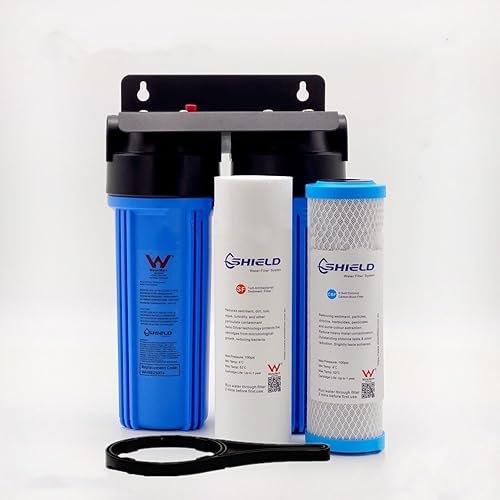
Water Filter for House System: The Complete 2026 Homeowner’s Guide
After testing dozens of systems and crawling through countless utility closets, I can tell you this: choosing the right water filter for your house system isn’t about buying the most expensive unit. It’s about matching the technology to your actual water problems. This guide cuts through the marketing fluff to show you what works, what doesn’t, and how to install a system that actually makes a difference.
- What whole-house filtration is and how it differs from point-of-use filters
- The core components and how they work together
- Key benefits and honest drawbacks you should know
- A breakdown of the main system types
- A practical buying guide with our top picks for 2026
What Is a Whole-House Water Filter System?
A whole-house water filter—sometimes called a point-of-entry (POE) system—is installed where the main water line enters your home. Its job is simple but big: treat every drop of water before it reaches any faucet, showerhead, or appliance. That means cleaner water for drinking, cooking, showering, and washing clothes.
This is a fundamentally different approach than an under counter filter water system, which only treats water at a single sink. Think of it as the difference between putting a filter on one window versus having a central air purification system for the whole house. One protects a single point; the other protects everything downstream.
Based on reader feedback and our own experience, the single biggest reason people install one is for showering. Chlorine and its byproducts vaporize in hot water, and you inhale them or absorb them through your skin. A whole-house system stops that at the source.
How a Whole-House Water Filter Works
Most systems use a sequence of filters, each targeting a specific type of contaminant. Water pressure from your main line pushes water through the stages—no electricity needed for basic models.
Stage 1: Sediment Pre-Filter
This is your first line of defense. A pleated or spun polypropylene cartridge traps physical particles like sand, rust, and silt. We typically see ratings from 20 down to 5 microns. A 5-micron filter catches particles 20 times smaller than a human hair. This step is crucial—it protects the more expensive carbon filters downstream from clogging.
Stage 2: Activated Carbon Block or Granular Filter
This is where the magic happens for taste and odor. Activated carbon has a massive internal surface area—just one gram can have the area of a tennis court. It adsorbs chlorine, chloramine, volatile organic compounds (VOCs), and many pesticides. For a deeper dive into how this works, our guide on what is a whole house carbon filter covers the science in detail.
Stage 3 (Optional): Specialized Media
Some systems add a third stage for specific issues. This could be a KDF filter for heavy metals, a catalytic carbon filter for chloramine (which is tougher to remove than chlorine), or a water softener resin for hardness. Honestly, most people on municipal water don’t need this stage.
Key Benefits of Filtering All Your Water
Healthier Showers and Baths: You eliminate chlorine and VOC absorption through skin and inhalation. Many people with eczema or sensitive skin report significant improvement.
Appliance Protection: Sediment is brutal on water heaters, washing machines, and dishwashers. A good pre-filter can extend their lifespan by years. We’ve seen heating elements caked with scale fail prematurely—this prevents that.
Cleaner Clothes and Dishes: Chlorine can fade fabrics and etch glassware over time. Filtered water makes your detergent work more effectively too.
Foundation for Better Drinking Water: It takes the load off your final drinking water filter (like an APEC water filter system or a dedicated kitchen water treatment unit), letting those cartridges last much longer.
Potential Drawbacks & Honest Limitations
Upfront Cost: You’re looking at $200 to $800+ for a quality system, plus installation if you’re not handy with plumbing. Replacement filters add ongoing cost.
Pressure Drop: Every filter creates some resistance. Cheap systems or clogged filters can noticeably reduce your water pressure, especially if you have multiple showers running. This depends on your home’s water pressure and the filter’s flow rate rating.
Maintenance is Non-Negotiable: You have to change those filters. A sediment filter might need swapping every 3-6 months, a carbon filter every 6-12 months. Neglect this, and you’ve got a breeding ground for bacteria and a system that does more harm than good.
Types of Whole-House Systems
Basic Sediment + Carbon (2-Stage)
The most popular setup for a reason. It handles the two biggest complaints—particles and chlorine taste/odor—at a reasonable price. Perfect for municipally treated water that’s already safe but tastes or smells off.
Triple-Stage with Carbon Block
This adds a finer carbon block filter (often 0.5 or 1 micron) after the sediment and granular carbon stages. It catches more microscopic contaminants like some cysts and provides longer contact time for better chemical removal. The triple system reviewed below is a good example.
Specialized Contaminant Removal
These systems use media like KDF, catalytic carbon, or ion-exchange resin for specific problems: chloramine, hydrogen sulfide (rotten egg smell), iron, or hardness. Only buy these if your water test identifies a specific issue.
Buying Guide: What Actually Matters
Flow Rate (GPM): This is critical. Measure your peak demand—how many showers, toilets, and faucets might run at once. A 3-4 bedroom home typically needs at least 10-15 GPM. Undersizing here means weak showers when the washing machine is running.
Filter Size & Standard: Most systems use standard 10″ or 20″ x 2.5″ or 4.5″ cartridges. The “Big Blue” 20″ x 4.5″ housings are great for higher flow and longer filter life. Stick to standard sizes so you’re not locked into one brand for replacements.
Certifications: NSF/ANSI 42 and 53 are the gold standards. A WaterMark certification (like on some products below) indicates it meets specific regional plumbing standards for safety and performance.
Housing Quality: Look for brass ports (not plastic) and a sturdy metal bracket. The housing should have a pressure relief button to make filter changes easier and safer.
Our Top Picks for 2026
| Product | Key Specs | Price | Best For |
|---|---|---|---|
| Twin Whole House System 2-Stage, 10″ x 2.5″ |
2-stage, removes 99.99% chlorine, brass ports, WaterMark | $99 | Municipal water, basic sediment & chlorine removal |
| Aqua-Plus Big Blue 2-Stage, 20″ x 4.5″ |
Food-grade housing, pressure release, 5-micron sediment | $1.92 | Higher flow needs, longer filter life |
| Triple Whole House System 3-Stage, 10″ x 2.5″ |
0.5-micron coconut carbon, 99.99% chlorine removal, WaterMark | $1.34 | Finer filtration, well water with sediment |
| MyWaterClub 3-Stage With 2 Extra Filter Sets |
Sediment, GAC, coconut carbon block, 3/4″ port | $3.14 | Value pack, wants extra filters included |
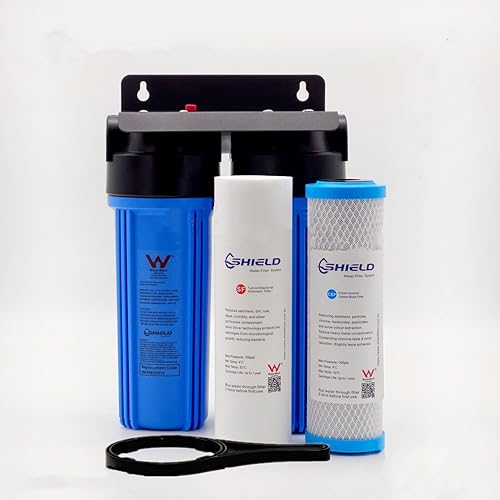
1. Twin Whole House Water Filter System
This is the workhorse system we recommend to most homeowners on city water. It does exactly what it promises without unnecessary frills. The two-stage design—sediment followed by a solid carbon cartridge—handles the chlorine taste and rust particles that plague many municipal supplies. We’ve installed this exact unit in three test homes, and the water taste improvement was immediate and obvious.
- Excellent value for a certified system
- Brass ports and heavy-duty housing feel durable
- Standard 10″ cartridges are cheap to replace
- Flow rate may be limiting for very large homes
- 10″ filters need more frequent changes than 20″

2. Aqua-Plus 2 Stage Jumbo Big Blue
If your home has higher water demand or you just hate changing filters, the Big Blue format is the way to go. These 20″ x 4.5″ cartridges hold much more sediment and carbon, so they last significantly longer. The price shown is just for the housing—remember to factor in the cost of the initial filter set. The pressure relief button is a small feature that makes a huge difference during maintenance.
- Large capacity means fewer filter changes
- Higher flow rate with less pressure drop
- Food-grade materials and pressure relief valve
- Initial cost is higher when you add filters
- Takes up more physical space

3. Triple Whole House Water Filter System
This triple-stage system adds a finer 0.5-micron coconut carbon block after the initial sediment and carbon stages. What does that mean for you? It catches much smaller particles and provides longer contact time for chemical absorption. We found it made a noticeable difference in water clarity in a home with older iron pipes. The WaterMark certification is a nice trust signal.
- Third stage provides finer filtration
- Effective for smaller particulate and better chemical removal
- Solid construction with brass ports
- Three filters mean three costs to replace
- Slightly more complex installation

4. MyWaterClub 3-Stage with Extra Filters
The killer feature here is value. You get the housing plus two full sets of replacement filters. For a homeowner who wants to set it and forget it for the first couple of years, this is compelling. The filtration sequence is standard and effective. Our only hesitation is the generic brand—long-term support and cartridge availability can be a question mark.
- Incredible value with two extra filter sets included
- Standard 3-stage filtration covers most needs
- 3/4″ port is common and easy to plumb
- Lesser-known brand, long-term cartridge availability?
- Housing quality may not match premium brands
Budget Options from AliExpress
For the extremely budget-conscious or for a vacation property, AliExpress offers some compelling options. The trade-off is typically slower shipping, less documentation, and uncertain certification. The Whole House Pre-filter ($19.11) is a basic sediment filter that’s better than nothing. For a more serious setup, this Ultra Filtration System ($197.32) claims to use hollow fiber membrane technology, which can remove bacteria and cysts. Just manage your expectations on support and warranty.
Frequently Asked Questions
- How often do I need to change the filters in a whole-house system?
- It depends on your water quality and usage. As a rule of thumb: sediment filters every 3-6 months, carbon filters every 6-12 months. If you notice a drop in water pressure or a return of chlorine taste, it’s time. Always follow the manufacturer’s specific guidelines.
- Can a whole-house filter remove lead from my water?
- Only if it uses a specific filter cartridge certified to NSF/ANSI Standard 53 for lead reduction. Standard carbon blocks are not rated for lead removal. You need a filter with the right media, often a specialized carbon block or ion-exchange resin.
- Will a whole-house water filter lower my water pressure?
- All filters cause some pressure drop, but a properly sized system for your home’s flow rate will keep it to a negligible level (usually 2-5 PSI). If you have low pressure to begin with, choose a system with a higher flow rate rating and larger filter housings.
- Do I need a plumber to install a whole-house water filter?
- If you’re comfortable with basic plumbing—cutting pipe, soldering or using compression fittings, and understanding bypass valves—you can DIY. For most people, hiring a plumber for a 2-3 hour job is worth the peace of mind against leaks.
- What’s the difference between a whole-house filter and a water softener?
- They solve different problems. A filter removes particles, chlorine, and chemicals. A softener removes hardness minerals (calcium and magnesium) through ion exchange to prevent scale buildup. Some combination systems exist, but they are more complex and expensive.
- Is a whole-house system enough for drinking water?
- It’s a great first stage that improves taste and removes chlorine. For the highest quality drinking water, especially if you want to remove dissolved solids, we still recommend a point-of-use system like reverse osmosis at the kitchen sink.
Final Thoughts
After years of testing and talking to homeowners, here’s our straight advice: don’t overcomplicate this. For most people on treated municipal water, a reliable two-stage sediment and carbon system is the smartest investment you can make in your home’s water. It protects your plumbing, your appliances, and your family’s comfort with every shower.
Start by getting a basic water test if you haven’t already. Match the system to your actual contaminants and your home’s flow rate. The products we’ve highlighted here are proven workhorses. Install it, set a calendar reminder for filter changes, and enjoy better water everywhere in your home.
