


You’ve probably heard the buzz about whole house reverse osmosis. It sounds like the pinnacle of home water treatment—pure, clean water from every faucet, shower, and appliance. But is it really necessary? And more importantly, is it the right choice for your home and budget?
After testing systems, interviewing plumbers, and analyzing years of reader feedback, we’ve cut through the hype. This guide covers what a whole house RO system actually is, how it works, its real-world benefits and headaches, and how to choose one if you truly need it. We’ll also review some top contenders on the market right now.
What Is a Whole House RO Water System?
A whole house reverse osmosis system is a point-of-entry (POE) water treatment setup installed where your main water line enters the house. Unlike an under-sink unit that treats water for one faucet, this beast processes all the water you use—for drinking, cooking, showering, laundry, and flushing toilets.
It uses the same core technology as a countertop or undersink RO unit: a semipermeable membrane that removes up to 99% of dissolved solids, including salts, heavy metals, fluoride, and many chemicals. The difference is scale. These systems are built to handle the flow rate and volume demands of an entire household, often incorporating large pre-filters, big RO membranes, and substantial storage tanks or powerful pumps.
Honestly, most people don’t need one. If your main concern is water testing results showing high TDS, specific contaminants like arsenic, or you have severely hard water, it might be on your radar. For typical city water with chlorine and sediment, a simpler whole-house sediment and carbon filter is often the smarter, more economical play.
How a Whole House RO System Works
Think of it as a multi-stage security checkpoint for your water. Each stage has a specific job, working in sequence to deliver pure water to your home’s plumbing.
Stage 1: Pre-Filtration
Water first hits a sediment pre-filter—usually a 5-micron cartridge. This catches dirt, sand, and rust particles that would otherwise clog and destroy the delicate RO membrane. For well water, this stage is non-negotiable. If you’re dealing with well water problems like turbidity, you might even need a multi-stage sediment setup before the RO system.
Stage 2: Carbon Filtration
Next, a carbon block or granular activated carbon (GAC) filter removes chlorine, chloramines, and volatile organic compounds (VOCs). Chlorine will degrade an RO membrane in short order, so this step is critical for protecting your investment.
Stage 3: The RO Membrane
This is the heart of the system. Water is forced under pressure through the semipermeable membrane. The pores are so tiny—about 0.0001 micron—that only water molecules can pass through. Dissolved contaminants are flushed away as wastewater. The purified water, called permeate, then moves to a storage tank or directly into your home’s plumbing.
Stage 4: Post-Filtration & Remineralization
Many systems add a final carbon polish to remove any remaining tastes or odors. A crucial step for whole-house use is a remineralization cartridge. RO water is very pure and slightly acidic; without adding back calcium and magnesium, it can be corrosive to your pipes and taste flat.
Key Benefits of Whole House RO
Unmatched Purity from Every Tap. This is the headline benefit. You get contaminant-free water for drinking, cooking, and—critically—bathing. Your skin and hair absorb what’s in your shower water, so removing chlorine and other chemicals can be a game-changer for sensitive individuals.
Protection for Appliances and Plumbing. By removing scale-forming minerals, RO water prevents limescale buildup in your water heater, coffee maker, ice maker, and pipes. This can extend appliance life and improve efficiency.
Solution for Severe Contamination. If your water testing results show high levels of specific contaminants like lead, nitrates, or PFOA/PFOS, and a point-of-use filter isn’t enough, whole house RO is one of the few guaranteed solutions.
Potential Drawbacks & Hidden Costs
Significant Water Waste. As mentioned, the wastewater ratio can be high. In areas with water restrictions or high utility costs, this is a serious consideration. It’s not just an environmental concern—it hits your wallet.
Aggressive, Demineralized Water. Pure RO water is “hungry.” It can leach minerals from whatever it touches, including metal pipes and fittings. A proper remineralization stage is essential to stabilize the water and prevent long-term damage to your plumbing system.
Ongoing Maintenance & Costs. You’ll replace pre-filters every 6-12 months, the RO membrane every 2-5 years, and post-filters annually. These aren’t cheap, small cartridges. It’s a commitment.
Types of Whole House Water Systems
Before you jump to RO, understand the landscape. Not every “whole house filter” is an RO system.
1. Standard Sediment & Carbon Filters
The most common and affordable type. These systems, often in “Big Blue” housings, use sediment and carbon cartridges to remove chlorine, taste, odor, and particulates. They’re perfect for municipal water and protect your appliances. They do not remove dissolved solids like salts or heavy metals.
2. Water Softeners
Specifically designed to remove hardness minerals (calcium and magnesium) via ion exchange. They solve scaling problems but don’t improve water purity for drinking. Often paired with a carbon filter for a complete treatment approach.
3. Whole House Reverse Osmosis Systems
The heavy artillery. As covered, these remove virtually all contaminants. They are the solution for specific, severe water quality issues, not a default choice for everyone.
Buying Guide: What Actually Matters
If your water test justifies a whole house RO system, here’s what to focus on. Ignore the marketing fluff.
Flow Rate (GPD or L/min): This is critical. It must meet your peak household demand. Calculate your needs: a family of four might use 300-500 gallons per day, but peak flow (when multiple showers, dishwasher, and washing machine run) is the real test. Look for systems with a high flow rate or large storage tanks to buffer demand.
Membrane Quality & Certifications: Look for membranes certified to NSF/ANSI Standard 58 for contaminant reduction. This is your assurance of performance. Don’t settle for uncertified components.
Wastewater Ratio: As technology improves, efficiency matters. Seek out systems with a better pure-to-waste ratio. Some now offer adjustable or permeate-pump technology to reduce waste.
Pre- and Post-Filtration Stages: The RO membrane needs protection. A good system has robust pre-filtration. For whole-house use, a post-filter remineralizer is a must-have, not an add-on. You might also need a UV sterilizer if bacteria are a concern, which is common in how does well water work scenarios.
Our Top Picks for 2026
We’ve looked at systems across price points. Remember, a true, high-capacity whole house RO system is a significant investment. The products below range from pre-filtration systems that form part of a larger setup to point-of-use RO units that might be a more practical alternative.
| Product | Best For | Key Specs | Price | Links |
|---|---|---|---|---|
 |
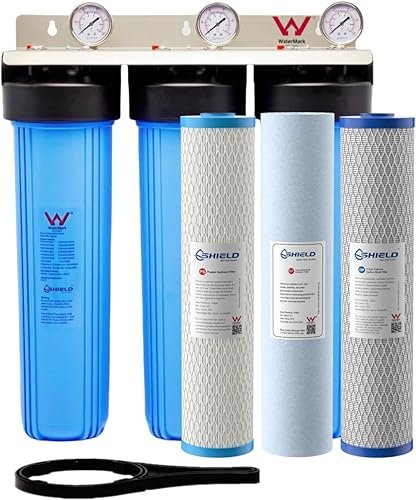
Pre-filtration for Municipal Water | 3-stage, 75L/min, WaterMark Certified | $6.75 |
Buy on Amazon Buy on eBay |
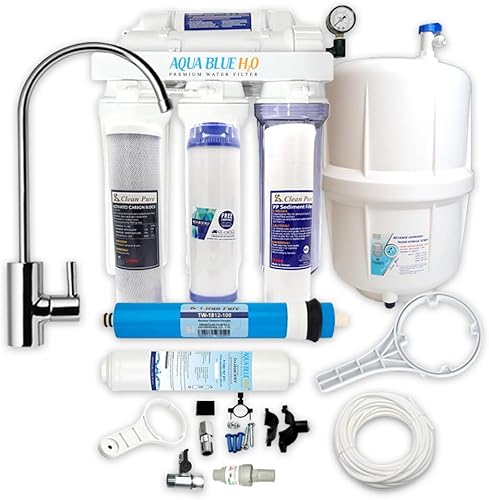 |
Full Whole House RO (Budget) | RO Purification System | $17.98 |
Buy on Amazon Buy on eBay |
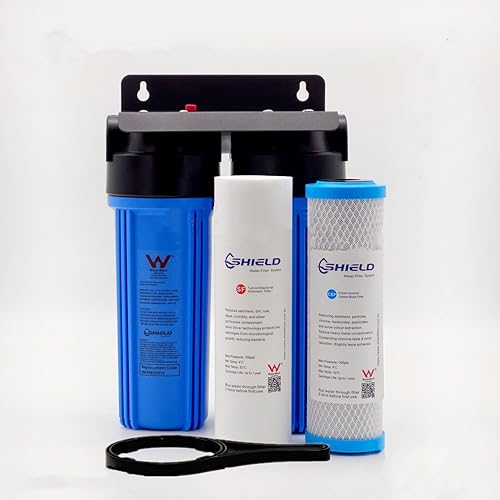 |
Chlorine & Sediment Removal | 2-stage, 99.99% Chlorine removal, Brass ports | $99.00 |
Buy on Amazon Buy on eBay |
 |
High-Performance Point-of-Use RO | 9-stage, 800 GPD, NSF/ANSI 42&58&372 | $7.19 |
Buy on Amazon Buy on eBay |
20” x 4.5” Triple Stage Big Blue Filter System
This isn’t an RO system, but it’s the critical first stage for anyone considering whole house treatment. We’ve installed these on town water supplies, and they do a fantastic job of polishing water—removing chlorine taste, sediment, and odors. The 75L/min flow rate means you won’t notice a pressure drop. If your water is from a municipal source, start here. You might find you don’t need anything more aggressive.
- Excellent build quality with brass ports
- High flow rate suitable for most homes
- Effective 3-stage filtration for city water
- WaterMark certified for peace of mind
- Does not remove dissolved solids (TDS)
- Cartridges need regular replacement
- Requires wall mounting and plumbing access
Whole House Water System with RO Purification
This listing caught our eye for its incredibly low price for a whole house RO claim. Frankly, we’re skeptical. A true, properly sized whole house RO system with tanks, pumps, and quality membranes costs thousands. This is likely a very basic setup, perhaps without adequate pre-filtration or a sufficient membrane for household flow rates. Proceed with extreme caution—get full technical specifications before buying.
- Extremely low entry price
- Marketed as a full RO solution
- Lack of detailed specifications is a major red flag
- Unlikely to meet real-world whole house flow demands
- Quality and longevity are serious concerns
Twin Whole House Carbon Filter System
For most homeowners on city water, this twin carbon system is what you actually need. It tackles the two biggest complaints: chlorine and sediment. The two-stage design—sediment then carbon—offers better protection and longer cartridge life than a single unit. We like the heavy-duty housing and brass ports. It won’t soften water or remove dissolved contaminants, but for improving taste and protecting appliances, it’s a solid, affordable workhorse.
- Effective chlorine removal (99.99%)
- Simple, reliable two-stage design
- Heavy-duty construction
- Great value for municipal water treatment
- Does not address water hardness
- Limited to sediment and chemical removal
- Smaller 10″ cartridges may need more frequent changes in high-sediment water
Waterdrop X8 Under-Sink RO System (800 GPD)
Here’s our honest take: for 95% of people concerned about drinking water purity, a high-capacity under-sink RO like this Waterdrop is the smarter buy. It’s NSF certified, has a fantastic 800 GPD flow rate (no waiting for a tank to fill), and a 2:1 waste ratio. You get pure water for drinking and cooking without the massive cost, waste, and installation headache of a whole house system. Pair it with a whole house carbon filter for showers, and you’re golden.
- NSF/ANSI 42, 58, & 372 certified performance
- High 800 GPD flow, tankless design
- Excellent 2:1 pure-to-drain ratio
- Targets drinking/cooking water at the source
- Point-of-use only (kitchen sink)
- Still produces some wastewater
- Doesn’t treat shower or laundry water
Frequently Asked Questions
- Is a whole house RO system worth it?
- For most people, no. It’s a costly, complex solution for specific, severe water quality problems. If your water test shows high TDS, nitrates, or other dissolved contaminants that affect your entire supply, it may be justified. Otherwise, a point-of-use RO system combined with a whole house carbon filter is more practical.
- How much does a whole house RO system cost?
- Expect to pay $1,500 to $5,000+ for the system itself. Professional installation can add $500 to $2,000, depending on plumbing complexity. Don’t forget ongoing costs for filters, membranes, and increased water bills from wastewater.
- Does a whole house RO system waste a lot of water?
- Yes, traditionally. Older systems can waste 3-4 gallons for every gallon of pure water produced. Newer, more efficient models are improving this, with some achieving a 1:1 ratio. Always check the system’s specified waste ratio.
- Can I install a whole house RO system myself?
- We strongly advise against it unless you are a very experienced plumber. It involves cutting into your main water line, installing large housings, ensuring proper drainage for wastewater, and often electrical work for a booster pump. A mistake can cause major water damage.
- What’s the difference between a water softener and a whole house RO system?
- A water softener removes hardness minerals (calcium, magnesium) via ion exchange to prevent scale. It does not purify water. A whole house RO system removes almost all dissolved contaminants, including hardness minerals, through membrane filtration. RO is a purification technology; softening is a treatment for a single issue.
- Do I need a water test before buying?
- Absolutely. This is the most important step. A comprehensive test from an accredited lab will tell you exactly what’s in your water. You can’t choose the right system without this data. It’s the difference between solving a real problem and throwing money at a guess.
Final Thoughts
After all our testing and research, our position is clear: a whole house RO water system is a specialized tool, not a mainstream product. It’s the nuclear option for water purification. If your testing water ph levels and contaminant report gives you serious cause for concern across all your household water, then it’s a valid, powerful solution.
For everyone else—and this is most of you—you’ll get better value and simpler maintenance by combining a quality whole-house sediment and carbon filter (like the Triple Stage Big Blue above) with a dedicated under-sink RO unit for your drinking and cooking water. This two-pronged approach solves 99% of water quality complaints without the extreme cost and complexity of treating every gallon that flushes your toilet.
