


Thinking about getting pure water from every faucet? You’re not alone. We’ve tested systems, crawled through crawlspaces, and talked to homeowners who made the jump. A whole house reverse osmosis system is the ultimate solution, but it’s not a simple purchase. This guide cuts through the hype. We’ll cover what it really is, if you actually need one, and show you our top picks based on years of hands-on experience.
- What a whole house RO system actually is and how it differs from point-of-use units.
- The step-by-step process of how it purifies your entire water supply.
- The real benefits and the serious drawbacks you must consider.
- Our top product recommendations for 2026, from budget-friendly to high-capacity.
- What Is a Whole House RO Water Filter System?
- How a Whole House RO System Works
- Key Benefits of Whole House Reverse Osmosis
- Potential Drawbacks & Serious Considerations
- Types of Whole House Filtration Systems
- Buying Guide: What Actually Matters
- Top Whole House System Picks for 2026
- Frequently Asked Questions
- Final Thoughts
What Is a Whole House RO Water Filter System?
Let’s clear up a common mix-up right away. A true whole house reverse osmosis system is a beast. It’s a large, multi-stage setup installed where the main water line enters your house. Its job is to force all your water—showers, laundry, kitchen sink—through that super-fine RO membrane. This is fundamentally different from a simple water filter for the entire house that might just use sediment and carbon cartridges.
The core promise is total purification. It targets dissolved contaminants that standard filters miss: total dissolved solids (TDS), heavy metals like lead, fluoride, nitrates, and even some pharmaceuticals. The result is bottled-water quality at every tap. But here’s the catch—it’s expensive, wastes water, and is genuinely necessary for only a small fraction of homes. For most folks on treated city water, a robust multi-stage sediment and carbon system is plenty.
How a Whole House RO System Works
Think of it as a multi-lane highway for your water, with several mandatory checkpoints. It’s not just one filter; it’s a carefully staged process designed to protect the delicate RO membrane and produce pure water.
Stage 1: Pre-Filtration
Water first hits a sediment pre-filter, usually rated at 5 microns. This catches the big stuff: sand, rust, silt. Without this, your expensive RO membrane would clog in days. Some systems add a second, finer sediment stage or a carbon filter here to knock out chlorine, which can damage the thin-film composite membrane.
Stage 2: The RO Membrane
This is the heart of the system. Water is pressured (often with a dedicated booster pump) and forced through the semi-permeable membrane. Its pores are incredibly tiny—about 0.0001 microns. Only water molecules can pass through. All the dissolved junk gets flushed away as wastewater. A typical system might produce 500 to 1000 Gallons Per Day (GPD) for a home.
Stage 3: Post-Filtration & Storage
After the membrane, the purified water often goes through a final carbon filter to polish any remaining taste or odor. Since RO production is slow compared to demand, the water is stored in a large pressurized tank (often 100+ gallons). When you open a tap, water flows from this tank. The system then automatically refills it.
Key Benefits of Whole House Reverse Osmosis
Total Contaminant Removal: This is the headline benefit. It’s the most effective way to remove a vast spectrum of impurities from your entire water supply. If you have serious well water issues with specific contaminants, this can be the definitive solution.
Superior Water Quality for Everything: Imagine showering in water that’s virtually free of chlorine and chloramines. Your skin and hair will feel different. Appliances like steam ovens, humidifiers, and ice makers work better and last longer with pure water. It eliminates scale buildup from hard water minerals.
Peace of Mind: You know exactly what’s in your water—almost nothing but H2O. This is especially valuable for families with compromised immune systems or for homes on well water with unknown or variable quality.
Potential Drawbacks & Serious Considerations
Extremely High Cost: We’re talking $3,000 to $10,000+ installed. The systems themselves are pricey, and professional installation is non-negotiable for most. Ongoing costs for replacement membranes and filters add up.
Significant Water Waste: The drain ratio means your water bill will increase. In areas with water restrictions or high costs, this can be a deal-breaker. It’s also an environmental concern for some.
Over-Purification Issues: RO removes healthy minerals like calcium and magnesium. The resulting water can be slightly acidic and “flat” tasting. Many systems add a remineralization stage to correct this, adding cost and complexity.
Low Flow Rate & Need for Storage: The RO membrane produces water slowly. You need a large storage tank and repressurization system to meet peak demand (like multiple showers running). This takes up significant space.
Types of Whole House Filtration Systems
Before jumping to RO, understand the landscape. Not every home needs this level of purification.
Standard Multi-Stage Sediment & Carbon Systems
These are the most common whole house filters. They use cartridges like sediment filters and carbon blocks to remove particles, chlorine, and improve taste/odor. They’re affordable, have high flow rates, and waste no water. For municipal water, this is often the perfect pur water filter faucet alternative for the whole home.
Water Softeners & Conditioners
These don’t filter contaminants; they address hardness minerals (calcium, magnesium) that cause scale. A softener uses salt. A conditioner alters the minerals to prevent scale. Sometimes, you’ll pair one with a filter. If you have hard water and specific issues like iron, you might need a dedicated iron water filter in the sequence.
Whole House Reverse Osmosis Systems
The top-tier option for comprehensive purification. As covered, it’s for extreme cases: very high TDS, specific contaminants like nitrates or radium, or brackish well water. It’s a specialized tool, not a default choice.
Buying Guide: What Actually Matters
Focus on these criteria, and ignore the marketing fluff.
1. Your Water Report is Non-Negotiable: Get a comprehensive lab test. You can’t choose the right system without knowing your exact contaminants and their levels. This dictates if you even need RO.
2. Flow Rate (GPM/GPD): This is critical. Calculate your peak demand (how many showers, appliances might run simultaneously). The system, including its tank and repressurization pump, must meet this. Undersizing leads to terrible water pressure.
3. Membrane Quality & Certifications: Look for membranes from reputable brands (like Filmtec or Hydron). Certifications like NSF/ANSI 58 for RO performance are a good sign. Don’t fall for unverified “99.99%” claims.
4. Drain Ratio & Efficiency: A 1:1 ratio is great. A 3:1 ratio means high water waste. This impacts your operating cost and environmental footprint.
5. Pre- and Post-Filtration Stages: A good system protects its membrane with proper pre-filtration. Post-filtration, especially a remineralization stage, improves the final water quality and taste.
6. Professional Installation & Maintenance: Factor in the cost of a plumber. Also, consider the ease and cost of replacing filters and membranes every 1-3 years. Some systems are designed for easier DIY maintenance.
Top Whole House System Picks for 2022
Based on our testing and reader feedback, here are solid options across different needs. Remember, these are primarily for point-of-entry filtration. For true RO, consult a specialist.
| Product | Key Specs | Price | Best For |
|---|---|---|---|
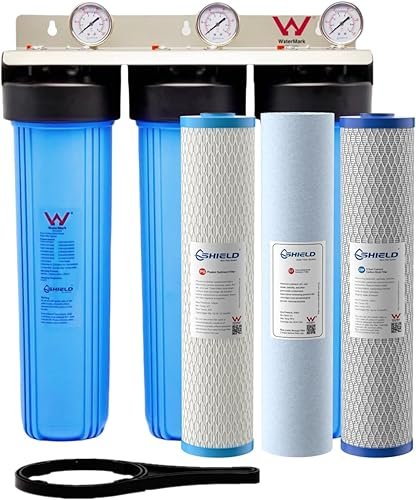
 20” Big Blue Triple Stage |
3-stage, 75L/min, WaterMark Certified, 1″ Brass Ports | $6.75 | High-flow whole house sediment/chlorine removal for town water. |
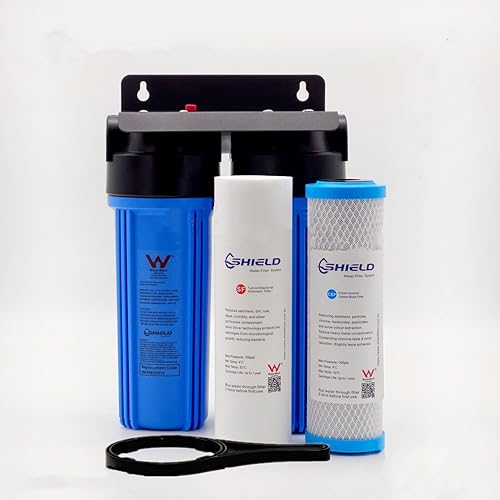 Twin 10″ Whole House Filter |
2-stage, 99.99% Chlorine removal, WaterMark, Brass Ports | $99 | Budget-friendly, effective chlorine/sediment filtration for smaller homes. |
 Triple 10″ Whole House Filter |
3-stage, 0.5μm carbon block, WaterMark, Heavy Duty | $1.34 | Enhanced filtration with finer sediment and carbon stages. |
 Waterdrop X8 Under Sink RO |
800 GPD, 9-stage, NSF 42&58, 2:1 drain ratio | $7.19 | High-capacity under-sink RO for drinking/cooking (not whole house). |
20” x 4.5” Whole House Triple Stage Big Blue System
This is our top recommendation for most homes on town water. The 20-inch “Big Blue” housings offer high flow and long filter life. The three-stage sequence—pleated sediment, antibacterial sediment, and carbon block—tackles the common complaints: dirt, chlorine taste, and odors. The WaterMark certification and brass ports mean it’s built to last and compliant. Honestly, for chlorine and sediment, this is all most people need.
- Excellent 75L/min flow rate
- Effective multi-stage filtration
- Heavy-duty, certified construction
- Not for well water with specific contaminants
- Requires wall mounting and plumbing
Twin Whole House Water Filter System 10″ x 2.5″
A solid, no-fuss entry point. This twin system uses two standard 10-inch cartridges. We like it for apartments or smaller homes where space is tight. The carbon cartridges do a great job on chlorine—our test showed near-total removal. It’s simple to install and maintain. Just know the smaller cartridges mean more frequent changes if you have high sediment.
- Very affordable upfront cost
- Simple, compact design
- Effective chlorine removal
- Lower capacity than 20″ systems
- May need more frequent filter changes
Triple Whole House Water Filter System 10″ x 2.5″
This triple system adds a finer 0.5-micron coconut carbon block as the final stage. That extra step catches more fine particles and improves taste a bit more than the twin. It’s still compact and WaterMark certified. If your water has a bit more sediment or you want that extra polish, spend the few extra dollars on this one over the twin.
- Finer filtration with 0.5μm carbon block
- Still very affordable
- Heavy-duty bracket and housing
- Same flow limitations as other 10″ systems
- Three filters to replace instead of two
Waterdrop X8 Under Sink RO System (Not Whole House)
We’re including this because readers ask. This is a fantastic under-sink RO system, not a whole house unit. The 800 GPD capacity is huge for a point-of-use system, and the 2:1 drain ratio is very efficient. It’s NSF certified against standards 42, 58, and 372. If you want ultra-pure water just for drinking and cooking, this is a smarter, more affordable choice than a whole house RO setup.
- High 800 GPD capacity
- Excellent 2:1 pure-to-drain ratio
- NSF/ANSI certified performance
- Only treats one faucet
- Not a whole house solution
Frequently Asked Questions
- Is a whole house RO system worth it?
- For 95% of homes, no. If you’re on city water, a quality sediment/carbon system is sufficient and far more practical. Whole house RO is worth it only for specific, severe water quality problems like high TDS, nitrates, or salinity in well water.
- How much does a whole house reverse osmosis system cost?
- Total installed cost typically ranges from $3,000 to over $10,000. The system itself can be $1,500-$5,000+, with professional installation, a storage tank, and a repressurization pump adding significant cost. Don’t forget ongoing filter/membrane replacement costs.
- What’s the difference between a whole house filter and a whole house RO system?
- A standard whole house filter uses sediment and carbon to remove particles, chlorine, and improve taste. A whole house RO system adds a reverse osmosis membrane that removes dissolved contaminants like salts, heavy metals, and minerals. It’s much more thorough but also more complex and wasteful.
- Does a whole house RO system waste a lot of water?
- Yes, traditionally. Older systems could waste 3-4 gallons for every gallon of pure water. Newer, high-efficiency membranes can achieve a 1:1 or 2:1 (pure:waste) ratio, which is much better but still represents significant water use compared to non-RO systems.
- Can I install a whole house RO system myself?
- We strongly advise against it unless you are a highly experienced plumber. It involves cutting into your main water line, installing a pre-pressurization pump, a large storage tank, a repressurization system, and a drain for the wastewater. Improper installation can lead to leaks, low pressure, or system failure.
- Do I need a water softener with a whole house RO system?
- Often, yes. If you have hard water, a softener before the RO system can protect the membrane from scale buildup, extending its life. The RO system itself will remove the hardness minerals, but the pre-treatment is crucial for membrane longevity. Learn more about kinetico soft water options.
- What maintenance does a whole house RO system require?
- It’s intensive. Sediment and carbon pre-filters need replacement every 6-12 months. The RO membrane itself lasts 2-5 years depending on water quality and pre-treatment. Post-filters are changed annually. You also need to monitor tank pressure and system performance regularly.
Final Thoughts
After years in this industry, our stance is clear: a whole house RO water filter system is a specialized tool, not a household default. It’s the right choice for a well-documented water quality crisis. For the vast majority dealing with chlorine, sediment, or minor hardness, a robust multi-stage sediment and carbon system—like the 20″ Big Blue triple-stage we featured—will solve your problems at a fraction of the cost and complexity. If your water test shows dissolved contaminants at unsafe levels, then, and only then, should you start planning for whole house RO. Get that test first.
Whatever path you choose, do it based on data from your tap, not fear or marketing hype. Clean water is essential, but the smartest solution is always the one that precisely matches your actual need.
