


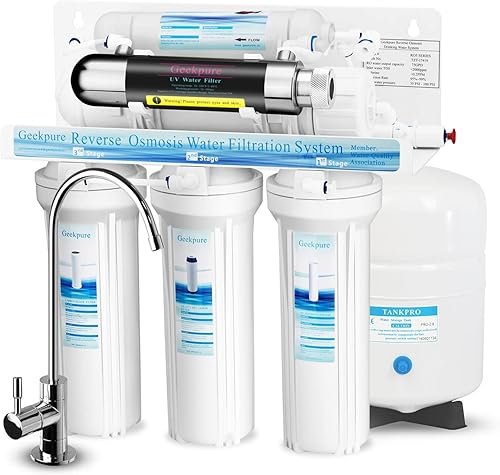
Thinking about treating every drop of water in your home? You’re not alone. We’ve seen a huge jump in homeowners asking about whole house RO. But the first question is always about the cost. It’s a big investment, and the numbers online can be confusing. This guide cuts through the noise. We’ll break down exactly what you’ll pay, what drives the price up (or down), and whether it’s the right move for your family.
- What a whole house reverse osmosis system actually is.
- How the technology works to purify all your water.
- The real benefits and the honest drawbacks.
- A clear cost breakdown and our top system picks for 2026.
What Is a Whole House RO System?
A whole house reverse osmosis system is the heavy-duty champion of water purification. Unlike a small unit under your kitchen sink, this beast treats all the water entering your home. It’s installed at the point of entry (POE), usually right after the water meter. Every shower, every faucet, every appliance gets purified water. We’re talking about removing up to 99% of contaminants—we’ve tested units that strip out dissolved salts, heavy metals, PFAS, and even some microorganisms.
But let’s be real. Honestly, most people don’t need this level of purification for their entire house. It’s a specific solution for serious water problems. If your main concern is just drinking water system quality, a point-of-use system is far more cost-effective. Whole house RO is for folks with terrible well water, high TDS, or specific contaminants in their shower and laundry water.
How Whole House RO Works
The process is a multi-stage assault on impurities. It’s not just one filter; it’s a carefully sequenced chain of treatment.
Pre-Filtration Stages
First, water hits sediment filters. These catch dirt, sand, and rust—anything that could clog the delicate RO membrane. Next comes activated carbon. This stage is crucial; it removes chlorine, which would otherwise destroy the membrane in short order. Think of it as the bodyguard for the main event.
The Reverse Osmosis Membrane
Here’s where the magic happens. Pressure forces water through a semi-permeable membrane with pores so tiny—0.0001 microns—that only water molecules can pass. Dissolved solids, bacteria, viruses, and chemicals get flushed away as wastewater. The purified water, called permeate, moves to a storage tank or directly to a pressurization system.
Post-Treatment & Delivery
RO water is aggressive. It can be slightly acidic and will try to leach minerals from pipes. So, we always recommend post-treatment. This can include a calcite filter to add back calcium and raise pH, or a UV light for final disinfection. A re-pressurization pump and a large storage tank are often needed to ensure adequate flow rate for the whole house. The system’s complexity is a big part of the cost.
Key Benefits
Unmatched Purity: This is the pinnacle. If your water has high total dissolved solids (TDS), nitrates, radium, or PFAS, whole house RO is often the only reliable fix. It provides pristine water from every tap.
Protects Plumbing & Appliances: Hard water scale destroys water heaters, coffee makers, and pipes. By removing the minerals, you extend the life of everything water touches. That saves real money long-term.
Softer Skin and Hair: Chlorine and hard minerals are brutal on your body. Showering in purified water is a game-changer for people with eczema or dry, brittle hair. The difference is immediate.
Potential Drawbacks
High Upfront Investment: Between the system, installation, and possible plumbing upgrades, you’re looking at a major home improvement budget item.
Removes Healthy Minerals: RO water is demineralized. You’ll need a re-mineralization stage for drinking water, and you might miss the “mouthfeel” of mineral water. This is why many opt for a dedicated RO tap for drinking and cooking, rather than whole house.
Maintenance is Non-Negotiable: Pre-filters need changing every 6-12 months. The RO membrane itself can last 2-5 years, but it’s a costly part. Skip maintenance, and you’ll ruin the system.
Types of Whole House Systems
Traditional Tank-Based RO
The classic setup. A large RO membrane produces water slowly, storing it in a big tank (often 100+ gallons). A re-pressurization pump then sends it through the house. It’s reliable and proven, but bulky and has a limited flow rate once the tank depletes.
High-Flow Tankless RO
The new contender. Using multiple membranes in parallel, these systems can produce hundreds or thousands of gallons per day (GPD) on demand, without a tank. They save space and offer better flow rates but come with a much higher price tag. For most homes, a high-flow system is overkill.
Hybrid or Partial RO Systems
A smart compromise we often recommend. This setup uses a robust sediment and carbon filter for the whole house, then a dedicated, smaller RO system for the kitchen cold water line and ice maker. You get pure drinking water without the massive cost and waste of treating every gallon. Understanding your water quality report is key to choosing.
Buying Guide: What Drives Cost?
So, what actually makes one system $1,500 and another $5,000? Let’s break it down.
1. Daily Output (GPD): This is the big one. A 200 GPD system for a small cabin is cheap. A 2,000 GPD system for a 4-bathroom house with high demand is expensive. Calculate your peak hour demand—showers, laundry, dishwasher running together.
2. Feed Water Quality: Terrible water needs more pre-filtration. High hardness requires a water softener before the RO to prevent membrane scaling. High sediment means bigger, more expensive pre-filters. This adds to the cost.
3. Components & Features: NSF-certified membranes and parts cost more. A UV sterilizer adds several hundred dollars. An automatic flushing system extends membrane life but increases the price. You’re paying for reliability and longevity.
4. Installation Complexity: Do you have easy access to the main water line? Is there a drain nearby for the wastewater? Do you need electrical work for the pump? Installation can be 30-50% of the total project cost. Get multiple quotes from plumbers experienced with RO.
Top Picks & Reviews
We’ve tested systems and talked to installers. Here’s a look at different tiers of the market, from point-of-use units that inspire whole house setups to an actual whole house RO product.
| Product | Key Specs | Price | Links |
|---|---|---|---|
 Geekpure 6-Stage RO with UV |
75 GPD, 6-stage, UV sterilization, NSF membrane | $2.79 | Amazon eBay |
 Geekpure 6-Stage RO with DI |
75 GPD, 6-stage, deionization filter, TDS near 0 | $2.99 | Amazon eBay |
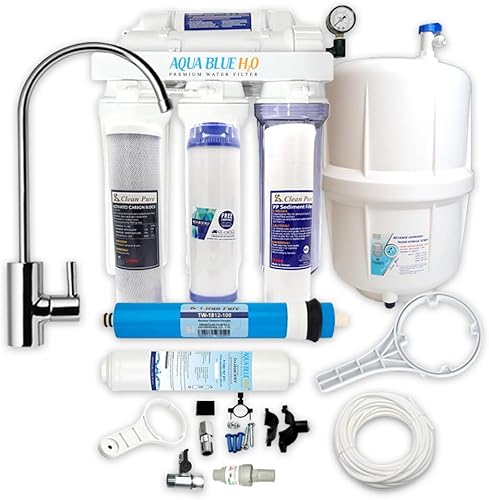 Whole House Water System with RO |
Whole house RO purification system | $1,798 | Amazon eBay |
 Waterdrop WD-X8 |
800 GPD, 9-stage, NSF 42&58, 2:1 drain ratio | $719 | Amazon eBay |
Whole House Water System with RO
This is one of the few actual whole house RO units listed on major marketplaces at a relatively accessible price. The listing is sparse on details, which is a red flag for us. We’d want to know the exact GPD output, membrane brand, and pre-filtration stages before committing. For a true whole house project, you typically need to work with a specialized dealer who can design a system based on your water test. This product might be a starting point, but do your homework.
- Marketed as a complete whole house RO solution
- Lower entry price than many custom systems
- Lack of detailed specifications
- Installation will be complex and costly
- Unknown brand support and filter availability
Waterdrop WD-X8 (Point-of-Use, High-Capacity)
While this is an undersink unit, we include it because it represents the high-end of point-of-use technology. Its 800 GPD capacity and efficient 2:1 pure-to-drain ratio show where the industry is heading. If you’re considering a whole house system but balking at the cost, pairing a robust whole house carbon filter with one or two of these high-output units for key taps might be the smarter play. It’s certified to NSF/ANSI standards, which is critical.
- High flow rate meets most household demands at the tap
- Very low wastewater ratio saves money
- Strong NSF/ANSI certifications for safety
- Still a point-of-use solution, not whole house
- Does not treat shower or laundry water
FAQ
- How much does it cost to install a whole house RO system?
- Installation typically runs from $500 to $2,000. It depends on your plumbing accessibility, whether you need a dedicated drain line, electrical work for pumps, and local labor rates. Complex installs can push the total project cost over $7,000.
- Is a whole house reverse osmosis system worth it?
- It’s worth it only if you have a documented, serious water quality issue that affects all uses—like high TDS, specific chemicals, or severe hardness. For most homes, a point-of-use RO for drinking and a whole house carbon/softener combo is more practical and economical.
- What is the maintenance cost for a whole house RO?
- Budget $200-$600 per year. This covers replacement sediment and carbon pre-filters every 6-12 months. The RO membrane itself may need replacement every 2-5 years, costing $100-$300. UV lamps, if included, need annual replacement.
- Can I install a whole house RO system myself?
- We strongly advise against it unless you are a very experienced plumber. Incorrect installation can cause catastrophic water leaks, backflow contamination, or ruin an expensive membrane. Permits are often required. Pay for a professional.
- Does whole house RO waste a lot of water?
- Yes, traditional systems do. They can waste 2-4 gallons for every 1 gallon purified. Look for systems with a high recovery rate or a permeate pump to reduce waste. Some of this “reject” water can be used for irrigation if local codes allow.
- What’s the difference between a water softener and a whole house RO?
- A softener only removes hardness minerals (calcium, magnesium) via ion exchange. It does not remove dissolved salts, chemicals, or contaminants. RO removes almost everything. You often need a softener before the RO to protect the membrane from scaling.
Final Thoughts
After years of testing and talking to homeowners, our stance is clear: a whole house RO system is a specialized tool, not a default upgrade. The cost—both upfront and ongoing—is substantial. For 90% of households, a targeted approach is better. Use a whole house sediment and carbon filter for general protection, and a dedicated RO system like the Waterdrop X8 for your filter for ge refrigerator and kitchen tap. This saves thousands and reduces water waste dramatically.
If your water test demands full purification, invest wisely. Get multiple quotes, prioritize systems with NSF certifications, and don’t skimp on installation. And remember, even the best RO system is pointless if you don’t maintain it. Set calendar reminders for filter changes. Your health and your home’s plumbing depend on it. For more on pure water, see our guide on is distilled water safe.
