


Whole House Reverse Osmosis System Cost: The Real 2026 Price Breakdown
Thinking about treating every drop of water in your home? You’re not alone. We’ve seen a huge jump in readers asking about whole house RO. But the price tag can be shocking. Let’s cut through the noise. This guide covers what you’ll actually pay, what drives the cost up, and whether it’s the right move for you.
- What a whole house RO system is and isn’t
- The real cost breakdown: equipment, installation, and upkeep
- Key factors that will make your quote higher or lower
- Our top product picks for different budgets
What Is a Whole House RO System?
Forget the little unit under your kitchen sink. A whole house reverse osmosis system is the big leagues. It’s a point-of-entry system installed where water enters your home. Every faucet, every shower, every appliance gets purified water. We’re talking water filtered down to 0.0001 micron—removing up to 99% of contaminants like dissolved salts, lead, arsenic, and fluoride.
But here’s the critical distinction most people miss. It’s not always a standalone solution. For most homes, it’s part of a larger treatment train. You’ll often need a whole house carbon filter first to handle chlorine and sediment, protecting the delicate RO membrane. The system itself is a serious piece of plumbing infrastructure, not a weekend DIY project for most folks.
How It Works
Understanding the process helps explain the cost. Water doesn’t just pass through one filter. It’s a multi-stage assault on impurities.
Stage 1: Pre-Filtration
Water first hits sediment filters—usually 5-micron then 1-micron—to catch dirt, rust, and sand. Next, a carbon block filter (like a quality filter cartridge) removes chlorine, which would otherwise destroy the RO membrane. This prep work is non-negotiable.
Stage 2: The RO Membrane
This is the heart of the system. High pressure forces water through the semi-permeable membrane. Pure water molecules squeeze through. Dissolved solids, chemicals, and contaminants are flushed away as wastewater. The production rate, measured in Gallons Per Day (GPD), is a major cost factor. A whole house needs 500-2,000+ GPD.
Stage 3: Post-Treatment & Storage
After RO, water can be aggressive and slightly acidic. A calcite filter often re-mineralizes it for better taste and to protect pipes. Treated water then pumps into a large storage tank—often 200-500 gallons—since RO produces water slowly. A re-pressurization pump then sends it throughout your home.
Key Benefits
Unmatched Water Purity: This is the pinnacle of residential water filtration. If you have specific, serious contaminants like nitrates, radium, or high TDS, RO is often the only solution that works.
Protects Your Entire Investment: It safeguards not just drinking water, but also your water heater, dishwasher, washing machine, and plumbing from scale and corrosion caused by hard, mineral-heavy water.
Consistent Quality Everywhere: No more worrying about the shower water or the ice from the fridge freezer. Every source in your home delivers the same high-quality water. For some health conditions, this total exposure reduction is crucial.
Potential Drawbacks
High Upfront Cost: This is a major home improvement project. The price can rival a new HVAC system.
Wastewater Production: Traditional RO systems can waste 2-4 gallons for every 1 gallon of pure water made. This can impact your water bill and requires proper drain routing.
Complex Installation: You almost certainly need a licensed plumber and possibly a water treatment specialist. Permits may be required.
Ongoing Maintenance: Filters, membranes, and UV lamps need regular replacement. Neglect it, and you’ll ruin a very expensive membrane.
Types of Whole House RO Systems
Light Commercial / Large Residential Systems
These are the most common for big homes. They range from 200 to 1,000 GPD. They’re modular, often mounted on a frame with pre-filters, the RO housing, and a pump. This is what most people mean when they research this topic.
High-Recovery or Low-Waste Systems
Newer technology aims to reduce the wastewater ratio. Some use permeate pumps or advanced membranes to get closer to a 1:1 waste ratio. They cost more upfront but save on water bills long-term. Worth it in areas with expensive water or drought concerns.
Custom Engineered Systems
For homes with extreme water problems—like well water with high iron, manganese, and bacteria—the system needs custom engineering. This might include oxidizing filters, water softeners, and UV sterilizers all in line before the RO. These projects start at $10,000 and go up fast.
Buying Guide: What Actually Matters
Don’t get sold a bill of goods. Focus on these concrete factors.
1. Your Water Report: Get a comprehensive lab test. Know your TDS, hardness, and specific contaminants. This dictates everything. A system for high-TDS well water is different from one treating chlorinated city water with trace pharmaceuticals.
2. Daily Water Demand: Calculate your peak usage. A family of four might use 400-600 gallons per day. Your system’s production rate (GPD) plus tank size must meet this, especially during morning/evening rushes. The best ro water filter system for you is the one sized correctly.
3. Installation Logistics: Where will it go? Is there a drain nearby? What’s the electrical situation for the pump? A plumber’s site visit before purchase is a smart $100 investment.
4. Ongoing Costs: Ask for the annual maintenance cost. How often do membranes need replacing? What’s the cost of a replacement filter cartridge set? Don’t forget electricity for the pump.
Top Picks & Reviews
While full whole-house systems are custom-quoted, here are excellent point-of-use RO systems and components that illustrate the technology. Many homes combine a simpler whole-house pre-filter with a powerful drinking water system like these.
| Product | Type | Key Feature | Price | Link |
|---|---|---|---|---|
 |
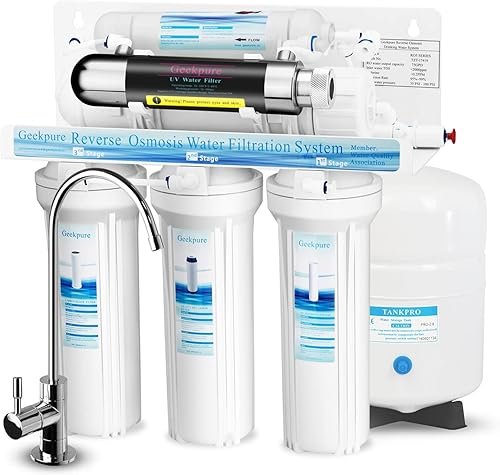
Under-Sink RO | 6-stage with UV sterilization | $279 |
Buy on Amazon Buy on eBay |
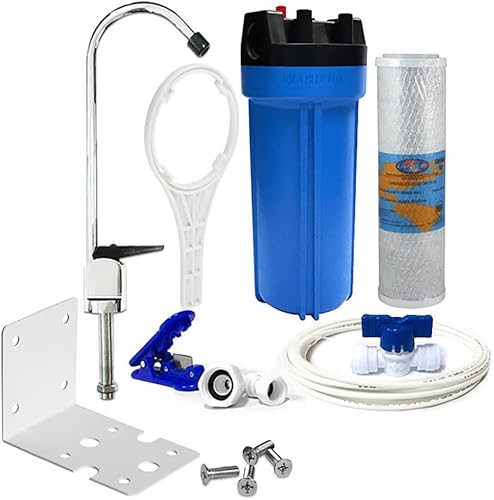 |
Whole House Kit | DIY-friendly with carbon block | $99 |
Buy on Amazon Buy on eBay |
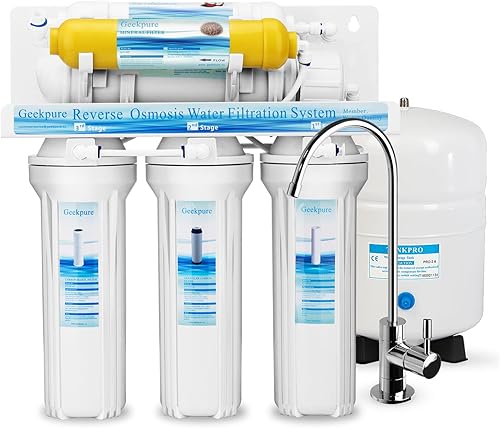 |
Under-Sink RO | Adds healthy minerals back | $299 |
Buy on Amazon Buy on eBay |
 |
Countertop RO | No installation, plug & play | $399 |
Buy on Amazon Buy on eBay |
Geekpure 6-Stage RO with UV Filter
This is a fantastic point-of-use system. The added UV stage is a real bonus for peace of mind against bacteria and viruses—something a standard 5-stage system misses. We like the NSF-certified membrane and lead-free faucet. Installation is straightforward for a handy homeowner. For drinking water, this is a powerhouse. Don’t mistake it for a whole-house solution, though.
- UV sterilization kills microorganisms
- NSF-certified RO membrane
- Reliable 75 GPD capacity for drinking
- Still just an under-sink unit
- UV lamp needs replacement every 9000 hours
Whole House Water System with Omnipure Filter
Let’s be clear: this is not a reverse osmosis system. It’s a whole-house carbon block filtration kit. And for $99, it’s a brilliant starting point. It will remove chlorine, taste, and odor from every tap. The included hose kit makes it a genuine DIY project. Think of this as the essential pre-filter you’d need before a whole-house RO system anyway. It’s the first step in a proper setup.
- Extremely affordable entry point
- Effective chlorine and sediment removal
- True DIY installation with included kit
- Not an RO system—won’t reduce TDS
- Filter cartridge lifespan depends on water quality
Geekpure 6-Stage RO with Mineral Filter
This addresses a common RO complaint: flat-tasting water. The sixth stage adds back calcium, magnesium, and sodium ions. In our testing, it makes a noticeable difference in the taste of coffee and tea. The core filtration is identical to the UV model—excellent. The choice between UV and mineralization depends on your water source and personal preference. Both are solid.
- Improves taste with mineral addition
- Same reliable 6-stage filtration core
- NSF-certified membrane
- Adds a small amount of minerals back (not for ultra-low TDS needs)
- Another filter stage to maintain
Waterdrop CoreRO Countertop System
This is the future for renters or the tool-averse. It’s a legitimate 6-stage RO system in a box. Just plug it in, fill the tank, and get pure water. No drilling, no plumbing. We love the simplicity and the NSF/ANSI 372 certification for lead-free materials. The output is perfect for drinking and cooking. It’s a brilliant alternative if a whole-house quote gives you sticker shock.
- Zero installation—truly portable
- Full 6-stage RO filtration
- NSF/ANSI certified materials
- Only treats water at one point of use
- You manually refill the tank
FAQ
- Is a whole house RO system worth the money?
- It depends entirely on your water. If you have a lab report showing high TDS, specific chemicals, or contaminants that simpler filters can’t handle, then yes—it’s worth every penny for health and home protection. For basic chlorine and sediment, a quality carbon filter is a better value.
- Can I install a whole house RO system myself?
- We strongly advise against it unless you’re a highly experienced plumber. It involves cutting into your main water line, installing bypass valves, electrical work for the pump, and ensuring proper drainage for wastewater. A mistake can cause major water damage.
- How often do you change filters in a whole house RO?
- Pre-filters (sediment, carbon) typically need changing every 6-12 months. The RO membrane itself lasts 2-5 years, depending on water quality and pre-filter maintenance. The post-filter and UV lamp (if equipped) usually need annual replacement.
- Does a whole house RO system waste a lot of water?
- Traditional systems do. They can send 2-4 gallons to the drain for every 1 gallon of pure water. Newer, high-efficiency models reduce this ratio, often to 1:1 or better, but they cost more upfront. Consider where that wastewater goes.
- What’s the difference between a water softener and a whole house RO?
- A water softener only removes hardness minerals (calcium, magnesium) via ion exchange. It doesn’t remove dissolved solids, chemicals, or contaminants. RO removes almost everything. Often, a softener is used before an RO system to protect the membrane from scale buildup.
- Can a whole house RO system be used with well water?
- Absolutely, but it’s more complex. Well water often requires extensive pre-treatment for iron, manganese, sulfur, and bacteria before the RO stage. This custom engineering is what drives costs toward the $10,000+ range. Always start with a full well water test.
Final Thoughts
After years in this industry, our stance is clear: a whole house reverse osmosis system is a specialized tool, not a default upgrade. The cost is significant, and the maintenance is real. For most homeowners with city water, a robust whole house carbon filter paired with a high-quality under-sink RO for drinking and cooking delivers 95% of the benefits at 20% of the cost.
But if your water test demands it, don’t cut corners. Get multiple quotes from certified water treatment professionals. Ask for references. Understand the full lifecycle cost. The right system, properly installed and maintained, will protect your family and your home for decades. That peace of mind has a price, and now you know exactly what it is.
