


Thinking about a whole house reverse osmosis system? It’s the nuclear option for water purification. We’ve installed, tested, and lived with these setups. They’re incredible—but they’re not for everyone. This guide cuts through the hype. We’ll show you how they work, the real costs, and whether your water actually demands this level of treatment.
- What a whole house RO system is and isn’t
- The step-by-step filtration process
- Key benefits and significant drawbacks
- Our 2026 top product picks and honest reviews
What Is a Whole House RO System?
A whole house reverse osmosis system is a point-of-entry water treatment solution. It’s installed where the main water line enters your house. Every drop—showers, laundry, kitchen sink, toilets—gets forced through a semi-permeable membrane. This membrane has microscopic pores that block contaminants.
Think of it as a molecular sieve. It removes up to 99% of dissolved solids, including salts, lead, arsenic, and fluoride. The result is exceptionally pure water distributed throughout your entire home. But here’s the catch: this process also strips out beneficial minerals and creates a significant amount of wastewater.
Honestly, most people don’t need one. If you’re on municipally treated city water, a high-quality carbon filter usually handles chlorine and taste issues. Whole house RO is a specialized tool for specific, serious water problems. We’re talking about private wells with high total dissolved solids (TDS), brackish water, or known chemical contamination.
How Whole House Reverse Osmosis Works
The process is more complex than just the RO membrane. A proper system is a multi-stage treatment train. Let’s walk through a typical setup.
Stage 1: Pre-Filtration
Water first hits a series of pre-filters. This is non-negotiable. A sediment pre filter (usually 5-micron) catches dirt, sand, and rust. Next, a carbon block filter removes chlorine, which would otherwise destroy the delicate RO membrane. Some systems add an extra stage here for specific issues like an iron water filter if your well has high iron content.
Stage 2: The RO Membrane
This is the heart of the system. Water is pressurized and forced through the membrane. Pure water molecules pass through. Contaminants are flushed away as brine (wastewater). The “recovery rate” tells you how much pure water you get versus waste. A typical whole house system might have a 50% recovery rate—meaning for every gallon of pure water, one gallon goes to drain.
Stage 3: Post-Treatment & Storage
RO water is pure but also slightly acidic and flat-tasting. It’s usually run through a calcite filter to add back minerals for taste and to protect plumbing. Then, it’s stored in a large pressurized tank (often 100+ gallons) to meet household demand peaks. A final UV light sterilizer is a smart add-on to kill any potential bacteria.
Key Benefits of a Whole House RO System
Unmatched Purity at Every Tap. This is the biggest draw. You get laboratory-grade water for drinking, cooking, and bathing. No more worrying about lead from old pipes or nitrates from agricultural runoff.
Protects Appliances and Plumbing. Hard water scale destroys water heaters, coffee makers, and ice machines. RO water eliminates scale buildup, extending the life of every water-using appliance in your home. That can save you thousands in the long run.
Solves Specific, Nasty Problems. If your water test shows high TDS, sodium, or specific contaminants like arsenic, RO is one of the few certified solutions. It’s peace of mind you can’t get from a simple carbon filter.
Potential Drawbacks & Costs
High Upfront and Ongoing Costs. Systems start around $3,000 and can easily exceed $10,000. You also have energy costs for the pump, frequent pre-filter replacements, and membrane replacement every 2-5 years. And your water bill will go up due to wastewater.
Wastewater Production. This is the environmental and financial trade-off. For every gallon of pure water, you send one or more gallons to the drain. In areas with water scarcity or high sewer fees, this is a serious consideration.
Aggressive Water. Pure RO water is “hungry.” It can leach minerals from metal pipes and fixtures over time. Post-treatment remineralization isn’t optional—it’s essential to prevent pinhole leaks in copper plumbing.
Types of Whole House RO Systems
Light Commercial / Large Residential
These are the most common for homes. They produce 100-500 gallons per day (GPD). They feature a pre-filter array, one or more membranes, a storage tank, and post-treatment. They’re designed for the flow rates and demands of a typical household.
High-Recovery or Brackish Water Systems
Built for tougher jobs, these systems use multiple membranes in series and advanced controls to maximize recovery rates (up to 75-80%). They’re for homes with very high TDS source water. The complexity and cost are significantly higher.
Packaged vs. Custom Systems
You can buy a packaged “all-in-one” unit or have a water treatment pro design a custom system. Packaged is simpler. Custom is tailored to your exact water report and home’s flow needs—which is what we recommend for a investment this size. A pro might integrate a water distillation unit for a specific point-of-use need alongside the whole house RO.
Buying Guide: What Actually Matters
Get a Comprehensive Water Test First. Don’t guess. A lab test ($100-$300) is the only way to know if you need RO and to size the system correctly. Look for NSF/ANSI Standard 58 certification for the RO unit itself.
Calculate Your Peak Flow Rate. How many bathrooms? How many people? A system that can’t keep up during morning showers is useless. You need adequate storage tank capacity and a pump that can deliver the required pressure.
Plan for Wastewater. Where will the brine line drain? It needs a proper air gap and drain connection. Check local plumbing codes. If you’re on a septic system, the volume of extra water can be a concern.
Consider an Alternative. For many wells, a targeted approach is smarter. A sediment filter, an iron water filter, and a UV light might solve your issues for a fraction of the cost and complexity. If your main concern is ultra-pure drinking water only, a point-of-use RO system at the kitchen sink combined with a whole house carbon filter is our most common recommendation.
Our Top Whole House RO System Picks for 2022
We focus on reliability, real-world performance, and value. Here’s a quick comparison of systems that cover different needs.
| Product | Key Feature | Best For | Price |
|---|---|---|---|
 Geekpure 6-Stage RO |
75 GPD, UV Sterilizer, 6 stages | Under-sink drinking water, not whole house | $279 |
 iSpring WCB32C |
3-stage whole house carbon/sediment | City water, chlorine/taste improvement | $408 |
 Whole House RO System |
Complete RO purification for whole house | True whole house RO application | $1,798 |
 Triple Big Blue Filter |
20″ x 4.5″ high-flow sediment filtration | Pre-filtration for wells, high sediment | $1,199 |
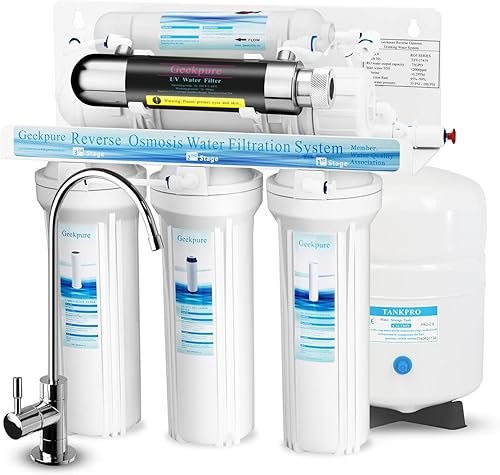
Geekpure 6-Stage Reverse Osmosis System
Let’s be clear: this is a fantastic under-sink drinking water system, not a whole house solution. The 75 GPD capacity can’t supply a whole home. But for what it is, it’s excellent. The added UV stage is a nice touch for killing bacteria and viruses in questionable source water. We’ve installed a few of these for readers who wanted pure drinking water without a full-house overhaul.
- NSF-certified membrane
- Includes UV sterilizer
- Good value for point-of-use
- Not a whole house system
- 75 GPD is very low output
- Tank is small (3.2 gal)
iSpring WCB32C 3-Stage Whole House Filter
This is what we recommend for 90% of people on city water who ask about “whole house RO.” It’s not RO. It’s a sediment filter and two carbon filters. And that’s exactly why it’s great. It removes chlorine, taste, odor, and sediment from your entire home without the waste, cost, or complexity of RO. Installation is straightforward for a handy homeowner.
- Removes 99% chlorine
- Clear first-stage housing for easy monitoring
- DIY-friendly installation
- Does not reduce TDS or dissolved solids
- Won’t help with nitrates, lead, etc.
- Filter changes needed every 6-12 months
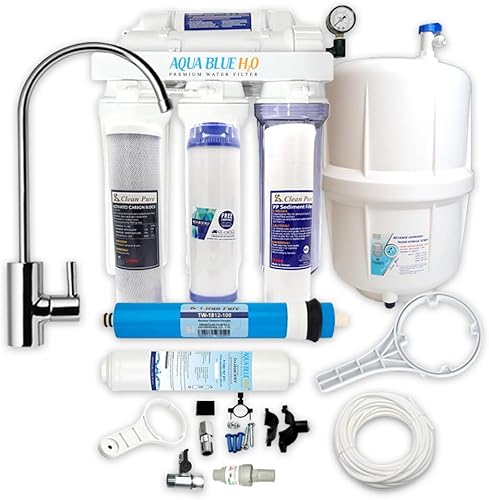
Whole House Water System with RO Purification
This is a true whole house RO system at a relatively accessible price point. The listing is sparse on details, which gives us pause. At this price, you’re likely looking at a lower-output membrane and minimal pre-filtration. It could work for a small cabin or a home with very low daily water use. We’d want to see the GPD rating and recovery rate before committing.
- True whole house RO application
- Lower entry price for whole house RO
- Vague product specifications
- Likely requires additional pre-filters
- Professional installation strongly advised
Triple Big Blue 20″ Whole House Filtration
This isn’t an RO system either, but it’s a critical component for anyone with a well. The large 20″ x 4.5″ cartridges have massive surface area for high flow and long life. You can configure it with sediment, carbon, or specialized filters. It’s the perfect pre-filtration backbone for a future RO system or a standalone solution for sediment-heavy water.
- High flow rate, low pressure drop
- Large filters last longer
- Versatile for different filter types
- Filters sold separately
- Does not purify water on its own
- Requires space for three large housings
Whole House RO System FAQ
- Is a whole house RO system worth it?
- Only if you have a documented water quality problem that simpler systems can’t solve. For most homes on city water, it’s overkill. For a well with high TDS, salt intrusion, or specific contaminants, it can be the only solution. Always start with a lab water test.
- How much does a whole house RO system cost?
- Expect $3,000 to $10,000+ for the system and professional installation. Ongoing costs include electricity for the pump, filter replacements ($200-$500/year), and a higher water bill from wastewater production.
- Can I install a whole house RO system myself?
- We don’t recommend it. It involves cutting into your main water line, installing large tanks, connecting to drains, and often electrical work for a booster pump. A mistake can cause major water damage. Hire a licensed plumber or water treatment specialist.
- Does whole house RO waste a lot of water?
- Yes. A typical system has a 1:1 pure water to wastewater ratio. Some high-efficiency models can reach 2:1 or 3:1, but they are more expensive. For a family of four, this could mean 50-100 extra gallons down the drain daily.
- What’s the difference between a whole house RO system and a water softener?
- They solve different problems. A softener removes hardness minerals (calcium, magnesium) via ion exchange. It does not reduce TDS or remove chemical contaminants. RO removes up to 99% of all dissolved solids, including hardness minerals. Some homes need both: a softener to protect plumbing and an RO for pure drinking water.
Final Thoughts
After years in this field, our stance is clear: a whole house RO system is a last resort, not a first choice. It’s a powerful, complex, and expensive tool for serious water contamination. For the vast majority of homeowners, a targeted approach—like a point-of-use RO at the kitchen sink paired with a whole house carbon/sediment filter—delivers better value and less hassle.
If your water test demands it, invest in a quality system from a reputable brand with professional installation. Don’t cut corners. And if you’re on a well, start by talking to local well drilling companies near me; they know the local water profiles inside and out. Your water is unique—your solution should be too.
