


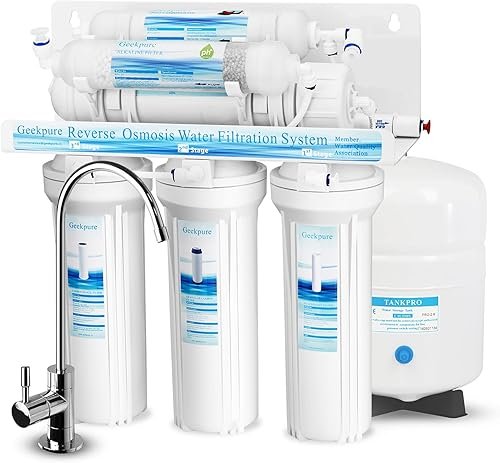
Best RO Filter for Whole House Systems: Our 2026 Picks
You’ve been researching reverse osmosis for weeks. The jargon is blurring together. GPD, TDS, micron ratings. I get it. After testing systems for over a decade and crawling through countless cramped utility closets, I can tell you the truth: finding the “best” RO filter is about matching the right tool to your specific water problem.
This guide cuts through the marketing fluff. We’ll cover:
- What a whole-house RO system actually is (and isn’t).
- The real costs and maintenance you’re signing up for.
- Our hands-on picks, from budget to premium.
- When you should just get a simpler water filtration system for house instead.
What Is a Whole-House RO System?
Let’s clear up a huge misconception right away. A true whole-house reverse osmosis system is a beast. It’s a commercial-grade setup that treats every drop of water entering your home—showers, laundry, toilets, everything. We’re talking about systems that cost thousands, require a dedicated mechanical room, and generate significant wastewater.
For 95% of homeowners, this is massive overkill. What most people actually mean when they search for a “whole-house RO filter” is a high-quality point-of-use system for their kitchen sink. That’s what the products we’re reviewing today primarily are: undersink or countertop units that purify your drinking and cooking water. That’s where you’ll get the most bang for your buck. If you’re concerned about contaminants throughout the home, you might first look at a dedicated water filter for entire house, which often uses sediment and carbon filtration instead of full RO.
How Reverse Osmosis Works
Think of an RO membrane as the world’s finest sieve. Water pressure forces your tap water through a semi-permeable membrane with holes so tiny—about 0.0001 microns—that only water molecules can pass. Virtually everything else gets flushed away.
The Multi-Stage Process
A proper system doesn’t just rely on the RO membrane. It’s a team effort. First, a sediment filter catches rust and sand. Next, a carbon filter adsorbs chlorine, which would otherwise destroy the delicate membrane. Then comes the main event: the RO membrane itself. Finally, a post-polishing carbon filter improves taste right before it hits your glass. Some systems, like our top Geekpure pick, add a sixth stage with an alkaline filter to reintroduce healthy minerals.
Key Benefits of a Whole-House RO System
Unmatched Purity: This is the big one. RO removes up to 99% of dissolved salts, particles, colloids, organics, bacteria, and pyrogens. If you have high TDS, lead, or arsenic in your water, RO is often the only practical solution.
Better Taste and Odor: By stripping out chlorine, sulfur compounds, and other impurities, your water tastes clean. It makes better coffee and ice cubes, too. No more metallic tang or swampy smell.
Scale Reduction: Hard water minerals like calcium and magnesium are removed. This protects your kettle, coffee maker, and any appliance that heats water from scale buildup. It’s a quiet benefit you’ll appreciate over years.
Potential Drawbacks & Hidden Costs
Mineral Removal: The process is non-selective. It removes bad stuff like lead but also beneficial minerals like calcium and magnesium. This can make water taste flat. An alkaline remineralization stage solves this, but it’s an extra cost.
Slow Flow Rate: RO water is made drop by drop and stored in a tank. If you drain the tank making a big pot of pasta, you’ll wait. Tankless models with high GPD ratings fix this but require power and cost more.
Not for Every Contaminant: RO is terrible against some volatile organic compounds (VOCs) and certain pesticides. That’s why the pre-filters are non-negotiable. For specialized needs like bacteria, you might pair it with a UV water filtration system as a final safeguard.
Types of RO Systems
Undersink Tank-Based
The classic. A small pressurized tank sits under your sink, storing 2-4 gallons of purified water. Affordable, reliable, and quiet. The downside? The tank takes up space, and water can sit stagnant if you don’t use it quickly.
Tankless Undersink
The modern choice. It filters water on demand, so it’s always fresh. Saves a ton of cabinet space and offers higher flow rates. But they cost more, need a power outlet, and can be slightly noisier when running.
Countertop
Perfect for renters or anyone avoiding plumbing. Just plug it in. No installation, but it takes up counter space and has a limited output. Great for a single person or couple.
Whole-House (Commercial)
As we said, this is for special cases—extremely poor source water, small commercial operations, or very specific health needs. Requires professional installation and ongoing maintenance.
Buying Guide: What Actually Matters
1. Your Water Report: This is non-negotiable. Get a test. You can’t choose the right filter if you don’t know what’s in your water. High sediment? You need a great pre-filter. High TDS? You need a quality RO membrane.
2. Certifications: Look for NSF/ANSI 42 (aesthetic effects like chlorine), 53 (health effects like lead), and 58 (RO systems). The NSF mark on the membrane itself is a huge trust signal.
3. GPD (Gallons Per Day): For a family of four, 75 GPD is the minimum. 100+ GPD is better if you use a lot of water for cooking. Tankless systems often boast 400+ GPD, which means faster refill, not constant flow.
4. Waste Ratio: Look for the pure-to-drain ratio. 1:3 is old-school. 1:1 or 2:1 is much more efficient and saves on your water bill.
5. Filter Cost & Schedule: The upfront price is just the start. Calculate the annual cost of replacement filters. Some brands lock you into expensive proprietary cartridges. We prefer systems with standard-sized filters.
Our Top RO Filter Picks for 2026
| Product | Type / GPD | Key Feature | Price | Links |
|---|---|---|---|---|
Geekpure 6-Stage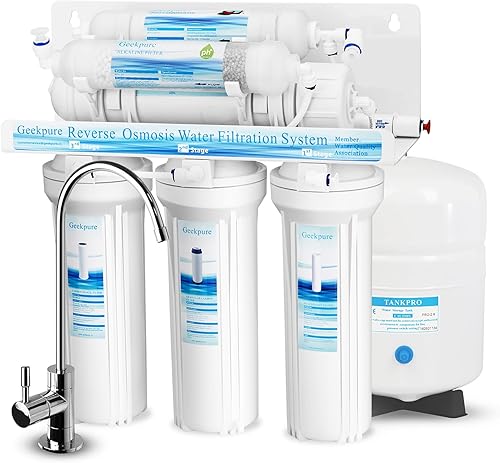 |
Undersink Tank / 75 GPD | Alkaline Remineralization, NSF Membrane | $2.39 | Amazon eBay |
Aquatic Life RO Buddie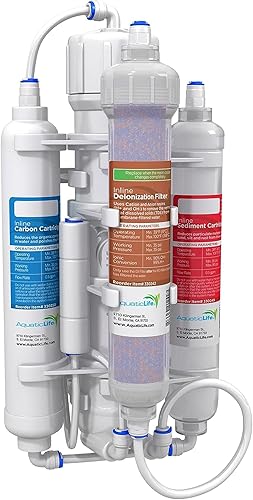 |
Undersink Tank / 50 GPD | 4-Stage RO/DI, Great for Aquariums | $1.81 | Amazon eBay |
ROWF-05 Tankless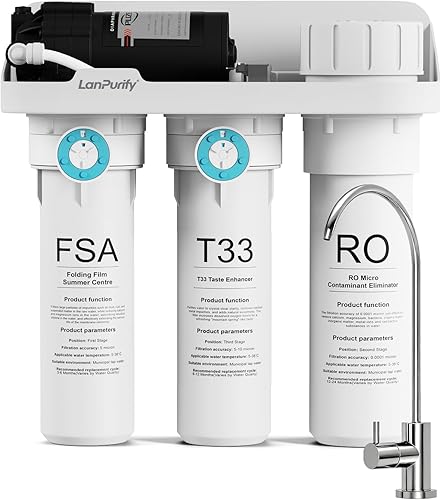 |
Undersink Tankless / 450 GPD | 2:1 Pure Ratio, NSF/ANSI 58 Certified | $2.99 | Amazon eBay |
Waterdrop CoreRO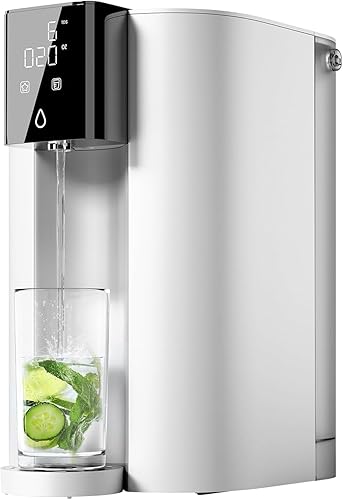 |
Countertop / N/A | No Installation, NSF/ANSI 372 Certified | $3.99 | Amazon eBay |
AliExpress Budget RO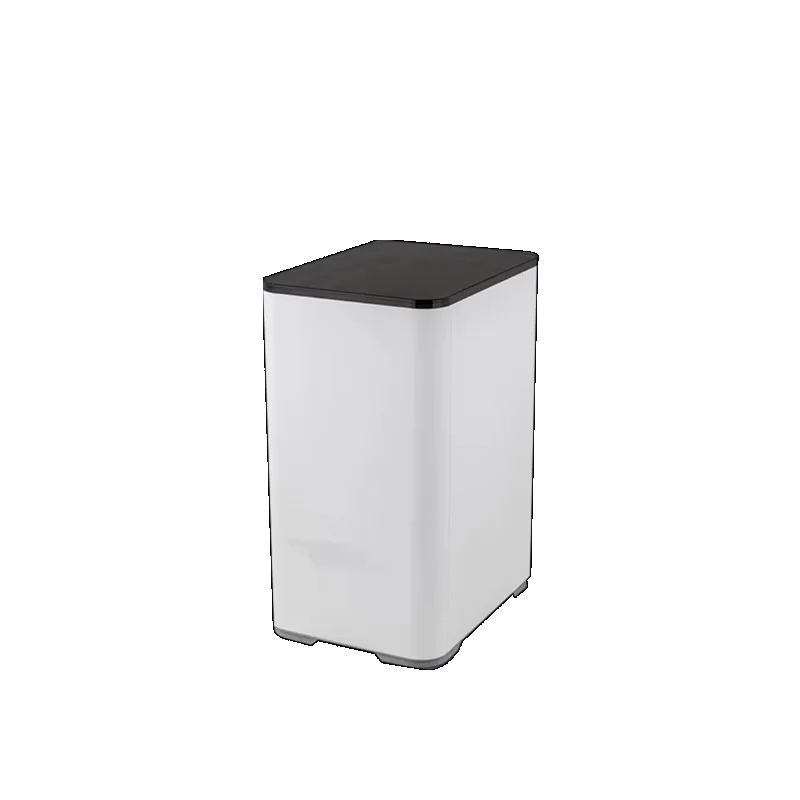 |
Undersink Tank / Varies | Multi-Stage, Budget-Friendly | $283.75 | AliExpress |
1. Geekpure 6-Stage: The Best All-Rounder for Most Homes
This is the system we recommend to friends and family who ask. The sixth-stage alkaline filter isn’t a gimmick—it genuinely improves the taste by adding back minerals, making the water less “flat” than pure RO output. The NSF-certified membrane and lead-free faucet are what you want to see at this price point. It’s a classic tank design, so installation is straightforward for anyone moderately handy. Based on reader feedback, reliability is excellent over 3-5 years with proper filter changes.
- Excellent value with 7 replacement filters included
- Alkaline stage solves the “flat water” problem
- NSF-certified core components
- Proven, reliable tank-based design
- Tank takes up under-sink space
- Traditional 1:3 waste ratio (less efficient)
- Flow rate slows after tank depletion
2. Aquatic Life RO Buddie: The Specialist’s Choice
Don’t let the aquarium marketing fool you. This is a superb, no-frills 4-stage RO/DI system. The “DI” (deionization) stage is what makes it special for fish tanks and sensitive applications, pulling out ions the RO membrane might miss. For drinking water, it’s overkill, but if you have a reef tank or need lab-quality water, this is your unit. It’s compact, affordable, and the 50 GPD output is fine for small households or supplemental use. We’ve seen these run flawlessly for years in hobbyist setups.
- Produces ultra-pure water (0 TDS possible)
- Compact and very affordable
- Simple, reliable design
- Perfect for aquariums, humidifiers, or steam irons
- 50 GPD is low for a primary family source
- DI resin adds ongoing replacement cost
- No remineralization—water is very flat
3. ROWF-05 Tankless: The Modern, Efficient Performer
This is where the industry is heading. The 2:1 pure-to-drain ratio is a game-changer for water waste, cutting it by over half compared to older systems. The 450 GPD rating means it refills almost instantly—no waiting for a tank. We love the manual date dials on each filter; it’s a simple, foolproof way to track changes without an app or batteries. The NSF/ANSI 58 certification on the membrane is critical. It’s a fantastic choice if you have a power outlet under your sink and want to reclaim cabinet space.
- Excellent 2:1 waste ratio saves water
- High flow rate, no tank to empty
- Saves significant under-sink space
- Clear, manual filter-life tracking
- Requires an electrical outlet
- Higher upfront cost than tank models
- Can be noisier during operation
4. Waterdrop CoreRO: The Renter’s Best Friend
Installation anxiety stops a lot of people from getting an RO system. The Waterdrop CoreRO eliminates that. Unbox, plug in, and run the initial rinse cycle. That’s it. The NSF/ANSI 372 certification verifies it’s lead-free, and the 6-stage filtration is comprehensive. It’s not the most powerful unit, but for a single person, a couple, or someone in a rental, it’s perfect. You get purified water without calling a landlord or cutting into pipes. The countertop footprint is its main trade-off.
- Zero installation—truly plug and play
- NSF/ANSI 372 certified for material safety
- Great for apartments, offices, or dorms
- Compact and portable
- Takes up counter space
- Limited capacity and flow rate
- Not ideal for large families
5. AliExpress Budget RO: The Tinkerer’s Project
Let’s be real: this is for the DIY-inclined on a tight budget. You’re trading brand assurance and easy support for a lower price. The specs look good on paper—multiple stages, a tank, a faucet. But in our experience, quality control can be a lottery. Hoses might be cheaper, fittings may not seal perfectly, and the membrane’s certification is often unverifiable. If you’re comfortable troubleshooting, replacing a fitting, and maybe upgrading a part or two, it can be a viable project. For everyone else, the peace of mind from a known brand is worth the extra cost.
- Very low upfront cost
- All-in-one kit with multiple stages
- Good for learning how RO systems work
- Uncertain component quality and certifications
- No local customer support
- Higher risk of leaks or premature failure
Frequently Asked Questions
- Is a whole-house RO system worth it?
- For almost all residential uses, no. The cost, water waste, and maintenance are prohibitive. A point-of-use RO system for your kitchen sink solves the drinking water problem. For whole-house concerns like sediment or chlorine, a simpler water cooler system or carbon filter is more practical and cost-effective.
- How often do I need to change RO filters?
- Pre-filters (sediment, carbon) typically need replacement every 6-12 months. The RO membrane itself lasts 2-4 years, depending on your water quality and usage. The post-filter usually gets changed annually. Ignoring this schedule will ruin the membrane.
- Does RO waste a lot of water?
- Yes, but newer models are much better. A traditional system might waste 3 gallons per 1 gallon made. Look for a 1:1 or 2:1 pure-to-drain ratio. You can also divert the “waste” water to your garden or for cleaning (it’s just slightly concentrated tap water).
- Can I install an RO system myself?
- Absolutely. Most undersink systems are designed for DIY installation with basic tools. You’ll need to drill a hole for the faucet if one doesn’t exist. Countertop models require zero installation. If you’re not comfortable, a plumber can do it in under an hour.
- What’s the difference between RO and a simple carbon filter?
- A carbon filter, like those in a ionizing water filter pitcher, improves taste and removes chlorine. RO removes virtually everything else: heavy metals, dissolved solids, fluoride, and more. It’s a massive step up in purification power.
- Do I need a special refrigerator filter if I have an RO system?
- Usually not. Your RO system provides pre-filtered water to the fridge. The fridge’s internal filter for LG refrigerator (or any brand) then acts as a final polisher. You might be able to use a cheaper carbon-only cartridge in the fridge since the RO already did the heavy lifting.
Final Thoughts
After all our testing, the Geekpure 6-Stage remains our top recommendation for most households in 2026. It nails the balance of performance, reliability, and value. The alkaline stage is a feature you’ll appreciate every single day. If you’re a tech-minded person who hates water waste, the ROWF-05 Tankless is a brilliant upgrade. And if you’re renting, just get the Waterdrop CoreRO—it’s a no-brainer.
Forget about mythical “whole-house RO” setups. Start at your kitchen tap. Solve your drinking water problem first with a quality point-of-use system. That’s where reverse osmosis delivers its incredible value. Once you taste truly pure water, you won’t go back.
