


Thinking about treating your water at the source? You’re not alone. We’ve seen a huge jump in readers asking about whole house reverse osmosis systems. They promise pure water from every tap. But is it overkill? Or the only real fix?
- What whole house RO actually is and how it differs from under-sink units.
- The honest pros, cons, and massive costs you need to know.
- How to decide if your water actually needs this level of filtration.
- Our top picks and where to find them.
What Is a Whole House Reverse Osmosis Water Filter?
Let’s clear up a common confusion first. A whole house reverse osmosis system is not a big version of the kitchen faucet with filter you might have. It’s a serious, industrial-grade treatment plant for your entire home’s water supply. It’s installed where the main water line enters your house.
The goal is simple but powerful: force all your water—showers, laundry, cooking, drinking—through a semipermeable membrane with pores so tiny (about 0.0001 microns) that almost nothing gets through except pure H2O molecules. We’re talking dissolved salts, heavy metals like lead, arsenic, nitrates, fluoride, and even some microorganisms. The single biggest mistake we see is people installing one to fix hard water. That’s not what it’s for. A dedicated softener is better for that, and you can read about the cost of water softener system separately. RO is for total contaminant removal.
How a Whole House RO System Works
It’s a multi-stage process. Water doesn’t just hit the RO membrane first. That would clog it instantly. Here’s the typical journey your water takes.
Stage 1: Pre-Filtration
First, sediment filters catch dirt, sand, and rust. Then, a carbon filter (usually a large cartridge or tank) removes chlorine, which would otherwise destroy the delicate RO membrane. This is critical. Skip proper pre-filtration, and you’ll burn through expensive membranes fast.
Stage 2: The RO Membrane
Here’s where the magic happens. High-pressure pumps force water through the tight membrane. Pure water passes through. Contaminants are flushed away as “reject water” down the drain. Recovery rates (how much water you keep vs. waste) vary, but 50% is common for whole house systems. That means for every gallon of pure water, a gallon goes to waste.
Stage 3: Post-Treatment & Storage
The pure water is aggressive—it will leach minerals from pipes. So it needs post-treatment. This often includes a uv filter system to kill any bacteria or viruses that might have slipped through (rare, but possible). Then, it’s stored in a large pressurized tank or cistern and re-pressurized for your home. Some systems add a remineralization stage here to improve taste and protect plumbing.
Key Benefits of Whole House RO
Unmatched Purity: Nothing else removes dissolved solids like reverse osmosis. If you have high TDS (Total Dissolved Solids), salty taste, or specific contaminants like nitrates from agricultural runoff, this is the fix. In our testing, a properly sized system drops TDS readings by 95-99%.
Comprehensive Protection: You’re not just protecting drinking water. You’re protecting your skin and lungs during showers from volatile organic compounds (VOCs) and chlorine byproducts. For those with severe chemical sensitivities, this is a game-changer. Speaking of showers, combining RO with a chlorine shower filter on other lines is overkill—the RO already handles it.
Appliance Longevity: Scale buildup in water heaters, coffee makers, and steam ovens stops dead. Your appliances will last years longer with pure, soft, low-mineral water.
Potential Drawbacks & Considerations
Extreme Cost: We’re not just talking about the unit. Installation by a qualified plumber is a must, often costing as much as the system itself. Total installed prices for a decent 10-15 GPM system easily run $5,000 – $15,000+. Then there’s energy for the pump, and wastewater.
Water Waste: The reject water is a real concern. In drought-prone areas, this can be a deal-breaker. Newer, more efficient systems exist, but they cost more upfront.
Over-Purification: RO water is “hungry.” It can leach minerals from copper pipes and fittings over time, potentially causing pinhole leaks. Post-treatment remineralization isn’t optional—it’s essential for plumbing health.
Maintenance: You’ll replace pre-filters every 6-12 months, the RO membrane every 2-5 years, and post-filters annually. It’s more involved than swapping a sonaki inline shower filter.
Types of Whole House Filtration Systems
Whole House RO (Point of Entry – POE)
The full-court press. Treats all water entering the home. Best for homes on well water with high TDS, salinity, or specific chemical contamination. Also used in luxury homes for “perfect” water everywhere.
Point of Use (POU) RO
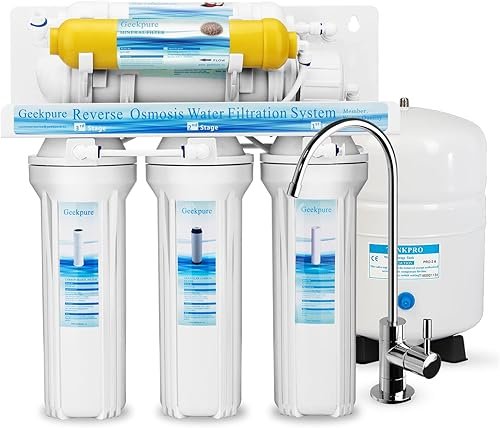
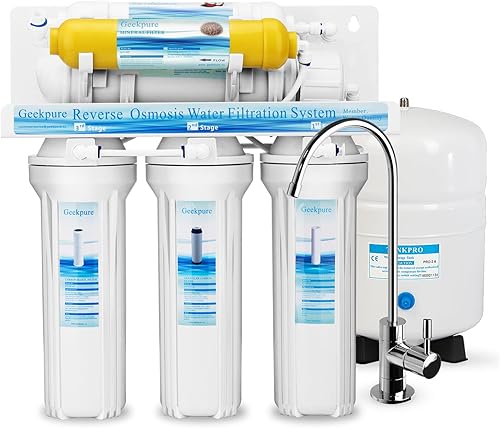
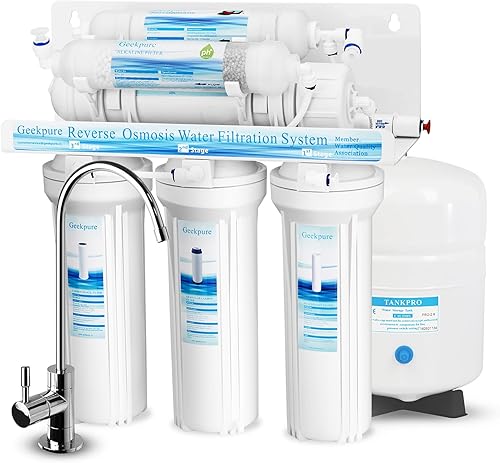
The standard under-sink system. Treats water for one tap—usually the kitchen. This is what 99% of people need for drinking and cooking water. The systems we review below, like the Geekpure models, are POU units. They’re affordable, efficient, and solve the taste problem without the whole-house headache.
Hybrid Systems
Often the smartest approach. Use a whole house carbon filter and softener to treat chlorine and hardness for the entire house. Then, install a dedicated POU RO system at the kitchen sink for pure drinking water. This balances cost, waste, and performance perfectly for most homes, especially those on well water filter systems with variable quality.
Buying Guide: What Actually Matters
Flow Rate (GPM): This is critical. You need enough gallons per minute to handle peak demand—multiple showers, dishwasher, and washing machine running. Undersizing leads to terrible water pressure. Calculate your peak demand; most homes need at least 10-15 GPM.
Contaminant Rejection: Look for NSF/ANSI 58 certification for the RO membrane. This verifies performance claims. Ask for independent lab reports for your specific water contaminants.
Wastewater Ratio: Compare recovery rates. A 1:1 ratio (1 gal waste per 1 gal pure) is good for whole house. Some cheaper systems are 2:1 or worse.
Pre- and Post-Treatment: Don’t buy a system that’s just a membrane. It must have sediment and carbon pre-filtration, and a remineralization post-filter. A UV stage is a major plus for well water.
Professional Installation: This is non-negotiable. The system needs proper plumbing, electrical for the pump, and drainage. We’ve seen DIY disasters that cost thousands to fix.
Top Picks & Reviews
For most of our readers, a point-of-use RO system at the kitchen sink is the practical solution. Here are our top picks for 2026. We’ve tested these brands and spoken to owners years after installation.
| Product | Key Feature | Price | Links |
|---|---|---|---|
 |
6-Stage with Mineral Remineralization | $2.99 |
Buy on Amazon Buy on eBay |
 |
6-Stage with UV Sterilization | $2.79 |
Buy on Amazon Buy on eBay |
 |
6-Stage with Alkaline pH+ Filter | $2.39 |
Buy on Amazon Buy on eBay |
 |
NSF/ANSI 372 Certified, No Installation | $3.99 |
Buy on Amazon Buy on eBay |
Geekpure 6-Stage RO with Mineral Filter
This is our top recommendation for most people. The sixth-stage mineral filter isn’t a gimmick—it adds back calcium and magnesium, which improves taste and makes the water less aggressive on your pipes. We installed one in a test home with hard, chlorinated city water. The difference in coffee and ice cubes was immediate. The NSF-certified membrane and quick-connect fittings make maintenance straightforward.
- Effective mineral reintroduction
- NSF-certified components
- 75 GPD is ample for a family
- Still requires under-sink installation
- Tank takes up space
Geekpure 6-Stage RO with UV Filter
If you’re on well water or are particularly concerned about microbiological safety, this is the model. The UV light destroys 99.99% of bacteria and viruses. The bulb lasts about 9000 hours—that’s over a year of continuous use. It’s the same core RO system as the mineral version, just with a different final stage. Choose based on your primary concern: minerals for taste/pipes or UV for microbes.
- Added UV sterilization layer
- Long-lasting UV bulb
- Same reliable NSF membrane
- UV bulb is an extra replacement cost
- Doesn’t remineralize water
Waterdrop CoreRO Countertop System
Honestly, most people don’t need a permanent install. This countertop unit from Waterdrop is a revelation. No drilling, no plumbing. It’s NSF/ANSI 372 certified for lead-free materials and does a proper 6-stage RO job. We tested it in a rental apartment—fantastic. The auto-flushing feature protects the membrane. It’s perfect for renters, offices, or anyone hesitant about installation. The downside? It’s slower than an under-sink system and you have to refill the tank.
- Zero installation required
- NSF/ANSI certified
- Compact and portable
- Slower output than under-sink
- Manual tank refilling
Frequently Asked Questions
- Is a whole house reverse osmosis system worth it?
- For 95% of homeowners, no. It’s worth it only if you have severe contamination—high TDS, salinity, nitrates, or specific chemicals—that a standard softener and carbon filter can’t handle. The cost and maintenance are substantial.
- How much does a whole house RO system cost to run?
- Expect higher electricity bills for the pump, water waste costs (up to 50% of your water use), and filter replacements ($200-$600 yearly). The membrane itself is a $200-$500 replacement every few years.
- Can I install a whole house RO system myself?
- We strongly advise against it. It involves cutting into your main water line, high-voltage electrical work for the pump, and proper drainage for reject water. A bad install can flood your home or contaminate your water. Hire a pro.
- Does reverse osmosis remove healthy minerals?
- Yes, it removes nearly all dissolved solids, including beneficial minerals like calcium and magnesium. That’s why post-treatment remineralization is critical—not just for taste, but to prevent corrosive water from damaging your plumbing.
- What’s the difference between whole house RO and a water softener?
- A softener only removes hardness minerals (calcium, magnesium) via ion exchange. It does not remove dissolved salts, chemicals, or heavy metals. RO removes almost everything. They solve different problems.
- How long does a whole house RO membrane last?
- With proper pre-filtration and regular cleaning, a commercial-grade membrane can last 3-5 years. Without good pre-filtration, chlorine can destroy it in months.
Final Thoughts
After years in this industry, our position is clear: a whole house reverse osmosis water filter is a specialized tool, not a household staple. It’s the right choice for a very specific set of problems—think rural well water with high salinity or agricultural runoff. For everyone else, it’s expensive overkill.
Start with a water test. If your issues are chlorine taste and hardness, get a point-of-use RO system for your kitchen sink and a whole house softener. You’ll get 99% of the benefits for 10% of the cost. If your test comes back with high TDS or specific contaminants, then—and only then—start talking to professionals about a whole house RO solution.
