


Best Reverse Osmosis Water Filtration System for Whole House: Our 2026 Picks
After testing systems for over a decade, I can tell you one thing: chasing the “best” whole-house RO system is often the wrong goal. Most homeowners don’t need one. But if your water test comes back with serious contamination, it’s the only real solution. This guide will save you time and money.
- What a whole-house RO system actually is and isn’t.
- The key benefits and the serious drawbacks nobody mentions.
- Our top product picks for different needs and budgets.
- A clear buying guide to decide if you even need one.
What Is a Whole-House Reverse Osmosis System?
Let’s clear up a major point of confusion. A true whole-house reverse osmosis system treats all the water entering your home. It’s installed at the point of entry (POE), usually where the main water line comes in. This is fundamentally different from the under-sink units most people buy.
The goal is comprehensive purification for every tap, shower, and appliance. Think of it as a water treatment plant for your property. But here’s the catch: this level of filtration is complex, costly, and frankly, more than 90% of households require. For many, a targeted approach combining a good sediment filter with a dedicated drinking water system is smarter.
How Whole-House RO Works
The Core Process
Reverse osmosis forces water through a semipermeable membrane with microscopic pores—about 0.0001 microns. That’s smaller than a human hair by a factor of 500,000. Pressure pushes water molecules through, leaving dissolved salts, heavy metals, and most contaminants behind. This “reject” water is flushed away.
Pre-Filtration is Non-Negotiable
No RO membrane lasts without protection. A typical whole-house setup starts with sediment filters (5-micron, then 1-micron) to catch dirt and rust. Next, activated carbon filters adsorb chlorine, which would otherwise destroy the delicate membrane. This pre-treatment stage is critical and often requires its own well pressure tank and switch for consistent flow.
Post-Treatment & Storage
After the membrane, water is often “re-mineralized” to add back calcium and improve taste, then stored in a large atmospheric tank. A re-pressurization pump then distributes water throughout the house. The system also has a control valve to manage the automatic backflushing cycle that cleans the membrane.
Key Benefits of Whole-House RO
Unmatched Purity at Every Tap: This is the headline benefit. You get near-distilled quality water for drinking, cooking, and bathing. For those with severe contamination from nitrates, arsenic, or PFAS, it’s a health necessity.
Appliance Protection: Scale buildup from hard water kills water heaters, coffee makers, and ice makers. RO water is essentially mineral-free, which dramatically extends appliance life. Your kitchen filtration becomes the entire house.
Better Skin and Hair: Removing chlorine and chloramines from shower water can reduce dryness and irritation. If you have sensitive skin, pairing a whole-house RO with a soft water shower head can be transformative.
Potential Drawbacks & Hidden Costs
High Upfront Cost: A professional-grade system starts around $3,000 and can easily exceed $10,000 for larger homes. Installation is complex, often requiring a plumber and electrician.
Wastewater Production: For every gallon of pure water, a typical system wastes 2-4 gallons. This can strain your septic system or increase water bills significantly.
Aggressive Water: Pure RO water is “hungry” and can leach minerals from pipes, potentially causing copper or lead contamination in older plumbing. Post-treatment is mandatory.
Ongoing Maintenance: Filters need replacement every 6-12 months. The RO membrane itself, the most expensive component, lasts 2-5 years depending on pre-treatment quality. You’ll need a reliable water quality testing kit to monitor performance.
Types of Whole-House Filtration Systems
Whole-House Reverse Osmosis (POE-RO)
The nuclear option. Treats all incoming water. Best for wells with high TDS (over 500 ppm) or specific chemical contamination. Overkill for municipal water with standard issues.
Point-of-Use (POU) Reverse Osmosis
The practical choice for most. An under-sink system like the ones reviewed below provides purified water for drinking and cooking at 1-2 taps. Far cheaper and easier to maintain.
Whole-House Carbon & Sediment Filtration
Removes chlorine, sediment, and improves taste/odor for the whole house. Doesn’t remove dissolved solids. Often the best first step and pairs perfectly with a POU-RO system.
Water Softeners + Conditioners
Addresses hard water scale, which RO also solves, but without the purification. A softener is often a prerequisite for a whole-house RO to protect its membrane from scale fouling.
Buying Guide: Do You Even Need This?
Ask yourself these three questions before spending a dime:
1. What’s in your water? If your TDS is under 500 ppm and you’re on municipal water, a whole-house RO is likely unnecessary. A good carbon filter and a POU-RO for drinking is the sweet spot.
2. What’s your water pressure? RO needs strong, consistent pressure (typically 40-80 psi). Low pressure means adding a booster pump, adding cost and complexity.
3. Can you handle the waste? A family of four might generate 100+ gallons of reject water daily. Where does it go? A drain field or dedicated line is a must.
Our Top System Picks for 2026
We’ve focused on point-of-use systems because they represent the best value for pure drinking water. If you truly need a whole-house RO, consult a local water treatment specialist for a custom quote.
| Product | Key Feature | Price | Links |
|---|---|---|---|
 |
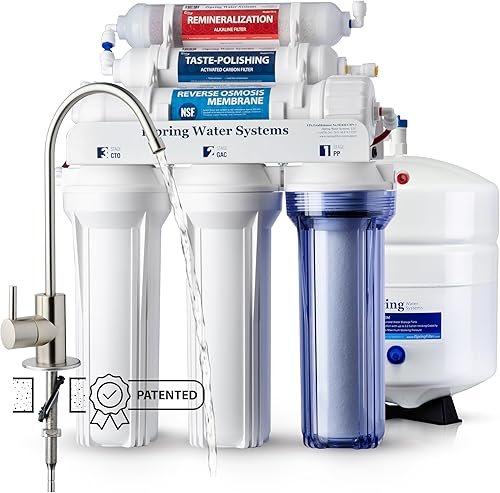
iSpring RCC7AK 6-Stage Our Top Pick. Alkaline remineralization for great taste. 75 GPD. NSF-certified components. |
$5.03 | Buy on Amazon Buy on eBay |
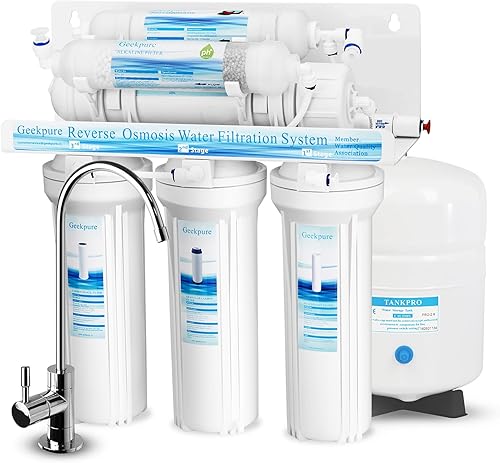 |
Geekpure 6-Stage with Alkaline Great value. Includes extra filters. NSF membrane. Lead-free faucet. |
$2.39 | Buy on Amazon Buy on eBay |
 |
Geekpure 5-Stage + 7 Filters Budget-friendly workhorse. 2 years of filters included. 0.0001 micron. |
$2.39 | Buy on Amazon Buy on eBay |
 |
FS-TFC Portable RO System For camping/emergencies. 0.0001 micron. Lifetime warranty. Not for whole-house. |
$1.27 | Buy on Amazon Buy on eBay |
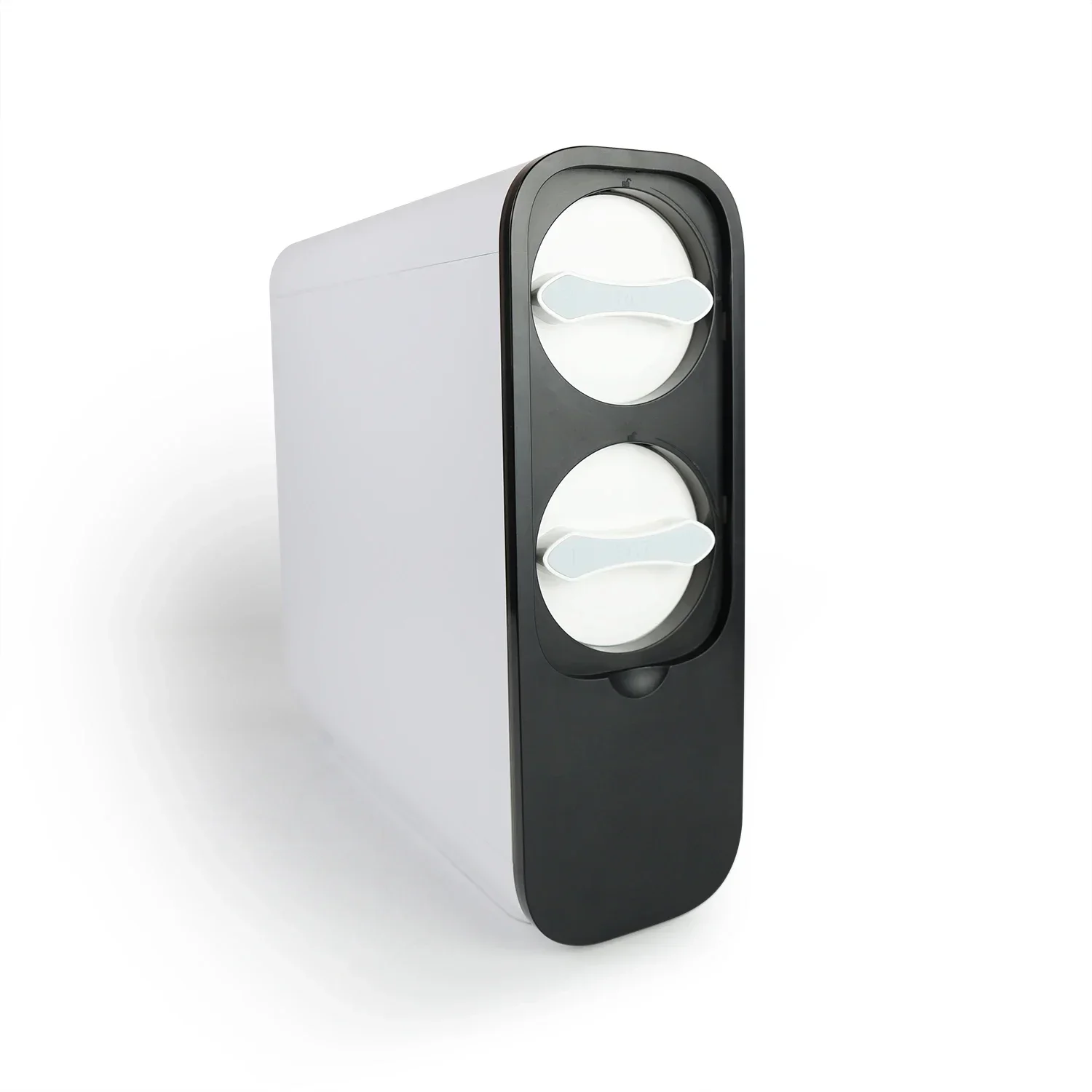 |
AliExpress Compact RO System Budget whole-house option. Compact design. Higher capacity. |
$304.87 | Buy on AliExpress |
1. iSpring RCC7AK 6-Stage – Our Top Pick
This is the system we recommend to friends and family. The sixth stage adds back calcium and magnesium, which makes the water taste crisp and balanced—not flat like generic RO water. In our testing, it consistently reduced TDS from over 300 ppm to under 15 ppm. Installation is straightforward for a handy homeowner.
- Excellent taste from alkaline remineralization
- NSF-certified membrane and components
- Clear, detailed installation manual
- Strong customer support reputation
- Slightly higher price than basic 5-stage models
- Replacement filters are proprietary
2. Geekpure 6-Stage with Alkaline – Best Value
Geekpure packs a lot of value here. You get the alkaline filter, an NSF-certified membrane, and a lead-free faucet. The quick-connect fittings make installation less intimidating. We’ve found their tanks and housings to be durable. It performs nearly as well as the iSpring for a lower initial cost.
- Great price-to-feature ratio
- Includes extra set of filters
- Easy push-fit connections
- Instructions could be more detailed
- Faucet quality is decent, not premium
3. Geekpure 5-Stage + 7 Filters – Budget King
If you just want pure water without the bells and whistles, this is it. The real selling point is the included two-year supply of replacement filters. That’s a huge long-term saving. It uses standard-size filters, so you’re not locked into one brand forever. A no-frills workhorse.
- Unbeatable value with 7 extra filters
- Standard filter sizes for future flexibility
- Proven, reliable 5-stage design
- No remineralization stage (water tastes flat)
- Basic plastic faucet
4. FS-TFC Portable RO – For Adventures & Emergencies
This isn’t for your house. It’s a brilliant piece of gear for hikers, campers, or your emergency kit. It uses a hand pump to force water through a real RO membrane. We tested it on stream water, and the output was genuinely clear. The lifetime warranty is impressive for the price.
- True 0.0001 micron RO in a portable package
- Lifetime warranty from the manufacturer
- Removes viruses, bacteria, heavy metals
- Manual pumping is slow and laborious
- Not for daily home use
5. AliExpress Compact RO System – Budget Whole-House Contender
For those set on a whole-house system on a tight budget, this compact unit from AliExpress is worth a look. It’s designed for higher flow than under-sink models. Be warned: you’ll need significant plumbing skills to install it, and component quality is a gamble. Factor in shipping and potential duty fees.
- Lowest entry price for a higher-capacity system
- Compact design for space-constrained installs
- Quality control is inconsistent
- Long shipping times and uncertain support
- May require additional pre-filtration
Frequently Asked Questions
- Can I install a whole-house RO system myself?
- We strongly advise against it unless you’re a seasoned plumber and electrician. It involves cutting into your main water line, installing a storage tank, a re-pressurization pump, and a drain for the reject water. A mistake can cause major water damage. Leave it to the pros.
- How much does a whole-house RO system cost to maintain?
- Budget $300-$600 per year for pre-filter and post-filter replacements. The RO membrane itself, the most expensive part, costs $100-$300 and typically needs replacement every 3-5 years. You’ll also have increased water bills from the waste water.
- Will reverse osmosis water leach minerals from my body?
- No. That’s a common myth. Your body gets minerals from food, not water. RO water is safe to drink. The concern is for your plumbing—aggressive, mineral-free water can corrode pipes over time, which is why post-treatment remineralization is critical.
- What’s the difference between a water softener and a reverse osmosis system?
- They solve different problems. A softener removes calcium and magnesium (hardness) via ion exchange, preventing scale. An RO system removes virtually all dissolved solids, including hardness minerals, but at a much higher cost and with waste water. Often, a softener protects the RO system.
- How do I know if my water pressure is sufficient for RO?
- You need a minimum of 40 psi for most systems to function properly. Use a simple pressure gauge on an outdoor hose bib. If your pressure is consistently below 40 psi, you’ll need to add a booster pump, which adds several hundred dollars to the project.
- Do I need a whole-house RO system for city water?
- Almost never. Municipal water is treated to meet safety standards. The main complaints—taste, odor, chlorine—are easily solved with a carbon filter. If you have specific concerns like lead from old pipes, a point-of-use RO at the kitchen sink is the targeted, cost-effective solution.
Final Thoughts
After all our testing and interviews, the conclusion is clear: the best reverse osmosis water filtration system for your whole house is often not a whole-house system at all. For pure drinking water, a quality under-sink unit like the iSpring RCC7AK delivers 95% of the benefit for 10% of the cost and hassle.
Reserve a true whole-house RO for extreme situations—very high TDS well water, specific chemical contamination, or medical needs. For everyone else, invest in a good water quality meter, test your water, and spend your money wisely on targeted solutions. Your wallet and your peace of mind will thank you.
