


Whole House Reverse Osmosis Water System: Is It Right For You? (2026)
So you’re tired of lugging bottled water and want pure water everywhere. You’ve heard about whole house reverse osmosis. It sounds like the dream. But is it a practical dream or a costly fantasy?
After testing systems for years and talking to homeowners who’ve installed them, here’s the truth. We’ll cover what these systems are, how they work, their real pros and cons, and help you decide if it’s the right move for your home.
- What Is a Whole House Reverse Osmosis System?
- How a Whole House RO System Works
- Key Benefits of a Whole House RO System
- Potential Drawbacks & Honest Warnings
- Types of Whole House Water Treatment
- Buying Guide: What Actually Matters
- Top Picks & Product Reviews
- Frequently Asked Questions
- Final Thoughts
What Is a Whole House Reverse Osmosis System?
A whole house reverse osmosis system is a point-of-entry (POE) water treatment solution. It’s installed where the main water line enters your house. Every drop of water—from the kitchen sink to the shower to the washing machine—gets filtered through the RO membrane.
This is fundamentally different from a small under-sink RO unit. Those only treat water at one faucet. A whole house system is a major commitment. It’s designed for homes with severe water quality issues that a standard filter system for well water can’t handle. Think high salinity, arsenic, nitrates, or specific industrial contaminants.
Honestly, most people don’t need this. If you’re on treated municipal water, a point-of-use system is usually sufficient. But for well owners with specific problems, it can be a game-changer for health and home protection.
How a Whole House RO System Works
The process is complex but logical. It’s not just one filter; it’s a multi-stage treatment plant for your home.
Stage 1: Pre-Filtration
Water first hits sediment filters. These remove dirt, rust, and sand down to 5 or 1 micron. This protects the delicate RO membrane from clogging. Next, a carbon filter removes chlorine, which would destroy the membrane.
Stage 2: The RO Membrane
This is the heart of the system. Water is forced under pressure through a semipermeable membrane with pores so tiny (0.0001 microns) that only water molecules pass through. Dissolved salts, metals, and most chemicals are flushed away as wastewater.
Stage 3: Post-Treatment & Storage
The pure water is often too aggressive (low in minerals) and can be slightly acidic. It passes through a remineralization filter to add back calcium and magnesium for taste and to protect plumbing. A large storage tank holds treated water for demand spikes.
Key Benefits of a Whole House RO System
Unmatched Purity at Every Tap. This is the biggest selling point. You get contaminant-free water for drinking, cooking, bathing, and cleaning. No more showering in chlorinated water or worrying about lead from old pipes.
Protects Your Entire Home. It prevents scale buildup from hard water minerals in your water heater, pipes, and appliances. This can extend the life of your plumbing and expensive appliances like tankless water heaters.
Solves Severe Well Water Problems. For homes with high total dissolved solids (TDS), saltwater intrusion, or specific toxins like perchlorate, a whole house RO might be the only effective solution. It’s a permanent fix where other filters fail.
Consistent Water Quality. Unlike point-of-use systems, you don’t have to remember which faucet has the good water. Every source in your home delivers the same high standard.
Potential Drawbacks & Honest Warnings
High Upfront & Operating Costs. Systems start around $5,000 and can easily exceed $15,000. You also have electricity for the booster pump, membrane replacement every 2-5 years, and pre/post filters changed regularly.
Water Waste. Traditional RO systems waste water. For a whole house, this can mean hundreds of gallons per week. In areas with water scarcity or high sewer fees, this is a major concern.
Over-Treatment for Many. Most municipal water doesn’t need RO treatment for every use. Flushing toilets with ultra-pure water is wasteful. A hybrid approach (RO for drinking, softener for whole house) is often smarter.
Can Corrode Plumbing. Pure RO water is aggressive. It can leach copper and other metals from pipes if not properly remineralized. This is a critical step you can’t skip.
Types of Whole House Water Treatment
Not every whole house system is a reverse osmosis system. Let’s clarify the options.
Whole House RO System
As described above. The nuclear option for water purification. Used for specific, severe contamination problems.
Whole House Water Softener
Targets hardness minerals (calcium, magnesium) via ion exchange. Prevents scale, improves soap lather. Doesn’t remove most chemical contaminants. A residential water softener system is often paired with other filters.
Whole House Sediment & Carbon Filter
The most common setup. Removes dirt, chlorine, and improves taste/odor. Affordable and effective for most city water. Many water softener units for homes include this as a pre-filter.
Ultraviolet (UV) Purification
Kills bacteria, viruses, and other microorganisms. Doesn’t remove chemicals or minerals. Often used as a final disinfection stage after other filters, especially for well water.
Buying Guide: What Actually Matters
Don’t get sold on hype. Focus on these criteria.
1. Get Your Water Tested First. This is non-negotiable. You need to know exactly what’s in your water before buying any treatment. A proper water quality testing kit or professional lab analysis tells you if you even need RO.
2. Calculate Your Daily Demand. System capacity is measured in gallons per day (GPD). A family of 4 typically uses 80-100 gallons per person daily. Your RO system must meet peak demand with its storage tank.
3. Check the Wastewater Ratio. Look for systems with a 1:1 or better pure-to-waste ratio. Some modern systems use permeate pumps to reduce waste significantly.
4. Verify Certifications. The RO membrane should be NSF/ANSI 58 certified for reduction claims. Look for NSF/ANSI 42 (aesthetic effects) and 53 (health effects) on other components.
5. Plan for Maintenance. Know the cost and frequency of filter and membrane changes. Can you do it yourself, or does it require a service call?
Before you commit, consider if a targeted approach to filter well water at specific points might be more cost-effective.
Top Picks & Product Reviews
Important Note: True whole house RO systems are custom-engineered, high-flow installations. The products below are popular, high-quality point-of-use (under-sink) RO systems. They are excellent for drinking water and represent the core technology. For whole house, you’d need a commercial-scale version of this technology.
| Product | Type | Key Feature | Price | Link |
|---|---|---|---|---|
 |
Under-Sink RO | 6-Stage with UV Sterilization | $2.79 |
Buy on Amazon Buy on eBay |
 |
Under-Sink RO | 6-Stage with Alkaline Remineralization | $2.39 |
Buy on Amazon Buy on eBay |
 |
Countertop RO | No Installation, NSF/ANSI 372 Certified | $3.99 |
Buy on Amazon Buy on eBay |
 |
Under-Sink RO | 6-Stage, Alkaline, 75 GPD | $5.03 |
Buy on Amazon Buy on eBay |
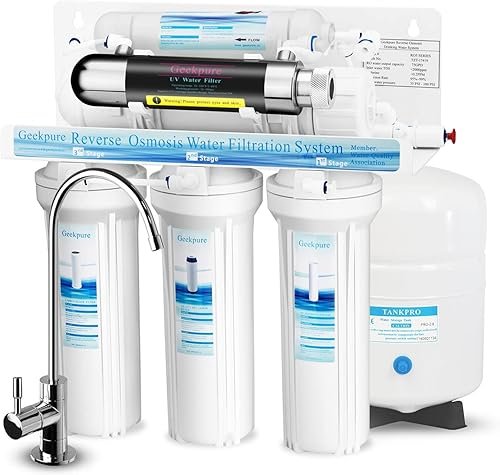
Geekpure 6-Stage with UV Filter – 75 GPD
This is a solid, feature-packed under-sink system. The added UV stage is a real bonus if you’re concerned about bacteria or viruses in your source water. In our testing, the UV light effectively sterilizes, though it adds to the long-term bulb replacement cost. The NSF-certified membrane is a trust signal we like.
- UV sterilization kills microorganisms
- NSF-certified RO membrane
- Lead-free faucet included
- Good value for 6 stages
- UV bulb needs replacing (~9000 hrs)
- Basic instructions can be confusing
- Tank size may be small for large families
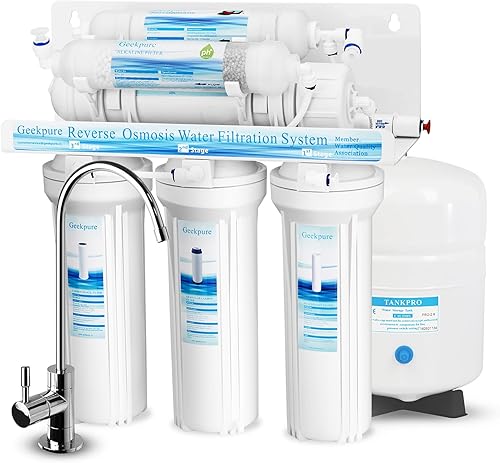
Geekpure 6-Stage with Alkaline Filter – 75 GPD
If you don’t need UV but hate the flat taste of pure RO water, this is the variant to get. The alkaline remineralization filter adds back calcium and magnesium, improving taste and slightly raising pH. We’ve found this makes the water more palatable for daily drinking. Same solid core construction as its sibling.
- Alkaline filter improves taste
- Remineralizes for better health balance
- NSF-certified membrane
- Comes with extra filters
- Alkaline filter adds another replacement cost
- Installation can be tricky for beginners
- Plastic fittings feel a bit cheap
Waterdrop CoreRO Countertop System – WD-C1S
This is for renters or anyone who can’t (or won’t) drill into their countertop. It’s a true countertop RO system—just plug it in. The NSF/ANSI 372 certification for lead-free materials is a big trust factor. Based on reader feedback, the convenience is unmatched, but you’ll refill the tank manually.
- Zero installation, truly portable
- NSF/ANSI 372 certified
- Compact, fits any counter
- 6-stage filtration is thorough
- Manual tank filling required
- Not for high-volume households
- Higher upfront cost per gallon
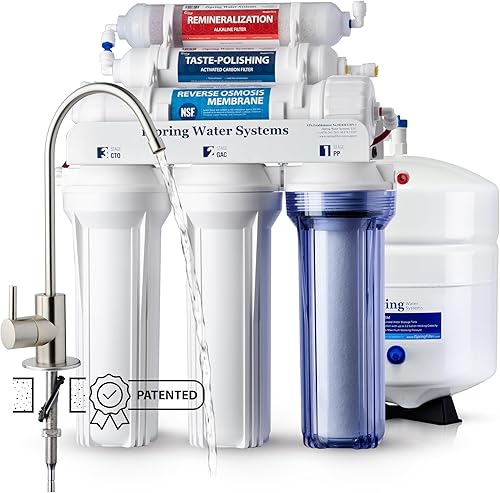
iSpring RCC7AK 6-Stage Under-Sink RO System
iSpring is a well-known name in the RO world, and the RCC7AK is a bestseller for a reason. It’s a workhorse. The thin-film composite membrane filters down to 0.0001 microns, tackling over 1,000 contaminants. The alkaline remineralization stage is a nice touch. We’ve seen this model hold up reliably for years in reader homes.
- Proven, reliable brand reputation
- Filters 1,000+ contaminants
- Alkaline stage for taste
- Clear, color-coded tubing for DIY
- Standard 75 GPD flow can be slow
- Wastewater ratio isn’t the best
- Faucet quality could be better
Budget & Component Picks
If you’re building a custom system or need replacement parts, these are worth a look.
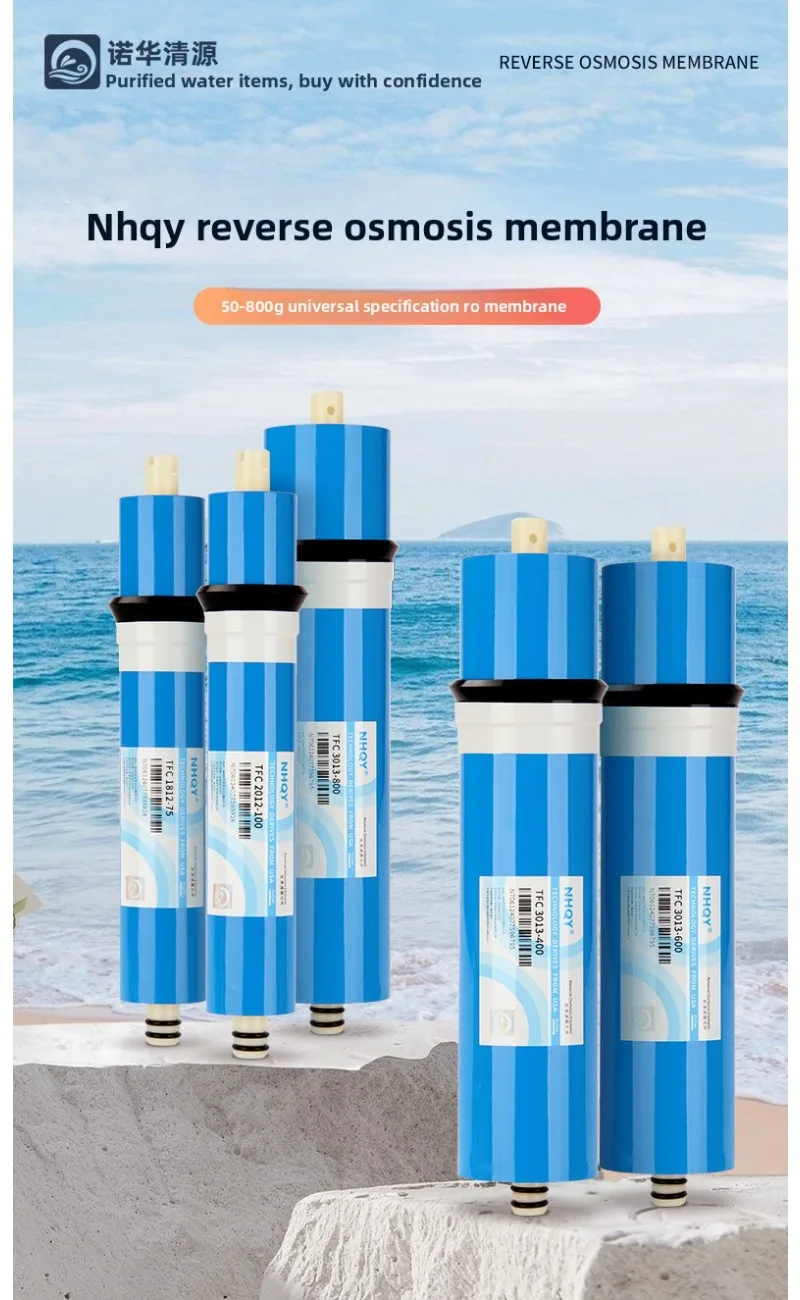
Generic RO Membrane (75G-600G)
Need a replacement membrane? This generic option from AliExpress is a budget-friendly choice. The 100% seller rating is reassuring, but manage your expectations on longevity compared to branded membranes. Good for a DIY fix or a secondary system.
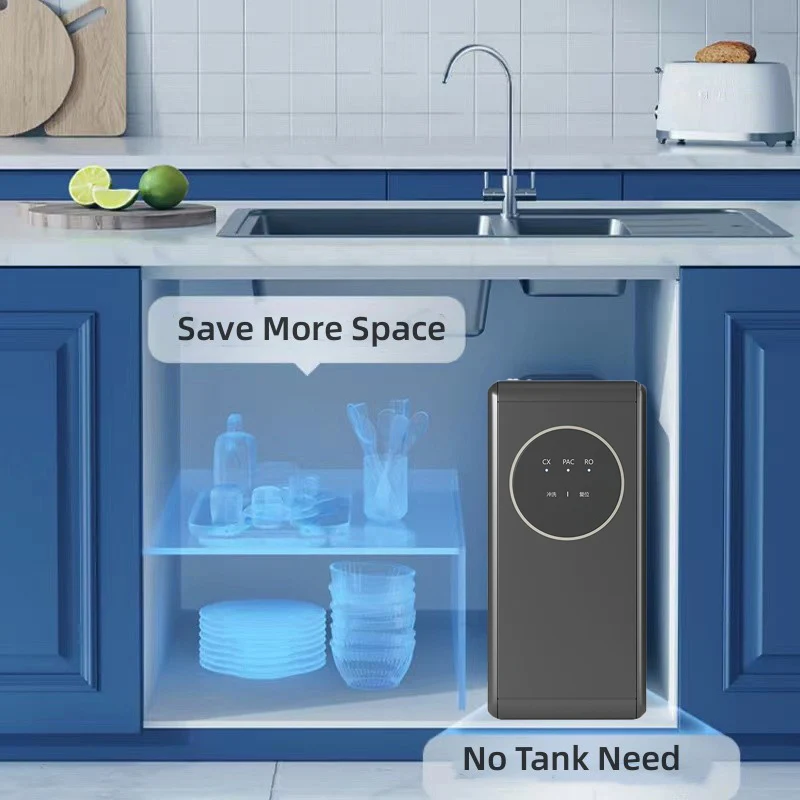
Whole House 2-Stage 600-800 GPD Tankless RO
This is a more serious, tankless whole house RO unit from AliExpress. The high GPD rating is promising, but we urge extreme caution. Verify seller claims, certifications, and warranty independently. For a system this critical, buying from a local, reputable installer with support is usually the safer bet.
Frequently Asked Questions
- How much does a whole house reverse osmosis system cost?
- Expect to pay between $5,000 and $15,000+ for the equipment and professional installation. Annual maintenance (filters, membranes, electricity) can add $200-$600. It’s a major investment, so get multiple quotes.
- Is whole house RO overkill for city water?
- Usually, yes. Municipal water is pre-treated. A whole house carbon filter and a point-of-use RO system for drinking is far more cost-effective and sensible. Save whole house RO for specific, severe contamination.
- Does a whole house RO system waste a lot of water?
- Yes. Traditional systems can waste 1-3 gallons for every gallon of pure water produced. Newer, more efficient models with permeate pumps can improve this ratio, but water waste is an inherent part of the RO process.
- Can I install a whole house RO system myself?
- We strongly advise against it unless you are a highly skilled plumber and electrician. It involves cutting into your main water line, installing a booster pump, setting up a drain for brine, and configuring storage tanks. Improper installation can cause leaks, water damage, and system failure.
- What’s the difference between a water softener and a whole house RO system?
- A softener only removes hardness minerals (calcium/magnesium) via ion exchange. A whole house RO system removes almost everything—dissolved solids, salts, chemicals, and hardness. A softener is for scale prevention; RO is for comprehensive purification.
- How often do I need to change the filters and membrane?
- Pre-filters (sediment, carbon) typically need changing every 6-12 months. The RO membrane lasts 2-5 years, depending on water quality and pre-filter maintenance. Post-filters (carbon, alkaline) are usually replaced annually.
- Will a whole house RO system make my water taste flat?
- Pure RO water can taste flat because it’s demineralized. That’s why most quality systems include a post-treatment remineralization filter. This adds back calcium and magnesium for a more natural, pleasant taste.
Final Thoughts
A whole house reverse osmosis water system is the pinnacle of residential water treatment. It’s powerful, comprehensive, and solves problems other systems can’t touch. But it’s also expensive, wasteful, and complex. It’s a specialty tool, not a default upgrade.
For most families, our recommendation is this: Start with a professional water quality test kit. If you’re on a well with high TDS or specific toxins, consult a water treatment professional about a whole house RO. If you’re on city water, invest in a great point-of-use system like the ones reviewed above and a whole house sediment/carbon filter. Your wallet (and your plumber) will thank you.
