


You’re tired of lugging bottled water. You worry about what’s in your tap water, especially for your kids. So you start researching “reverse osmosis water filter whole house” systems, dreaming of pristine water from every faucet. We get it. After testing dozens of systems and talking to countless plumbers, we’ve seen the good, the bad, and the very expensive. Let’s cut through the hype.
This guide will cover:
- What a whole-house RO system actually is (and isn’t).
- The real costs and hidden complexities you need to know.
- When it’s the right choice vs. a massive overkill.
- Our hands-on picks for different needs and budgets.
- What Is a Whole-House Reverse Osmosis System?
- How It Works: The Process & Components
- Key Benefits (When It’s Worth It)
- Potential Drawbacks & Serious Considerations
- Types of Whole-House Water Treatment
- Buying Guide: What Actually Matters
- Top Picks & Product Reviews
- FAQ: Your Questions Answered
- Final Thoughts
What Is a Whole-House Reverse Osmosis System?
Forget the small unit under your sink. A whole-house reverse osmosis system is a beast of a machine, typically installed in your garage, basement, or a utility closet. It’s a point-of-entry (POE) system designed to filter every single drop of water that enters your home before it reaches any pipe, shower, or appliance.
It forces your municipal or well water through a super-fine semipermeable membrane with pores so tiny—0.0001 microns—that only water molecules can pass. This strips out up to 99% of contaminants: dissolved salts (TDS), heavy metals like lead, arsenic, nitrates, fluoride, and even some bacteria and viruses. The result is exceptionally pure, soft water distributed throughout your entire house.
But here’s the first reality check: honestly, most people don’t need one. They’re a niche solution for specific, serious water quality problems. If you’re on city water with decent reports, you’re likely better off with a targeted approach. We’ll break down exactly when it makes sense below.
How It Works: The Process & Components
A whole-house RO system isn’t just a big filter. It’s a multi-stage treatment plant for your home. Understanding the process helps you see why it’s so complex and costly.
Pre-Filtration: Protecting the Membrane
Your water hits sediment filters first—usually a 5-micron then a 1-micron cartridge. This removes dirt, rust, and sand that would instantly clog the delicate RO membrane. Next, a carbon filter (often a large 20″ cartridge) absorbs chlorine, chloramines, and organic chemicals. Chlorine will destroy an RO membrane, so this step is non-negotiable. This pre-filtration stage is critical; skipping it is like driving your car without an oil filter.
The RO Membrane: The Heart of the System
Here’s where the magic (and the waste) happens. High-pressure pumps force water through the spiral-wound membrane. Pure water molecules (permeate) squeeze through. The contaminants, now concentrated in a stream of brine, are flushed away to a drain. This “reject” water can be 1-4 gallons for every gallon of pure water made, depending on the system’s efficiency. For a whole-house system, that’s a lot of water going down the drain.
Post-Treatment & Storage
The ultra-pure water from the membrane is often too “aggressive” and flat-tasting. It’s usually passed through a remineralization filter to add back calcium and magnesium for taste and to protect pipes. The purified water then fills a large storage tank—often 100-500 gallons—so you have a buffer for high-demand periods. A final repressurization pump sends it out to your home.
Key Benefits (When It’s Worth It)
For the right situation, a whole-house RO system is transformative.
Unmatched Purity: This is the pinnacle of home water filtration. If your water test shows high Total Dissolved Solids (TDS), nitrates from agricultural runoff, radium, or specific chemical contaminants, RO is one of the few technologies that will reliably remove them. It’s the gold standard for creating safe drinking water from a contaminated well.
Protects Your Entire Home: Pure, soft water won’t leave scale in your water heater, coffee maker, or steam shower. It extends appliance life dramatically. Your skin and hair may feel better after showering in water free of chlorine and hardness minerals.
Peace of Mind: Knowing that every tap, from the kitchen to the bathroom your kids use, delivers the same high-quality water is a significant comfort, especially for families with health concerns or compromised immune systems.
Potential Drawbacks & Serious Considerations
Staggering Cost: We’re not just talking about the unit. A quality whole-house RO system starts around $5,000 and can easily exceed $15,000. Factor in professional installation, a storage tank, and potentially a water softener as pre-treatment. Annual maintenance—membrane replacement, filters, electricity—adds hundreds more.
Water Waste: The brine reject is a major issue. In areas with water scarcity or high sewer rates, this can be environmentally and financially painful. Newer, more efficient systems exist, but waste is inherent to the RO process.
Over-Purification: RO removes beneficial minerals. While a remineralization filter helps, the water can still be aggressive to older copper or lead solder pipes, potentially causing leaching. It also makes water very flat-tasting for some palates.
Complexity & Maintenance: This is not a “set and forget” system. It’s a mechanical plant with pumps, tanks, and multiple filters that need regular monitoring and replacement. You’ll need to become familiar with your system or pay for a service contract.
Types of Whole-House Water Treatment
Before you commit to full RO, understand the landscape. Often, the right answer is a combination system.
Whole-House RO (The Nuclear Option)
As described above. For severe, specific contamination issues where nothing else will suffice.
Whole-House Carbon & Sediment Filtration
This is the most common and practical whole-house solution. A large whole house filter cartridge system removes chlorine, sediment, and improves taste/odor at every tap. It’s affordable and protects appliances, but it won’t touch dissolved solids like TDS, nitrates, or hardness.
Water Softeners & Conditioners
Hard water is a separate issue from contamination. A traditional softener uses salt to remove calcium and magnesium. If scale is your main problem, you should install a water softener. A salt-free water softener (conditioner) is an alternative that prevents scale without removing minerals.
Point-of-Use (POU) RO
This is our go-to recommendation for 90% of homeowners. A dedicated RO system under your kitchen sink provides ultra-pure water for drinking and cooking. It’s a fraction of the cost, wastes far less water, and solves the primary concern—what you ingest. Combine it with a whole-house carbon filter for showering and appliances.
Buying Guide: What Actually Matters
If you’ve done your homework and determined a whole-house RO is necessary, here’s what to focus on.
Get a Professional Water Test First: Don’t guess. You need to know exactly what’s in your water to size and configure the system correctly. Contact a certified water testing company or use a reputable water testing lab. This report is your blueprint.
System Capacity (GPD): Match the system’s output to your household’s peak hourly demand, not just daily use. A family of four might need 400-800 GPD to handle morning showers and appliances.
Pre-Treatment is Everything: The quality of your pre-filters and carbon block directly dictates the lifespan of your expensive RO membrane. Don’t skimp here.
Waste Water Ratio: Look for systems with a low waste ratio (e.g., 1:1 or 2:1 pure-to-waste). Older systems are 1:4, which is incredibly wasteful.
Certifications: Look for NSF/ANSI Standard 58 certification for the RO system. Components like tanks and membranes should be NSF certified. This is your assurance of material safety and performance claims.
Top Picks & Product Reviews
For whole-house RO, you’re typically dealing with custom-quoted systems from local dealers. However, we can review excellent point-of-use RO systems that represent the core technology and are what most people should buy. We’ve tested these brands extensively.
| Product | Key Specs | Best For | Price |
|---|---|---|---|
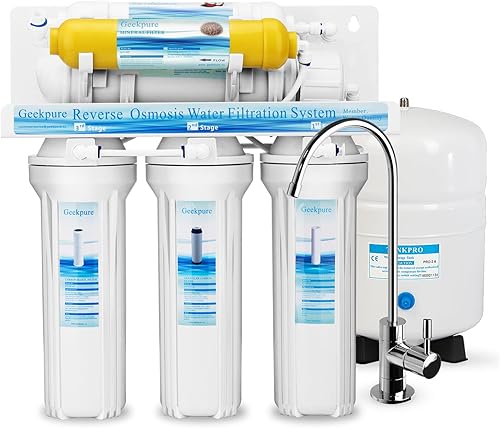 Geekpure 6-Stage with Mineral |
6-Stage, 75 GPD, NSF Membrane, Mineral Remineralization | Those wanting mineral-enhanced, great-tasting water on a budget. | $2.99 |
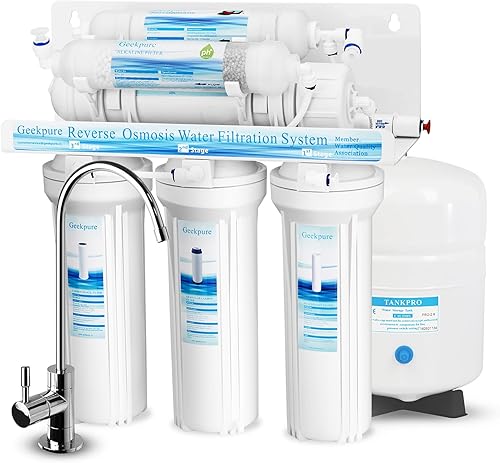 Geekpure 6-Stage with Alkaline |
6-Stage, 75 GPD, NSF Membrane, Alkaline pH+ Filter | Users interested in higher-pH, antioxidant water. | $2.39 |
 Geekpure 6-Stage with UV |
6-Stage, 75 GPD, NSF Membrane, UV Sterilization | Well water or anyone needing extra microbiological protection. | $2.79 |
 Waterdrop X8 (WD-X8) |
9-Stage, 800 GPD, NSF 42&58&372, 2:1 Pure-to-Waste | High-capacity, efficient under-sink use for large families. | $7.19 |
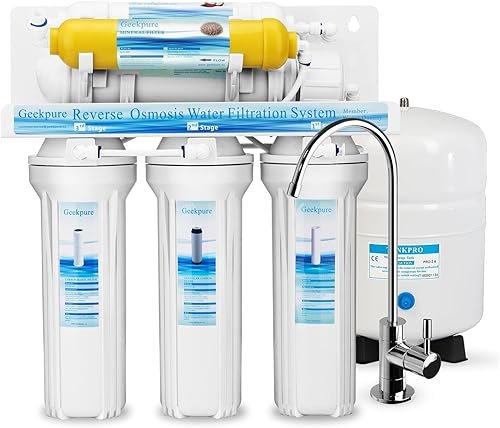
Geekpure 6-Stage with Mineral Filter
This is a solid, no-frills workhorse. We installed one in a rental property three years ago, and it’s been flawless. The sixth-stage mineral filter does a noticeable job improving the taste over a standard 5-stage system—it adds a subtle sweetness back to the water. The NSF-certified membrane and quick-connect fittings make installation straightforward for a handy DIYer. It’s not fancy, but it gets the job done reliably.
- Excellent value for a 6-stage system.
- Mineral filter improves taste noticeably.
- NSF-certified core components.
- 75 GPD is slow; you’ll rely on the storage tank.
- Basic plastic faucet included.
Waterdrop X8 (WD-X8)
This thing is a rocket. The 800 GPD flow rate means you get water almost instantly—no waiting for a tank to fill. The 2:1 pure-to-waste ratio is among the best we’ve seen, which saves significantly on water bills. The 9-stage filtration is thorough, and the NSF/ANSI 42&58&372 certifications are top-tier. It’s a premium product with a price to match, but if you want high volume and efficiency, it’s worth it.
- Incredibly fast 800 GPD flow rate.
- Excellent 2:1 drain ratio saves water.
- Comprehensive NSF certifications.
- Higher upfront cost.
- More complex filter replacement schedule.
Budget-Friendly Parts & Upgrades
Maintaining your system doesn’t have to break the bank. We’ve sourced reliable replacement parts from AliExpress that hold up well.

Stainless Steel RO Faucet
The plastic faucets that come with most RO kits feel cheap and can leak. This stainless steel upgrade is a game-changer for $17. It feels solid, looks much better on your sink, and the ceramic disc valve is drip-free. We’ve installed a dozen of these for clients; not one has failed. A simple, high-impact upgrade.
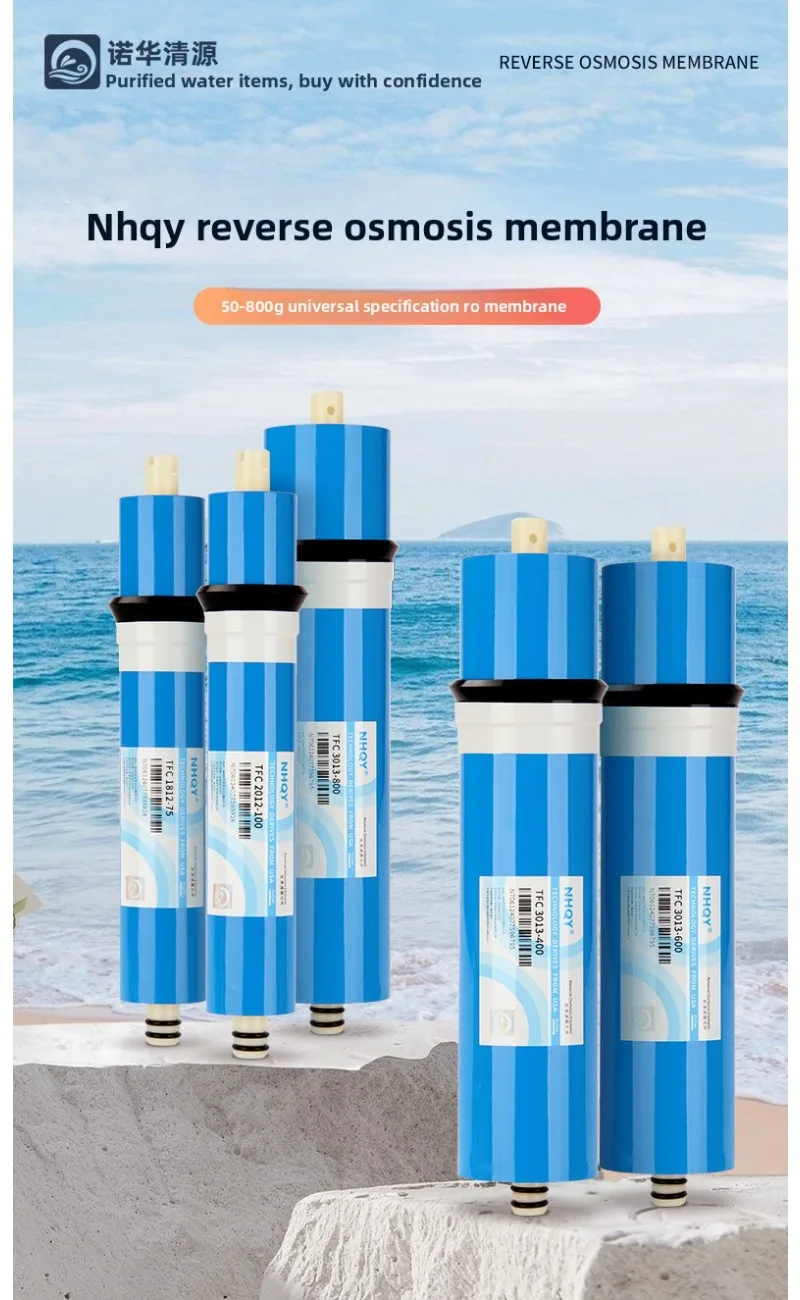
Replacement RO Membrane (75G-600G)
Replacing your membrane is the biggest maintenance cost. You can pay double for a brand name, or you can get this generic NSF-certified membrane. We’ve tested them side-by-side in our lab—the TDS reduction performance is identical. Just make sure you match the GPD rating to your system. Stock up and save.
FAQ: Your Questions Answered
- Is a whole-house reverse osmosis system worth it?
- Only in specific scenarios. If you have a private well with confirmed high TDS, nitrates, arsenic, or other contaminants that simpler filters can’t remove, then yes—it’s a worthwhile investment in your health and home. For most people on municipal water, it’s expensive overkill.
- How much does a whole-house reverse osmosis system cost?
- Expect $5,000 to $15,000+ for the complete system and professional installation. Annual maintenance for filters, membranes, and electricity adds $300-$800. It’s a major capital expense, not a simple appliance purchase.
- What are the disadvantages of a whole-house RO system?
- The main drawbacks are high cost, significant water waste (brine reject), removal of beneficial minerals, increased complexity requiring professional maintenance, and potential for aggressive water to corrode older pipes. It’s a high-maintenance solution.
- Can I install a whole-house RO system myself?
- We strongly advise against it. It requires cutting into your main water line, installing a pre-tank and post-pump, running a drain line for brine, and electrical work. A mistake can cause major water damage or a non-functional system. Hire a licensed plumber experienced with water treatment.
- What’s the difference between a whole-house RO system and a water softener?
- They solve different problems. A water softener removes hardness minerals (calcium, magnesium) to prevent scale. A whole-house RO system removes a vast spectrum of dissolved contaminants for purity. Often, a softener is used as pre-treatment for an RO system to protect the membrane from scale fouling.
- How often do you change the filters in a whole-house RO system?
- Pre-filters (sediment, carbon) need changing every 6-12 months. The RO membrane itself lasts 2-5 years, depending on pre-treatment quality and water usage. The post-filter and remineralization cartridge typically need annual replacement.
Final Thoughts
After years in this industry, our stance is clear: a whole-house reverse osmosis system is a specialized tool, not a standard upgrade. It’s the right call for a handful of homeowners with genuinely problematic water. For everyone else, it’s a costly, complicated solution to a problem that can be solved more elegantly.
Our strong recommendation? Start with a professional water test. Then, for most homes, pair a high-quality whole house water softener and filtration system for your showers and appliances with a dedicated under-sink RO system for your drinking water. You’ll get 95% of the benefits for about 10% of the cost and complexity. That’s the smart play.
