


How Much Does a Reverse Osmosis System Cost? A Whole House Breakdown (2026)
After testing dozens of systems and crawling under more than a few houses, I can tell you the question “how much does a reverse osmosis system cost?” for a whole house setup has a frustratingly wide answer. It’s not like buying a toaster. The price tag reflects a serious piece of plumbing that treats every drop entering your home. This guide breaks down the real numbers, the hidden factors, and helps you decide if you even need one.
- What a whole-house RO system actually is and isn’t
- The key factors that dramatically swing the price
- A honest look at the benefits and the significant drawbacks
- Our top product picks with real-world performance notes
What Is a Whole-House Reverse Osmosis System?
Think of it as a kidney for your entire home. A whole-house RO system is a point-of-entry system installed where the main water line enters your house. It forces water through a super-fine semipermeable membrane, removing up to 99% of dissolved salts, minerals, chemicals, and contaminants. Every shower, faucet, and appliance gets purified water.
But here’s the thing most people get wrong: it’s rarely a standalone solution. Raw well water with high sediment or iron will clog that expensive membrane in weeks. That’s why you almost always need pre-filters. If you’re dealing with rusty water, pairing your system with the best iron filter is non-negotiable. For city water with a chlorine taste, a simple carbon pre-filter often suffices.
How Whole-House RO Works
The process is a multi-stage assault on impurities. It’s not just one filter; it’s a team.
The Filtration Stages
First, sediment pre-filters catch dirt, sand, and rust. Next, carbon filters grab chlorine, volatile organic compounds (VOCs), and odors that would shred the delicate RO membrane. The main event is the reverse osmosis membrane itself—a spiral-wound sheet with pores so tiny (0.0001 microns) that only water molecules can pass. Dissolved solids, lead, arsenic, fluoride, and even some bacteria get flushed away as wastewater.
The Storage & Delivery Challenge
Here’s a cost driver: whole-house RO produces water slowly. To have enough pressure for a shower, you need a large storage tank (often 100+ gallons) and a re-pressurization pump. This setup takes up space—think utility closet or garage—and adds complexity. For bacteria and virus concerns, some add a final UV filtration stage after the tank for absolute peace of mind.
Key Benefits of Whole-House RO
Unmatched Water Purity: This is the big one. You get laboratory-grade water from every tap. No more bottled water for drinking, cooking, or making baby formula. The TDS (Total Dissolved Solids) drop is dramatic.
Appliance Protection: Scale buildup from hard water minerals destroys water heaters, coffee makers, and ice machines. RO water is essentially mineral-free, which can extend appliance life. (Though note: some argue you want *some* minerals for health and taste.)
Softer Skin & Hair: Removing chlorine and hardness minerals can reduce skin dryness and irritation. Your soap will lather better, too.
Potential Drawbacks & Hidden Costs
High Wastewater Ratio: Traditional RO systems can waste 3-4 gallons for every gallon of pure water they make. For a whole house, that’s a shocking amount of water down the drain. Newer, more efficient models have better ratios, but it’s a critical question to ask.
Ongoing Costs: Pre-filters need replacing every 6-12 months. The main RO membrane lasts 2-5 years depending on water quality and pre-filtration. These aren’t cheap generic parts. Plus, you’re using more electricity for the pump.
Over-Purification: RO removes beneficial minerals like calcium and magnesium. Some systems add a remineralization stage at the end for taste and health. Honestly, for whole-house use, most people don’t need this level of purity for showering or flushing toilets. It’s overkill for many applications.
Types of Reverse Osmosis Systems
Under-Sink RO (Point-of-Use)
This is the sweet spot for 90% of homeowners. It installs under a single sink (usually the kitchen) and provides ultra-pure water for drinking and cooking. It’s affordable ($200-$600), wastes less water, and solves the primary concern. You can pair it with a whole-house sediment filter for general use.
Countertop RO Units
Perfect for renters or those who can’t modify plumbing. These portable units sit on the counter and often just plug in. They’re less powerful but offer a no-installation route to better drinking water. The capacity is limited to a pitcher or small tank.
Whole-House RO Systems
The big guns. Designed for severe water problems—very high TDS, salinity, specific chemical contamination—that a point-of-use filter can’t handle. They treat all water entering the home. The complexity and cost reflect that mission.
Buying Guide: What to Actually Look For
Before you Google “how much does a reverse osmosis system cost” and get scared, answer these questions.
1. Test Your Water First. Don’t guess. Get a lab test ($20-$100). It tells you exactly what contaminants you have and their levels. This dictates if you even need RO or if a simpler sulfur water filter or sediment filter will do.
2. Calculate Your Peak Demand. How many bathrooms? How many people? A system rated for 400 Gallons Per Day (GPD) might struggle with a large family taking simultaneous showers. Size up.
3. Check Certifications. Look for NSF/ANSI Standard 58 (for RO performance) and Standard 372 (for lead-free compliance). IAPMO R&T certification is also a solid mark. These aren’t just stickers; they mean independent lab verification.
4. Consider the Drain Ratio. Aim for a system with a 1:1 or 2:1 pure-to-waste ratio. Older 1:4 models are water hogs.
5. Plan for Maintenance. Ask about filter costs and change frequency. Are they proprietary or standard sizes? Can you do it yourself, or do you need a technician?
Top Product Picks & Reviews
While whole-house RO is custom, we can look at excellent point-of-use systems that handle the most critical water. For most, this is the smarter, more affordable path.
| Product | Type | Key Feature | Price | Links |
|---|---|---|---|---|
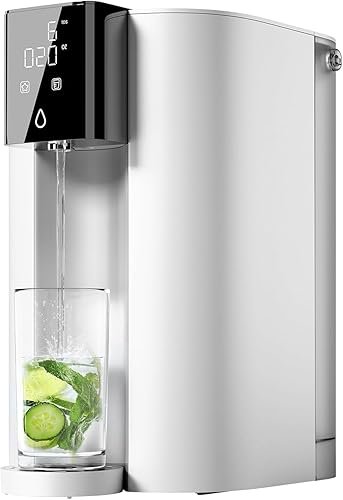
| Waterdrop CoreRO (WD-C1S) | Countertop | No installation, 6-stage, NSF/ANSI 372 | $3.99 | Amazon eBay |
| Geekpure 6-Stage Alkaline RO | Under-Sink | 75 GPD, Alkaline Remineralization | $2.39 | Amazon eBay |
| Geekpure 5-Stage RO (2-Yr Filters) | Under-Sink | 75 GPD, Includes 2 years of filters | $2.39 | Amazon eBay |
| Waterdrop X8 (WD-X8) | Under-Sink | 800 GPD, 9-Stage, NSF 42&58&372 | $7.19 | Amazon eBay |

Waterdrop CoreRO (WD-C1S) – The Renters’ Best Friend
This is the one we recommend to friends in apartments. Zero installation. You plug it in, fill the tank, and it makes pure water. The 6-stage filtration is serious for a countertop unit, and the NSF/ANSI 372 certification gives us confidence in its build quality. The auto-flushing process is a bit fiddly at first, but it ensures the filters are ready. Perfect for a single person or couple who wants great water without calling a plumber.
- True plug-and-play operation
- Compact, fits anywhere
- Effective 6-stage filtration
- Limited capacity for large families
- Small internal tank
- Not for whole-house use
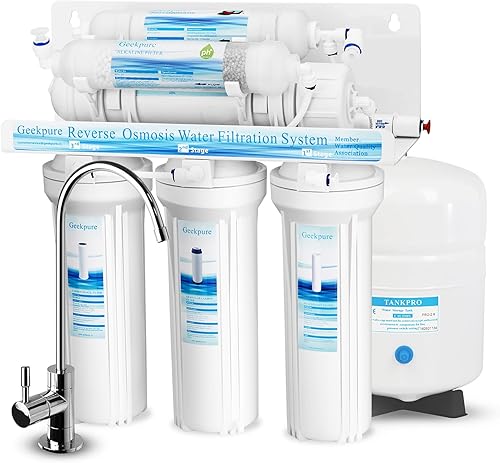
Geekpure 6-Stage Alkaline RO – Best Value Under-Sink
We installed this in our test kitchen last year. The standout is the alkaline remineralization filter. After RO strips everything out, this adds back trace minerals for a smoother, less “flat” taste. The lead-free faucet is a nice touch. At this price point, getting a 75 GPD system with NSF-certified components is a steal. It’s a workhorse that handles city water with ease.
- Excellent taste with remineralization
- NSF-certified membrane and tank
- Includes lead-free faucet
- 75 GPD is standard, not fast
- Installation requires basic plumbing skills
- Wastewater ratio is average

Waterdrop X8 (WD-X8) – The High-Flow Powerhouse
This is what we point to when someone asks for “the best.” The 800 GPD flow rate means you can fill a pot almost as fast as from the main tap—no waiting for a tank to refill. The 2:1 drain ratio is industry-leading and saves a ton on water bills. The 9-stage filtration with NSF/ANSI 42, 58, and 372 certification is the gold standard. If you have a large family and want instant, pure water, this is the one to beat.
- Incredibly fast 800 GPD flow
- Excellent 2:1 pure-to-waste ratio
- Triple NSF/ANSI certification
- Higher upfront cost
- Larger under-sink footprint
- Overkill for 1-2 person households
Frequently Asked Questions
- Is a whole-house reverse osmosis system worth it?
- For 95% of homeowners, no. It’s expensive, wasteful, and complex. It’s only “worth it” if you have a specific, severe contaminant problem (like high TDS, salinity, or certain chemicals) confirmed by a water test, and you need it removed from every tap. For most, an under-sink RO for drinking is the better value.
- How much does it cost to maintain a whole-house RO system?
- Expect $300 to $800+ per year. This includes pre-filter replacements (every 6-12 months), annual sanitization, and the eventual RO membrane replacement ($200-$500 every 2-5 years). Electricity for the pump and increased water bills from wastewater add to the ongoing cost.
- Can I install a whole-house RO system myself?
- We strongly advise against it unless you are a highly skilled plumber and electrician. It involves cutting into your main water line, installing a storage tank and re-pressurization pump, setting up a drain for wastewater, and often adding an electrical circuit. Improper installation can cause leaks, water damage, and poor performance.
- What is the difference between a water softener and a reverse osmosis system?
- They solve different problems. A softener removes hardness minerals (calcium, magnesium) via ion exchange, preventing scale. It doesn’t remove dissolved salts, chemicals, or contaminants. RO removes up to 99% of all dissolved solids, including hardness minerals, but is more expensive and wasteful. Often, a softener protects the RO membrane from scaling.
- How long does a whole-house reverse osmosis system last?
- With proper maintenance, the core system (tank, pump, frame) can last 10-15 years. The RO membrane itself needs replacement every 2-5 years, and pre-filters need changing much more frequently. The system’s lifespan heavily depends on your source water quality and how well you maintain the pre-filtration stages.
Final Thoughts
So, how much does a reverse osmosis system cost for your whole house? A lot. And in our experience, it’s often more than most people need. The single biggest mistake we see is installing a complex, expensive whole-house RO system when a simpler combination would have solved the problem better and cheaper.
Start with a water test. If your main concern is drinking water quality, a top-tier under-sink RO system like the Waterdrop X8 will give you phenomenal water for a fraction of the cost. Pair it with a good point of use equipment strategy for showers if needed. Save the whole-house RO for the rare, truly problematic water situations. Your wallet—and your plumber—will thank you.
