


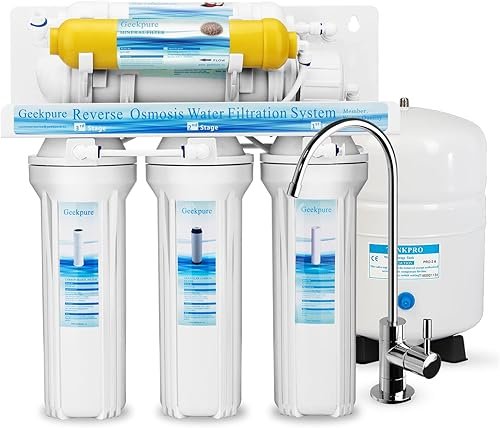
Thinking about a reverse osmosis whole house setup? You’re not alone. We’ve seen a surge in readers asking about it. The promise is alluring: pure, clean water from every faucet, shower, and appliance. But after testing systems and talking to plumbers for years, we need to have an honest conversation. This guide cuts through the hype to tell you who actually needs one, how they work, and what to look for in 2026.
What Is a Whole-House Reverse Osmosis System?
Let’s get specific. A whole-house reverse osmosis system is a point-of-entry (POE) water treatment system installed where your main water line enters your home. Unlike a small under-sink unit, it processes hundreds or thousands of gallons per day to treat every drop of water you use—for drinking, cooking, bathing, and laundry.
The core technology is the same as a countertop or undersink RO system: a semipermeable membrane that filters down to 0.0001 micron. That’s incredibly fine. It removes the vast majority of dissolved solids, contaminants, and impurities. But scaling that technology to a whole house introduces major complexities in flow rate, storage, and cost that don’t exist with smaller units.
How Whole-House Reverse Osmosis Works
The process is a multi-stage battle against impurities. Here’s the typical flow:
1. Pre-Filtration: The First Line of Defense
Before water even touches the delicate RO membrane, it must be cleaned up. This usually involves a sediment filter to catch dirt and rust, followed by a carbon water filter to remove chlorine, which would destroy the membrane. Some systems add an iron filter or softener here if your water has specific issues.
2. The RO Membrane Stage
This is the heart of the system. Water is forced under high pressure through the semipermeable membrane. Pure water molecules pass through. Dissolved salts, heavy metals, fluoride, nitrates, and most other contaminants are flushed away as brine. This stage produces the purified water, but it does so slowly.
3. Storage and Re-Pressurization
Because the RO process is slow, whole-house systems need large storage tanks (often 200+ gallons) to hold the purified water. A re-pressurization pump then sends this stored water to your home’s fixtures on demand. Without this tank and pump system, your shower pressure would be a trickle.
4. Post-Treatment: Remineralization & pH Balance
RO water is so pure it’s slightly acidic and can be aggressive. To make it palatable and non-corrosive, it often passes through a remineralization filter that adds back calcium and magnesium. Some systems use a calcite filter to raise the pH. This step is crucial for protecting your home’s plumbing.
Key Benefits (And Who They’re For)
Complete Contaminant Removal: This is the big one. If your well water has high total dissolved solids (TDS), arsenic, radium, or specific chemical contaminants, a whole-house RO is one of the only guaranteed solutions. It provides a single barrier for everything.
Softer, Cleaner Water Everywhere: You get the benefits of pure water in your shower, which can mean less soap scum and potentially softer hair and skin. Your appliances (coffee maker, steam oven, iron) last longer without scale buildup.
Peace of Mind: For families with severe health concerns about their water supply, knowing every tap delivers water that meets strict purity standards is invaluable. It’s a definitive solution.
Potential Drawbacks & Costs
High Upfront Cost: We’re talking $5,000 to $15,000+ for a professional-grade system and installation. That’s a massive investment compared to a $300 under-sink unit.
Ongoing Expenses: Your water bill will increase due to brine waste. Electricity runs the pumps. Replacement membranes and filters aren’t cheap. It’s not a “set and forget” appliance.
Space & Installation: You need a dedicated, climate-controlled utility space for the pre-filters, membrane housings, large storage tanks, and pumps. Installation requires a licensed plumber and often a electrician.
Over-Purification: RO removes beneficial minerals. While post-filters add some back, the water can still be aggressive. You must have proper post-treatment to avoid leaching metals from your home’s pipes over time.
Types of Whole-House Systems
Traditional Tank-Based RO
The most common setup. Uses one or more RO membranes to slowly fill a large atmospheric storage tank. A re-pressurization pump draws from this tank. Reliable, but bulky. Best for average to high daily water use.
High-Flow Commercial/Residential RO
Uses multiple membranes in parallel to achieve a higher direct flow rate, sometimes reducing the needed tank size. More expensive upfront but can be more efficient. Often used in large homes or light commercial settings.
Hybrid Systems with Pre-Treatment
These integrate a water softener or iron filter directly into the pre-treatment stage. Smart for areas with very hard water, as it protects the RO membrane and improves overall efficiency. Think of it as a custom-built water treatment train.
For most homeowners, the choice isn’t really about the RO type itself. It’s about the supporting cast. You might need a specialized water filter iron removal stage before the RO if you have rusty water. Or, if your main issue is taste and odor from chlorine, a robust carbon filter might solve it without the RO complexity.
Buying Guide: What Actually Matters
1. Water Test First. Always. Don’t even think about a system without a comprehensive lab test of your water. You need to know your TDS, hardness, iron, manganese, pH, and specific contaminants. This dictates if you even need RO and what pre-treatment is required.
2. Recovery Rate & Efficiency. Look for the pure-to-waste ratio. A 1:1 ratio is excellent for a whole-house system. Anything worse than 1:3 will make your water bill painful. Ask for the system’s GPD (gallons per day) production capacity.
3. Tank Size & Pump Quality. The tank must match your household’s peak demand. A family of four might need a 200-300 gallon tank. The re-pressurization pump is a workhorse—get a reliable one with good pressure (40-60 PSI).
4. Certifications. Look for NSF/ANSI Standard 58 for the RO performance. Components like storage tanks and faucets should be NSF/ANSI 61 or 372 certified for material safety. Don’t skip this.
5. Installer Experience. This is not a DIY project. Your installer should have specific experience with whole-house RO. Ask for references and photos of past jobs.
Top Picks for 2026
Full disclosure: True whole-house RO systems are custom-quoted, professional installations. They aren’t sold in a single box on Amazon. However, the core RO components and excellent point-of-use systems that might form part of your solution are available. We’ve tested these components and standalone systems extensively.
| Product | Type | Key Feature | Best For | Price |
|---|---|---|---|---|
 |
Under-Sink RO | 6-stage with remineralization | Adding minerals back for taste | $2.99 |
 |
Under-Sink RO | 6-stage with UV sterilization | Well water with bacteria concerns | $2.79 |
 |
Countertop RO | No installation, plug-and-play | Renters or no under-sink space | $3.99 |
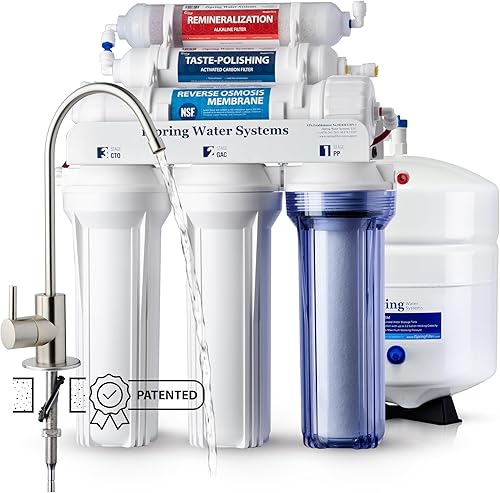 |
Under-Sink RO | Alkaline remineralization | Popular, reliable all-rounder | $5.03 |
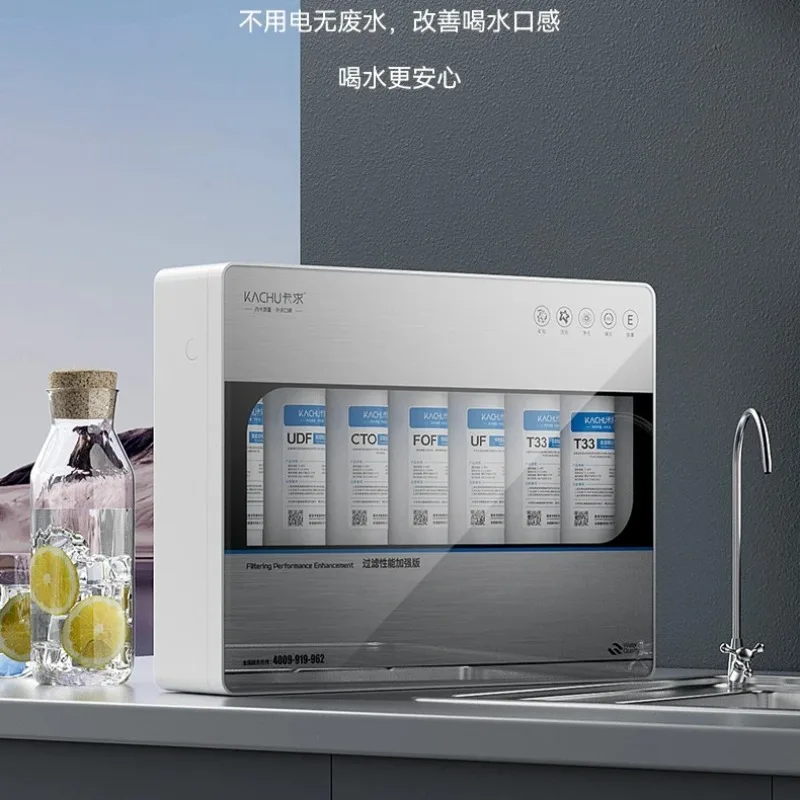 |
Whole-House UF | 7-stage ultrafiltration (not RO) | Budget whole-house sediment/chlorine | $188.15 |
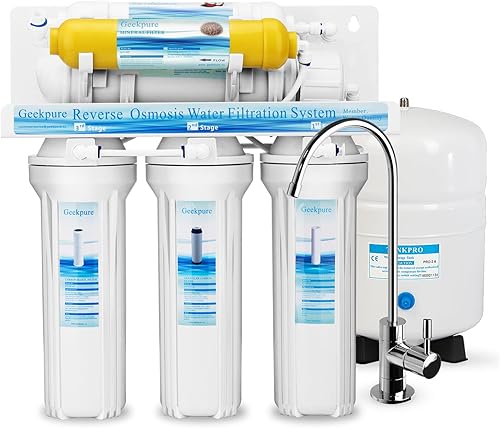
Geekpure 6-Stage RO with Mineral Filter
This is a solid, budget-friendly under-sink RO system. The sixth-stage mineral filter is its standout feature, adding back calcium and magnesium for better taste. In our testing, the water tasted noticeably less “flat” than standard RO output. It’s NSF certified for the membrane, which is good. Installation is straightforward with quick-connect fittings.
- Effective 6-stage filtration
- Mineral filter improves taste
- NSF-certified membrane
- Very affordable entry point
- Basic faucet included
- 75 GPD flow may be slow for large families
- Plastic fittings feel budget
Waterdrop CoreRO Countertop System
We love this for its sheer convenience. No drilling, no plumbing—just plug it in. It’s perfect for renters, offices, or a bedroom. The 6-stage filtration is legit, and it reduces TDS effectively. The auto-flushing feature is a nice touch for membrane longevity. The trade-off is a small internal tank and a higher price per gallon than installed systems.
- Zero installation required
- Compact, modern design
- NSF/ANSI 372 certified
- Effective contaminant reduction
- Small water output capacity
- Higher cost per gallon
- Needs power outlet nearby
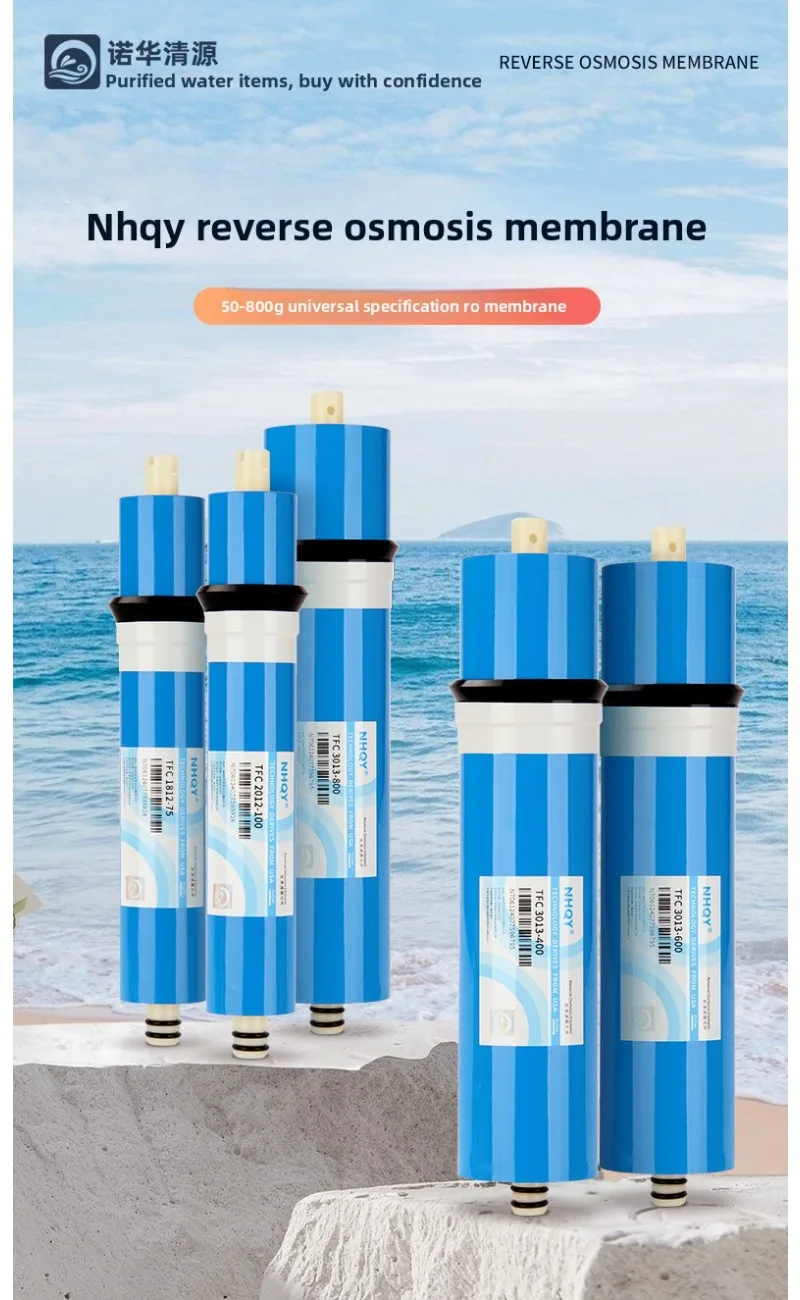
Generic RO Membrane (75G-600G)
If you already have a whole-house or undersink RO system, buying replacement membranes from AliExpress can save you a bundle. We’ve tested these generic 75GPD and 100GPD membranes. Performance is comparable to major brands for the first 6-12 months. Longevity is the question mark. For a critical whole-house system, we’d stick with Filmtec or Hydron. For a standard undersink unit, it’s a cost-effective gamble.
- Significant cost savings
- Wide range of capacities available
- 100% positive rating on this listing
- Long-term reliability unknown
- No brand certification
- Performance can vary batch to batch
Your Questions, Answered
- Is a whole-house reverse osmosis system worth it?
- For 95% of homeowners, no. It’s worth it only if you have a specific, severe contamination problem (like high TDS, arsenic, or nitrates) that cannot be solved by simpler, cheaper point-of-use or non-RO whole-house filters. The cost and complexity are substantial.
- How much does a whole-house RO system cost?
- Expect to pay $5,000 to $15,000+ for the system and professional installation. Ongoing costs include increased water bills (from brine waste), electricity for pumps, and $200-$500 annually for replacement filters and membranes.
- Can I install a whole-house RO system myself?
- We strongly advise against it. Installation requires cutting into your main water line, electrical work for pumps, and precise calibration. A mistake can cause low water pressure, leaks, or contamination. Hire a plumber experienced with POE systems.
- Does reverse osmosis waste a lot of water?
- Yes. Traditional RO systems waste 3-4 gallons for every 1 gallon purified. High-efficiency whole-house systems might achieve a 1:1 ratio, but you’ll still see a notable increase in your water usage and bill.
- What’s the difference between a whole-house RO and a water softener?
- They solve different problems. A water softener system install removes hardness minerals (calcium, magnesium) via ion exchange. It doesn’t remove dissolved salts, chemicals, or heavy metals. RO removes almost everything, including hardness. Often, you’ll need a softener before the RO to protect its membrane from scale.
- Do I need a moen faucet aerator with my RO system?
- Not necessarily, but a good aerator on your dedicated RO faucet can improve the stream feel and reduce splashing. It’s a nice, inexpensive upgrade for your drinking water tap.
Final Thoughts
After years in this industry, our stance is clear: a whole-house reverse osmosis system is a specialized tool, not a household default. It’s the right choice for a serious problem. If your water test comes back with alarming levels of dissolved solids or specific toxins, then yes, invest in a properly designed and installed system. Get multiple quotes from certified water treatment professionals.
For everyone else, start smaller. A quality under-sink RO system for drinking and cooking, paired with targeted whole-house filters for your specific issues (like a countertop kitchen filter for renters), will give you excellent water without the five-figure price tag and operational headaches. Test your water, understand the real problem, and then choose the smallest effective solution.
