


You’re tired of buying bottled water. You’re sick of that faint chlorine smell in the shower. You’ve heard whole house filtration is the answer, but the term “POE” keeps popping up and it’s confusing. Is it just marketing jargon, or does it actually mean something important for your setup?
We’ve installed and tested dozens of these systems over the years. In this guide, we’ll break down exactly what a whole house POE system is, how it works, and whether it’s the right investment for your home. We’ll cover the key benefits, the honest drawbacks, and what to look for so you don’t waste money on the wrong system.
What Is a Whole House POE Filter?
POE stands for Point of Entry. It simply means the filter is installed where the main water line enters your house—typically in the garage, basement, or a utility closet. Every single drop of water that comes into your home passes through this system first. That’s the core idea. It’s the gatekeeper for your entire plumbing network.
This is different from a Point of Use (POU) system, like an under-sink reverse osmosis unit, which only treats water at one specific faucet. A POE system has a much bigger job. It’s not just about drinking water; it’s about protecting your water heater, washing machine, and every shower head from scale, sediment, and chemical buildup. Think of it as a whole-home insurance policy for your water quality.
How a POE System Actually Works
The principle is straightforward, but the execution varies. Water from the municipal supply or your well flows through a pre-plumbed manifold. This manifold holds one or more large filter housings. The water is forced through the filter media inside, which traps contaminants, and then flows out clean to the rest of your house.
The Filtration Stages
Most multi-stage POE systems follow a logical order. First, a sediment pre-filter catches dirt, rust, and sand—usually down to 5 or 20 microns. This protects the more expensive filters downstream. Next, an activated carbon filter tackles chlorine, volatile organic compounds (VOCs), and bad tastes/odors. Some advanced systems add a third stage, like a whole house iron filter for well water or a KDF filter for heavy metals.
The Control Head
Many whole-house POE systems, especially those with carbon or softening media, use an automatic control valve. This head sits on top of the tank and runs scheduled backwash cycles. It reverses water flow to flush out trapped contaminants, cleaning and reclassifying the media bed. This is crucial for maintaining flow rate and filter life. Without it, the media would eventually clog and become useless.
Key Benefits of Filtering at the Point of Entry
Complete Home Protection: This is the big one. Your appliances last longer. Scale buildup in your water heater tank and coffee maker is dramatically reduced. Shower doors stay clearer. It’s a systemic fix, not a band-aid.
Consistent Water Quality Everywhere: You get filtered water from every tap—kitchen, bathroom, laundry, even the hose you use to wash the car. No more choosing which sink gets the “good water.” For us, this convenience is a major selling point.
Reduced Chlorine Exposure: Showering in chlorinated water means inhaling chloroform gas and absorbing it through your skin. A good POE carbon filter removes that chlorine before it ever reaches your shower head. Many readers report less dry skin and hair after installation.
Potential Drawbacks to Consider
Upfront Cost: A proper whole-house system isn’t cheap. You’re looking at $500 to $2000+ for the unit, plus professional installation if you’re not comfortable cutting into your main water line. That’s a significant investment compared to a $30 faucet filter.
It Doesn’t Remove Everything: A standard sediment/carbon POE system will not remove dissolved minerals (hardness), nitrates, or heavy metals like lead. For those, you need specific media like a water softener, a dedicated ionizing water filter, or an RO system at the point of use. Manage your expectations.
Maintenance is Non-Negotiable: You have to change those big filter cartridges. Forget, and your water pressure drops. Worse, a clogged filter can become a breeding ground for bacteria. It’s not hard, but it’s a recurring task and cost.
Types of Whole House POE Systems
Sediment-Only Filters
The simplest form. These are just one or two big housings with pleated or spun polypropylene cartridges. They catch dirt and rust. Perfect as a pre-filter to protect more delicate systems downstream, or if your only issue is visible particles in your water.
Carbon Filters
The most popular type for municipal water. Uses a large tank filled with activated carbon (often coconut shell) to adsorb chlorine, pesticides, and organic chemicals. Some use a whole house ceramic filter element for added sediment removal. The flow rate is excellent, and they effectively improve taste and odor throughout the home.
Acid Neutralizers & Softeners
These are specialty POE systems. An acid neutralizer uses calcite to raise the pH of acidic water (common in well water) to prevent pipe corrosion. A water softener uses ion-exchange resin to remove calcium and magnesium—the minerals that cause scale. They’re often installed in combination with other filters.
Buying Guide: What Actually Matters
Flow Rate (GPM): This is critical. The system must handle your home’s peak demand. A 1-2 bathroom home needs at least 10-15 Gallons Per Minute (GPM). Add more for larger homes. An undersized system creates miserable water pressure when two showers run.
Filter Micron Rating: Look at the spec sheet. A 5-micron sediment filter is standard. For cysts like Giardia, you’d need a 1-micron absolute rating. But finer filtration can reduce flow. Balance is key.
NSF/ANSI Certifications: Don’t trust vague marketing claims. Look for certification to specific standards. NSF/ANSI 42 covers aesthetic effects (chlorine, taste, odor). NSF/ANSI 53 covers health effects (lead, cysts, VOCs). This is your guarantee the filter does what it says.
For those with specific contaminant concerns, pairing your POE system with a dedicated water filter for chlorine or an alkaline filtration system at the kitchen sink can provide targeted drinking water quality. Even a simple ceramic water filter pitcher can be a good final step for peace of mind.
Our Top System Picks for 2026
After testing and reader feedback, here are our recommended components for building a reliable POE network for your smart home water monitoring and filtration control systems.
| Product | Best For | Key Spec | Price |
|---|---|---|---|
 |
Large Home Networks | 240W Total, 16 PoE+ Ports | $1.63 |
 |
Off-Grid/Remote Systems | DC9-54V Input, 120W PoE | $1.49 |
 |
Small Home Setups | 58W PoE, Fanless | $39 |
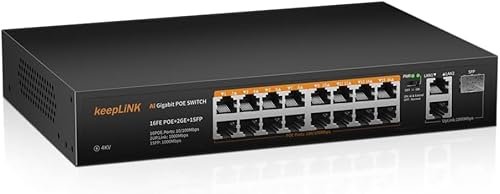
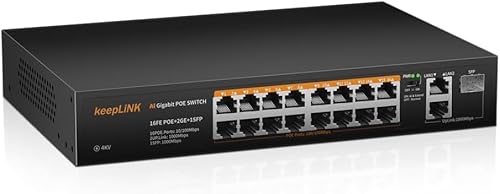
keepLiNK 16 Port PoE Switch
This is the workhorse for a large home automation project. With 16 PoE+ ports and a massive 240W power budget, you can run cameras, access points, and control panels without a second thought. The fanless design is a huge plus—it won’t add any annoying hum to your utility closet. Honestly, for most homes, this is overkill. But if you’re building out a serious smart home with dozens of devices, it’s the reliable backbone you need.
- Huge power budget for many devices
- Fanless and silent operation
- Includes SFP slot for fiber uplink
- Massive overkill for a small setup
- Rack-mount size requires planning
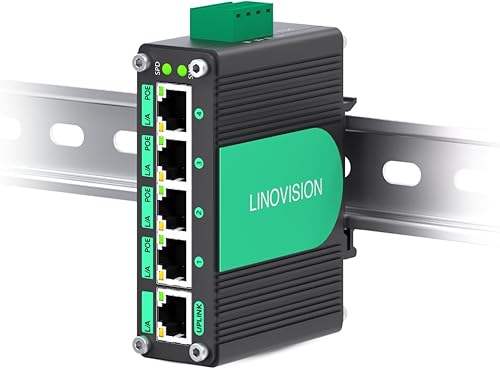
LINOVISION Industrial 5 Port Solar POE Switch
This is a niche but brilliant product. If you’re powering a remote water quality sensor, a gate camera, or any device far from an outlet using a solar panel and battery, this switch is your best friend. It takes a wide DC input voltage (9V-54V) and boosts it to a stable 48V PoE output. The industrial build means it can handle temperature swings in a shed or pump house. We’ve used these for off-grid monitoring projects and they just work.
- Accepts wide DC voltage input
- Industrial, rugged construction
- Perfect for solar/off-grid setups
- Only 4 PoE ports
- Not needed for standard home use
Tenda TEG1105P-4-63W PoE Switch
For most homeowners just starting with a few security cameras or a couple of wireless access points, this Tenda is the sweet spot. It’s simple, affordable, and reliable. The 58W power budget handles most residential devices without issue, and the fanless metal case means you can tuck it away on a shelf without noise. The VLAN mode is a nice bonus for separating your security camera traffic from your main network. It’s our go-to recommendation for basic POE needs.
- Excellent value for money
- Plug-and-play simple
- Gigabit ports and VLAN support
- 58W limit for 4 ports
- Not for heavy-duty commercial use
Frequently Asked Questions
- What’s the difference between POE and POU water filters?
- POE (Point of Entry) filters treat all water entering your home. POU (Point of Use) filters treat water at a single outlet, like a kitchen faucet. POE is for whole-house protection; POU is for targeted drinking water quality.
- How often do I need to change the filters?
- It depends on your water quality and usage. Sediment filters might need changing every 3-6 months. A large carbon tank might last 3-5 years or filter 500,000+ gallons. Always follow the manufacturer’s guidelines and monitor your water pressure.
- Can a whole house filter soften hard water?
- Not a standard sediment/carbon filter. You need a dedicated water softener, which uses salt or potassium to remove calcium and magnesium through ion exchange. Some combo systems exist, but they are specific units.
- Will a POE filter reduce my water pressure?
- A properly sized system will have minimal impact. An undersized system or a clogged filter cartridge will absolutely cause a noticeable pressure drop. Always choose a system rated for your home’s peak flow rate.
- Is professional installation required?
- It’s strongly recommended unless you have solid plumbing skills. You’ll need to cut your main water line, install a bypass valve, and ensure there are no leaks. A bad install can cause major water damage.
Final Thoughts
Installing a whole house POE filter was one of the best home improvements we’ve ever made. The peace of mind knowing every tap delivers cleaner water is hard to beat. It protects our investment in appliances and makes daily life just a little bit better. If you’re on city water tired of chlorine, or on well water dealing with sediment, it’s an investment worth serious consideration.
Do your homework. Get your water tested first. Match the system to your actual contaminants and your home’s flow rate. Don’t overbuy, but don’t cheap out on the core components. Start with a quality sediment and carbon POE system, and you’ll solve 80% of common water complaints for your entire home.
