


The Whole House Fluoride Filter: Your 2026 Guide to Cleaner Water From Every Tap
You’ve seen the pitch: “fluoride-free water from every tap!” It sounds perfect. But is a whole-house system overkill, or is it the right move? After testing filtration systems for years, I can tell you the answer isn’t simple. It depends on your water, your budget, and your goals. We’ll break down exactly how these systems work, what they cost, and whether one deserves a spot in your utility closet.
What Is a Whole House Fluoride Filter?
Think of it as a bouncer for your main water line. Installed where water enters your home—usually at the meter or a well pump—this system treats every single drop before it reaches a single faucet, showerhead, or appliance. That’s the core difference from an under-sink unit. You’re not just protecting your drinking glass; you’re protecting your skin and lungs during showers, your coffee maker, and your ice cubes.
The goal is comprehensive reduction. These systems target fluoride, but the best ones also knock out chlorine, sediment, and other contaminants. It’s a whole-house approach to water quality. For context, a standard ceramic filter is fantastic for bacteria but won’t touch dissolved fluoride ions. You need a different technology altogether.
How Whole House Fluoride Removal Works
This isn’t a simple mesh screen. Removing fluoride requires specific chemical adsorption or ion exchange. Here’s the science made simple.
The Filtration Media: The Workhorse
The heart of the system is a tank filled with specialized media. The two most common are activated alumina and bone char carbon. Water flows through this media bed. Fluoride ions in the water have a stronger attraction to the media than to the water itself. They stick to the media surface—a process called adsorption—while the cleaned water continues on.
System Configuration: More Than One Stage
A standalone fluoride tank is rare. You’ll almost always see a multi-stage setup. A typical sequence looks like this:
Stage 1: Sediment Pre-filter. A 5-micron pleated or spun cartridge catches dirt, sand, and rust. This protects the expensive fluoride media from clogging. We always recommend starting with a quality pleated filter cartridge here for longer life.
Stage 2: Fluoride Reduction Tank. This is the big tank with activated alumina or bone char. Contact time is critical. The flow rate must be slow enough for the fluoride to adsorb.
Stage 3 (Optional): Polishing Filter. Often a granular activated carbon filter to improve taste and remove any residual chlorine that could damage the fluoride media.
Key Benefits of Whole-House Filtration
Complete Exposure Reduction: The biggest win. You’re not just filtering drinking water. You’re filtering shower water, which is huge. Hot showers open pores and create steam you inhale, potentially increasing fluoride absorption. This system addresses that.
Appliance Protection: Fluoride and other minerals can contribute to scale and corrosion over time. Protecting your water heater, washing machine, and dishwasher can extend their lifespans.
Convenience: One system, one maintenance schedule. Every tap is covered. No need for multiple under-sink units or pitcher filters. It’s a set-it-and-forget-it solution for the entire home.
Improved Water for Pets & Plants: Your aquariums, dogs, cats, and houseplants all get the same filtered water. This can be especially important for sensitive species.
Potential Drawbacks & Honest Costs
Ongoing Media Replacement: The fluoride media doesn’t last forever. It has a finite capacity measured in gallons or grains. Depending on your water’s fluoride level and usage, you may need to replace or recharge the media every 1-3 years. This can cost $200-$500 per service.
Space Requirements: You need room for a large pressure tank (often the size of a water softener), pre-filters, and post-filters. A cramped utility closet won’t cut it.
Flow Rate Impact: If the system is undersized for your home’s peak demand (like two showers and the dishwasher running), you’ll notice a significant pressure drop. Sizing correctly is non-negotiable.
Types of Whole House Fluoride Systems
Activated Alumina Systems
The most common dedicated fluoride removal media. It’s a porous, granular form of aluminum oxide. Very effective when pH is optimized. Capacity is good but can be fouled by competing ions like arsenic or silica. Requires periodic regeneration with a sodium hydroxide solution, which many homeowners leave to professionals.
Bone Char Carbon Systems
An older, natural technology. Bone char is made from—you guessed it—animal bones heated to high temperatures. It removes fluoride through a combination of adsorption and ion exchange. It also reduces some heavy metals and chlorine. It’s a more “all-in-one” media but has a lower fluoride capacity than activated alumina. A good bone char system can sometimes eliminate the need for a separate carbon block filter, simplifying the setup.
Reverse Osmosis (For Context)
A whole-house RO system is a different beast entirely. It’s extremely effective at removing fluoride (and almost everything else), but it’s wasteful, expensive, and complex. For most homeowners, a targeted adsorption system is more practical. RO is often better suited as a point-of-use solution for drinking water, like the Waterdrop system we review below. For more on how carbon works in filtration, see our guide to carbon water filters.
Buying Guide: What Actually Matters
Forget the marketing hype. Focus on these concrete factors.
1. Test Your Water First. Don’t guess. Get a lab test to know your exact fluoride level (in ppm or mg/L). A system rated for 10 ppm is overkill if you’re at 0.7 ppm. Also test pH, alkalinity, and competing ions like arsenic.
2. Calculate Your Peak Flow Rate. Add up the flow rates of all fixtures that might run simultaneously. A typical showerhead is 2.0 GPM. Your system’s rated service flow rate must exceed this number, or you’ll have pressure issues.
3. Media Capacity & Lifespan. Look for capacity stated in gallons or grains. Do the math: (Your daily water use in gallons) x 365 = Annual use. Divide the media’s total capacity by your annual use to estimate years between replacements.
4. Certifications. Look for NSF/ANSI Standard 42 (aesthetic effects) and, more importantly, Standard 53 (health effects) for fluoride reduction. NSF/ANSI 58 is for RO systems. Independent lab reports are good; NSF certification is better.
5. Pre- and Post-Filtration. A system without a sediment pre-filter is a red budget flag. The main media is too expensive to clog. A carbon post-filter for taste is a nice bonus.
Our Top Picks for 2026
We’ve looked at systems that address different needs, from basic whole-house setups to under-sink RO for ultimate fluoride removal. Here’s how they compare.
| Product | Type | Key Feature | Price | Best For |
|---|---|---|---|---|
 Twin Whole House System |
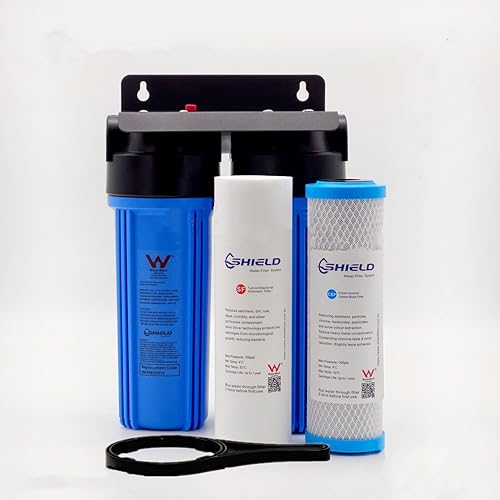
2-Stage Carbon/Sediment | Removes 99.99% chlorine, sediment | $99 | Chlorine & sediment removal (not fluoride) |
 1 Micron Sediment Filters (3-Pack) |
Sediment Pre-filter | 1-micron rating, fits standard housings | $26 | Essential pre-filter for any system |
 Waterdrop WD-X8 RO System |
Under-Sink Reverse Osmosis | 9-stage, 800 GPD, NSF Certified | $7.19 | Ultimate point-of-use fluoride removal |
 20″ Big Blue Fluoride Cartridges |
Replacement Cartridge Set | 0.22 micron, removes lead, fluoride, cysts | $3.75 | Replacement filters for Big Blue housings |
1. Twin Whole House Water Filter System
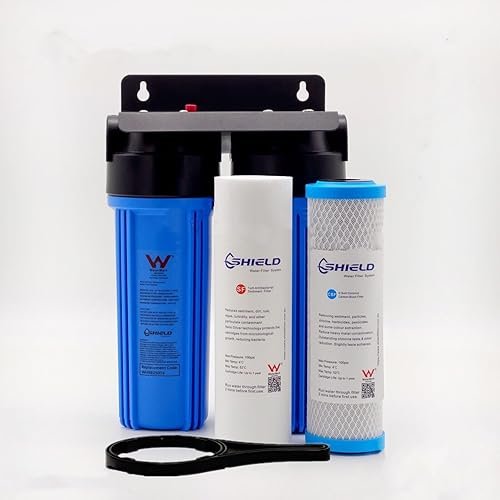
Let’s be clear: this is not a fluoride filter. It’s a fantastic sediment and chlorine pre-filter system, and we’re including it because it’s the perfect first stage for a larger setup. The twin 10″x2.5″ housings with carbon cartridges do a stellar job removing chlorine taste and odor, sand, and rust. For $99, it’s a steal for protecting more expensive downstream equipment.
- Excellent value for whole-house sediment/chlorine removal
- Heavy-duty housing with brass ports
- Protects appliances and improves water clarity
- Does NOT remove fluoride
- Cartridges need regular replacement
- Requires installation at point of entry
2. Waterdrop WD-X8 Under-Sink RO System
This is the powerhouse for drinking water. While not a whole-house solution, it’s the most effective way to get fluoride out of the water you consume. The 9-stage filtration with a 0.0001μm RO membrane tackles fluoride, lead, PFAS, and TDS. The 800 GPD flow rate means you won’t wait for a glass to fill. NSF/ANSI 42, 58, and 372 certification gives us real confidence. Honestly, for most people, pairing a whole-house sediment filter with this under-sink RO is the smartest, most cost-effective combo.
- Exceptional fluoride and contaminant reduction
- High flow rate, low waste ratio (2:1)
- Trusted NSF certifications
- Compact under-sink design
- Only treats water at one faucet
- Requires under-sink space and power
- Creates wastewater
3. 20″ Big Blue Fluoride Removal Cartridges
If you already have a standard 20″x4.5″ Big Blue housing, these replacement cartridges are a direct upgrade. The 0.22-micron carbon block claims to remove lead, fluoride, cysts, and chlorine. At under $4 per cartridge, the price is almost too good to be true. We’d want to see independent lab data for the fluoride claim, but for sediment and chlorine, they’re a solid budget pick. Use them as a secondary stage.
- Extremely affordable
- Fits standard Big Blue housings
- Grooved design for longer life
- Fluoride reduction claims need verification
- Not a complete system
- Capacity may be limited
Frequently Asked Questions
- Does a whole house water filter remove fluoride?
- Only if it uses the right media. Standard carbon or sediment filters do not. You need a system with activated alumina, bone char, or a dedicated fluoride reduction cartridge. Always check the manufacturer’s performance data sheet for specific fluoride reduction claims.
- What is the best way to filter fluoride from all water in a house?
- The most reliable method is a point-of-entry system with a dedicated activated alumina or bone char tank, properly sized for your flow rate and water chemistry. For many, a whole-house sediment pre-filter paired with an under-sink reverse osmosis system for drinking water offers the best balance of cost and effectiveness.
- How much does a whole house fluoride filter cost?
- Expect to invest between $1,500 and $3,000+ for a quality system with professional installation. Ongoing costs for media replacement every 1-3 years can add $200-$500 per service. It’s a significant investment compared to point-of-use filters.
- Can I install a whole house fluoride filter myself?
- It’s possible if you’re very handy with plumbing, but not recommended. These systems often require cutting into your main water line, dealing with large, heavy tanks, and sometimes setting up pH pre-treatment. A professional ensures correct installation, proper flow rates, and avoids leaks that could cause major damage.
- Is a whole house system better than an under-sink RO system for fluoride?
- They serve different purposes. A whole-house system reduces exposure from all water sources, including showers. An under-sink RO system provides higher-purity water specifically for drinking and cooking. The RO system is often more cost-effective for fluoride removal if you’re primarily concerned about ingestion.
- Do whole house fluoride filters waste water?
- Adsorption systems (activated alumina, bone char) do not waste water. However, if you add a reverse osmosis stage for whole-house treatment, it will produce significant wastewater. Most whole-house fluoride solutions are non-wasteful adsorption tanks.
Final Thoughts
So, is a whole house fluoride filter worth it? For the average homeowner concerned about fluoride, probably not. The cost and complexity are high. But if you have confirmed high fluoride levels, sensitive skin, or simply want the most comprehensive solution possible, a properly specified and installed system is the only way to get true whole-house coverage.
Our honest recommendation for most people? Start with a high-quality under-sink reverse osmosis system for your drinking and cooking water. Pair it with a good whole-house sediment and carbon filter to protect your appliances and improve shower water quality. That combination delivers 90% of the benefits for about 20% of the cost of a dedicated whole-house fluoride tank. Test your water, weigh the pros and cons, and choose the path that makes sense for your home and budget.
